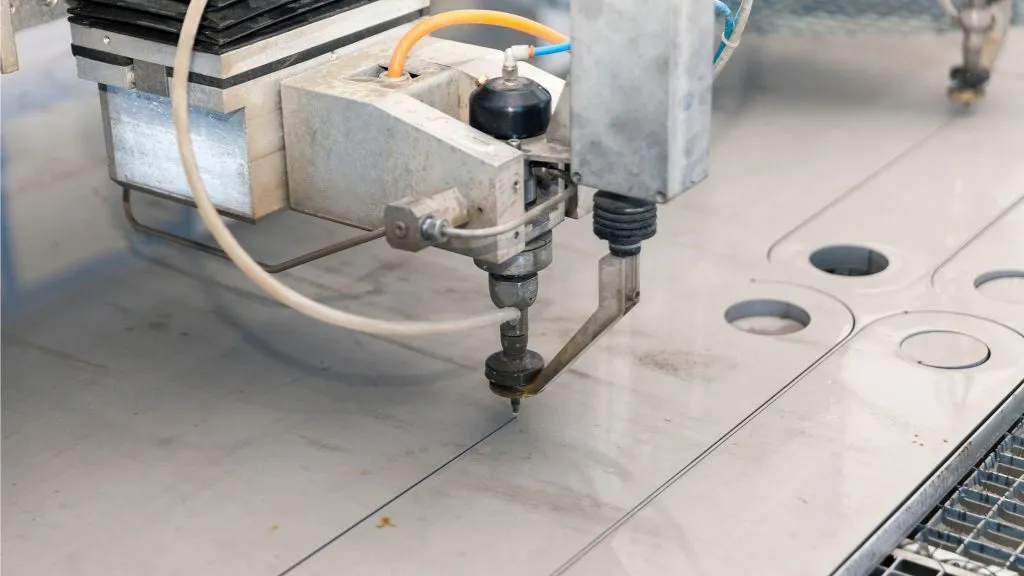
Small manufacturing shops used to rely almost entirely on saws, lasers, or plasma torches to cut materials, but that landscape has been shifting fast. More entrepreneurs running lean fabrication businesses are now looking closely at waterjet cutting, and once you understand how it actually works, it is easy to see why the interest keeps growing year after year. Here are five reasons water jet cutter technology keeps showing up in more small shops and startups every year, along with what makes each benefit genuinely practical rather than just a nice-to-have.
Key Takeaways
|
1. A Water Jet Cutter Cuts Almost Any Material

One of the biggest draws of waterjet technology is sheer versatility. A single machine can cut through metal, stone, glass, rubber, composites, and even food products, which means entrepreneurs are not stuck buying separate equipment for every material they want to work with.
This matters enormously for small businesses juggling tight budgets. Instead of investing in three or four specialized machines, a single cutting setup built around this method can often replace multiple pieces of equipment, freeing up both floor space and capital for other parts of the business. That kind of flexibility also makes it easier to say yes to unusual client requests instead of turning work away.
2. There Is No Heat-Affected Zone
Traditional cutting methods like lasers or plasma torches generate intense heat, which can warp materials, change their properties, or leave a heat-affected zone that needs additional finishing work. Waterjet cutting uses a high-pressure stream of water, sometimes mixed with abrasive particles, which means materials stay cool throughout the entire process, start to finish.
This cold-cutting advantage matters especially for entrepreneurs working with heat-sensitive materials like certain plastics, composites, or thin metals that would otherwise warp or discolor. Skipping that extra finishing step alone can save real time on every single job, which adds up quickly across dozens of orders a month.
3. A Water Jet Cutter Reduces Material Waste
Precision cutting means less scrap ending up in the trash bin, which directly affects a small business’s bottom line. Waterjet systems can follow incredibly tight tolerances, which allows entrepreneurs to nest parts closely together on a sheet of material and get more usable pieces out of every purchase, rather than discarding large offcuts after every run.
For businesses working with expensive materials like titanium, specialty alloys, or natural stone, this kind of precision adds up fast. A few percentage points of material savings on every job can mean a meaningfully healthier profit margin over the course of a year.
4. It Opens Up New Revenue Streams
Because waterjet technology can handle such a wide range of materials and thicknesses, entrepreneurs often find themselves able to take on job types they previously had to turn away. A shop that once specialized narrowly in sheet metal, for example, might suddenly be equipped to handle glass etching, stone signage, or intricate gasket production once they bring a water jet cutter into their existing lineup, effectively expanding their client base without expanding their footprint.
Omax, a Hypertherm Company has documented plenty of cases where shops expanded into entirely new markets simply because their equipment finally allowed it, turning what used to be a missed job into steady, repeatable revenue.

5. It Fits the Realities of Small Business Budgets
Adopting new manufacturing technology can feel risky for a small business, and that hesitation is backed up by real data. According to a technology adoption survey referenced by the National Institute of Standards and Technology, only about 32 percent of small and medium-sized manufacturers in the U.S. reported using cloud-based or advanced production technology, showing just how much room there still is for smaller shops to modernize their operations and gain an edge over competitors who are slower to adapt.
Waterjet systems have become more accessible over the past several years, with financing options and smaller machine footprints making the technology realistic for shops that could not have justified the investment a decade ago. A few reasons this shift makes financial sense for smaller operations:
- Lower long-term tooling costs since no blades or specialty bits wear out
- Reduced need for a separate finishing or deburring step on many materials
- The ability to take on a wider range of job types without buying new equipment
Final Thoughts on Water Jet Cutter Technology
Waterjet cutting is no longer a tool reserved only for large industrial operations with deep pockets. As the technology has become more affordable and more capable, entrepreneurs running smaller manufacturing businesses are finding real, practical reasons to make the switch. From material versatility to reduced waste and new revenue opportunities, it is easy to see why this trend shows no signs of slowing down.
For a small business owner weighing the decision, the real question is no longer whether waterjet technology works, but how soon it makes sense to bring it in-house.
Frequently Asked Questions
What materials can a water jet cutter cut?
A water jet cutter can cut a wide variety of materials, including metal, stone, glass, rubber, composites, plastics, and even certain food products. This versatility allows small businesses to handle more types of projects without investing in multiple cutting machines.
Why does waterjet cutting produce less material waste?
Waterjet cutting uses highly precise cutting technology that allows parts to be nested closely together on a sheet of material. This reduces scrap, improves material utilization, and helps businesses save money, especially when working with expensive materials like titanium, specialty alloys, or natural stone.
Is waterjet cutting affordable for small manufacturing businesses?
Yes. Modern waterjet systems have become more accessible due to smaller machine footprints and financing options. Many small businesses find that lower tooling costs, reduced finishing requirements, and the ability to take on more job types help justify the investment over time.