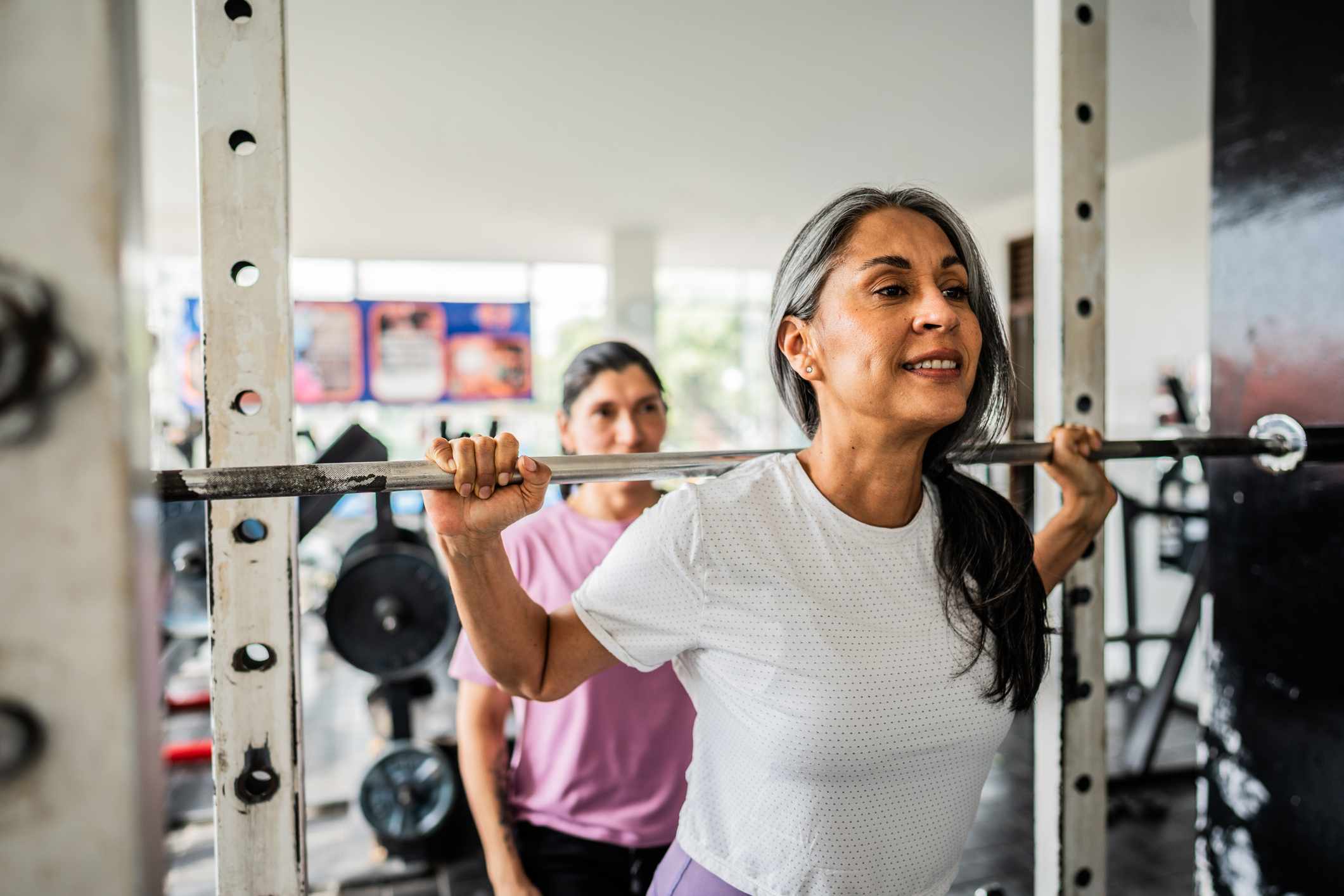
:max_bytes(150000):strip_icc():format(jpeg)/Health-GettyImages-2212443785-0bffdbdd46554ebc94b6d80facc29f02.jpg "A woman lifting a barbell in a gym with another person assisting")
Credit: Frazao Studio Latino / Getty Images
• Bone density naturally begins to decline with age, especially after you turn 60 years old.
• Certain exercises can help slow bone loss and stimulate bone growth.
• Weight-bearing, resistance, and balance exercises offer the greatest benefits.
As you age, maintaining strong bones becomes just as important as maintaining your overall health. Research shows that a combination of weight-bearing activity, resistance training, and balance work can help slow bone loss, support bone remodeling, and reduce overall fall and fracture risk. The key is choosing the right movements that safely place healthy stress on your muscles while also supporting confidence and function in your everyday life.
1. Squats
Squats are an effective lower-body exercise for bone health. The movement places healthy stress on your hips, knees, and spine, all areas that are most commonly affected by bone loss.
To perform a squat:
- Start standing with your feet hip-width apart, holding onto a countertop or sturdy chair for support if needed
- Keeping your chest lifted, bend your knees and lower your hips down as if you were sitting into a chair
- Press through your heels to stand up
Perform three sets of 10 repetitions, or work your way up to this amount, taking rests as needed.
2. Heel Raise
Heel raises can help support bone strength in both your legs and spine.
To perform heel raises:
- Stand tall, holding onto a countertop or sturdy chair for support
- Rise onto your toes
- Drop your heels to the floor with control
Perform three sets of 10 repetitions, or work your way up to this amount, taking rests as needed.
3. Step-Ups
Step-ups are a great exercise because they are extremely functional and mimic everyday movements, like climbing up and down stairs. They also strengthen your hips, thighs, and even your core. Performing step-ups can improve balance and reduce your risk of falls and fractures as you age.
To perform step-ups:
- Use a low, stable step or a stair
- Step up with one foot, followed by the other
- Step back down slowly
Alternate sides for balance, performing three sets of 10 repetitions. Take rests as needed.
4. Resisted Rows
Resisted rows strengthen the muscles that support good posture and spinal health. This can help reduce the rounded posture, or “forward head posture,” sometimes associated with osteoporosis. This exercise is great for strengthening your upper back, shoulder, and arm muscles.
To perform resisted rows:
- Start sitting or standing tall
- Hold a resistance band with both hands, or two dumbbells that are a comfortable yet challenging weight
- Pull your elbows backward while squeezing your shoulder blades to bring them close together
- Return your arms to the starting position, slow and with control
Perform three sets of 10 repetitions, or work your way up to this amount, taking rests as needed.
5. Standing Lateral Leg Raises
Balance becomes increasingly important as you age to lower your risk of falls, which is a leading cause of fractures. Standing leg raises can help strengthen your hips while also challenging your balance.
To perform standing leg raises:
- Hold onto a countertop or sturdy chair for support
- Keeping your torso upright, lift one leg out to the side
- Slowly lower it back down to the starting position
Repeat on both sides for three sets of 10 repetitions, or for as many repetitions as feel comfortable to you.
6. Wall Push-Ups
Upper body strength is important for bone health, especially in your wrists, arms, and shoulders. Performing a modified push-up on a wall, countertop, or other sturdy surface can safely challenge and load these areas.
To perform a wall push-up:
- Place your hands on a wall or countertop
- Keeping your hands on the surface, take a few steps back
- Bend your elbows and lower your chest towards the surface
- Push back up to the starting position
Perform three sets of 10 repetitions, or work your way up to this amount, taking rests as needed.
How To Build a Bone-Healthy Exercise Routine
For a well-rounded bone-healthy routine, combine weight-bearing movements, strength training, and balance exercises throughout the week. Keeping your activity varied can help prevent injury and ensure you're working different body parts.
Aim for:
- Strength training two to three times per week
- Daily balance practice
- Regular walking or weight-bearing activity
- Rest days for recovery
If you’ve been diagnosed with osteoporosis or have a history of falls or fractures, working with a skilled physical therapist or healthcare provider can help you choose exercises that are both safe and effective for your level of function.