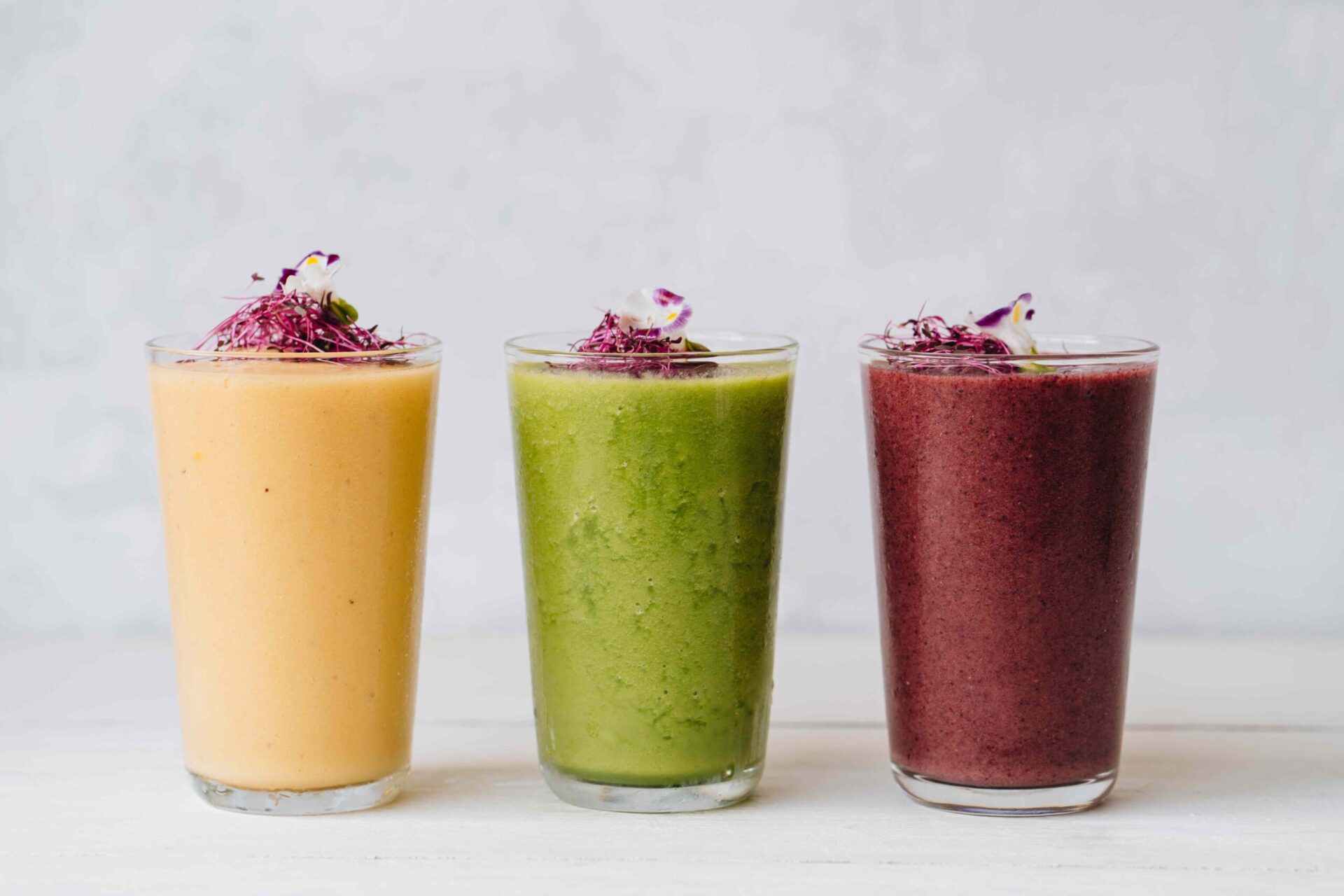
7 Easy-To-Make Smoothies That Are Both Nutritious and Filling


Frozen produce, dairy, protein powder, and other ingredients can make simple but filling smoothies.Credit: Natalie_magic / Getty Images
Frozen produce, dairy, protein powder, and other ingredients can make simple but filling smoothies.
Credit: Natalie_magic / Getty Images
  • Smoothies offer a simple way to combine multiple healthy ingredients for a quick, on-the-go meal or snack.
  • To make smoothies filling, prioritize protein from dairy and protein powder, fiber from grains or produce, and healthy fats from nuts, seeds, or avocados.
  • Other ingredients like berries, spices, and chia seeds provide an extra boost of antioxidants, vitamins, and minerals.

Smoothies are one of the easiest ways to throw together a nutrient-packed breakfast or snack when you’re short on time. But a quick, simple smoothie should contain more than just fruit and juice if you want to feel full. Here are seven easy-to-make smoothies that are packed with filling, healthy protein, fiber, and fats.

1.  Berry Greek Yogurt Smoothie

Credit: Sol de Zuasnabar Brebbia / Getty Images

This nutrient-dense smoothie contains:

  • Frozen berries: These fruits are rich in antioxidants called anthocyanins, which are responsible for berries' deep blue, purple, and red colors. Antioxidants help neutralize unstable molecules called free radicals, which otherwise contribute to inflammation and damage cells. Research suggests anthocyanin-rich berries may support heart health, brain health, and blood sugar balance.
  • Greek yogurt: A standard serving of plain, nonfat Greek yogurt adds over 17 grams of protein to your smoothie, which helps support fullness.

Other ingredients to add: Throw in a handful of spinach for extra folate and vitamin K to support healthy cell division and strong bones. You can also add chia seeds to your smoothie—which are high in fiber and omega-3 fatty acids—for better heart health, cholesterol levels, and digestion.

How to make it: Add ice, one-half cup frozen mixed berries, half of a frozen banana, a handful of spinach, 1 tablespoon of chia seeds, 1 cup of milk, and three-fourths cup plain, nonfat Greek yogurt. Blend until smooth.

2.  Peanut Butter Cinnamon Oat Smoothie

Credit: nata_vkusidey / Getty Images

This smoothie tastes like peanut butter overnight oats blended into a creamy shake. It contains:

  • Peanut butter: Rich in healthy fats and protein, peanut butter helps make your smoothie more filling.
  • Banana: A classic smoothie addition, bananas provide potassium, which helps support healthy blood pressure.
  • Oats: This whole grain contains beta-glucan, a type of soluble fiber linked to healthy cholesterol levels, gut health, and better blood sugar balance.
  • Cinnamon: A sprinkle of cinnamon adds sweetness without added sugar. Studies suggest that cinnamon may also help support more stable blood sugar in people with obesity and prediabetes.

Other ingredients to add: Unflavored or vanilla protein powder can increase protein content and make your peanut butter cinnamon oat smoothie even more filling.

How to make it: Combine half of a frozen banana, one-half cup rolled oats, 1 tablespoon peanut butter, 1 cup of milk, a scoop protein powder (optional), ice, and cinnamon to taste. Blend until smooth and creamy.

3. Green Avocado Smoothie

Credit: iweta0077 / Getty Images

Green smoothies can leave you feeling hungry when they're primarily made from juiced produce. But this simple smoothie is more filling thanks to healthy fats and fiber from:

  • Avocados: Half of an avocado provides nearly 5 grams of fiber, which promotes fullness by slowing down your digestion. Plus, it has over 10 grams of unsaturated fats, which make your smoothie extra creamy and also help promote healthy cholesterol levels.
  • Leafy greens: Kale and spinach provide fiber, antioxidants, and vitamins A, C, and K.

Other ingredients to add: Flaxseeds are yet another source of fiber to add to your green smoothie, plus they contribute omega-3 fats which may help combat inflammation. You can also add some fruit—pineapple brightens the flavor so the greens don’t overpower your drink. If you plan to enjoy this smoothie as a full meal, consider adding protein powder.

How to make it: Blend ice, half of an avocado, 1 cup spinach and/or kale (stems removed), one-half cup frozen pineapple, 1 tablespoon flaxseeds, and 1 scoop unflavored protein powder (optional) until smooth.

4. Tropical Kefir Smoothie

Credit: Angelika Mostova / Getty Images

This fruity, tart smoothie includes:

  • Kefir: Made from fermented milk, kefir tastes like a tangy, drinkable yogurt. It has protein, healthy bacteria called probiotics, and other compounds that may support fullness, gut health, and immune function.  
  • Frozen mango: Along with a tropical sweetness, mango offers a decent amount of vitamin C, which supports immune and skin health.

Other ingredients to add: Three tablespoons of hemp seeds provide plenty of healthy fats, in addition to about 9.5 grams of plant-based protein to make your smoothie more filling. A frozen banana can offer a creamy consistency, plus potassium and vitamin B6 for healthy blood pressure and metabolism.

How to make it: Blend 1 cup unsweetened kefir, one-half cup frozen mango, half of a frozen banana, 2 tablespoons hemp seeds, and ice until smooth.

5. Chocolate Cherry and Cauliflower Smoothie

Credit: IriGri8 / Getty Images

If you’re craving something sweet, this smoothie can easily pass for dessert. It contains:

  • Cherries: Research suggests both sweet and tart cherries may help reduce inflammation, support exercise recovery, and promote better sleep.  
  • Cocoa powder: Cocoa powder adds rich chocolate flavor along with flavanols—these plant compounds may support brain health and improve cardiovascular disease risk factors, studies suggest.
  • Frozen cauliflower: The secret ingredient in this smoothie is frozen cauliflower, which adds a creamy texture without overpowering the flavor. Cauliflower contains an array of bioactive plant compounds with antioxidant and anti-inflammatory effects.

Other ingredients to add: Adding plain Greek yogurt or a scoop of protein powder makes this smoothie even more filling.

How to make it: Add ice, one-half cup frozen sweet cherries, 1 tablespoon unsweetened cocoa powder, one-half cup frozen cauliflower, and 1 cup milk. Finish with three-fourths cup Greek yogurt or 1 scoop protein powder if you choose, and blend until creamy.

6. Coffee Protein Smoothie

Credit: bhofack2 / Getty Images

If you're trying to avoid added sugar but you're craving a blended coffee treat, try a smoothie made with:

  • Coffee: This classic morning beverage is rich in antioxidants, and the caffeine may help improve alertness and focus.
  • Protein powder: In addition to keeping you full, protein powder helps you maintain stable blood sugar and energy levels. You can use vanilla for a lighter option, or chocolate for a mocha-like flavor.
  • Banana: This creates a creamy texture for your smoothie, along with essential nutrients like potassium and vitamin B6.

Other ingredients to add: It might taste a bit less like your normal morning coffee, but you can blend almond butter or peanut butter into your smoothie for more healthy fats and protein. You can also finish your smoothie with a dash of chia seeds on top for extra fiber and healthy fats.

How to make it: Blend 1 cup cold brew coffee, a scoop of vanilla protein powder, half of a frozen banana, and 1 tablespoon almond butter until smooth. Sprinkle with 1 tablespoon of chia seeds.

7. Strawberry Almond Smoothie

Credit: bingokid / Getty Images

This simple yet tasty smoothie offers sweetness and health benefits from:

  • Strawberries: Strawberries bring bright sweetness along with vitamin C and polyphenol antioxidants. These may help reduce inflammation and oxidative stress, a harmful phenomenon where the body has high levels of cell-damaging molecules.
  • Almond butter: Beyond its creamy texture, almond butter adds fiber, healthy fats, magnesium, and vitamin E to your smoothie. There's less research on almond butter, but studies suggest eating almonds regularly may support healthy cholesterol levels and overall heart health.

Other ingredients to add: In this simple smoothie, Greek yogurt or protein powder can be helpful for boosting the protein content. For more natural sweetness and fiber, consider adding dates.

How to make it: Blend ice, 1 cup frozen strawberries, 2 tablespoons almond butter, one-half cup plain Greek yogurt (or a scoop of vanilla protein powder), two pitted dates, and 1 cup of milk until creamy.



Source link

Leave a Reply

Subscribe to Our Newsletter

Get our latest articles delivered straight to your inbox. No spam, we promise.

Recent Reviews


What is CCBA

CCBA stands for Certificate of Capability in Business Analysis. It is a certification awarded by IIBA for mid-level business analysis professionals. It is one of the most reputable certifications all over the world. A person can qualify for the CCBA examination if they are able to contribute a minimum work experience of 3750 hours with the BABOK Guide. Another requirement is a minimum of 500 hours in four of the six knowledge areas or 900 hours in two of the six knowledge areas.

Become a CCBA Certified professional by learning this HKR CCBA Training !

What is CBAP

CBAP stands for Certified Business Analysis Professional. It is a certification awarded by IIBA for senior-level business analysis professionals. It is the best-recognized certification for business analysts. A person can apply for the CBAP examination if they have more experience than the requirement of CCBA. In addition to the BABOK guide, BA work experience of a minimum of 7500 hours is needed over the past ten years. The candidate must be capable of documenting 900 hours in four of the six knowledge areas.

CCBA Certification Training

  • Master Your Craft
  • Lifetime LMS & Faculty Access
  • 24/7 online expert support
  • Real-world & Project Based Learning

Difference between CCBA & CBAP certification

CCBA: 

Certification Body: IIBA
Aimed at: Mid-level Business Analysis Professionals
Curriculum: BABoK 3.0
Work Experience: At least 3,750 hours of BA work experience aligned to the BABOK guide during the past seven years.
Knowledge Area Expertise: At least 900 hours within each of 2 of the six knowledge areas or at least 500 hours within each of the 4 of the six knowledge areas.
Professional development Training Hours: At least 21 hours of Professional development training over the last four years.
Reference required: Two references from a customer, career manager or CBAP recipient.
Exam Mode: Online
Exam fees:
Application Fee: $125
Certification Fee: $325 for members
            $450 for non-members

Exam Duration: 3 hours
Questions Pattern: Scenario-based Multiple choice questions
No. of Questions: 130
Difficulty level: Medium
In order to answer the questions, the candidate must do some analysis.

Brand value: Medium
Focuses on:
Elicitation and Collaboration – 20%
Requirements Analysis and Design Definition – 32%
Strategy Analysis – 12%
Business Analysis Planning and Monitoring – 12%
Requirements Life Cycle Management – 18%
Solution Evaluation – 6%

CBAP:

Certification Body: IIBA
Aimed at: Senior-level Business Analysis Professionals
Curriculum: BABoK 3.0
Work Experience: At least 7500 hours of BA work experience aligned to the BABOK guide during the past ten years.
Knowledge Area Expertise: At least 900 hours within each of 4 of the six knowledge areas.
Professional development Training Hours: At least 35 hours of Professional development training over the last four years.
Reference required: Two references from a customer, career manager or CBAP recipient.
Exam Mode: Online
Exam fees:
Application Fee: $125
Certification Fee: $325 for members
                         $450 for non-members

Exam Duration: 3.5 hours
Questions Pattern: Multiple choice questions related to the case.
No. of Questions: 120
Difficulty level: High
In order to answer the questions, the candidate must perform a good analysis.

Brand value: High
Organizations recognize this certification in their framework of competence.

Focuses on:
Elicitation and Collaboration – 12%
Requirements Analysis and Design Definition – 30%
Strategy Analysis – 15%
Business Analysis Planning and Monitoring – 14%
Requirements Life Cycle Management – 15%
Solution Evaluation – 14%

HKR Trainings Logo

Subscribe to our YouTube channel to get new updates..!

Why do the Organizations hire CCBA or CBAP professionals

CCBA or CBAP professionals offer a number of benefits to the organization. 

  • CCBA and CBAP provide opportunities for staff to advance, grow their careers and gain recognition.
  • The candidate is recognized for their skills and knowledge. They ensure that suppliers, customers, staff, investors, and competitors comply with the industry standard.
  • They provide assurance to stakeholders that the company is operating effectively.
  • They use industry-based standardized Business Analytics techniques to achieve better outcomes which increase efficiency and consistency and are more reliable.
  • The calculation process will help to improve staff responsibility, commitments, and motivation.
  • The implementation and development of business analysis practices are conducted in accordance with the Business Analysis Body of Knowledge (BABOK) guidelines.
  • Customers and business partners receive recognition from professional business analysts.

How to choose between CCBA and CBAP

While CBAP and CCBA Certification are related to business analysis, there is a significant difference between the two.

Both exams have a different focus. The CBAP exam consists of situation-based questions which ask the candidate to apply the knowledge they have acquired from BABOK. At the same time, the CCBA exam contains mostly factual and knowledge questions about techniques and tasks in BABOK. But CBAP study material can be used for preparing for the CCBA exam. If your experience matches with the CBAP, then proceeding with CBAP is the better choice than CCBA. If you cannot acquire the same experience as the CBAP, consider CCBA as a temporary certification that you can still be successful in leveraging your skills and broadening your experience in business analysis and Work towards CABP eligibility prior to the recertification period.

The CBAP is more challenging to attain than the CCBA; consequently, CBAP is more prestigious.

Preparation for the examination – CCBA vs CBAP

CCBA

One can attend the CCBA exam in the comfort of their home. Further, the preparation format for the CCBA exam requires covering the following topics thoroughly.:-

  • BABOK V-3 Overview
  • BA Process & Techniques
  • Collaboration & Elicitation
  • Strategy Analysis
  • Requirement Analysis & Design Definition
  • Estimation of solutions
  • Business Analysis – Monitoring & Planning.
  • Life Cycle Management needs
    So, after covering all these topics thoroughly, you will finally be ready to attempt the exam. While preparing for the CCBA exam, you need to remember some key points.
    1. Must have a good grasp of the BABOK guide version 3. Also, the aspirant should complete the Certification training well.
    2. To check the knowledge gaps, you must regularly attempt the mock tests and check the dashboard report.

CBAP

Like CCBA, you can attend the CBAP exam from anywhere and anytime, as it is an online exam. The exam duration is about 3.5 hours and includes 120 MCQ questions. Further, the preparation format for the CBAP exam also requires you to cover similar topics as we see in CCBA. The topics are similar, but the coverage ratio for the CBAP exam is different compared to the CCBA exam.
A survey says that an applicant must prepare atleast 90 to 120 hours for CCBA vs CBAP exam. Further, it would be better if an applicant gives 3 to 6 months to prepare for this exam. It would be sufficient time for better preparation. Moreover, taking mock tests with regular practice can give more confidence to clear the final exam.

Benefits of Getting The Certification

CCBA

CCBA Certification gives immense benefits as a Business Analyst, showcasing your BA skills and abilities. You can avail lots of help after getting certified in CCBA.

  • It will give more opportunities as CCBA is a globally recognized certification.
  • You can effectively and actively implement various Business Analysis skills.
  • It will present your BA skills and specific industry standards for which global employers search.
  • The intensive learning and preparation will give an extensive knowledge base. The various concepts will expand your knowledge and help businesses make the right decisions.
  • These credentials will give you more confidence to work in a BA profile and help your career graph to grow.
  • You can get a higher salary package or can see a hike in your existing pay with this Certification. Also, there are many chances to get promoted to the next level in a career.
  • Further, you will enjoy the vast skill-set with in-depth knowledge.
  • Also, the entity will get into a leading position with your efforts and skill base. Therefore, the business will bring more projects to work.

CBAP

CBAP credentials also offer many benefits as a Certified Business Analysis Professional, which showcases your BA skills. You can expect a lot of benefits after getting this certificate.

  • This Certification will fill confidence within you by giving a higher weightage in your workplace.
  • A practising BA can take advantage of the CBAP credentials.
  • With the CBAP credentials, you can get more recognition, proficiency, ability, and skills.
  • You will be able to implement effective business strategies.
  • Further, this certificate will commit to the BA profession to work more effectively.
  • Moreover, CBAP is the most prestigious Certification everyone wishes to pursue to become an expert Business Analyst.
  • This Certification will further add more weight to your career growth.
  • Thus, in the CCBA vs CBAP certifications, many aspirants prefer CBAP as the best career-oriented skill. It is the most recognized credential that every BA professional expects to get.

[ Related Article: certified business analysis professional ]

CCBA Certification Training

Weekday / Weekend Batches

Conclusion

As business analysis is an essential element of any organization determining business needs, a professional business analyst is a must. Because of this, there is a high demand for highly qualified and expert analysts. Appearing for examinations like CCBA, CBAP makes it easy to prove your skills and enhance your profile to be selected from a reputable company. Based on the knowledge acquired during the certification course, the candidate could shape their future and lead the organization to heights. So choose a certification that’s right for you.


Source link