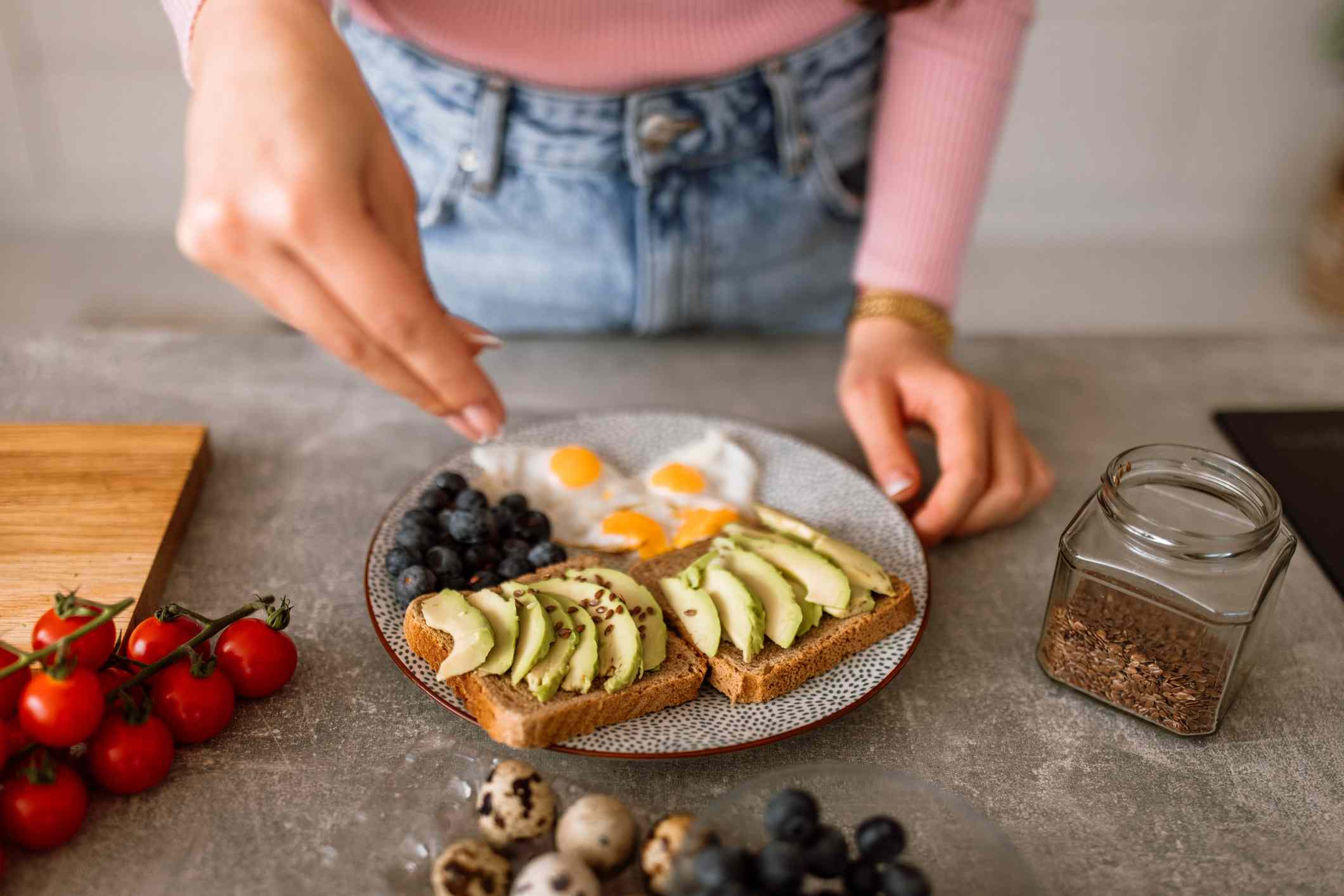
:max_bytes(150000):strip_icc():format(jpeg)/Health-GettyImages-2205929868-eced0cd4c8084537b5b5f1eb55c19eaf.jpg "A person garnishing an avocado toast with grapes and fried eggs on a plate on a countertop")
Credit: J_art / Getty Images
- You do not need expensive powders or bars to add protein at breakfast.
- Eggs, Greek yogurt, cottage cheese, beans, tofu, milk, and nut butter are budget-friendly protein options.
- Aim for about 20 grams of protein at breakfast when possible.
Protein can help make breakfast more filling and satisfying, but high-protein foods can get expensive. However, you don't need pricey powders, bars, or specialty foods to get more protein in the morning.
Budget-friendly staples like eggs, Greek yogurt, cottage cheese, beans, peanut butter, and milk can help you add protein without spending a lot.
1. Add Eggs and Egg Whites
Eggs are one of the easiest and most affordable ways to add protein to breakfast. One large egg has about 6 grams of protein.
Try scrambling eggs with leftover vegetables, boiling a few ahead of time, or adding an egg to toast, breakfast tacos, or a breakfast bowl.
Stir liquid egg whites into oatmeal while it cooks for extra protein without much flavor change. A half-cup adds about 13 grams of protein. You can also mix whole eggs with egg whites in scrambles, omelets, or casseroles.
2. Use Greek Yogurt
Greek yogurt is higher in protein than regular yogurt. An 8-ounce serving of plain nonfat Greek yogurt provides about 24 grams of protein.
For a sweet breakfast, use Greek yogurt as the base for a bowl with fruit, oats, nuts, seeds, or peanut butter. You can also blend it into smoothies or stir it into overnight oats.
For a savory option, use plain Greek yogurt in place of sour cream in a breakfast burrito, taco, or egg bowl.
To cut costs, buy a large tub instead of single-serve cups.
3. Try Cottage Cheese
Cottage cheese is another high-protein breakfast option that requires little prep. One half-cup serving of low-fat (1-2% milk fat) cottage cheese has about 12 grams of protein.
Top it with fruit for a sweet breakfast, or add tomatoes, pepper, and whole-grain toast for a savory alternative. You can also blend cottage cheese into pancake batter or scrambled eggs, or spread it on toast.
Like yogurt, cottage cheese is often cheaper when bought in larger containers.
4. Stir Nut Butter Into Oatmeal
A half cup of dry oats provides fiber and some protein, and you can boost it even more with peanut butter. Two tablespoons of peanut butter provide about 7.6 grams of protein.
Try oatmeal with peanut butter, banana, and cinnamon. You can also add milk, soy milk, Greek yogurt, or chia seeds for even more protein.
5. Use Milk or Soy Milk Instead of Water
Use milk or soy milk instead of water when making oatmeal, smoothies, or pancake batter. One cup of low-fat milk has about 8 grams of protein, while one cup of soy milk has about 7 grams.
6. Add Beans to Breakfast
Beans are inexpensive and easy to use in savory breakfasts. One cup of pinto beans offers about 16 grams of plant-based protein, plus fiber for staying power.
Try black beans or pinto beans in breakfast tacos, egg scrambles, or a simple bowl with eggs, salsa, and leftover rice or potatoes. You can also mash beans onto toast and top with an egg.
Dry beans are usually the cheapest option, especially if you cook them in bulk and use them throughout the week. Canned beans are still budget-friendly and much faster to prepare. Rinse canned beans to reduce sodium.
7. Try Tofu
Tofu is often less expensive than many meats and can stretch across several breakfasts. Firm tofu is highest in protein, providing about 21 grams per half cup.
Crumble tofu into a scramble with garlic powder, onion powder, turmeric, pepper, and any vegetables you have on hand. Serve it with toast, potatoes, beans, or tortillas.
8. Make a Breakfast Casserole
A breakfast casserole is an easy way to make several high-protein breakfasts at once. Start with eggs, cottage cheese, beans, tofu, or leftover meat, then add filling ingredients like potatoes, frozen vegetables, spinach, peppers, or onions.
Bake it once, then reheat portions during the week for a budget-friendly, high-protein breakfast.
Tips for Building a High-Protein Breakfast on a Budget
When building a high-protein breakfast, aim for about 20 grams of protein. These tips can help keep costs down:
- Buy store-brand staples like eggs, oats, yogurt, and beans
- Choose frozen fruits and vegetables when fresh options are out of season
- Buy larger containers when it costs less per serving
- Cook protein foods in bulk, like eggs, beans, or casseroles
- Keep simple staples on hand, like peanut butter, milk, or tofu






:max_bytes(150000):strip_icc():format(jpeg)/Health-Anchovies-vs-Sardines-abf78393ed254f7fb6103ad3b603bfd0.png "Comparison between canned anchovies and sardines, side by side.")