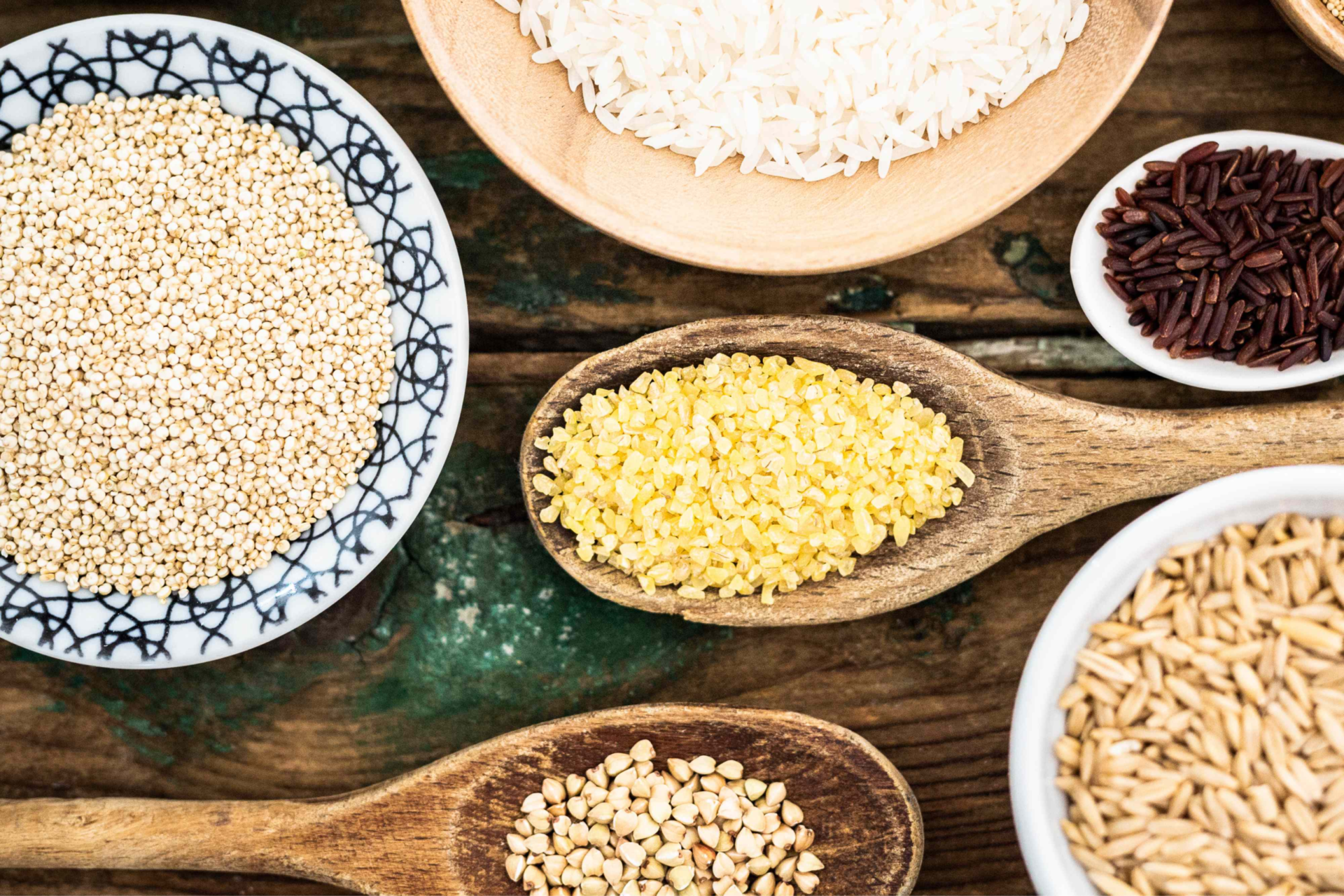
:max_bytes(150000):strip_icc():format(jpeg)/Health-GettyImages-1150291374-e4ef7d70a80d4f06bff72a264b431cd1.png "Various grains displayed on wooden spoons and bowls including quinoa and bulgur.")
Credit: Westend61 / Getty Images
- Barley, oats, farro, and other whole grains contain nutrients and plant compounds that support healthy cholesterol levels.
- Specifically, the fiber found in these grains can bind to cholesterol molecules and help remove them from the body.
- Cooking with a variety of whole grains adds both flavor and health benefits to your diet.
Whole grains are processed in a way that leaves more of the original grain intact, boosting nutrient content. The added fiber and plant compounds found in these whole grains may help lower total cholesterol and "bad" low-density lipoprotein (LDL) cholesterol levels.
1. Oats

- Fiber: 4.16 grams (g)
- Serving size: One-half cup (40 g) of rolled old-fashioned oats, uncooked
Oats are one of the most well-known grains for cholesterol management. They contain beta-glucans, a type of soluble fiber that helps reduce "bad" LDL cholesterol by binding to cholesterol molecules in the digestive tract and removing them from the body.
In a recent study, researchers asked participants with metabolic syndrome—a cluster of conditions including obesity, high blood pressure, high blood sugar, and high cholesterol—to consume an oat-rich diet for two days. After, participants experienced a 10% reduction in their LDL cholesterol levels on average.
2. Barley

- Fiber: 15.6 g
- Serving size: One-half cup (100 g) of pearled barley, uncooked
Barley is one of the best whole grain sources of beta-glucans, a type of soluble fiber. Beta-glucans help lower cholesterol, plus some research suggests they may support heart health by promoting beneficial changes in the gut microbiome (the collection of organisms living in the digestive tract).
Additionally, barley provides antioxidant plant compounds, as well as minerals like magnesium, which may help reduce cell damage and support cardiovascular health.
It's important to note, however, that studies investigating barley's effect on cholesterol levels in the real world have shown mixed results.
3. Quinoa

- Fiber: 5.95 g
- Serving size: One-half cup (85 g) of quinoa, uncooked
Though it's technically a seed, quinoa is eaten and prepared like a whole grain. Nutritionally, it's rich in fiber, plant protein, and a host of antioxidants that can help support heart health overall.
Among adults in the U.S., regular consumption of quinoa has been associated with lower total cholesterol levels, as well as lower triglyceride (blood fat) concentrations. Quinoa has also been linked to healthier blood sugar levels and reductions in body mass index (BMI), which may further support heart health.
4. Bulgur

- Fiber: 8.75 g
- Serving size: One-half cup (70 g) of bulgur, uncooked
Bulgur is a whole grain made from wheat. But unlike other wheat-based products like bread or pasta, bulgur is very minimally processed and still retains the wheat bran layer, boosting nutrient density.
High-fiber foods like bulgur can help support healthy cholesterol levels. And research shows that diets rich in whole grains are associated with lower LDL cholesterol and reduced heart disease risk.
5. Farro

- Fiber: 3.28 g
- Serving size: One-fourth cup (45 g) of pearled farro, uncooked
Farro is an ancient wheat grain, with a nutty flavor and chewy texture.
The pearled variety of farro provides fiber, nearly 6 grams of plant protein, and magnesium. Healthy magnesium levels are associated with improved cholesterol levels, as well as blood sugar control and a lower risk of cardiovascular disease.
6. Buckwheat

- Fiber: 3.12 g
- Serving size: One-fourth cup (30 g) of buckwheat flour
Despite its name, buckwheat is not related to wheat and is naturally gluten-free. It's a "pseudocereal grain" (similar to quinoa), but in the U.S., buckwheat is more commonly consumed as a flour.
Buckwheat flour is a good source of fiber, but it also contains beneficial plant compounds such as rutin, an antioxidant linked to improved blood vessel function and a reduction in plaque buildup in the arteries.
In one clinical trial, adults who replaced typical grain foods with buckwheat products experienced reductions in total cholesterol and LDL cholesterol, along with improvements in other heart health markers.
7. Millet

- Fiber: 8.5 g
- Serving size: One-half cup (100 g) of millet, uncooked
Millet is a small, gluten-free ancient grain. There are five main varieties—sorghum, finger millet, pearl millet, foxtail millet, and proso millet. This whole grain is a good source of fiber, antioxidants, B vitamins, iron, and magnesium, all of which can support heart health.
In a review of studies, researchers concluded that eating millet-based foods for several weeks can lower total cholesterol and LDL cholesterol, as well as slightly increase high-density (HDL), or "good," cholesterol.
8. Amaranth

- Fiber: 6.45 g
- Serving size: One-half cup (96.5 g) of amaranth, uncooked
Like quinoa and buckwheat, amaranth is a "pseudocereal" that is prepared and cooked like other whole grains. Amaranth provides a significant dose of fiber, helping support healthy cholesterol. Plus, amaranth is a great source of iron, antioxidants, and magnesium, which are crucial for heart health.
Studies not done in humans have shown that amaranth or amaranth-derived products can lower cholesterol levels, but more research is needed.
How To Start Eating More Whole Grains
With the exception of oats, cholesterol-lowering whole grains aren't a staple in many Americans' diets. However, there are a few simple ways to boost your consumption of these grains:
- Start with breakfast: Choose oatmeal, quinoa porridge, or make a savory grain-based breakfast bowl with eggs to add heart-healthy fiber early in the day.
- Add grains to salads: Toss cooked farro, barley, or quinoa into salads to make meals more filling.
- Get creative: Use whole grains like millet, farro, or bulgur as a base in your grain bowl or as a side dish, rather than using refined grains like white rice.