Iran war enters week 6 as search continues for crew


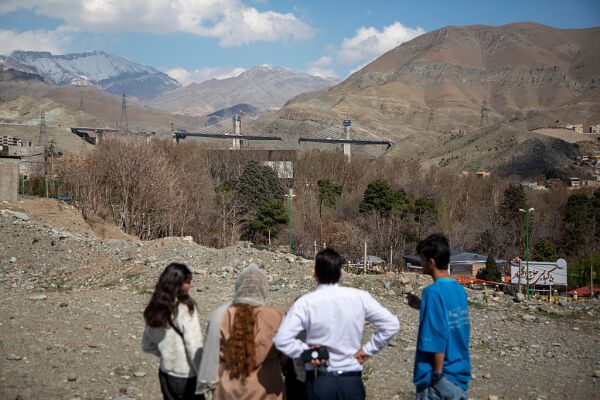
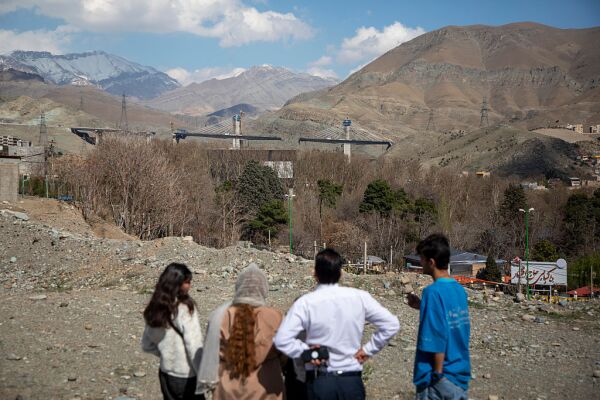
People view the damaged B1 bridge, a day after it was destroyed by an airstrike, on April 3, 2026 west of Tehran in Karaj, Iran.
People view the damaged B1 bridge, a day after it was destroyed by an airstrike, on Friday west of Tehran in Karaj, Iran.
Majid Saeedi | Getty Images Europe

The war in Iran entered its 6th week on Saturday, as the search continues for the missing U.S. service member who bailed out of a U.S. F15-E fighter jet, shot down by Iranian fire on Friday.

A second U.S. Air Force combat plane was shot down near the Strait of Hormuz on Friday, according to a U.S. official, capping off another week of intensified fighting in the U.S.-Israeli war with Iran.

Meanwhile, on Saturday, U.S. and Israeli warplanes continued to pound Iran hitting several targets, including Mahshahr Special Petrochemical Zone, a major oil industry hub in southwestern Iran, according to Iranian media.

An airstrike near Iran's Bushehr nuclear facility was reported by the Atomic Energy Organization of Iran. In a X post, the organization said a security guard was killed in the attack, which also damaged a support building.

The Israeli military said it had also conducted overnight airstrikes in Tehran, targeting ballistic and anti-aircraft missile storage facilities.

And in Dubai, authorities said that falling debris from intercepted drones damaged the facade of two buildings, including one belonging to U.S. tech firm Oracle. Iran also hit a water desalination plant and an oil refinery in Kuwait.

This, as dozens of countries — not including the U.S. or Israel — have launched efforts to reopen the Strait of Hormuz, a strategic waterway through which 20% of the world's oil supply passes, and that has been largely blocked by Iran in retaliation for U.S. and Israeli strikes. President Trump said Friday it would take "a little more time" but would be easy to open the strait.

As the 5th week of fighting in Iran came to an end, 365 U.S. service members have been wounded, according to Pentagon data. The death toll remains at 13 service members killed in combat.

In Iran, at least 2,076 people have been killed by US-Israeli attacks since Feb. 28, according to the country's Health Ministry.


The interior of a residential building that was damaged by recent strikes at Vahdat town on April 3, 2026 in Karaj, southwest of Tehran, Iran.
The interior of a residential building that was damaged by recent strikes at Vahdat town on Friday in Karaj, southwest of Tehran, Iran.
Majid Saeedi | Getty Images Europe

Here's more news from the war on Iran on Saturday:

Downed jets | Lebanon | Oracle building


Downed jets call U.S. air dominance into question

An American fighter jet went down in Iran and one crew member has been rescued on Friday, according to a U.S. official who was not authorized to speak publicly. The official said that a search is underway by U.S. forces to find the second crew member.

Photos posted to Telegram by Iran's Fars news agency showed debris from what appeared to be an American aircraft. One piece of debris in the photos closely resembles the vertical stabilizer of an F-15 Strike Eagle. A separate photo posted by an IRGC-affiliated channel appeared to show an empty F-15 ejection seat. The F-15 is a tactical fighter that typically carries a crew of two, according to the Air Force.

USAF military ground personnel prepare Joint Direct Attack Munitions (JDAM) for a US Air Force (USAF) B-1 Lancer bomber jet on the tarmac the tarmac at RAF Fairford in south-west England on March 14, 2026.
Henry Nicholls | AFP via Getty Images

Numerous videos have also appeared showing planes and helicopters that closely resemble American search and rescue (SAR) aircraft flying in southwestern Iran. NPR was able to geolocate one of the videos to a bridge in the province of Khuzestan. The bridge is located in a mountainous area approximately 100 miles inland.

Separately on Friday, a U.S. official told NPR a second combat plane with only one crew member was shot down near the Strait of Hormuz. That crew member has been rescued.

The two events are rare and follow assertions by U.S. officials that the U.S. military had achieved "total air dominance" in the war in Iran.


Israel's invasion of Lebanon continues

Lebanon's government says at least 23 people were killed in Israeli attacks Friday, as Israel steps up airstrikes against Iran-backed Hezbollah militants.

On Friday, Israel's Defense Minister Israel Katz said that the approximately 600,000 residents who have been forced out of southern Lebanon will not be allowed to return until security is guaranteed for Israel's northern residents. Katz did not elaborate on how Israel will determine that. Throughout Lebanon more than one million people have been displaced.

A displaced boy stands on the back of a car at an unofficial camp erected along Beirut's seafront area during a sandstorm on April 3, 2026.
A displaced boy stands on the back of a car at an unofficial camp erected along Beirut's seafront area during a sandstorm on Friday.
Dimitar Dilkoff | AFP via Getty Images

Katz also reiterated threats against Hezbollah militants fighting Israel in Lebanon, saying Israel will act forcefully against rocket fire and that Hezbollah will "pay a heavy price." Israeli officials have outlined plans to occupy a large swath of southern Lebanon as a so-called "security zone." Israeli ground troops have razed residential buildings while airstrikes have hit multiple bridges severing vital routes between southern Lebanon and the north.

Meanwhile, while the U.S. and Israel attack Iran, and Iran retaliates against U.S. allies in the Gulf, Lebanon has not been hit by Iranian fire. But the U.S. Embassy in Beirut says Iran may now target U.S. universities in Lebanon. The American University of Beirut has shifted some classes online. The Embassy also upped its overall warning, telling U.S. citizens to leave Lebanon now.


Oracle building in Dubai targeted

The city skyline is pictued in Dubai on March 11, 2026.
The city skyline is pictured in Dubai on March 11.
Giuseppe Cacace | AFAFP via Getty Images

Iran targeted Oracle's multistory office building in Dubai overnight. Authorities say debris fell on the facade of the building. The apparent overnight drone attack occurred when offices would normally be empty of personnel, and no injuries were reported.

Iran says the attack is in response to the attempted assassination this week of former foreign minister, Kamal Kharazi, who was severely wounded, while his wife was killed. Iranian media reported he had been in communication with Pakistani mediators, on possible U.S.-Iran talks to end the war. The U.S. and Israel have been coordinating most attacks on Iran, and it's unknown which carried out the attack on Kharazi.

Iran's Revolutionary Guard named 18 U.S. tech and defense companies as targets of further assassination attempts. The list includes Palantir, META, Google, Microsoft and others.


People look at the damage at a factory that got hit by a missile in Petah Tikva, east of Tel Aviv, on April 3, 2026.
People look at the damage at a factory that got hit by a missile in Petah Tikva, east of Tel Aviv, on Friday.
Ilia Yefimovich | AFP via Getty Images

Aya Batrawy contributed to this report from Dubai, Lauren Frayer from Beirut, Tom Bowman from Washington, D.C., and Miguel Macias from Seville, Spain.

Copyright 2026, NPR


Source link

Leave a Reply

Subscribe to Our Newsletter

Get our latest articles delivered straight to your inbox. No spam, we promise.

Recent Reviews


Coffee and energy drinks are popular sources of caffeine, but may have different health effects.Credit: Health / Getty Images
Coffee and energy drinks are popular sources of caffeine, but may have different health effects.
Credit: Health / Getty Images
  • Both coffee and energy drinks can vary in caffeine content.
  • Moderate caffeine consumption is recommended for reducing the risk to your heart.
  • Energy drinks have been shown to cause heart problems, but more research is needed.

Coffee and energy drinks are popular options for a quick energy boost. Both caffeinated beverages can support physical endurance, alertness, and reaction time. However, they can also increase heart rate, reduce steadiness, and increase your added sugar intake.

Which One Will Give You More Energy?

Coffee and energy drinks can both range in caffeine content, which can affect their impact on energy levels. Coffee drinks vary in caffeine based on the brew method and bean type, but on average, a cup (8 ounces) of coffee contains about 113-247 milligrams of caffeine.

Standard 16-ounce energy drinks can contain anywhere from 70 to 240 milligrams of caffeine. Concentrated 2-2.5 ounce energy shots pack about 113-200 milligrams of caffeine in a much smaller volume.

It's important to be aware of how much caffeine you’re consuming and check nutrition labels. However, energy drink manufacturers aren’t required to disclose the caffeine content.

Which Has a Greater Impact on Heart Health?

Research shows consuming high levels of caffeine can raise your blood pressure and heart rate, as well as affect your heart’s rhythm. This risk is especially high for children since their cardiovascular and nervous systems aren’t fully developed.

Coffee's effect on heart health is more widely researched than that of energy drinks. Evidence suggests that moderate coffee drinking can support heart health, while heavy consumption increases heart disease risk. How you prepare your coffee also affects the way it impacts your heart. Boiled coffee, like the kind you can make with a French press, can increase your cholesterol levels. High amounts of caffeine can also have negative effects on the heart, so many people with existing heart conditions choose decaf coffee out of caution.

Some case studies show that energy drink consumption can harm heart health, even in young people, but more research is needed to understand the mechanisms behind this. Some of the more severe cases include sudden death from drinking an energy drink.

What Other Ingredients, Besides Caffeine, Can Affect My Health? 

Coffee and energy drinks aren’t just pure caffeine. It’s important to consider their other ingredients when thinking about how they can impact your health. Early research suggests some of the cardiovascular effects of coffee and energy drinks may be more related to other ingredients than caffeine.

For example, energy drinks can contain a range of other ingredients, such as guarana (which contains additional caffeine), sugar, B vitamins, and other energy-boosting compounds. Both coffee drinks and energy drinks can contain high amounts of added sugar. Energy drinks can also interact with alcohol and prescription or illicit drugs, causing negative health effects.

Risks of Having Too Much Caffeine

Whether you choose coffee, an energy drink, or another caffeinated drink for your energy boost, it’s important to watch how much caffeine you’re consuming per day. Adults without underlying health conditions should limit their total caffeine intake per day to 400 milligrams. People who are pregnant or breastfeeding should stick to half of that limit, or about 200 milligrams. You can always check with your healthcare provider about your individual health status and their recommendations for your caffeine levels.

If you consume too much caffeine, you may notice:

  • A faster heart rate or a racing heart
  • High blood pressure
  • Trouble sleeping
  • Anxiety or jitters
  • Nausea or an upset stomach
  • Headache

If you’re choosing an energy drink, research suggests having only one drink at a time, with a max of two per day, for safer outcomes.


Source link