Right now, the latest Atmos Rewards credit card welcome offers are among the strongest we’ve seen, with bonuses ranging from 80,000 to 100,000 points (along with valuable companion fares).
That’s a sizable stash of points, but what does it actually translate to in real travel?
Depending on how you redeem, a single welcome bonus could realistically cover anywhere from five larger trips or 10 or more shorter flights.
Here’s how that breaks down — and how to stretch those points as far as possible.
Current Atmos credit card welcome offers overview
Currently, Atmos is offering elevated welcome bonuses across a few cards that can significantly boost their value.
- Atmos™ Rewards Ascent Visa Signature® credit card: New cardholders can earn 80,000 bonus points and a $99 Companion Fare (plus taxes and fees from $23) after spending $4,000 on purchases within the first 120 days from account opening. Plus, receive a 50% flight discount code for a qualifying future flight after opening an account.
- Atmos™ Rewards Summit Visa Infinite® credit card: New cardholders can earn 100,000 bonus points and a 25,000-point Global Companion Award after spending $6,500 on purchases in the first 90 days from account opening. Plus, receive a 50% flight discount code for a qualifying future flight after opening an account.
- Atmos™ Rewards Visa Signature® Business Card: New cardholders can earn 80,000 bonus points and a $99 Companion Fare (plus taxes and fees from $23) after spending $5,000 on purchases in the first 90 days from account opening.
While each card comes with different perks that provide ongoing value, the real value of the welcome offer comes down to how far those points can take you.
Related: Atmos Rewards Ascent card vs. Atmos Rewards Summit card
Example redemptions: Short domestic flights starting at 5,000 points
Atmos Rewards uses dynamic pricing, meaning award rates vary based on route, timing and demand. Still, there are some consistent ranges to keep in mind:

Reward your inbox with the TPG Daily newsletter
Join over 700,000 readers for breaking news, in-depth guides and exclusive deals from TPG’s experts
- Short domestic flights can start around 5,000 points one-way
- Cross-country routes often fall in the 10,000 to 20,000-point range
- Flights to Hawaii often cost 15,000 to 30,000 points one-way
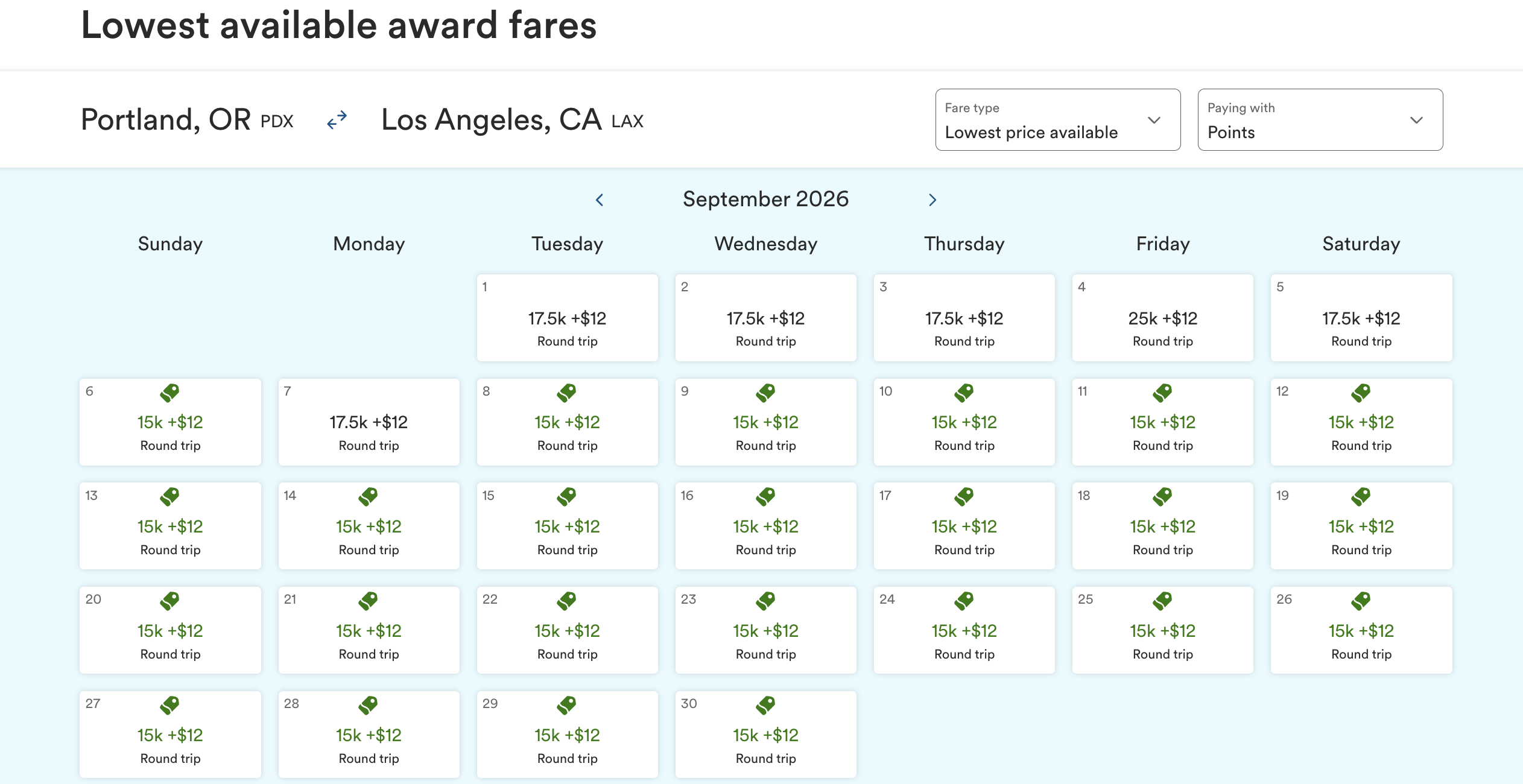
For example, at the time of writing, flights from Portland International Airport (PDX) to Los Angeles International Airport (LAX) in September (shown below) average 15,000 points (plus $12 in taxes and fees).
Meanwhile, flights from PDX to Denver International Airport (DEN) during the same time start at 27,500 points (plus $12 in taxes and fees).
If your goal is to stretch your welcome bonus as far as possible, shorter domestic routes offer some of the best value.
At the very lowest redemption levels, it’s possible to stretch a welcome bonus quite far — potentially up to 16 one-way flights with 80,000 points, or 20 with 100,000.
In practice, though, most travelers will land somewhere in the middle.
Even at more typical redemption rates, it’s still realistic to get around five to 10 round-trip flights out of a single bonus, which is enough to cover a full year of weekend trips.
I’d personally use one of these bonuses to cover multiple domestic flights to visit family across the U.S., or put it toward a round-trip economy flight abroad. The beauty of a large welcome offer is that once you earn it, you’ve got a solid stash of points ready to use, and how you redeem them is entirely up to you.
But if a premium flight experience is what you’re after, there are also plenty of great options for your points.
Related: How to book American Airlines flights with Atmos Rewards points
Example redemptions: Premium flights to Europe and beyond
If you’d rather maximize value per trip, using points for longer or premium flights can be just as compelling.
With the current offers, your bonus could realistically cover a round-trip economy flight to Europe, two one-way long-haul flights or one premium cabin experience.
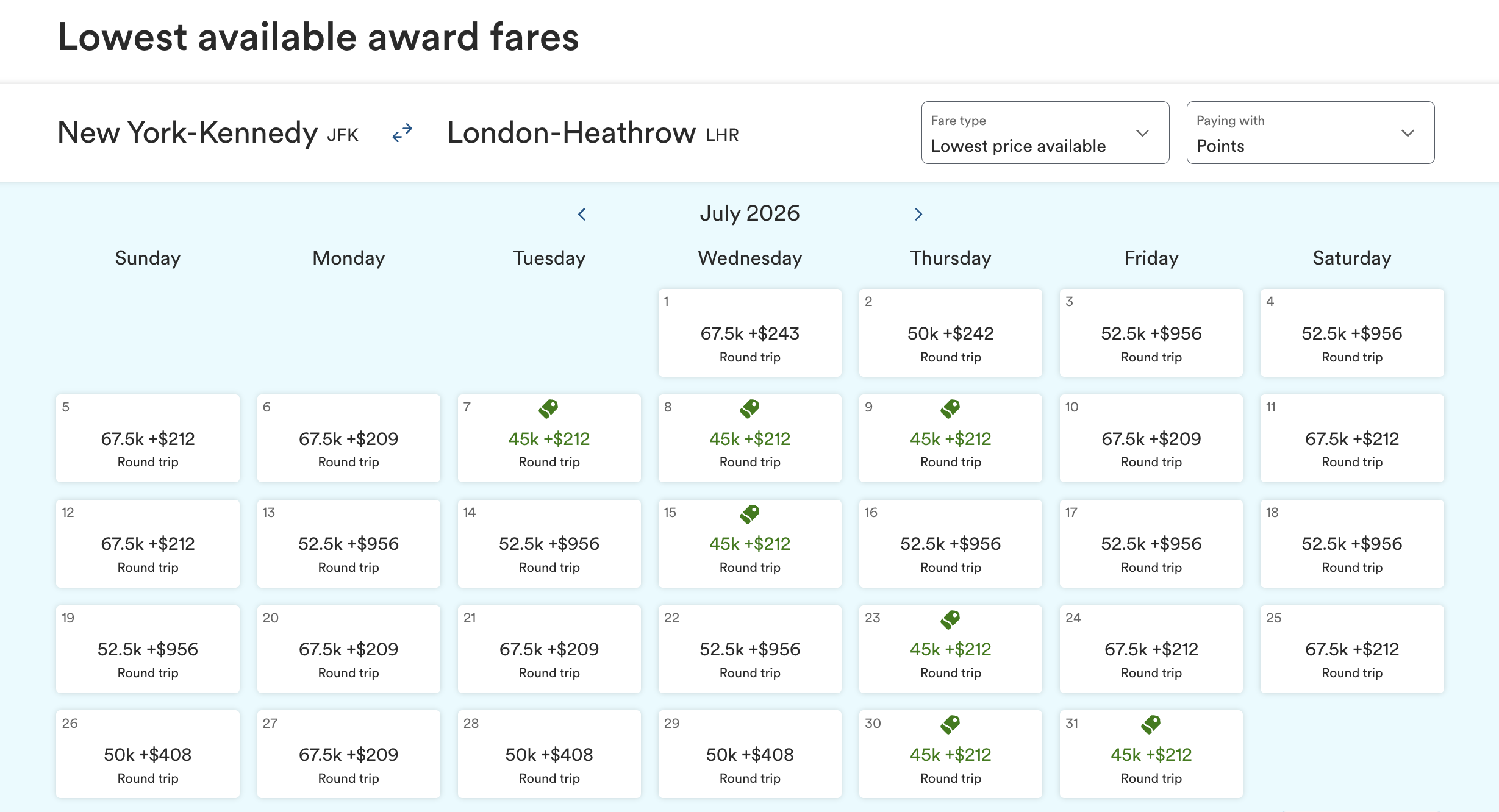
For example, at the time of writing, there is strong business-class availability on British Airways (bookable via Atmos through the oneworld alliance) from John F. Kennedy International Airport (JFK) to Heathrow Airport (LHR) in July 2026.
Or, you could use your points for a single premium flight. For example, 95,000 points from the Atmos Rewards Summit bonus could cover a one-way business-class flight from Seattle-Tacoma International Airport (SEA) to Tokyo-Haneda Airport (HND) on Japan Airlines, with taxes and fees starting at just $18.10.
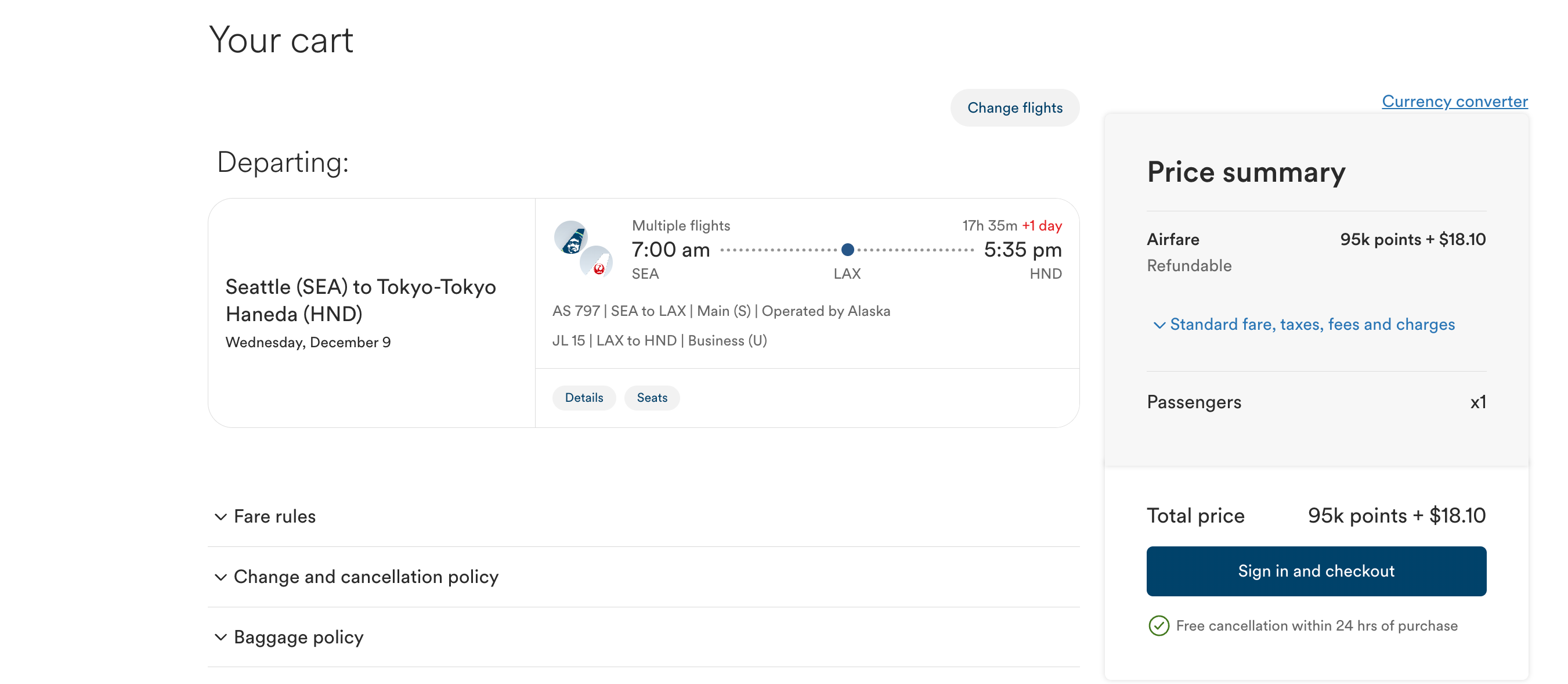
Cash prices for the same flight are around $4,362, which means you’d get a value of roughly 4.6 cents per point — well above TPG’s April 2026 valuation of Atmos Rewards points at 1.4 cents each. Redemptions like this highlight how using points for premium cabin flights can deliver outsize value — and how far a single welcome bonus can take you.
How the 50% flight discount works
New cardholders of the Atmos Rewards Ascent and the Atmos Rewards Summit can currently receive a 50% flight discount code as part of the welcome offer, which can provide meaningful savings for cash bookings.
That said, this benefit comes with a few important limitations. The discount is only valid on eligible future flights with Alaska Airlines or Hawaiian Airlines booked with cash, and travel is limited to select dates and certain days of the week.
Because of that, the discount works best if you have flexibility and can plan around those constraints. It’s a strong addition to the welcome offer, just not universally usable.
How companion fares can stretch your points further
The companion benefits currently offered on all three Atmos cards are another way to extend the value of a single welcome bonus. The Atmos Rewards Ascent and Atmos Rewards Business are currently offering a $99 Companion Fare (plus taxes and fees from $23), while the Atmos Rewards Summit is offering a 25,000-point Global Companion Award.
If you haven’t used an Atmos Companion Fare benefit before, it’s pretty simple: you book a paid ticket for yourself, then add a second traveler on the same itinerary for $99 plus taxes and fees.
That effectively turns a single booking into a trip for two. For example, for a round-trip flight from Dallas Fort Worth International Airport (DFW) to Boston Logan International Airport (BOS) costing about $290 per person, booking two tickets would total roughly $580.
Instead, you could pay for one ticket and add a companion for $99 plus taxes and fees, potentially saving close to $200 on the second seat.

This can be a meaningful boost in real-world value, especially for couples, families or friends traveling together. It’s also worth noting that companion fares need to be used on the same itinerary, so they work best when you’re planning trips together from the start.
There are a few important restrictions to keep in mind.
The companion fare allows you to add one traveler to your itinerary for a base fare of $99, plus taxes and fees starting at $23 (totaling at least $122), when flying within North America on Alaska Airlines or Hawaiian Airlines. Both tickets must be booked at the same time, on the same itinerary, using a paid coach fare.
Bookings must be made through AlaskaAir.com using your eligible Atmos card. The companion fare is not valid on award travel, though both travelers are still eligible to earn points on the flight.
Companion fares are valid for 12 months from the date of issuance. As long as you book your ticket before the expiration date, travel can take place after that one-year window.
Related: How to earn and redeem the Atmos Summit’s Global Companion Award
Bottom line
Through maximizing the strong available welcome offers, Atmos Rewards credit cards can realistically cover anywhere from five to 20 trips.
Whether you want frequent short getaways or one standout international trip, the value is there — and it can stretch even further if you’re able to take advantage of perks like discount codes and companion fares.
For more information, check out our full review of the Atmos Rewards Ascent, our full review of the Atmos Rewards Summit and our full review of the Atmos Rewards Business Card.
Apply here: Atmos Rewards Ascent Visa Signature credit card
Apply here: Atmos Rewards Summit Visa Infinite credit card
Apply here: Atmos Rewards Visa Signature Business Card

Stacie Harris is a local resident and reporter of the Maple Grove area. Stacie reports on medicine and science for the Maple Grove Report.