How to cover your next 5+ trips with these Atmos card offers


Right now, the latest Atmos Rewards credit card welcome offers are among the strongest we’ve seen, with bonuses ranging from 80,000 to 100,000 points (along with valuable companion fares).

That’s a sizable stash of points, but what does it actually translate to in real travel?

Depending on how you redeem, a single welcome bonus could realistically cover anywhere from five larger trips or 10 or more shorter flights.

Here’s how that breaks down — and how to stretch those points as far as possible.

Current Atmos credit card welcome offers overview

Currently, Atmos is offering elevated welcome bonuses across a few cards that can significantly boost their value.

  • Atmos™ Rewards Ascent Visa Signature® credit card: New cardholders can earn 80,000 bonus points and a $99 Companion Fare (plus taxes and fees from $23) after spending $4,000 on purchases within the first 120 days from account opening. Plus, receive a 50% flight discount code for a qualifying future flight after opening an account.
  • Atmos™ Rewards Summit Visa Infinite® credit card: New cardholders can earn 100,000 bonus points and a 25,000-point Global Companion Award after spending $6,500 on purchases in the first 90 days from account opening. Plus, receive a 50% flight discount code for a qualifying future flight after opening an account.
  • Atmos™ Rewards Visa Signature® Business Card: New cardholders can earn 80,000 bonus points and a $99 Companion Fare (plus taxes and fees from $23) after spending $5,000 on purchases in the first 90 days from account opening.

While each card comes with different perks that provide ongoing value, the real value of the welcome offer comes down to how far those points can take you.

Related: Atmos Rewards Ascent card vs. Atmos Rewards Summit card

Example redemptions: Short domestic flights starting at 5,000 points

Atmos Rewards uses dynamic pricing, meaning award rates vary based on route, timing and demand. Still, there are some consistent ranges to keep in mind:

Reward your inbox with the TPG Daily newsletter

Join over 700,000 readers for breaking news, in-depth guides and exclusive deals from TPG’s experts

  • Short domestic flights can start around 5,000 points one-way
  • Cross-country routes often fall in the 10,000 to 20,000-point range
  • Flights to Hawaii often cost 15,000 to 30,000 points one-way

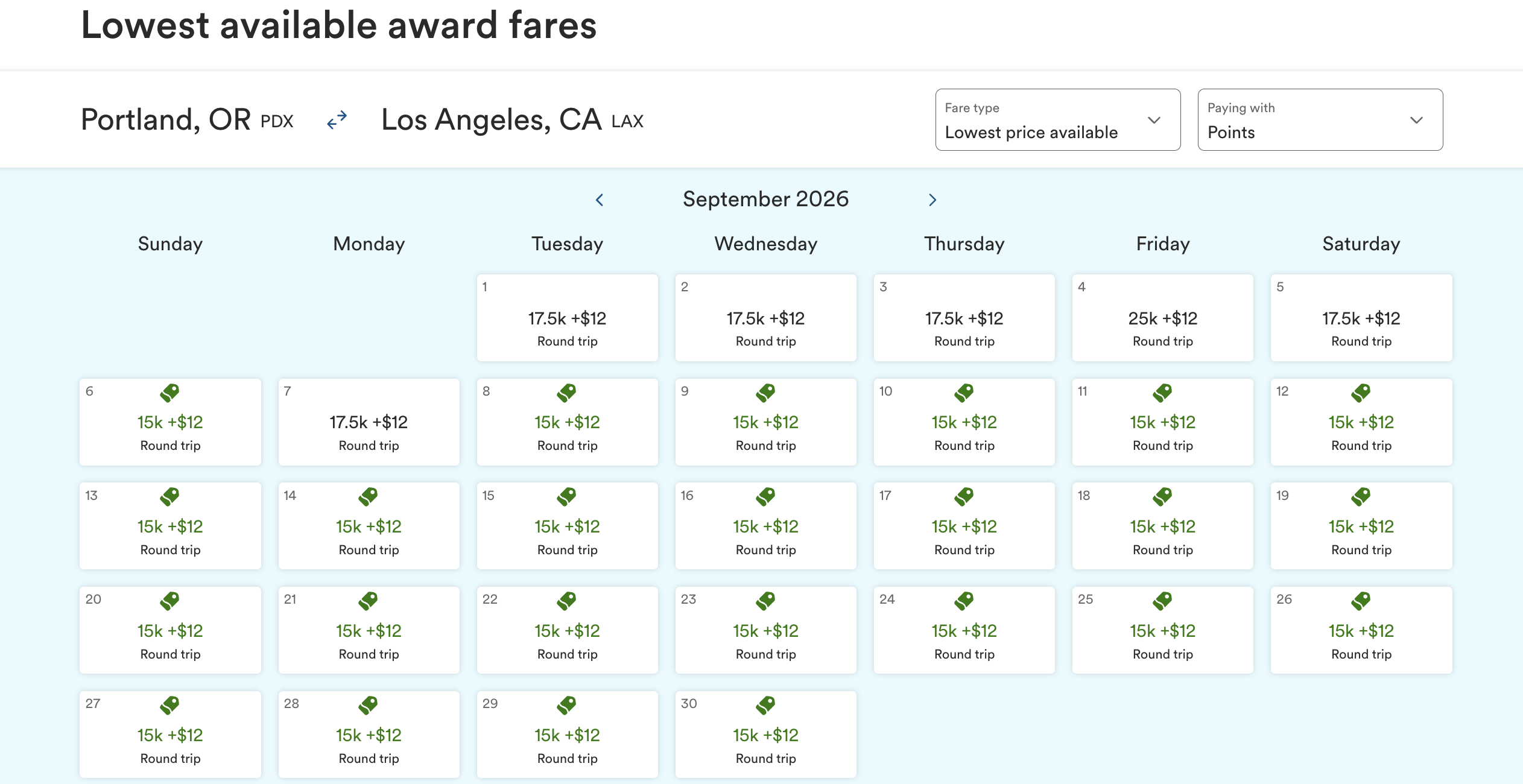
For example, at the time of writing, flights from Portland International Airport (PDX) to Los Angeles International Airport (LAX) in September (shown below) average 15,000 points (plus $12 in taxes and fees).

Meanwhile, flights from PDX to Denver International Airport (DEN) during the same time start at 27,500 points (plus $12 in taxes and fees).
screenshot of Atmos
ATMOS

If your goal is to stretch your welcome bonus as far as possible, shorter domestic routes offer some of the best value.

At the very lowest redemption levels, it’s possible to stretch a welcome bonus quite far — potentially up to 16 one-way flights with 80,000 points, or 20 with 100,000.

In practice, though, most travelers will land somewhere in the middle.

Even at more typical redemption rates, it’s still realistic to get around five to 10 round-trip flights out of a single bonus, which is enough to cover a full year of weekend trips.

I’d personally use one of these bonuses to cover multiple domestic flights to visit family across the U.S., or put it toward a round-trip economy flight abroad. The beauty of a large welcome offer is that once you earn it, you’ve got a solid stash of points ready to use, and how you redeem them is entirely up to you.

But if a premium flight experience is what you’re after, there are also plenty of great options for your points.

Related: How to book American Airlines flights with Atmos Rewards points

Example redemptions: Premium flights to Europe and beyond

If you’d rather maximize value per trip, using points for longer or premium flights can be just as compelling.

With the current offers, your bonus could realistically cover a round-trip economy flight to Europe, two one-way long-haul flights or one premium cabin experience.

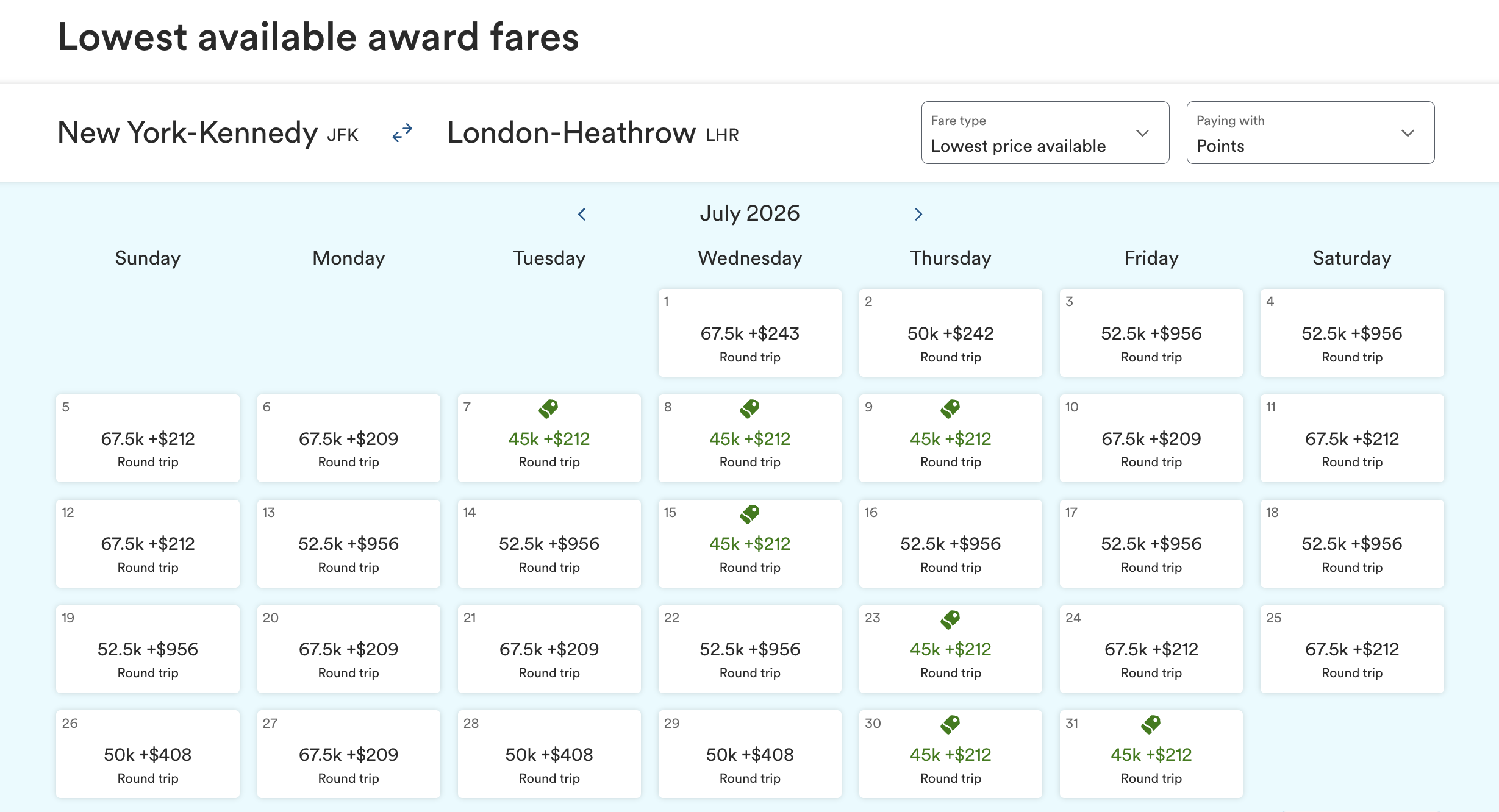
For example, at the time of writing, there is strong business-class availability on British Airways (bookable via Atmos through the oneworld alliance) from John F. Kennedy International Airport (JFK) to Heathrow Airport (LHR) in July 2026.
Atmos screenshot
ATMOS

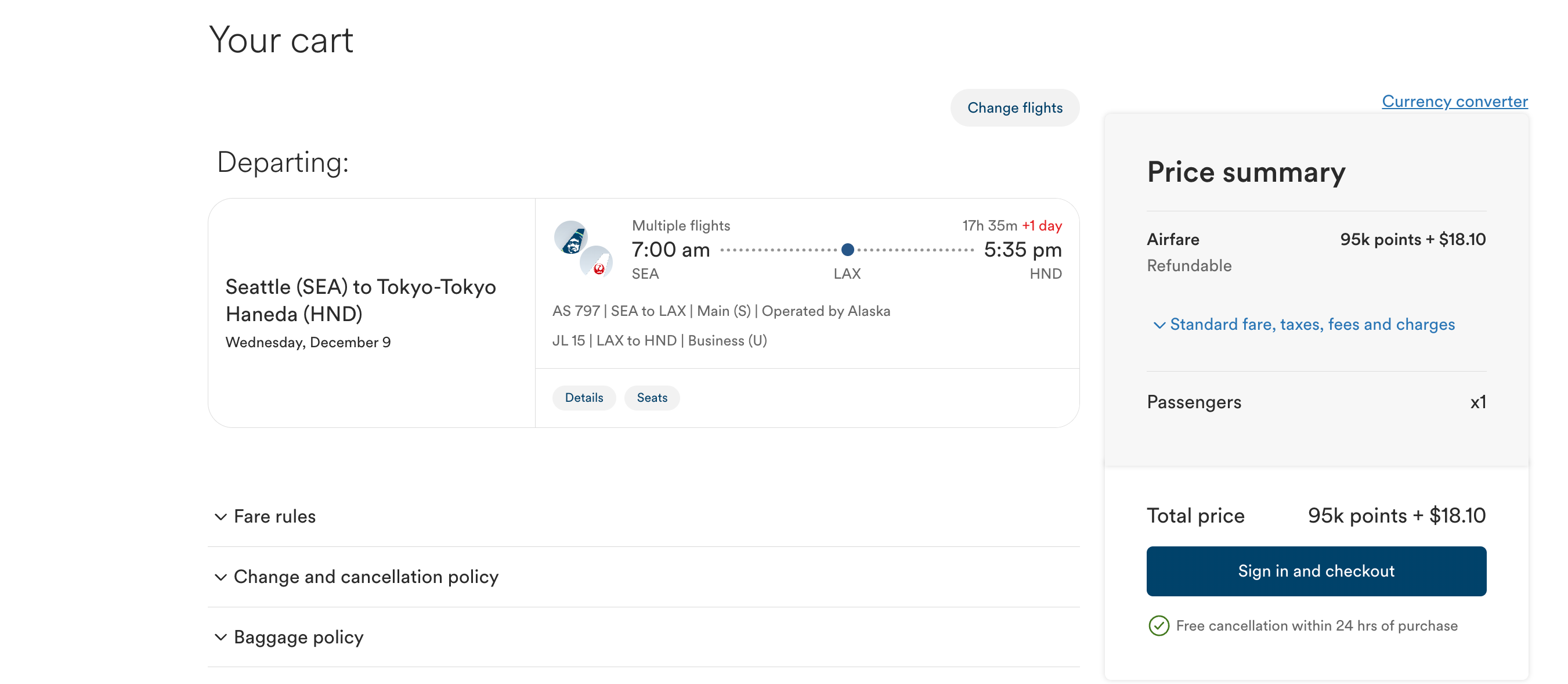
Or, you could use your points for a single premium flight. For example, 95,000 points from the Atmos Rewards Summit bonus could cover a one-way business-class flight from Seattle-Tacoma International Airport (SEA) to Tokyo-Haneda Airport (HND) on Japan Airlines, with taxes and fees starting at just $18.10.
screenshot of Atmos
ATMOS

Cash prices for the same flight are around $4,362, which means you’d get a value of roughly 4.6 cents per point — well above TPG’s April 2026 valuation of Atmos Rewards points at 1.4 cents each. Redemptions like this highlight how using points for premium cabin flights can deliver outsize value — and how far a single welcome bonus can take you.

How the 50% flight discount works

New cardholders of the Atmos Rewards Ascent and the Atmos Rewards Summit can currently receive a 50% flight discount code as part of the welcome offer, which can provide meaningful savings for cash bookings.

That said, this benefit comes with a few important limitations. The discount is only valid on eligible future flights with Alaska Airlines or Hawaiian Airlines booked with cash, and travel is limited to select dates and certain days of the week.

Because of that, the discount works best if you have flexibility and can plan around those constraints. It’s a strong addition to the welcome offer, just not universally usable.

How companion fares can stretch your points further

The companion benefits currently offered on all three Atmos cards are another way to extend the value of a single welcome bonus. The Atmos Rewards Ascent and Atmos Rewards Business are currently offering a $99 Companion Fare (plus taxes and fees from $23), while the Atmos Rewards Summit is offering a 25,000-point Global Companion Award.

If you haven’t used an Atmos Companion Fare benefit before, it’s pretty simple: you book a paid ticket for yourself, then add a second traveler on the same itinerary for $99 plus taxes and fees.

That effectively turns a single booking into a trip for two. For example, for a round-trip flight from Dallas Fort Worth International Airport (DFW) to Boston Logan International Airport (BOS) costing about $290 per person, booking two tickets would total roughly $580.

Instead, you could pay for one ticket and add a companion for $99 plus taxes and fees, potentially saving close to $200 on the second seat.

friends walk arm-in-arm through an airport
FLY VIEW PRODUCTIONS/GETTY IMAGES

This can be a meaningful boost in real-world value, especially for couples, families or friends traveling together. It’s also worth noting that companion fares need to be used on the same itinerary, so they work best when you’re planning trips together from the start.

There are a few important restrictions to keep in mind.

The companion fare allows you to add one traveler to your itinerary for a base fare of $99, plus taxes and fees starting at $23 (totaling at least $122), when flying within North America on Alaska Airlines or Hawaiian Airlines. Both tickets must be booked at the same time, on the same itinerary, using a paid coach fare.

Bookings must be made through AlaskaAir.com using your eligible Atmos card. The companion fare is not valid on award travel, though both travelers are still eligible to earn points on the flight.

Companion fares are valid for 12 months from the date of issuance. As long as you book your ticket before the expiration date, travel can take place after that one-year window.

Related: How to earn and redeem the Atmos Summit’s Global Companion Award

Bottom line

Through maximizing the strong available welcome offers, Atmos Rewards credit cards can realistically cover anywhere from five to 20 trips.

Whether you want frequent short getaways or one standout international trip, the value is there — and it can stretch even further if you’re able to take advantage of perks like discount codes and companion fares.

For more information, check out our full review of the Atmos Rewards Ascent, our full review of the Atmos Rewards Summit and our full review of the Atmos Rewards Business Card.


Apply here: Atmos Rewards Ascent Visa Signature credit card

Apply here: Atmos Rewards Summit Visa Infinite credit card

Apply here: Atmos Rewards Visa Signature Business Card


Source link

Leave a Reply

Subscribe to Our Newsletter

Get our latest articles delivered straight to your inbox. No spam, we promise.

Recent Reviews


What is Azure DevOps?

Microsoft Azure DevOps, formerly known as Visual Studio Team Service (VSTS) is a software that utilises several Agile Methodologies to improve the process of planning, developing, and delivering software. 

Azure DevOps provides its users with a ready-made platform to turn their code into an application. The developers have access to so many Agile tools that help in managing tests, versioning code, and deploying projects.

The tool is specifically known for its 5 different services that may or may not be used individually. 

  • Azure Boards – used by cross-functional teams for planning, tracking, and discussing the work
  • Azure Repos – managing the code with the help of version control tools
  • Azure Pipelines – used to build and test codes automatically
  • Azure Test Plans – used to provide test management solutions for user acceptance testing.
  • Azure Artifacts – used to install and publish packages in Azure DevOps.

After knowing the basics of Azure DevOps, it is crucial to know the basics of Jira before checking out the differences between the two tools. 

What is Jira?

Jira was originally created as a tool to track bugs and issues but has turned out to be a widely used project management tool. The tool enables its users to track project growth and development. Jira is at times chosen over Azure DevOps for two simple reasons: scalability and deep customization. 

Developed by Atlassian, Jira supports all Agile Methodologies along with being extremely flexible for diverse processes and environments. The tool also enables you to use agile boards, backlogs, roadmaps, add-ons, and integrations to plan and track software development projects.

Now, that you know the basics of both, Azure DevOps and Jira, it is the right time to learn about the differences between the two. 

Become a master of Jira by going through this HKR Jira Training!

Azure DevOps vs Jira

Azure DevOps and Jira definitely have a lot in common and are used by a lot of companies worldwide. It must be understood that even though they are extremely powerful and may be used for the same purpose, they have a lot of differences too. 

Let’s have a look at the differences between Azure DevOps and Jira based on the following: 

Cloud Service

Cloud Service or Services refer to a wide variety of services that could be provided to an organisation over the internet. So, for that purpose, Azure DevOps uses Microsoft Azure services, whereas, Jira uses Amazon Web Services (AWS) as their cloud service provider in several regions of the world.

Customizable Dashboards

A Customizable Dashboard refers to a single screen that is used by a tool or software to display all the relevant metrics. All the DevOps services, including Azure DevOps and Jira, can utilise this feature and display the most relevant data on the screen. For this purpose, Azure DevOps uses tools popularly known as “widgets”, whereas the tools used by Jira are called “gadgets.” 

Product road mapping

Product road mapping can be one of the decisive features for you to choose Jira over Azure DevOps. Azure DevOps has recently added Product road mapping to its features which is not that well integrated. To access Product road mapping in Azure DevOps, you will need separate applications like Epic Timeline and Feature Timeline, which are available as a plugin via the Microsoft Marketplace. Whereas, Jira has had Product road mapping for a very long time. Jira’s inbuilt road mapping is well developed and optimised. 

Traceability

Now, if Traceability is one of the things you are looking for, Azure DevOps must be your pick. Azure DevOps provides traceability from the beginning of the Software Development process to the end, the deployment process. Whereas Jira doesn’t provide that great traceability. Although you can use GitHub to relate commits, pull requests and other changes, you will never know if the task is completed with each deployment.

Search Capabilities

Another thing that makes Jira stand out is its Search Capabilities. Azure DevOps is lagging far behind when it comes to Search capabilities as it provides no advanced capabilities like Jira. Whereas Jira comes with amazingly advanced search capabilities which enable you to find issues within the blink of your eye. Jira Query Language(JQL) enables the user to find bugs quickly and not just that, finding an issue with simple text is extremely easy. To top it all up, in Jira the results of your searches are not just saved, but they are emailed too.

Purpose

Azure DevOps and Jira both are widely used by organisations today. So, talking just in reference to the purpose, Azure DevOps is used by companies to enable amazing collaboration between the Development team and Operations team. In simpler words, if someone is choosing Azure DevOps their entire focus is on the Software Development Lifecycle. Whereas, if you want the focus to be on agile reporting, problem tracking, and implementing other agile methodologies, Jira must be your pick. 

Now, that you have covered the main topic and understood the contrast between Azure DevOps and Jira, let’s explore their pros and cons one after the other.

Join our Azure DevOps Training in Ameerpet today and enhance your skills to new heights!

Jira Administration Training

  • Master Your Craft
  • Lifetime LMS & Faculty Access
  • 24/7 online expert support
  • Real-world & Project Based Learning

Features of Azure DevOps

Azure DevOps has a lot of amazing features if someone wants to build a software product from scratch. Software Developers can use these features to manage code, test their applications, and deploy the same using the CI/CD pipeline.

Some of the main features of Azure DevOps are:

1. Easy project management

Azure DevOps provides interactive and customised tools which make it easy for the Software Development teams to manage their projects. 

2. Azure Pipelines

The feature of Azure Pipelines enables Azure DevOps to automate the building and testing of software, i.e. enabling Continuous Integration and Continuous Delivery, by creating workflows. 

3. Customized dashboards

The tool enables different teams to create their customised dashboards as per their requirements. This helps them in agile planning, progress tracking, work visualization, and reporting. 

4. Integration

Using Azure DevOps, the users can collaborate with external stakeholders by integrating with several external applications like GitHub and JIRA.

5. Pipeline Templates

The tool provides pipeline templates which can be executed by Azure cloud-hosted agents or local hosted agents. Also, the users can customize these templates according to their requirements in the form of YAML templates. 

6. Azure Test Plans

Another powerful tool is Azure Test Plans which helps in improving the overall quality of the project by enabling end-to-end testing. 

Features of Jira

Jira has numerous outstanding features if someone wants to plan and track all their software development projects. The tool provides a lot of useful features to manage these projects in complex scenarios like agile boards, backlogs, roadmaps, integrations etc. 

Some of the main features of Jira are:

1. Agile Development

Jira is one of the finest tools when it comes to Agile Development as it offers the utilisation of all the Scrum and Kanban board features. When you start your project, you can choose your project type from Scrum or Kanban.

2. Project Tracking

Here the users can track their software projects at any given point. JQL enables you to track some specific projects by using filters or some specific issues.

3. Mobile Application

Using Jira, you won’t be limited to a desktop or an on-premise system, you can use the native mobile application. This makes the tool more preferred by remote teams who are working from diverse locations. 

4. Reporting

The data is delivered by Jira in form of reports which helps in commenting on the actual situation. Not just that, these reports provide a lot of statistical data regarding the project, throughout the process. Some of the most popular reports provided by Jira include – Version Report, Resolved vs. Created Issues Report, Pie Chart Report, Average Age Report, Velocity Chart, Sprint Report, etc

5. Product Integration

Jira provides many feature integrations which make software development even more impactful and easier. Some of the popular Jira Integrations currently include Salesforce Sales Cloud, Atlassian Confluence, GitHub, Service Desk, Zendesk, etc.

6. Jira Roadmaps

The tool provides roadmaps which can be utilised by developers or users to keep track of the project. These roadmaps enable the users to handle and visualise the project growth, along with checking the schedule for bug fixing.

If you want to Explore more about Jira? then read our updated article – Jira Tutorial

HKR Trainings Logo

Subscribe to our YouTube channel to get new updates..!

Pros and Cons of Azure DevOps

Pros:
Easy to use

Azure DevOps is an extremely simple tool for any beginner to start with. When it comes to designing and integration visualisation, the classic editor offers an easy Graphic User Interface (GUI). There are two features of defining a pipeline: one is using this classic editor while the second one is YAML, in which the same steps can be defined. 

Flexible

Another reason which makes Azure DevOps stand out is the flexibility that comes with it. All the services provided by the tool can not just be used independently but they can also be integrated with a lot of already existing tools in the organisation. 

Platform Independent

Microsoft Azure DevOps is a platform-independent tool that can work with any platform or Operating System (Windows, Linux, macOS) and language (.Net, PHP, Java, C, C++, Python, etc). 

Rapid Features Upgrades

Microsoft has already published a roadmap for Azure DevOps, and along with that several new features are being added to the tool rapidly. There are several new features that are launched in short spans, usually three weeks.

Access to other development services.

Azure DevOps provides numerous features like project management, version control, automated builds, release management, reporting, and testing. The tool will also enable you to access development services in Microsoft Cloud, like Office 365 etc that not only enable collaboration among teams but also the configuration of processes for efficient working.

Access from anywhere

Azure DevOps is what you need to provide your teams with a secure and safe environment if they work remotely or from some different location. The tool will help teams to work with amazing flexibility and collaborate wherever and whenever needed.

Cons:
Integration of non-Microsoft Platforms

One of the prominent disadvantages of using Azure DevOps is that it cannot be integrated with non-Microsoft Platforms which limits its acceptability.

Azure Pipeline

Azure DevOps has a simple and straightforward workflow, i.e. there are no if-else or switch-case constructions allowed in Azure DevOps, which makes the development of workflows difficult. 

Pros and Cons of Jira

Pros
Agile Project Management

Using Jira, agile teams can use Kanban and Scrum with the agile boards. This will enable the Kanban team to track their workflow and monitor all the progress to efficiently and effectively complete the project. Similarly, for the Scrum team, it becomes easier to break huge chunks of work into sprints, focus on them and complete them faster.  

Organization Alignment

Jira roadmaps are the key to a great alignment among teams. Keeping in mind the organization’s goal, the teams can collaboratively come up with an effective way of completing tasks. These roadmaps will enable the team members to keep a track of the project’s progress and keep an eye on dependencies on different team members. 

Reports and Insights

There are ready-to-use dashboards provided by Jira that help in having up-to-date information on whatever is going on. It helps teams to deliver projects while keeping in mind the time boundations. There are backlog insights which help teams in planning their sprints to deliver something particular to the customer. 

Integrations

The capabilities of Jira can be extended with a lot of applications. It is up to the team and team members to choose a tool of their choice. There are tools that help teams in their different nature of work like there are specific tools for designers, developers and many more, helping teams to always come out with flying colours. 

[ Related Article: Jira training in hyderabad ]

Cons
Difficult Setup

The initial set-up of the tool is difficult making the overall learning curve for users challenging. If you or your team are looking for something that simply works and helps you as soon as it is out of the box, then Jira with its vast configuration options isn’t for you. 

Missing Communication Tool

Though there is a process of receiving email notifications in case of issues, there is no quick way of sending messages from Jira itself. If you wish to solve this problem, you must download some chatting application or some plugin.

Suite of Products

There are a lot of products in the Jira Suite which are often confusing for the user. For development teams there is Jira Software, for business teams, there is Jira Work Management, for service management there is Jira Service Management, and there are many more. 

Limited Project Management

No matter how amazing Jira is when it comes to tracking issues or bugs, when it comes to project management there are a lot of limitations. The tool lacks features that are required for several project management processes like managing costs, managing risks etc. 

Frequently asked Jira Interview Questions and Answers !!

Jira Administration Training

Weekday / Weekend Batches

Conclusion

By now, you would know why Azure DevOps and Jira are one of the most widely used Software Development Platforms. In the article, you began with learning the basics of the two tools and how they help organisations in their respective segments of work. Then you went in to check the comparison between Azure DevOps and Jira based on several categories like Cloud service, Customizable dashboards, and Product road mapping. As a part of that comparison, you also had a look at the pros and cons of the two popular tools, one after the other.Once you were well versed with their pros and cons and how they are different, you went on to learn about their features. You had a look at the popular features of both, Azure DevOps and Jira. Post the features you were all set to decide which tool is better suited to your requirements.

Related Articles:


Source link