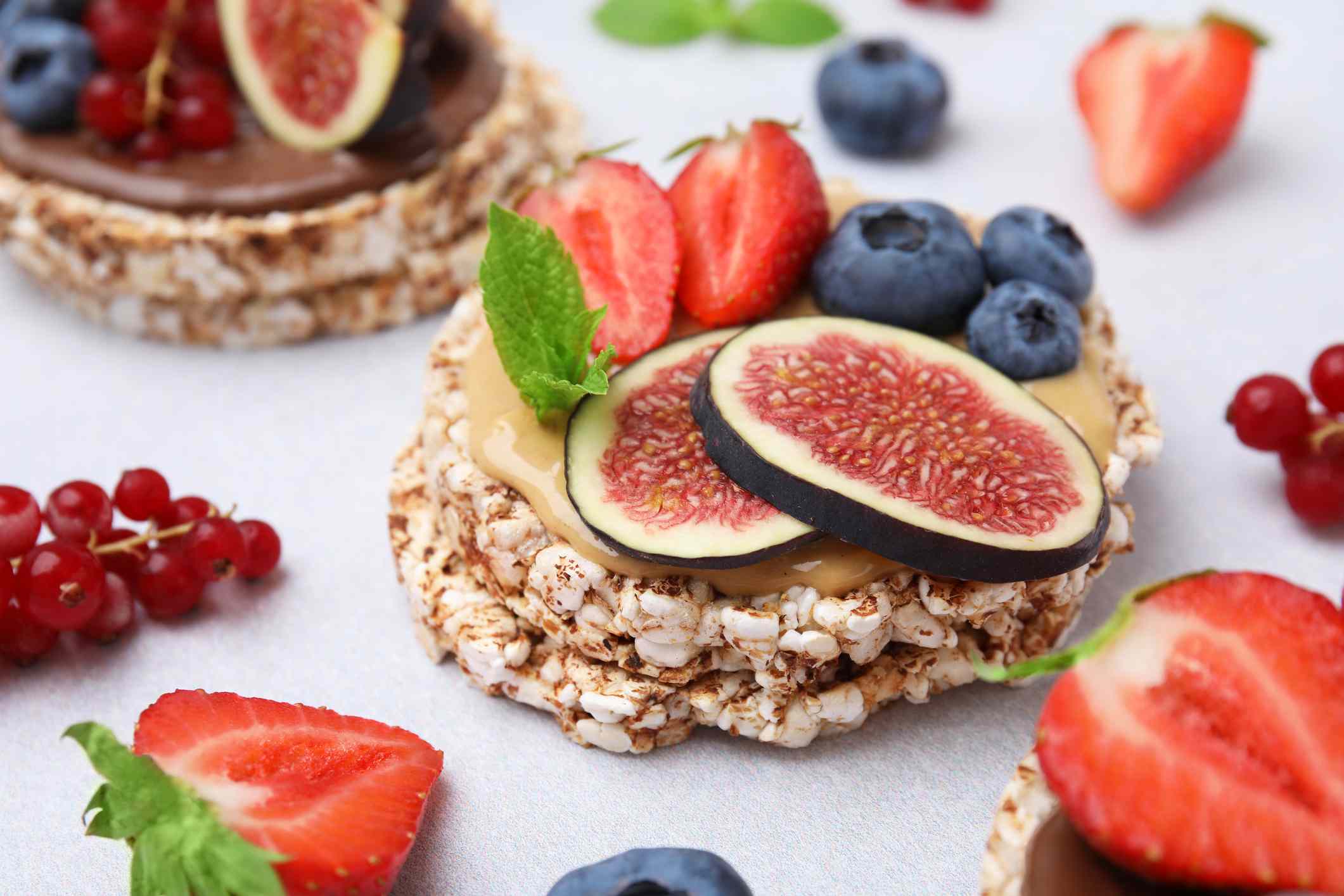
:max_bytes(150000):strip_icc():format(jpeg)/Health-GettyImages-1486172047-00a8078a78e2442d9733b6393ce1de21.jpg "Rice cakes topped with fruit such as figs strawberries and blueberries on a surface")
- High-protein snacks help keep you full and support steady energy between meals.
- Choosing whole or minimally processed foods supports healthy cholesterol levels and blood pressure.
- Look for options lower in saturated fat and sodium to fit a heart-healthy eating pattern.
High-protein snacks can support heart health when they come from whole or minimally processed foods that offer fiber, healthy fats, or antioxidants alongside protein. These options help keep you full between meals and support steady energy, and they fit naturally into eating patterns that emphasize nutrient-dense foods while limiting saturated fat and sodium to promote heart health.
1. Greek Yogurt With Berries

Total Protein: About 16 grams of protein per container of plain, nonfat Greek yogurt
Greek yogurt is an excellent source of protein without much saturated fat. Opting for nonfat or low-fat versions helps further limit saturated fat intake, which can support healthy cholesterol levels and overall heart health.
Adding berries to yogurt boosts the fiber and antioxidant content. The two nutrients both help protect the heart by maintaining healthy cholesterol and fighting inflammation. Include a sprinkle of chia seeds or walnuts to add healthy fats and make the snack feel more substantial.
2. Cottage Cheese and Fruit

Total protein: About 12 grams of protein per 1/2 cup serving of cottage cheese
Cottage cheese packs a lot of protein into a small portion, which helps keep you full between meals. Pairing it with fruit, like pineapple, peaches, or berries, adds natural sweetness and fiber without added sugar.
Also, cottage cheese provides potassium and calcium, two minerals that help support healthy blood pressure by balancing sodium levels and promoting proper blood vessel function. For a savory option, try topping it with sliced veggies or a drizzle of olive oil seasoned with your choice of herbs.
3. Edamame

Total Protein: About 19 grams of protein per 1 cup of cooked edamame
Edamame is one of the highest-protein plant-based snacks you can keep on hand. It offers heart-healthy nutrients like fiber, potassium, and magnesium.
Soy foods like edamame contain natural compounds called isoflavones that may help reduce LDL cholesterol when eaten regularly as a part of a balanced diet. Frozen shelled edamame heats up quickly in the microwave, making it an easy and nutrient-dense snack for busy days.
4. Nuts and Seeds

Total protein: About 6 grams of protein per 1 ounce of nuts and seeds (varies by type)
Nuts and seeds offer a naturally satisfying mix of protein, fiber, and heart-healthy unsaturated fats. Almonds, pistachios, and walnuts are all strong choices to start with.
The unsaturated fats in nuts and seeds may support healthy cholesterol levels when they replace saturated fats in the diet. Because nuts are high in calories, portioning them into small containers or snack bags can help keep servings consistent.
Pairing a handful of nuts with fruit or a few whole-grain crackers adds more fiber and makes the snack even more filling.
5. Hummus With Veggies or Whole‑Grain Crackers

Total protein: About 3 grams of protein per 2-tablespoon serving of hummus
Hummus is made from chickpeas, which are a source of plant-based protein and fiber. In particular, chickpeas provide soluble fiber, which is known to help keep cholesterol levels in check.
Pairing hummus with raw vegetables, such as carrots, bell peppers, or broccoli, adds crunch and additional fiber. A few whole-grain crackers can make the snack more substantial and provide slow-digesting carbohydrates that help maintain steady energy.
6. Hard‑Boiled Eggs

Total protein: About 6 grams of protein per large egg
Eggs offer high-quality protein along with nutrients like choline, B vitamins, and selenium, which help keep your body’s cells functioning well. While eggs do contain dietary cholesterol, research shows that moderate intake, or about one egg a day for most healthy adults, can fit into a heart-healthy eating pattern. People with certain cholesterol-related conditions may need more individualized guidance.
Pairing eggs with vegetables such as sliced bell peppers, cherry tomatoes, or spinach adds fiber and antioxidants. A sprinkle of seasonings like paprika is also a simple way to make them more flavorful.
7. Tuna and Whole‑Grain Crackers

Total protein: About 20 grams of protein per 3-ounce serving of tuna
Canned tuna is a convenient and shelf-stable source of lean protein. It also contains omega-3 fatty acids, which may help reduce damaging inflammation that can lead to heart disease.
Pairing tuna with whole-grain crackers adds fiber and makes the snack more filling. To keep sodium lower, choose tuna labeled "no salt added." Limiting sodium helps support healthy blood pressure and overall heart health. Another option is to mix tuna with plain Greek yogurt, lemon juice, and herbs instead of mayonnaise, which keeps the saturated fat lower while still adding creaminess and flavor.
8. Roasted Chickpeas

Total protein: About 15 grams of protein per 1 cup serving of chickpeas
Roasted chickpeas offer a crunchy, high-fiber plant-based snack that provides both protein and important minerals, like potassium and magnesium. Their mix of protein, fiber, and slow-digesting carbohydrates helps support steady energy and a sense of fullness.
If you're using canned chickpeas, choose low-sodium or no-salt-added varieties and rinse them before roasting to help keep sodium low.
9. Peanut Butter on Whole-Grain Toast

Total protein: About 10 grams of protein per 2-tablespoon serving of peanut butter and 1 slice of whole grain bread
Peanut butter is another source of plant-based protein. It also offers heart-healthy monounsaturated fats. Spreading it on whole-grain toast adds fiber and additional protein, creating a balanced snack that keeps you full.
Choosing natural peanut butter with no added sugar or hydrogenated oils helps keep the snack aligned with heart-healthy eating patterns. Adding sliced strawberries or bananas can provide extra fiber and natural sweetness.
How to Make High-Protein Snacking Heart-Healthy Long Term
Building heart-healthy and high-protein snacks into your routine is easier when you focus on balance and consistency rather than perfection. Choosing snacks that pair protein with fiber or healthy fats can help keep you full, support steady energy, and make it easier to stick with eating patterns that benefit your heart over time.
Keeping a few go-to options, like yogurt, nuts, edamame, or hard-boiled eggs, on hand can also make nutritious choices more convenient during busy days.






:max_bytes(150000):strip_icc():format(jpeg)/coffeevsenergydrink-738dcdca64dd44cf913c6acb21f2dc44.jpg "A cup of coffee and a metal can side by side with a VS icon in the middle")