International student enrollment fell significantly at several of Minnesota’s colleges and universities in the spring semester as the Trump administration’s travel bans, visa restrictions and immigration crackdown chill global education. And many schools are anticipating the number of students coming to study in the U.S. from overseas to drop even more next fall.
In response, the state’s higher education institutions and student advocates say they are ramping up efforts to better support their international students.
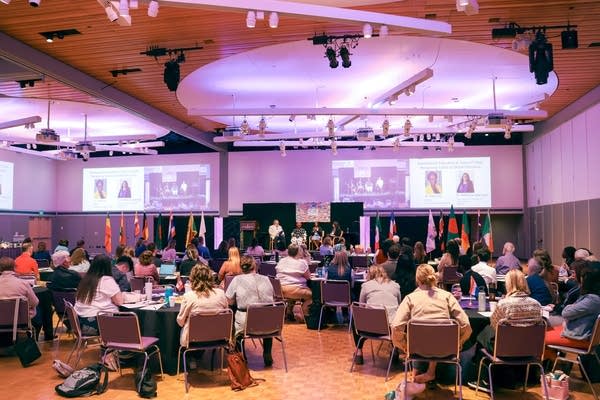
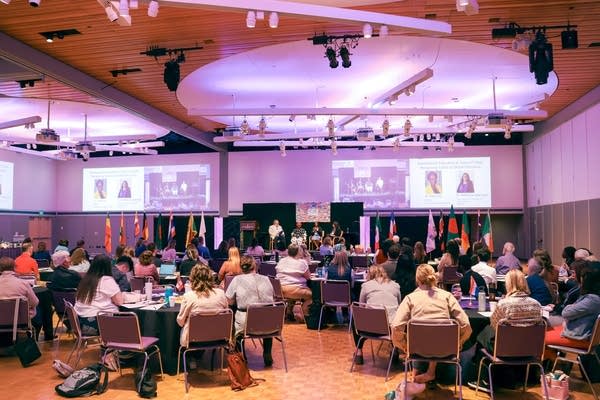
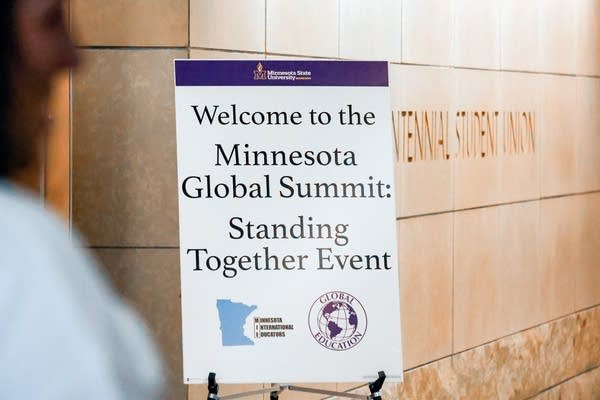
More than a hundred members of Minnesota International Educators from across the state convened for a summit at Minnesota State University, Mankato on Tuesday.
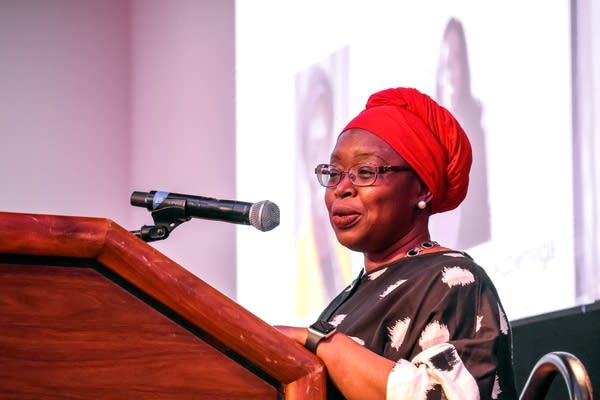
Fanta Aw, CEO of NAFSA: Association of International Educators, a national organization, said the last several months have been some of the most challenging in “recent memory,” especially for international students in Minnesota. But she praised how the people of the state responded.
“What Minnesota has demonstrated in recent months has mattered far beyond Minnesota,” Aw told attendees during her keynote speech. “This state showed the nation something powerful: That community is still possible. That courage is still possible. That humanity is still possible.”
International student enrollment at U.S. universities for this spring semester plummeted nearly 20 percent from last spring, according to a new report published this week by NAFSA.
The organization surveyed 149 schools and found that about 62 percent of those colleges and universities reported a significant decline in international student enrollment within both undergraduate and graduate programs from last year.
“We anticipate fall of 2026 to have a larger decline in overall international enrollment than fall of 2025,” Aw said.
In addition to citing the Trump administration’s travel and visa restrictions on students from certain counties, Aw said many prospective students say they no longer want to study in a country in which they don’t think they’d feel welcomed, and some fear for their safety.
“Because of so many policy changes last year, you already had a smaller number of students who applied to U.S. universities. There was a decline in interest in the U.S. to begin with,” Aw said. ”And then you now have to add the [war in Iran] and the cost of flights. All of that is gonna have an impact on enrollment for the fall.”
But Aw said it’s vitally important for schools to continue to bolster their support for international students, both before they arrive in the U.S. and once they’re on campus.
“We know it’s going to be a challenging fall,” she said. “What we know is people are not just sitting idly. They’re moving and they’re making some really key and important decisions that hopefully will help weather some of the storm.”
Hope and resiliency
Not all colleges and universities are experiencing the same declines in international student enrollment. Bethany Lutheran College, a small private school in Mankato, experienced historic levels of new international student enrollment last fall while also retaining currently enrolled students.
But at MSU Mankato, both graduate and undergraduate international student enrollment dropped 10 percent, said William Coghill-Behrens, dean of global studies at MSU Mankato. About half of the school’s international students come from countries in Africa, which he added have “seen a disproportionate number of visa and travel bans.”
But Coghill-Behrens disputed the claim by some that international students drain resources that could be used to support other students, saying that they more than pay their own way.
“This notion that they’re somehow taking away places is just — that couldn’t be further from the truth,” Coghill-Behrens told MPR News, noting that international students are not eligible for federal financial aid. “Our funding structures for support resources are paid for and by international students as a part of their tuition structure. International students add quite a bit of resources to this campus that domestic students also benefit from.”
And It’s not just those on campus who benefit from the presence of international students. MSU Mankato’s international student population contributed $52.5 million to the local economy and supported 211 jobs, according to a 2024 NAFSA report.
NAFSA projects a potential $7 billion loss and over 60,000 fewer jobs in the U.S. if there were more drastic declines in new international student numbers. Though, the actual impact from declines in enrollment won’t be known until the fall semester starts in August.
Despite these troubling trends, there is reason to be optimistic about the future of global education, according to DeBrenna Agbényiga, provost of International University of Grand Bassam in the West African nation of Côte d'Ivoire. Her own child is a recent University of Minnesota graduate, and she says global education enriches all students.
“It has been challenging, and there will be more challenges.” Agbényiga said. “But we have far more opportunities that are going to grow out of this, and this is going to transform higher education overall, not just global education.”