How is the Iran war affecting air travel ahead of Memorial Day weekend?


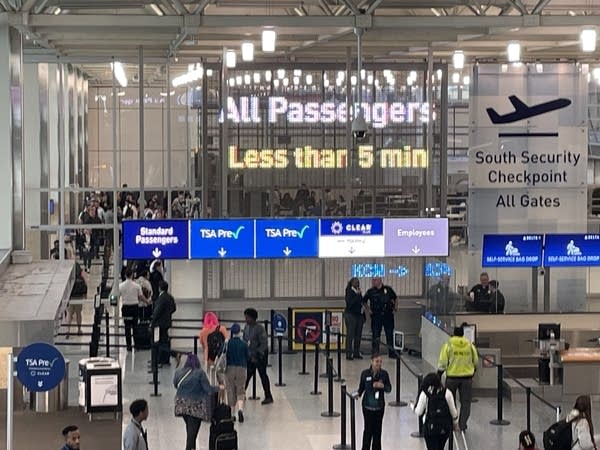
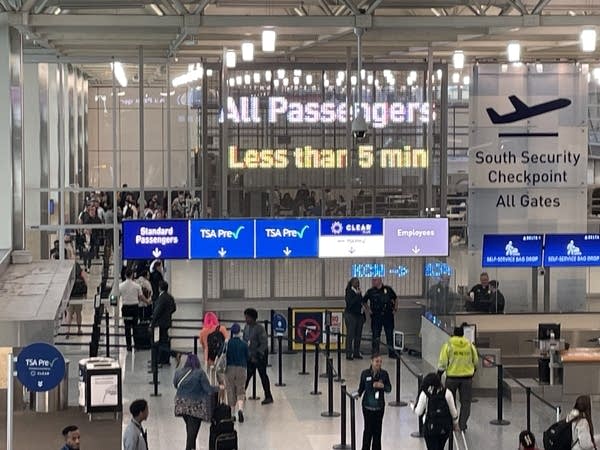
lines in airport

A holiday weekend is on the horizon for many Minnesotans, meaning a trip to the lake or cabin for some, or a trip farther away for others.

But high fuel prices amid the war in Iran may curb the appeal of a road trip or a last-minute flight.

Kyle Potter with Thrifty Traveler joined Morning Edition to talk about travel during a tumultuous few months for the airline industry.

“Things have gotten ugly, no question,” Potter said. “The average price of a gallon of jet fuel has hovered around $4 to $4.20 a gallon, so it feels similar” to gasoline. “But that said, the amount of money that airlines spend on jet fuel is absolutely enormous. So, it is hitting airlines incredibly hard, and I think everyday travelers are feeling that too, in the form of higher fares.”

Jet fuel supply, however, hasn’t been an issue in the U.S., despite some shortages in Europe and Asia.

As far as the shuttering of Spirit Airlines and Allegiant Air’s acquisition of Minnesota-based Sun Country Airlines, what it means for consumers remains an open question, Potter said, because it will take a long time for the two air carriers to integrate.

“Will Allegiant, as it swallows Sun Country, still offer the same cheap fares to as many destinations as Sun Country serves from Minneapolis today? That's a big question,” he said. “In the short term, no question, there aren't going to be any significant changes. But longer term, that's where I start to have some questions and concerns.”

Most people who are traveling by air over Memorial Day weekend bought their tickets weeks or months ago, and so there’s not been a major decline in broad, nationwide travel numbers, Potter said.

“I think we're in a weird intermediary period with travel, where it's hard to tell exactly where things are going to go, and, of course, it all hinges on what the prices of jet fuel and, therefore, tickets are in the weeks and months to come,” Potter said.

Listen to the full conversation by clicking the player button above.


Source link

Leave a Reply

Subscribe to Our Newsletter

Get our latest articles delivered straight to your inbox. No spam, we promise.

Recent Reviews


Apple has secured a major victory for its redesigned smartwatches as per the latest decision from the US International Trade Commission. The federal agency ruled against reinstating an import ban on Apple Watches, allowing the tech giant to continue selling its devices with a reworked blood-oxygen monitoring technology.

The ITC decided to terminate the case and refer to a preliminary ruling from one of its judges in March that claimed that Apple’s redesigned smartwatches don’t infringe on patents held by Masimo, the medical tech company that has long been embroiled in lawsuits surrounding the Apple Watch. Apple thanked the ITC in a statement, adding that “Masimo has waged a relentless legal campaign against Apple and nearly all of its claims have been rejected.” We reached out to Masimo for comment and will update the story when we hear back.

The latest decision could offer some closure to the longstanding legal feud between Masimo and Apple. The patent battle dates back to 2021 with Masimo’s first filing against Apple that requested an import ban on Apple Watches. The ITC ended up ruling that Apple violated Masimo’s patents, resulting in the previous import ban and the Apple Watch maker redesigning the blood-oxygen reading feature in certain models. However, Masimo wasn’t satisfied with this conclusion and sought another import ban on the updated Apple Watch models. Now that the ITC has ruled against that, Masimo is left with the option to appeal the decision with the US Court of Appeals for the Federal Circuit.

While Masimo may currently be on the losing side of this legal battle, it’s confronting Apple on multiple fronts. In November, a federal jury sided with Masimo and ruled that Apple has to pay $634 million in a separate patent infringement case.


Source link