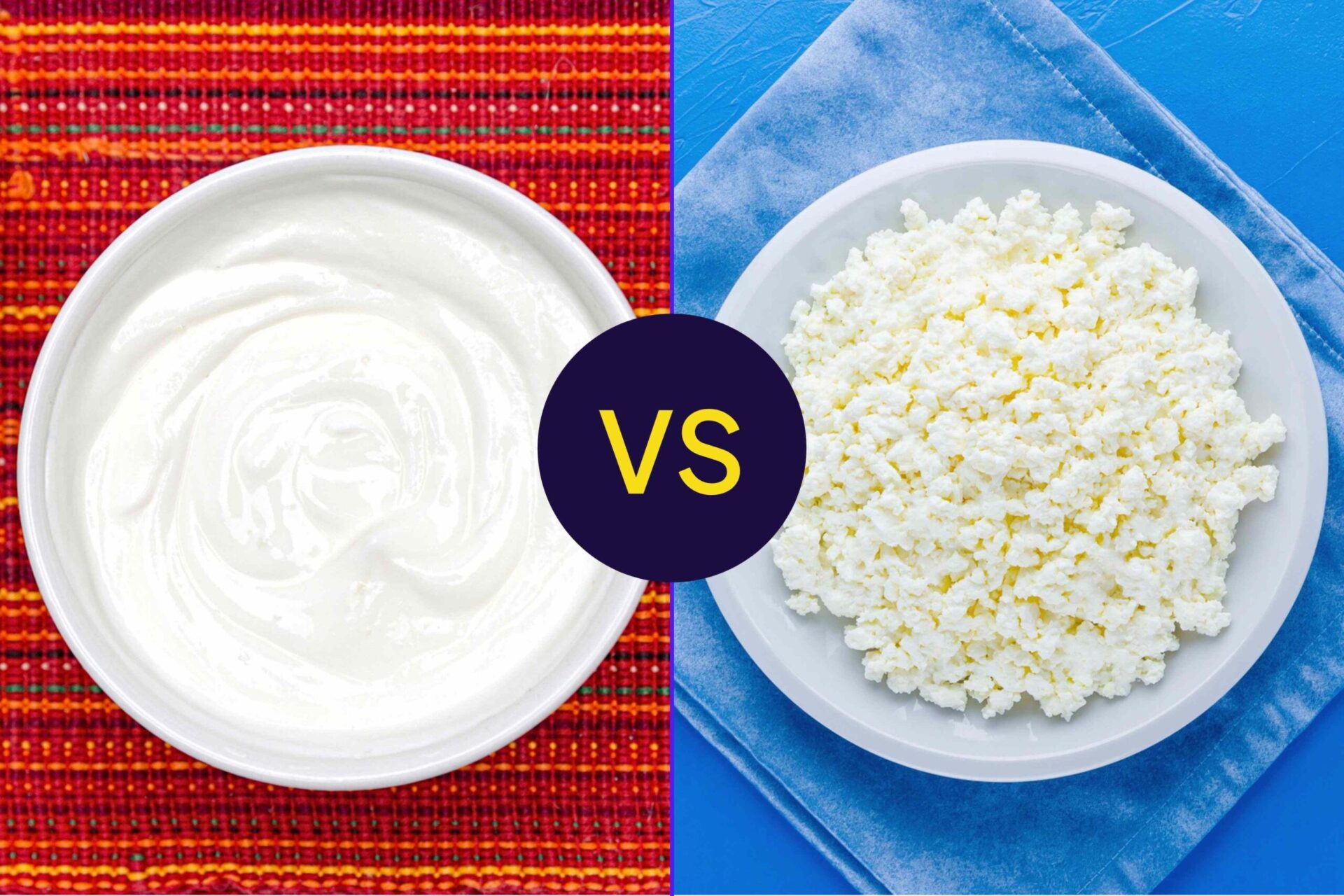
:max_bytes(150000):strip_icc():format(jpeg)/greekyogurtvscottagecheeseforweightloss-1875f4a0ee9044d1a1670d1adbf4ec03.jpg "A bowl of Greek yogurt and a bowl of cottage cheese side by side with a VS symbol in the center")
Credit: Health / Getty Images
- Cottage cheese has more protein to support muscle mass and satiety.
- Greek yogurt often has fewer calories, high protein, and contains probiotics that can support gut health and weight management.
- There are nonfat, low-fat, and full-fat versions of both Greek yogurt and cottage cheese. Reading labels can help you choose the best option for your dietary goals.
Both cottage cheese and Greek yogurt can support weight loss in different ways. It all comes down to which one you enjoy most and how you eat them with other foods.
Nutritional Comparison
Here is a nutritional comparison of 100 grams of Greek yogurt and cottage cheese with different fat contents:
| Nonfat Greek Yogurt | Nonfat Cottage Cheese | Low-Fat Greek Yogurt | Low-Fat Cottage Cheese | Whole Milk Greek Yogurt | Full-Fat Cottage Cheese | |
| Calories | 59 kcal | 72 kcal | 67 kcal | 82 kcal | 94 kcal | 103 kcal |
| Protein | 10.3 grams (g) | 10.3 g | 10.2 g | 11 g | 8.78 g | 11.6 g |
| Fat | 0.37 g | 0.29 g | 1.36 g | 2.3 g | 4.39 g | 4.22 g |
| Carbohydrates | 3.64 g | 6.66 g | 3.6 g | 4.31 g | 4.75 g | 4.6 g |
| Sodium | 36 milligrams (mg) | 372 mg | 36 mg | 321 mg | 34 mg | 350 mg |
Different types of Greek yogurt and cottage cheese vary in their protein, calorie, fat, carbohydrate, and sodium content:
- Lowest protein: Whole milk Greek yogurt
- Highest protein: Full-fat cottage cheese
- Lowest calories: Nonfat Greek yogurt
- Highest calories: Full-fat cottage cheese
- Lowest fat: Nonfat cottage cheese
- Highest fat: Full-fat cottage cheese
- Lowest carbohydrates: Low-fat Greek yogurt and nonfat Greek yogurt
- Highest carbohydrates: Nonfat cottage cheese
- Lowest sodium: Whole milk Greek yogurt
- Highest sodium: Nonfat cottage cheese
Cottage Cheese Has More Protein
Both cottage cheese and Greek yogurt have a good amount of protein. However, full-fat cottage cheese has about 3 grams more protein than full-fat Greek yogurt, per 100-gram serving.
Protein supports muscle mass and satiety, which are important for weight management. Muscles are metabolically active tissues. More muscle mass means you burn more calories, even while resting.
Muscle tissue also helps regulate blood glucose (sugar) because muscles use glucose for energy and store it as glycogen.
Cottage cheese is also rich in casein, a milk protein that digests slowly. This provides a steadier release of amino acids for muscles and may help you feel full for longer.
Some studies suggest that consuming casein before sleep can positively affect muscle recovery after exercise.
Greek Yogurt Often Has More Probiotics
Greek yogurt is often made through fermentation and contains live bacteria such as Lactobacillus and Bifidobacterium. These beneficial bacteria are called probiotics. Probiotics are living microorganisms that support metabolic health by improving gut health.
Cottage cheese is also fermented, but typically for a shorter time than yogurt. It is also usually rinsed, which can reduce the amount of probiotics in the final product.
Studies suggest that taking Lactobacillus and Bifidobacterium may support weight loss.
Probiotics may help support weight management in several ways. Gut bacteria break down food into compounds that can help regulate appetite. A healthy gut is also better at absorbing nutrients and keeping harmful substances out of the body. This may help lower inflammation, improve insulin sensitivity, and support better blood sugar management.
Probiotic content can vary depending on the fermentation and manufacturing processes. To find products with probiotics, look for labels that say “live and active cultures.”
Greek Yogurt Has Less Sodium
Greek yogurt has much less sodium than cottage cheese. It can be a better choice for those on a low-sodium diet while losing weight. You can also choose low-sodium cottage cheese.
Overall Diet Matters More Than Eating the “Best” Foods
Both cottage cheese and Greek yogurt can be great choices for people following a weight-loss diet. However, your overall diet matters more than eating single “best” foods. The amount of calories, protein, and fiber you eat, along with your lifestyle, can affect your weight loss journey. You can focus more on choosing whole foods and eating balanced meals rather than trying to choose the “best” foods.
How To Incorporate Cottage Cheese and Greek Yogurt Into Your Diet
Cottage cheese and Greek yogurt are versatile, high-protein foods that pair well with meals or serve as snacks. Here are simple ways to incorporate them into your diet:
- Mix cottage cheese with eggs to make a fluffy, high-protein omelet.
- Add Greek yogurt to smoothies, breakfast oats, or fruit parfaits.
- Add cottage cheese or Greek yogurt to pancake batter.
- Spread cottage cheese on crackers.
- Use cottage cheese or Greek yogurt in dips and sauces.
- Mix Greek yogurt with fruit, nuts, and seeds, then freeze it for a refreshing snack.
- Try desserts such as mousse made with cottage cheese, cocoa, and honey.
- Replace creamy ingredients with cottage cheese or Greek yogurt when possible. Cottage cheese usually works better in savory foods, while Greek yogurt pairs well with sweeter foods.