5 Simple After-Dinner Habits to Help Lower Your Cholesterol Levels


Credit: semenovp / Getty Images
  • A short walk after dinner may support healthy cholesterol and heart health.
  • Limiting late-night snacks can help support healthy cholesterol levels by reducing saturated fat and added sugar intake.
  • Getting enough sleep may support healthier cholesterol levels over time.

If you're trying to lower your cholesterol, don't overlook what happens after dinner. Your evening habits can affect your activity, sleep, and food choices the next day, all of which can influence cholesterol and heart health. While no single habit will lower cholesterol overnight, small changes can support your overall heart health. Here are five healthy after-dinner habits worth considering.

1. Take a Walk After Dinner

Taking a walk after dinner is a simple way to support heart health.

Regular physical activity can help raise HDL ("good") cholesterol, lower triglycerides, support weight management, and improve cardiovascular health.

The good news is you don't have to spend an hour at the gym to see benefits. Even a 10-to-20-minute walk after dinner can help you move more and work toward the recommended 150 minutes of moderate-intensity activity per week.

Walking after dinner may also help support healthy blood sugar levels. This matters because insulin resistance and type 2 diabetes are linked with higher levels of LDL ("bad") cholesterol and triglycerides.

2. Skip Late-Night Snacking

Late-night snacking isn't always a problem, but the foods people tend to reach for at night often aren't the best choice for heart health.

Ice cream, chips, cookies, candy, and other ultra-processed snacks are often high in saturated fat, added sugar, or both. Eating these foods regularly may make it harder to manage cholesterol levels and maintain a healthy weight.

If you find yourself hungry every night after dinner, it may be worth looking at your meals earlier in the day. Protein, fiber, and healthy fats help keep you satisfied and may reduce cravings later in the evening.

If you're truly hungry, choose a snack that provides fiber and/or healthy fats, such as fruit, air-popped popcorn, or a small handful of nuts.

3. Unwind Before Bed

Stress may not affect cholesterol as directly as diet, but it can influence many of the habits that support healthy cholesterol levels.

When you're stressed, you may be more likely to overeat, skip exercise, sleep poorly, or rely on convenience foods. Over time, those habits can take a toll on heart health.

That's why it can be helpful to build a few minutes of stress management into your evening routine.

Some options include:

  • Reading a book
  • Gentle stretching or yoga
  • Journaling
  • Meditation
  • Deep breathing exercises
  • Taking a warm bath

4. Prioritize Sleep

Sleep is easy to overlook when talking about cholesterol, but it plays an important role in overall heart health.

Research suggests that poor sleep is linked to higher levels of LDL cholesterol and triglycerides. Not getting enough sleep can also affect hormones that regulate hunger and appetite, making it harder to stick to healthy eating habits.

Most adults should aim for seven to nine hours of sleep each night. Try going to bed and waking up around the same time each day, limiting screen time before bed, and keeping your bedroom cool, dark, and quiet.

5. Spend a Few Minutes Meal Prepping

A few minutes of planning at night can make healthy eating easier the next day. When life gets busy, it's easy to grab whatever is convenient. Unfortunately, those foods are often higher in saturated fat, sodium, and added sugar than meals prepared at home.

Meal planning doesn't have to mean spending hours in the kitchen. Even something as simple as packing your lunch, washing fruit, prepping overnight oats, or deciding what's for dinner the next day can help.

Planning ahead may also make it easier to include foods that support healthy cholesterol levels, such as fruits, vegetables, beans, whole grains, nuts, seeds, and fatty fish.

Other Ways to Help Lower Cholesterol

Healthy after-dinner habits can help, but they work best when paired with other cholesterol-lowering strategies. These include:

  • Eat more soluble fiber from oats, beans, lentils, apples, chia seeds, and flaxseeds
  • Choose unsaturated fats from olive oil, nuts, seeds, avocado, and fatty fish
  • Limit saturated fat from fatty meats, butter, full-fat dairy, and fried foods
  • Exercise regularly, aiming for at least 150 minutes per week
  • Avoid smoking and limit alcohol


Source link

Leave a Reply

Subscribe to Our Newsletter

Get our latest articles delivered straight to your inbox. No spam, we promise.

Recent Reviews


PeopleSoft Architecture – Table of Content

In this blog, We are going to learn about the architecture of Peoplesoft in detail. So without wasting our time, let’s get on with it.

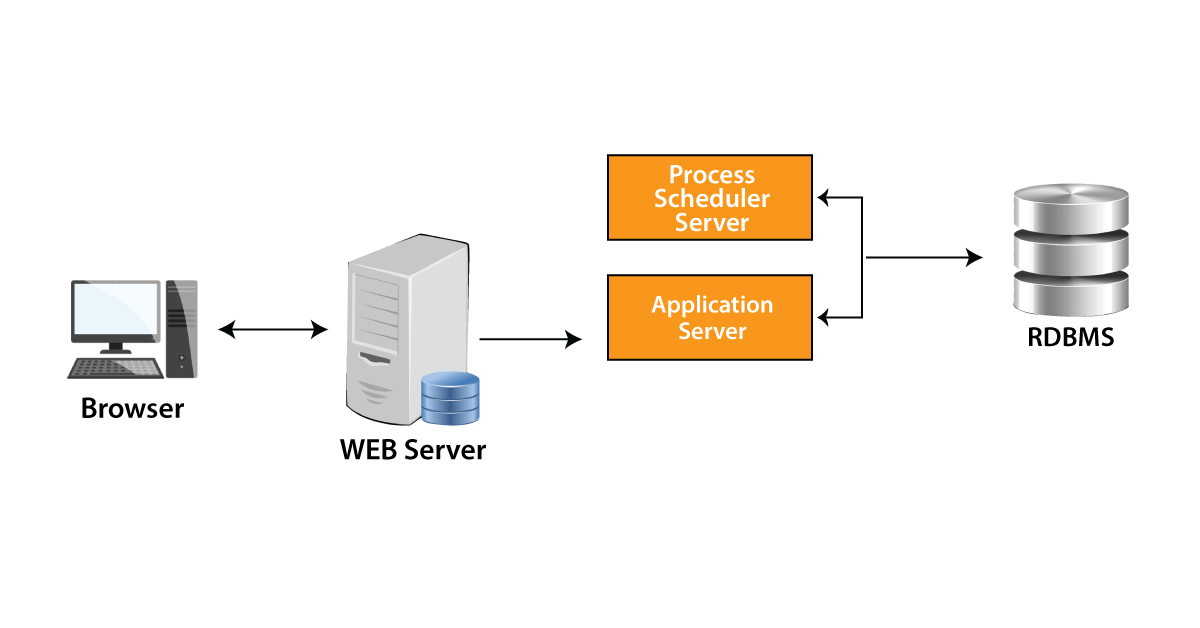
PeopleSoft application operates under PeopleSoft Internet Architecture that needs various Hardware and Software components such as 

  • Database server
  • Process Scheduler server
  • Application server
  • Web browsers
  • Web Servers

We need to understand the role of every component before deciding the configuration options that are most appropriate for the implementation.

implementationThe requests are sent by the web browser to the web server. The web server will pass the request to the application server, which will generate the SQL to be executed in the database.


The configuration of the PeopleSoft infrastructure is not only about enabling the deployment of Internet applications via a browser. PeopleSoft allows us to benefit from many of PeopleSoft’s Internet, intranet, and back-end solutions, that includes service-orientated architecture, Performance Monitor, Feeds Framework, PeopleSoft Interaction Hub, and Search Framework.

           We have the perfect professional PeopleSoft Admin Training course for you. Enroll now!

PeopleSoft Admin Training

  • Master Your Craft
  • Lifetime LMS & Faculty Access
  • 24/7 online expert support
  • Real-world & Project Based Learning

Database Server: 

The database server hosts a database engine and PeopleSoft application database consisting of all PeopleTools application definitions, metadata, system tables, application data, and application tables. The database server manages the connections of the application server, the connections of the development environment, and the batch programs executing against it at the same time. The PeopleSoft database is the repository of all the information that the PeopleSoft application manages. PeopleSoft application data and metadata are stored and kept up to date within the database. Application Designer is the primary tool in the development environment, allowing us to define, edit and manage this metadata that the system uses to control the execution architecture. This metadata collection specifies a PeopleSoft application.

Process Scheduler server: 

PeopleSoft Process Scheduler environment is also called the “batch” environment. This is where most of the batch programs like Application Engine programs run, and that’s where you installed the COBOL and SQR executables. In a multi-server environment, we can choose where to find your Process Scheduler environment depending on server availability and performance requirements. Within the topology of PeopleSoft, Process Scheduler can be installed on a separate server, or it may be executed on the database server or application server.

                                 We have the perfect professional PeopleSoft HRMS Tutorial for you. Enroll now!

Application servers and associated components:

Application server: It is the heart of PeopleSoft’s Internet architecture. The business logic is executed by the application server and SQL is submitted to the database server. The application server is made up of many PeopleSoft server processes that are grouped into domains. Every server process in a domain offers unique processing capabilities, allowing the application server to effectively respond to multiple transactional requests produced in the PeopleSoft architecture. Application servers need locally installed database connectivity software to keep SQL connected to RDBMS. You need to install the necessary connectivity software and related utilities for your RDBMS on any server where you plan to run the PeopleSoft application server.

Once an application server has established a database connection, any device which issues a transaction request across the application server benefits from the direct connection of the application server to the database.

  • Oracle Jolt and Tuxedo: PeopleSoft utilizes Oracle Tuxedo for managing transactions between the application server and the database. PeopleSoft uses Oracle Jolt to make it easier to communicate between PeopleSoft running on the webserver and Tuxedo running on the application server. Oracle Tuxedo and Jolt are mandatory components of PeopleSoft’s application server.
  • Domains: A domain is a set of supporting processes, server processes, and resource managers which allows the database connections necessary to meet application requests. Every domain is managed with a separate configuration file, and every application server domain is configured for connecting to a single database. One application server machine may support more than one application server domain executing on it. Using the psadmin utility, we can configure the application server domain.
HKR Trainings Logo

Subscribe to our YouTube channel to get new updates..!

  • Peoplesoft server Processes: When we start an application server domain, it will start all the server processes related to this domain. Many server processes are executed in a domain. Every server process creates a permanent connection to a PeopleSoft database, which acts like a generic SQL pipeline which is used by server processes for sending and receiving SQL. Every server process utilizes its own unique SQL connection to make requests from several sources easier. From an RDBMS point of view, every server process in a domain represents a logged-on user.
  • Services: When a request is submitted to the application server by a PeopleSoft application, service name and a set of parameters are also submitted like MgrGetObject and also its parameters. The transaction request is queued by the Tuxedo to a particular server process which is designed to manage certain services. When the server process starts, it informs the system about the predefined services it manages.
  • Listeners, Handlers, and Queues: All these Listeners, Handlers, and Queues form the basis for the functionality of a domain. They receive requests, direct the requests, store the requests, follow-up requests, and respond to return requests.

Web Servers:

A Java-compatible web server is needed for extending the architecture of PeopleSoft to the Internet and intranet. When Peoplesoft Internet Architecture is installed on the webserver, a collection of Java servlets was designed to handle a wide variety of PeopleSoft transactions from the Internet or Intranet.

PeopleTools supports and offers the following standard web servers to be used in the PeopleSoft implementation:

  • IBM WebSphere
  • Oracle WebLogic
  • PeopleSoft Servlets

The following are the PeopleSoft servlets available on the webserver:

  • PSIGW:
  • Portal
  • PSEMHUB
  • PSINTERLINKS
  • Report Repository

Web browsers:

Peoplesoft Applications and administrative tools can be accessed by the supported Web browser. It is unnecessary to install any other software on the workstation that runs the browser, like the connectivity software or the downloaded applets.

PeopleSoft only sends the following elements to the browser:

As the browser only handles this core Internet content, the client workstation is not overloaded by an unnecessary processing responsibility. The entire process is performed at the server level.

    Click here to get frequently asked PeopleSoft Admin interview questions for freshers & experienced professionals

PeopleSoft Admin Training

Weekday / Weekend Batches

Conclusion: 

In this blog, we have gone through the architecture of Peoplesoft and the components of Peoplesoft architecture. I hope you found this information useful.

Related Article:

Peoplesoft Data Management Training


Source link