:max_bytes(150000):strip_icc():format(jpeg)/Health-GettyImages-2175189846-2799034f632040ca9426708ee816ad45.jpg "Closeup of fresh lettuce leaves")
Credit: wing-wing / Getty Images
- Lettuce or salad greens may be a source of the current cyclosporiasis outbreak.
- Lettuce is especially vulnerable because the parasite can contaminate it through water during growing or processing, and greens are usually eaten raw.
- Experts recommend practicing good food safety, but they are not advising people to stop eating lettuce while the investigation continues.
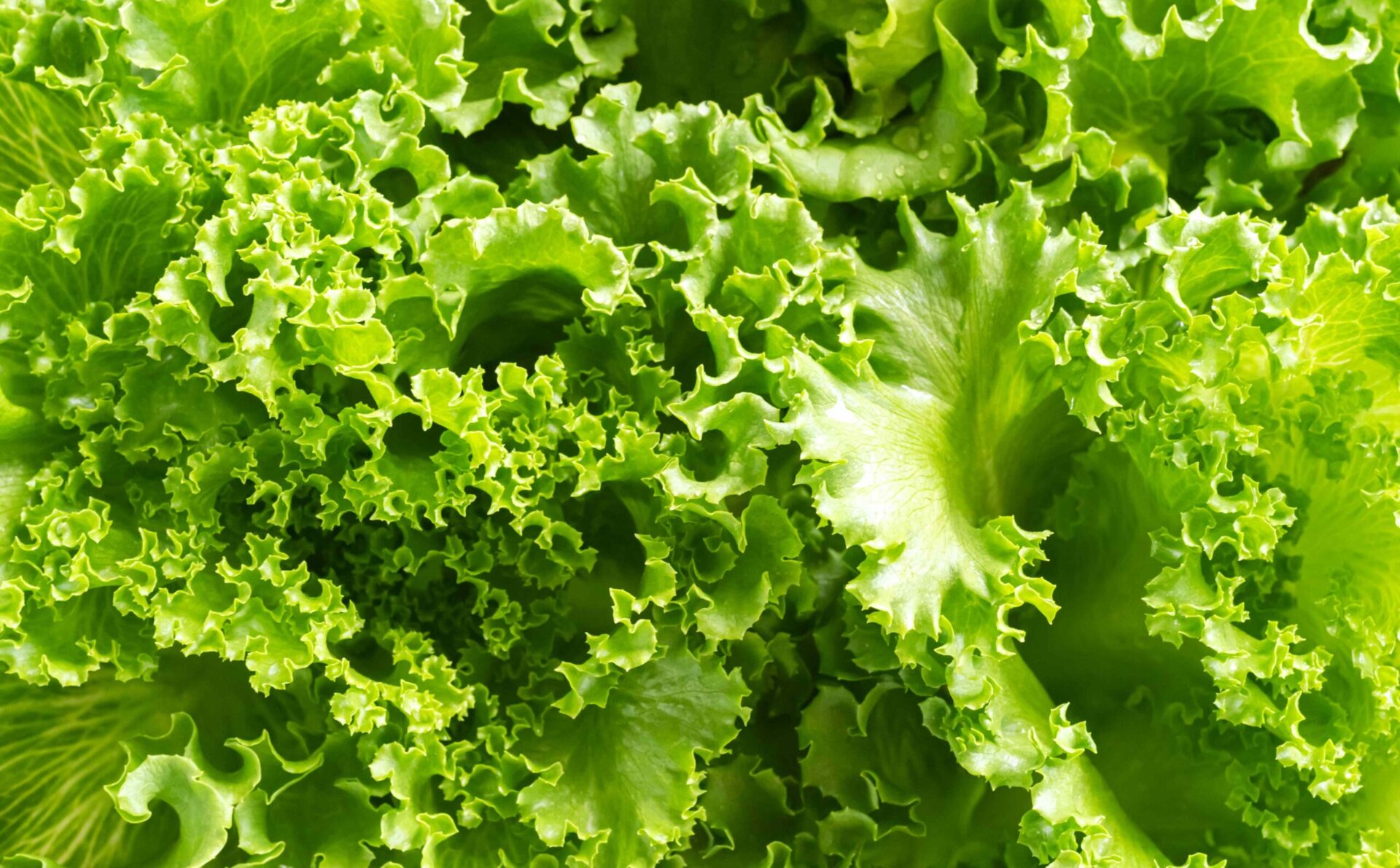
Lettuce or salad greens have been identified as a potential source of the current outbreak of cyclosporiasis, a parasitic infection known for causing severe diarrhea.
Officials in Michigan—the state with the most cyclosporiasis cases, currently at 3,309—said lettuce has commonly come up in their traceback investigations and patient interviews, though they have not completely ruled out other foods.
Nationwide, the Centers for Disease Control and Prevention has confirmed 843 cases across 31 states, but state-level data suggest the true number is closer to 4,000. Here’s what you need to know about the current status of the outbreak.
What to Know About Lettuce and Cyclosporiasis
Lettuce, and leafy vegetables in general, are a common source of foodborne illness and have been linked to cyclosporiasis outbreaks in the past.
Cyclospora, the parasite that causes cyclosporiasis, spreads through human feces. It typically reaches lettuce through contaminated irrigation or wash water, but can also come into contact with the produce during harvesting, processing, or distribution, said Wade Syers, DSocSci, a statewide food safety specialist at Michigan State University Extension.
Lettuce is particularly susceptible to cyclospora because “leafy greens have high surface area with lots of folds and crevices that trap the parasite,” explained Zoe Weiss, MD, director of clinical microbiology at Tufts Medical Center. And since lettuce is typically eaten raw, there’s no “kill step” to destroy pathogens during the cooking process.
The Michigan Department of Health and Human Services (MDHHS) has not identified a specific type of lettuce as the source of the outbreak, nor a particular grower or supplier.
The Washington Post reported that Taco Bell is being investigated after some Detroit-area locations put up signs that they were “currently unable to sell Lettuce, Cilantro Onion, Pico de Gallo, and Guacamole due to a nationwide recall”—but the MDHHS has not confirmed this. Taco Bell did not respond to a request for comment.
Are There Any Other Foods to Worry About?
While the MDHHS is zeroing in on lettuce, it has not determined if that is the only contaminated food. Cyclosporiasis outbreaks are typically linked to fresh fruit and vegetables, and the MDHHS noted several produce items responsible for previous outbreaks in the U.S. and Canada, including:
- Fresh cilantro
- Fresh basil
- Raspberries
- Snow peas
- Green onions (scallions)
Also, experts said even if lettuce is responsible for cyclosporiasis cases in Michigan, it’s not yet clear whether it’s the source of cases in other states. Health officials would have to identify exactly which lettuce is causing the outbreak to determine whether it’s the same source of cyclosporiasis in other states, Syers said.
“It is not 100% clear yet whether all or just some of the cases we are seeing reported right now represent a single outbreak or multiple simultaneous outbreaks,” Weiss added.
How to Protect Yourself
You can always avoid lettuce and produce altogether, but experts did not say that precaution is necessary. “I can tell you that I have not changed my fresh produce consumption patterns,” Don Schaffner, PhD, department chair, distinguished professor, and extension specialist in food science at Rutgers University, told Health.
Instead, experts recommend focusing on regular food safety behaviors, including washing your hands often during food preparation and rinsing all produce under running water.
The MDHHS recommended several steps for handling lettuce, specifically:
- Buy whole heads of lettuce instead of pre-washed, bagged lettuce or salad kits.
- Throw out the outer two to three layers of the lettuce head.
- Wash the remaining inner leaves thoroughly under clean running water.
The agency also advised cooking your greens to at least 158 degrees Fahrenheit—the temperature at which cyclospora dies. The parasite is resistant to chemical cleaning, and washing alone cannot guarantee its removal from produce.
If you do experience signs of infection—including watery diarrhea, nausea, or flu-like symptoms—contact a healthcare provider. Stool testing can confirm if you have cyclosporiasis, and it’s treatable with an antibiotic.
Why Is This Outbreak So Bad?
Cyclosporiasis typically surges in the warmer months, as the parasite thrives in heat and humidity. But the U.S. typically sees 3,000 to 4,000 cases the whole year—not by July. In Michigan, there’s usually about 50 cyclosporiasis cases per year. “It is dramatically higher,” Syers told Health. “We’re definitely seeing an outbreak.”
There are likely several reasons behind this year’s bad cyclosporiasis season, Syers said. The contaminated food source may have been widely distributed, or it could be the especially hot weather this summer.
Cyclosporiasis is also very hard to track, Weiss added. “The onset of illness can take one to two weeks from exposure,” she said. “So it can be difficult for people to remember what they ate two weeks ago, especially if it was an ingredient in a dish they got at a restaurant, for example.”
A lack of national cyclosporiasis surveillance could also be a factor, Weiss noted. In July 2025, the CDC scaled back a government program that monitors food poisoning on the national level, known as FoodNet. It’s currently only required to monitor illnesses caused by two pathogens, but it used to track eight—including cyclospora.
“I don’t think that scale back has impacted the current outbreak, but certainly the wisdom of that decision might be in question right now,” Schaffner said. “Clearly this is a microorganism that we need to learn more about, and FoodNet should be part of that process.”
With that in mind, experts recommend following your state’s local reporting for the most accurate information about the cyclosporiasis case counts and potential food sources near you.