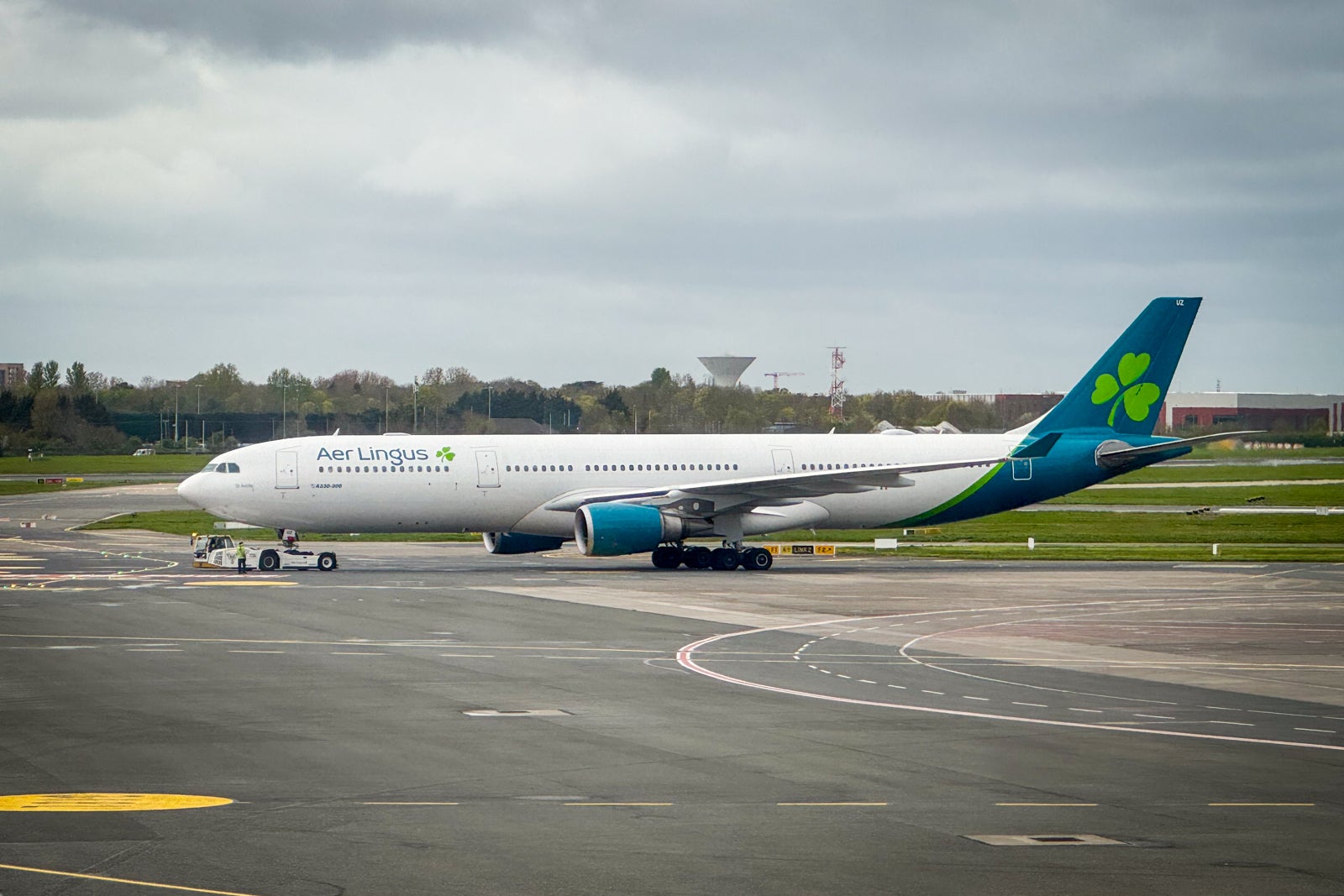
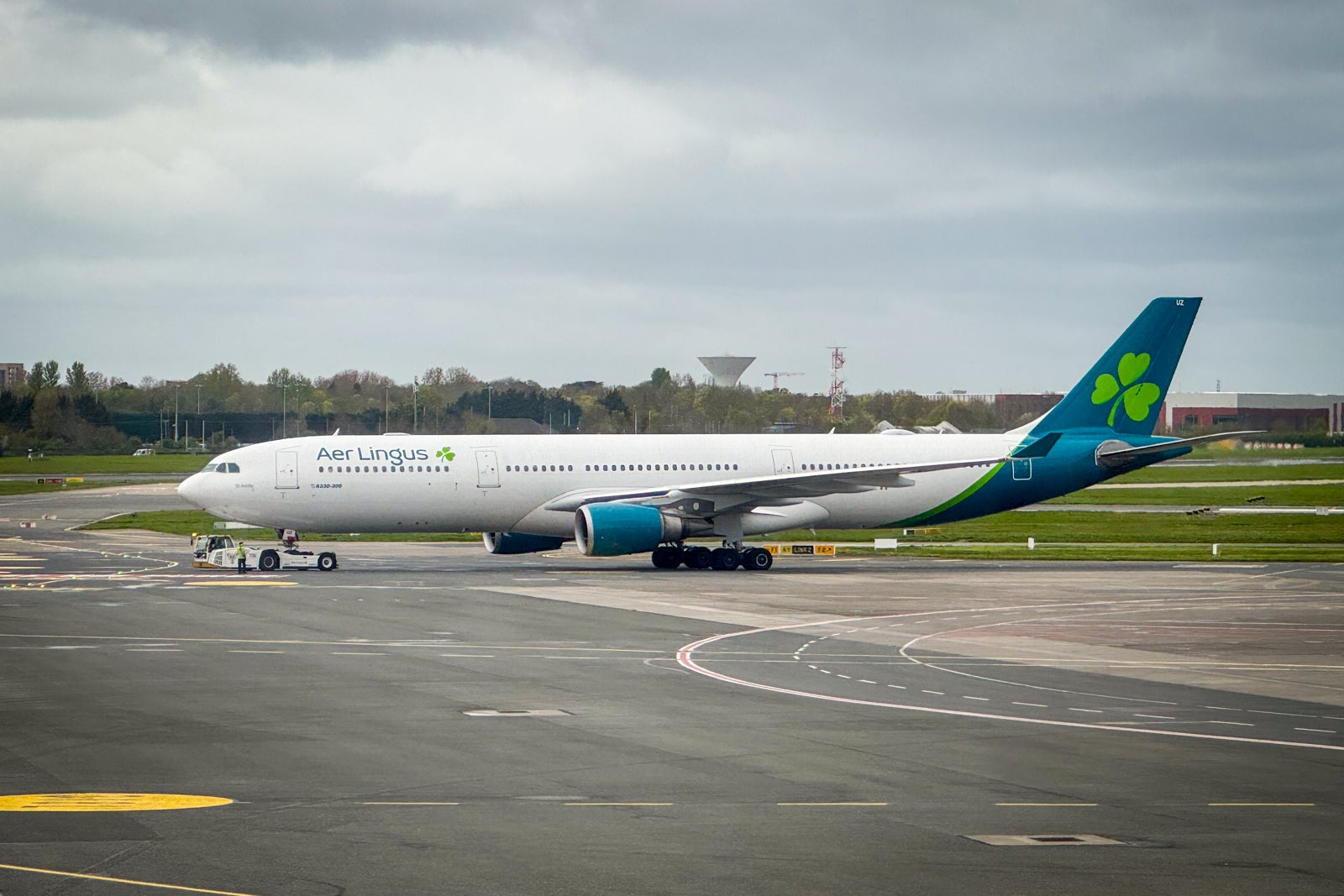
Aer Lingus business class aboard the Airbus A330


Quick take: Aer Lingus business class is a great transatlantic option — award space is plentiful, taxes and fees are low, and flights departing Ireland to the U.S. include customs and immigration preclearance.

Pros

  • There is a lot of award availability at affordable rates using partner miles.
  • Delightful crew members provide attentive service.
  • U.S. travelers can take advantage of preclearing customs and immigration in Dublin.
  • The Dublin lounge, which business-class passengers can access, has just reopened after a refurbishment.

Cons

  • The seats feel dated, and the layout lacks privacy.
  • Bedding is scant — just a blanket and a pillow.
  • The amenity kits could feel a little more premium.
ERIC ROSEN/THE POINTS GUY

Although it’s owned by the same parent company as British Airways and Iberia, folks tend to forget about Aer Lingus, the flag carrier of Ireland, since it’s not part of one of the major airline alliances.

However, Aer Lingus does have plenty of airline partners, including Alaska Airlines, American Airlines and United Airlines. Plus, its AerClub loyalty program even uses Avios as its currency — just like British Airways, Finnair, Iberia and Qatar Airways do.

What’s more, the taxes and fuel surcharges when flying to or from Dublin are much lower than those of many other European airports, and especially compared to London.
ERIC ROSEN/THE POINTS GUY

Aer Lingus currently flies from its hubs at Dublin Airport (DUB) and Shannon Airport (SNN) to about 20 cities in the U.S., including major cities like Boston, Chicago, Los Angeles and New York City. It also flies to destinations that might seem more surprising, like Cleveland, Minneapolis and Nashville.

For all those reasons, there are plenty of opportunities to use points and miles to fly Aer Lingus across the Atlantic, both in economy and business class. In fact, the airline regularly offers decent business-class award availability. That’s how I recently booked a one-way ticket from Dublin to Seattle at the tail end of a trip.

Here’s how I booked Aer Lingus business class using miles and what my flight experience was like.

Reward your inbox with the TPG Daily newsletter

Join over 700,000 readers for breaking news, in-depth guides and exclusive deals from TPG’s experts

How much does it cost to book Aer Lingus business class?
ERIC ROSEN/THE POINTS GUY

The cost of an Aer Lingus long-haul, business-class ticket depends on the route, dates and whether you’re flying round-trip or one-way.

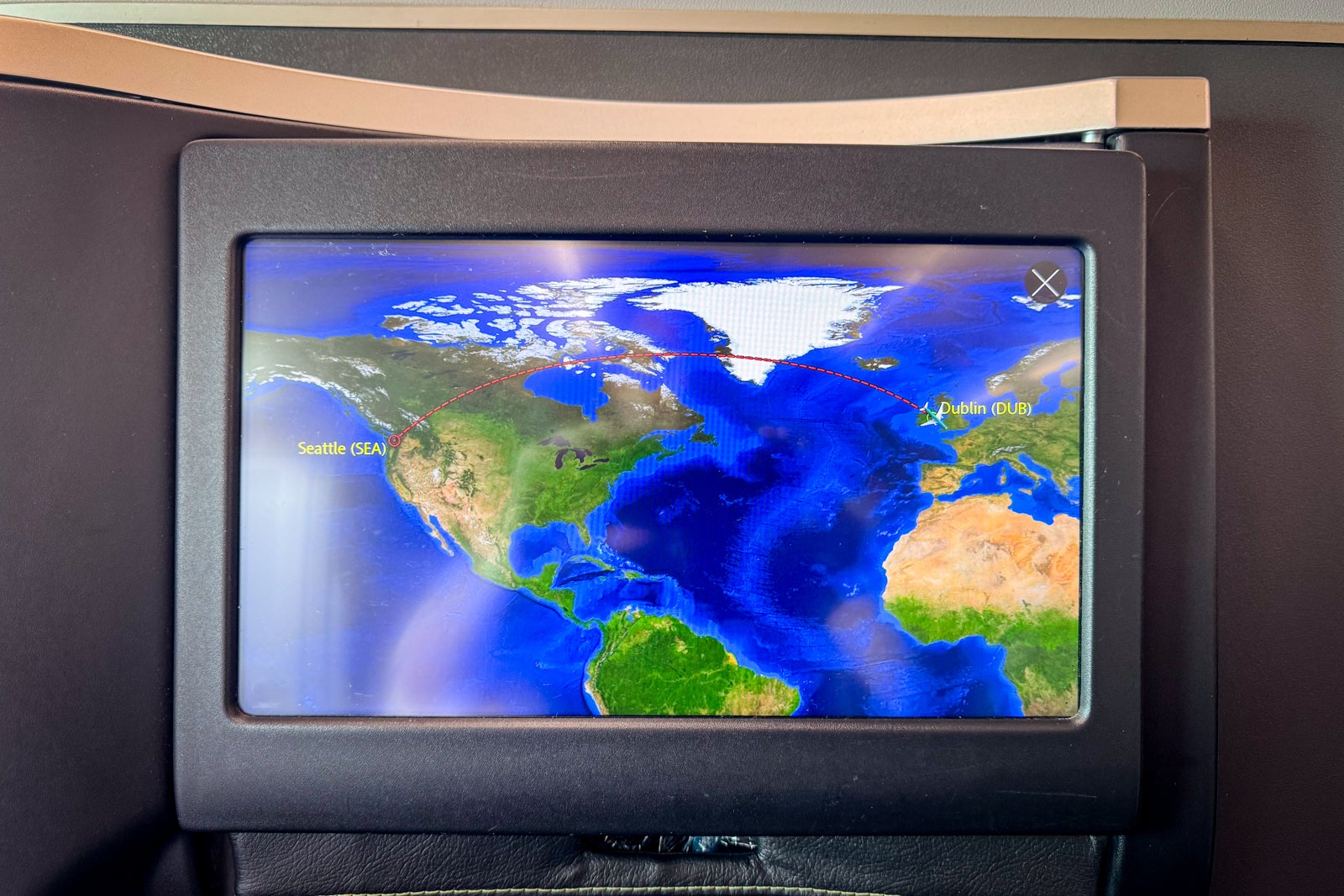
My one-way flight from DUB to Seattle-Tacoma International Airport (SEA) would have cost $3,500. However, I was able to redeem just 55,000 Alaska Airlines Atmos Rewards points plus $60 in taxes and fees for my ticket. That way, I netted a value of about 6.25 cents per point — well above TPG’s May 2026 valuation of Atmos Rewards points.

Some of the airline’s shorter transatlantic flights, including those to Boston Logan Airport (BOS), John F. Kennedy International Airport (JFK) and Dulles International Airport (IAD), only require 45,000 Atmos Rewards points each way in business class.

Here’s a snapshot of the other frequent flyer programs from which I could have redeemed miles for my one-way ticket.

Frequent-flyer program Miles and taxes

62,500 + $243

Alaska Airlines Atmos Rewards

55,000 + $60

American Airlines AAdvantage

57,500 + $48

85,000-93,000 + $48

Alaska Airlines is a 1:1 transfer partner of Bilt. You can also transfer Marriott Bonvoy points at a 3:1 ratio to Alaska.

The best way to stock up on Alaska Airlines Atmos Rewards points quickly, however, is to apply for one of the following cobranded credit cards:

Checking into and boarding Aer Lingus business class
ERIC ROSEN/THE POINTS GUY

Aer Lingus long-haul business-class passengers can enjoy the following priority services at the airport:

Priority check-in Yes

Three checked bags with a combined weight of up to 150 pounds

Yes

Does the airline participate in TSA PreCheck?

Yes

Yes

I began my journey in London and was the only passenger in line for the business-class check-in, where I received both my boarding passes and a pass to visit the small Aer Lingus lounge in Heathrow Airport’s (LHR) Terminal 2.

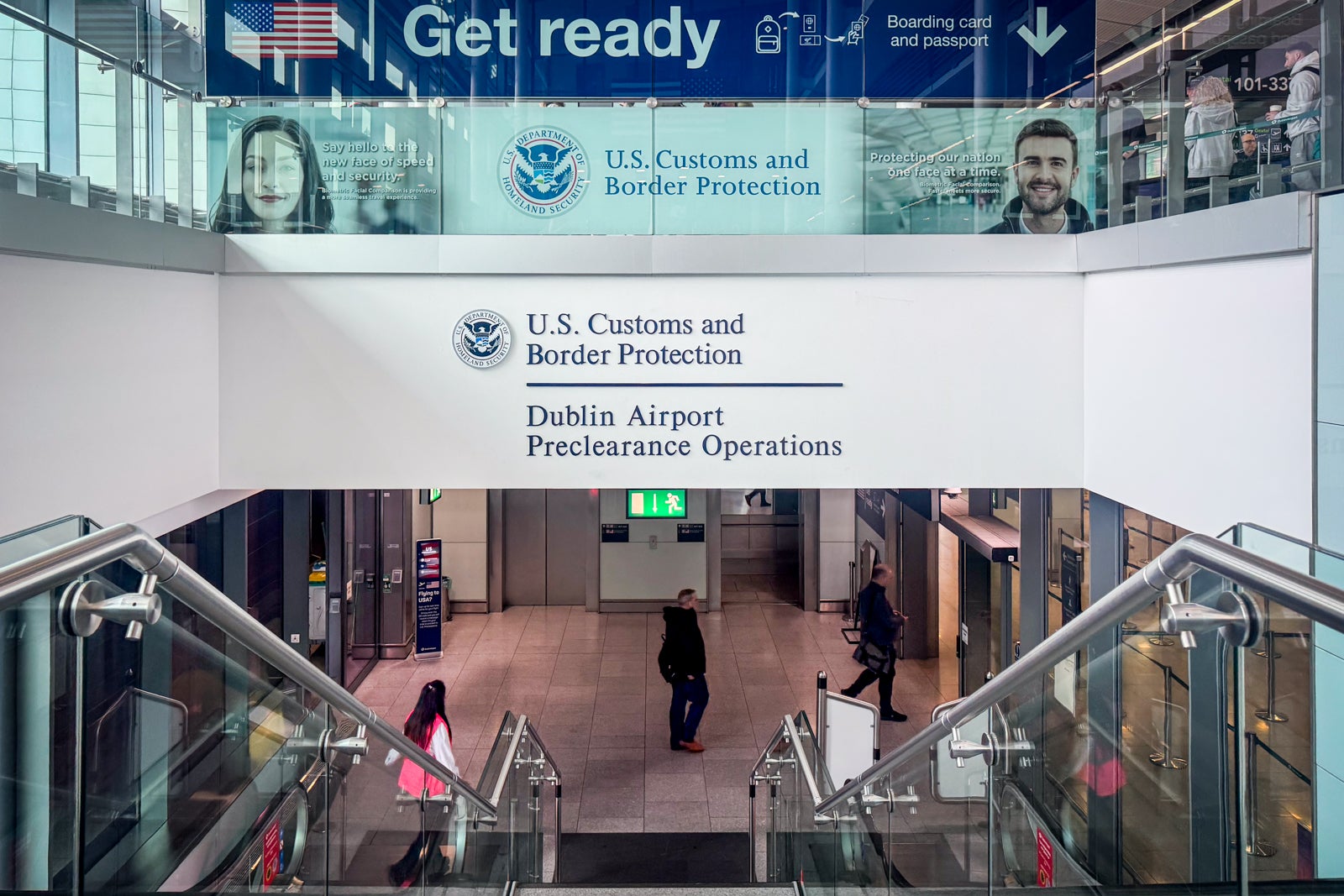
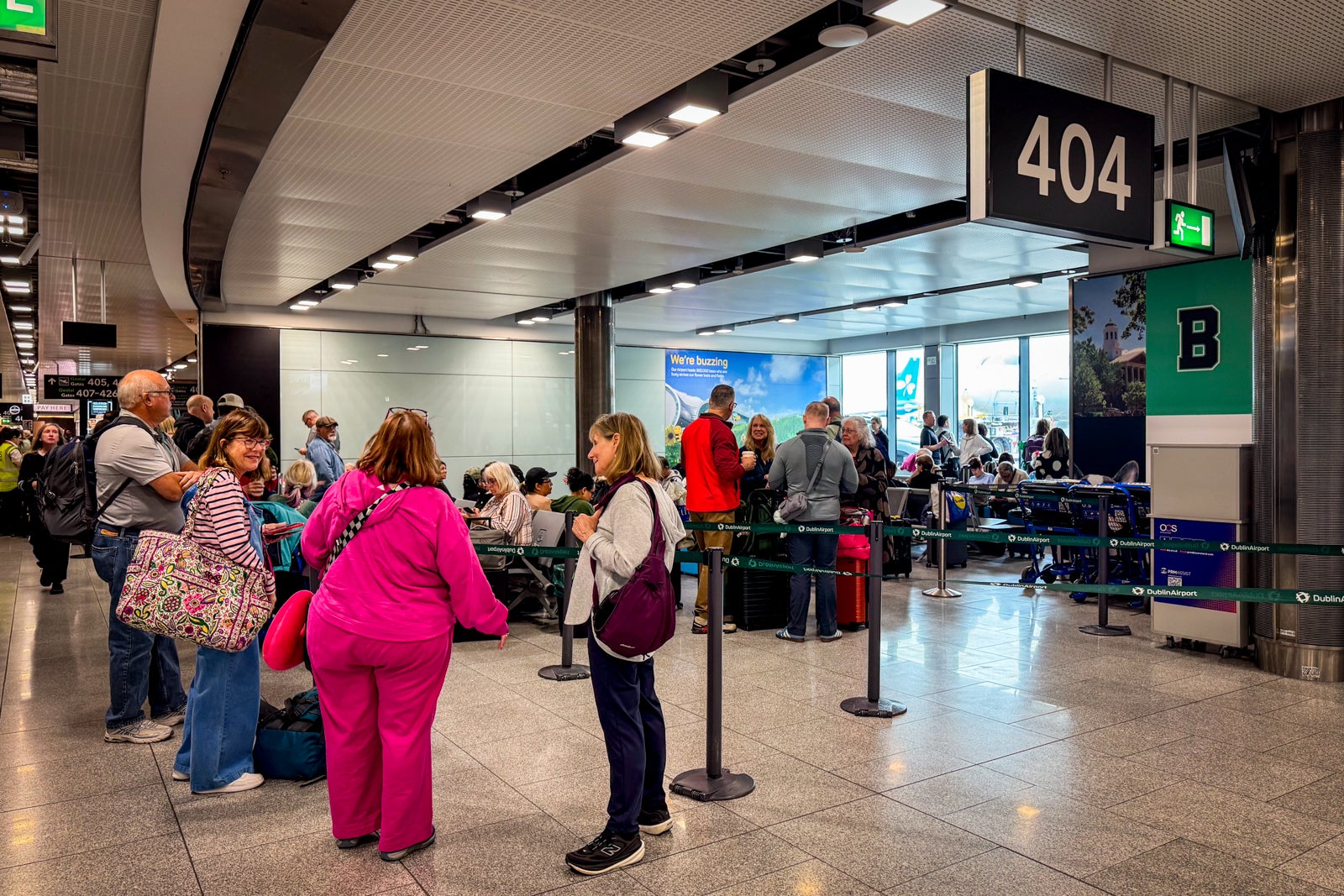
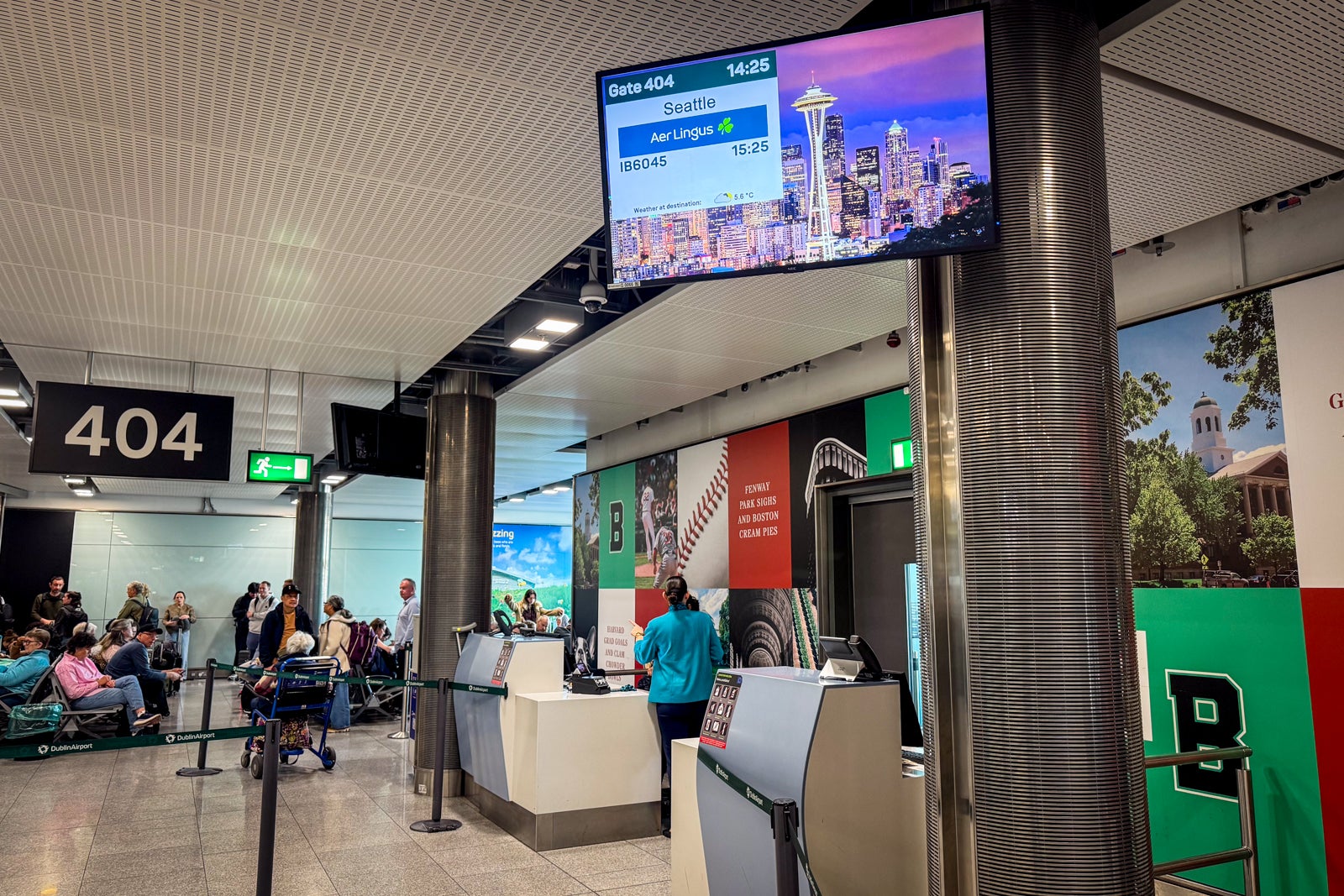
My flight arrived in Dublin about four hours before my transatlantic connection. Flights to the U.S. operate from a dedicated area of the terminal at Dublin Airport, where passengers undergo security screening and processing by U.S. customs and immigration. Passengers are told to proceed to this area about three hours before their flight departs, but in reality, you can go in anytime (though there are only a few restaurants and shops once you’re through).
ERIC ROSEN/THE POINTS GUY

While these circumstances can add some time at the beginning of your journey, it means that when you land in the U.S., you can simply collect your bags and either head out of the airport or connect to your onward flight with no further screening.

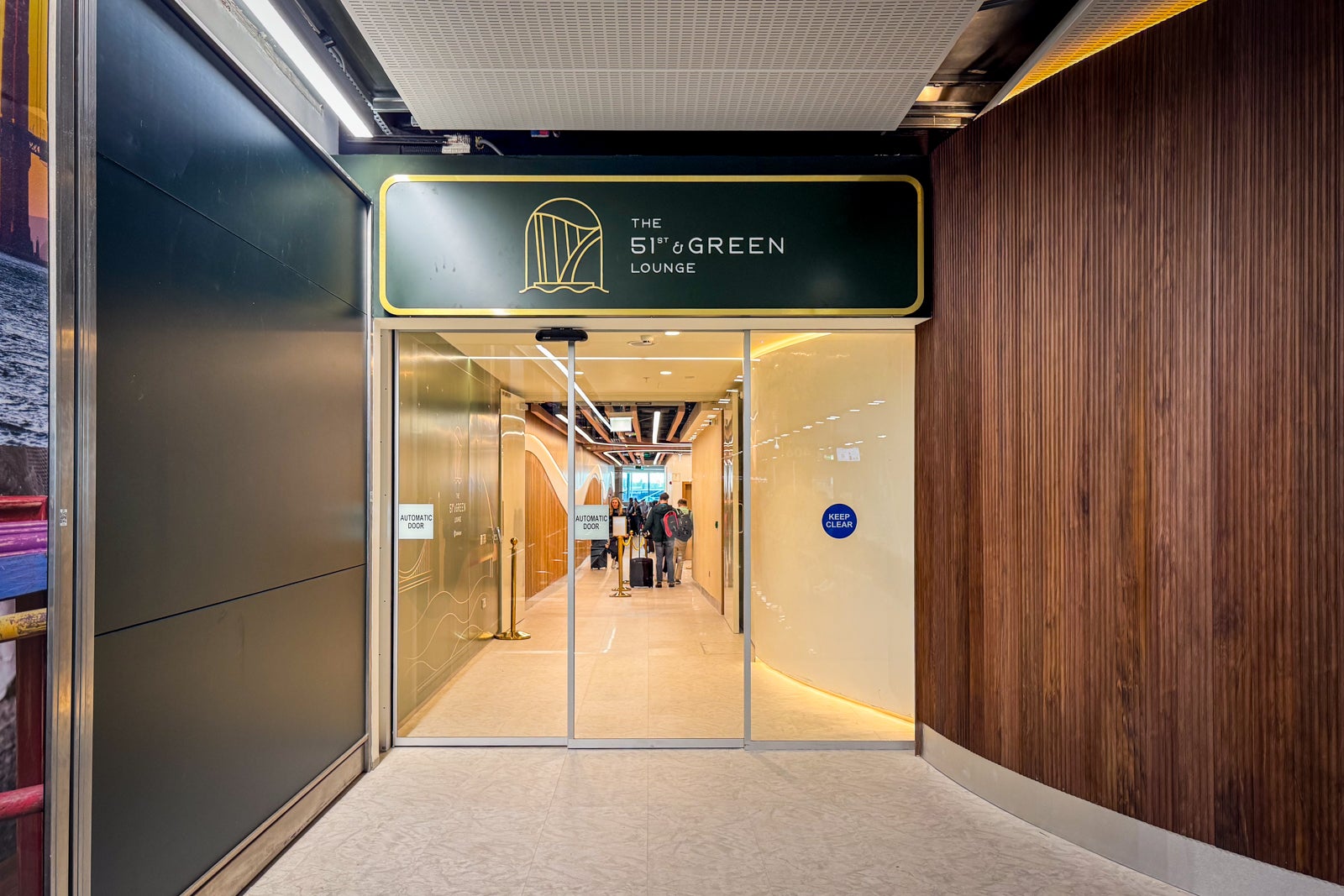
I made my way to the very end of the terminal, where I found the 51st & Green lounge, which had only recently reopened after a six-month refurbishment. I had access thanks to my business-class ticket.
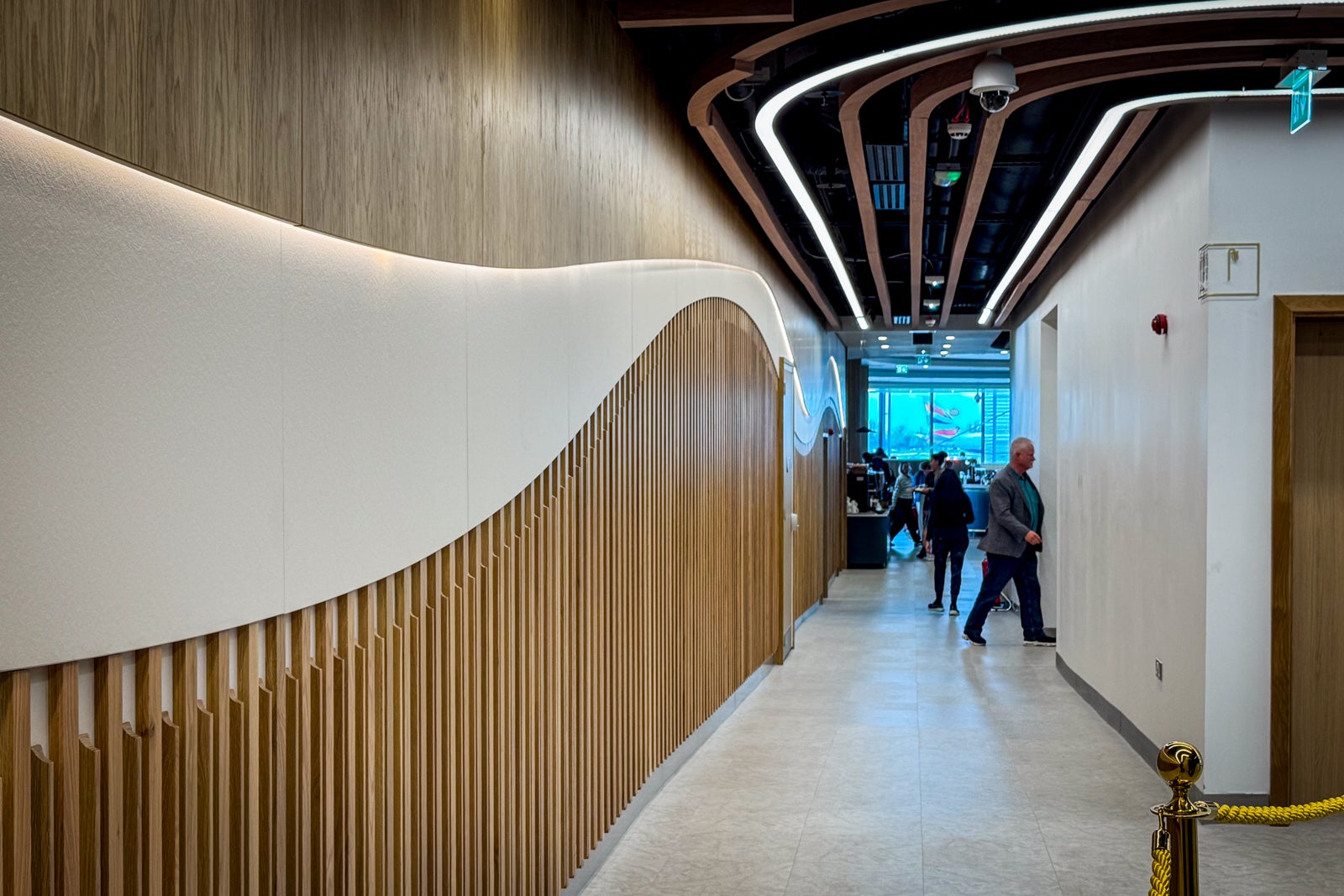
Although a huge bank of flights on multiple airlines departed throughout the afternoon, the lounge did not feel super crowded. There were plenty of seating options, ranging from cafe-style dining areas and workstations along the windows to booths and banquettes, and lots of low-slung armchairs.

At the center of the lounge, the new bar was the focal point thanks to its dramatic design, which resembles a jet engine. There, travelers could order a freshly pulled pint of Guinness along with plenty of other complimentary alcoholic and nonalcoholic drinks.

There was a small buffet with both hot and cold dishes, including Malaysian beef curry, chicken fricassee, mashed potatoes, finger sandwiches and make-your-own salads.

Wi-Fi was fast and free, and I was able to snag a chair by the windows for photo-finish views of the runway.

My flight began boarding an hour before departure, and I climbed on board first to snap some pictures.
ERIC ROSEN/THE POINTS GUY

How comfortable is Aer Lingus business class?

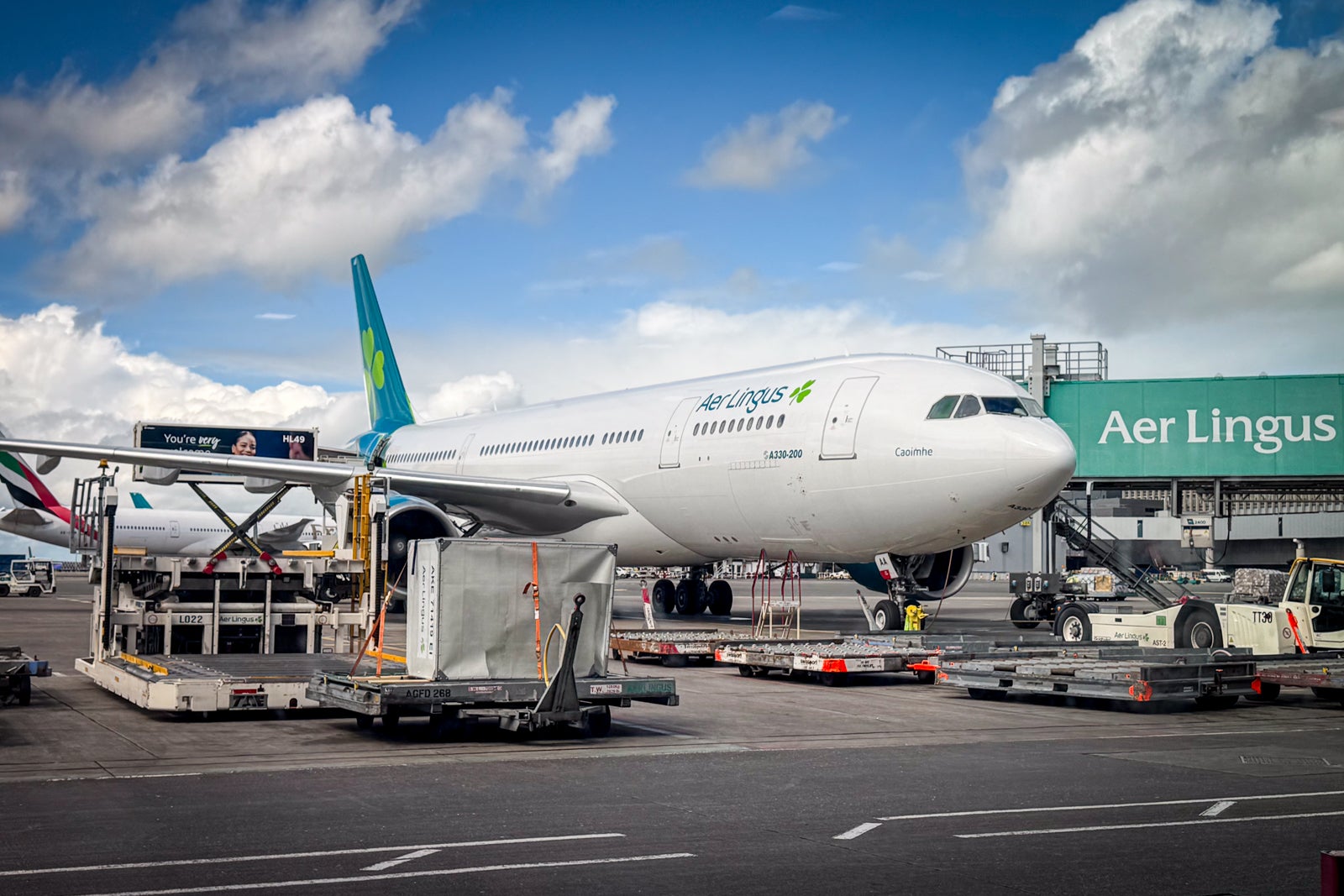
Aer Lingus flies both Airbus A330-200s and A330-300s. The -300 variant has 30 business-class seats, while the -200 variant operating my trip has just 23. Fun fact: Aer Lingus’ A330s are named after saints and other figures of Irish mythology and folklore. My specific plane was named Caoimhe (pronounced “kwee-vah”) and was delivered to the airline way back in 2001.
ERIC ROSEN/THE POINTS GUY

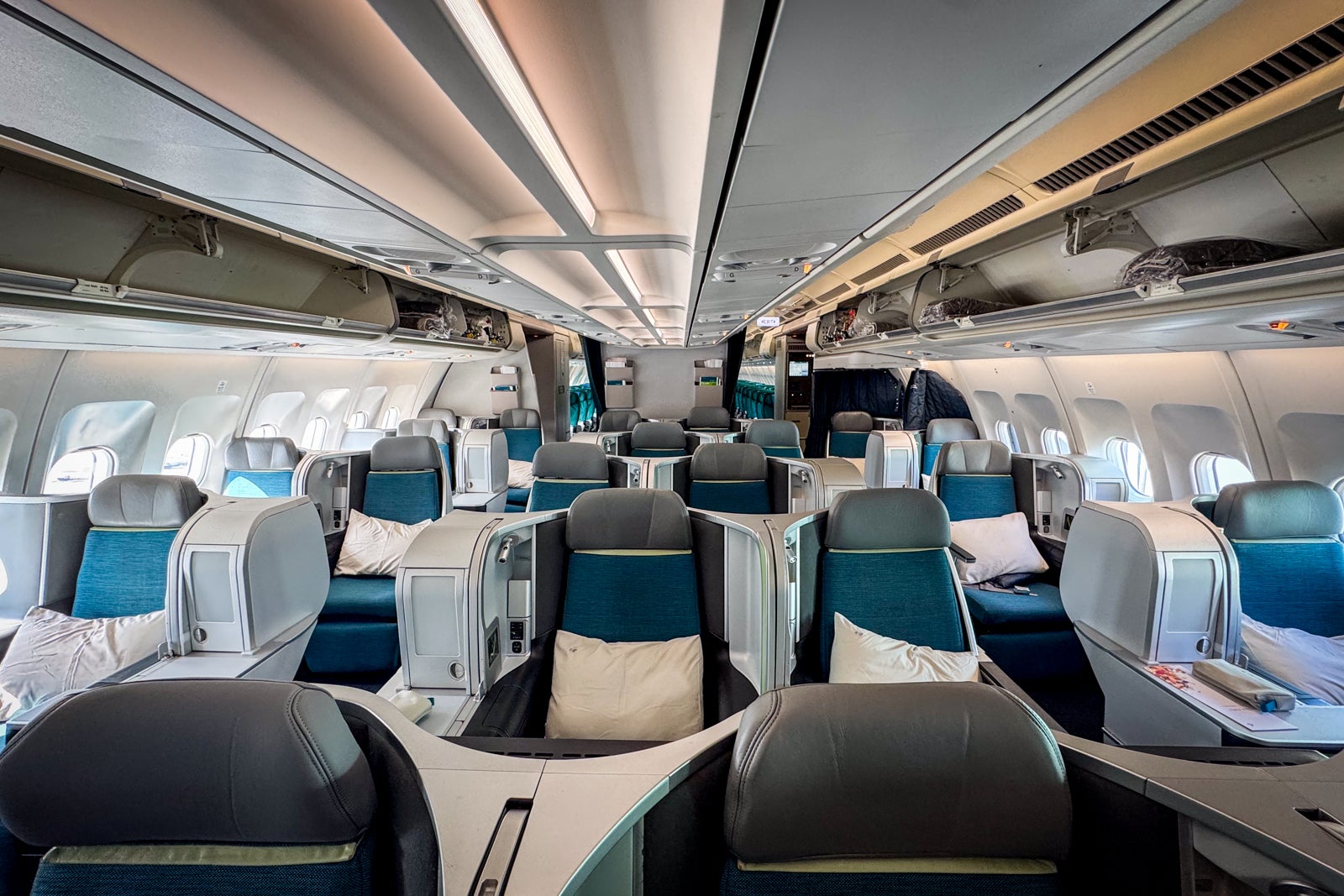
Here’s a quick look at the layout and dimensions:

Number of seats 23

1-2-1, 1-2-2

77 inches fully flat

21 inches

16 inches

These are tried-and-true, if not super current, Thompson Aero Vantage seats. Hence, their distinctive 1-2-1 and 1-2-2 layout.
ERIC ROSEN/THE POINTS GUY

All the seats along the left side of the cabin are singles that alternate between being closer to the window and the aisle.
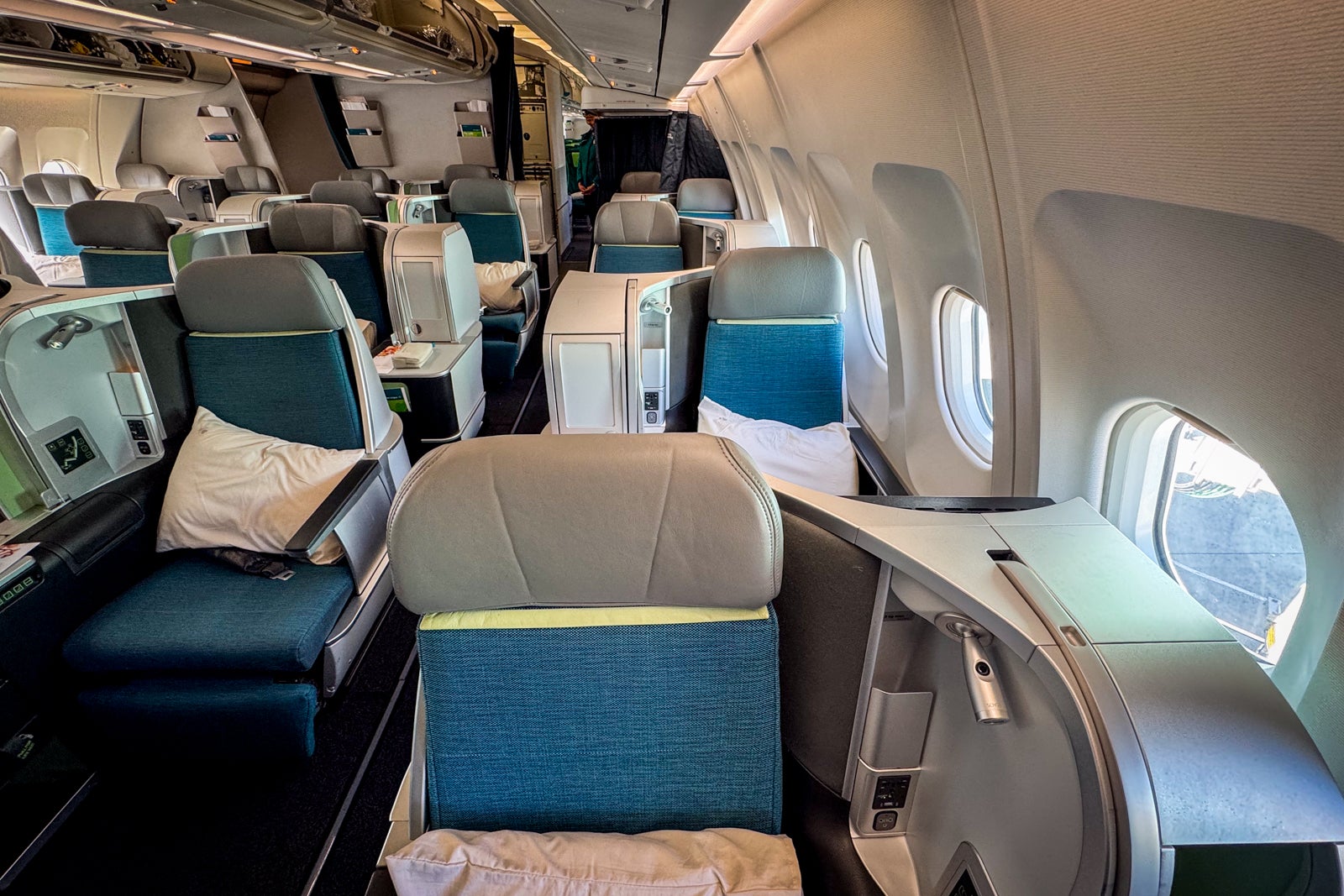
ERIC ROSEN/THE POINTS GUY

All five rows running down the center are paired and, unlike other configurations, they’re not closer together or farther apart depending on the row. Rather, they are staggered just like the seats on the sides.
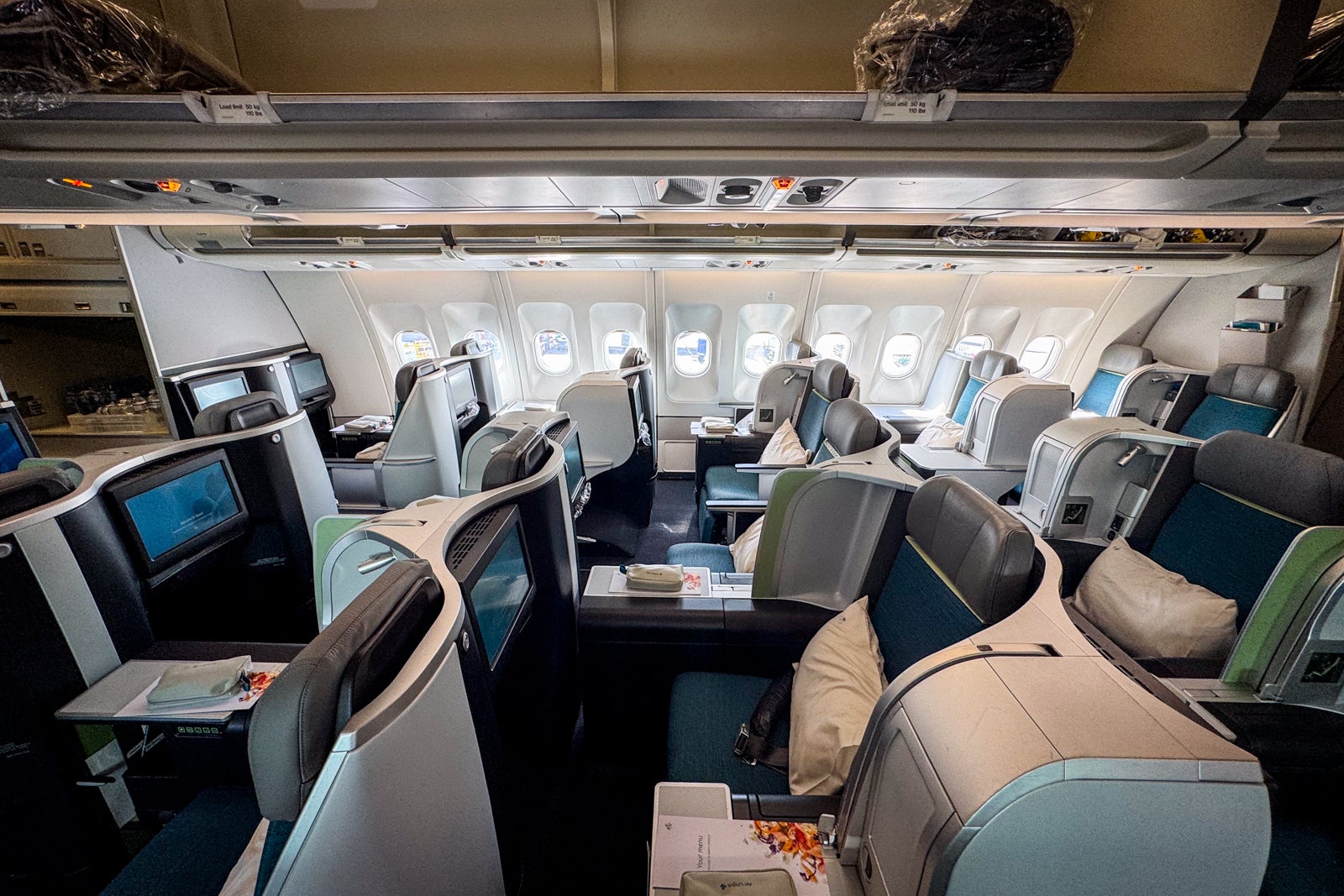
Those along the right side of the cabin alternate between singles and doubles; the singles are the sought-after “throne” seats with plenty of space on either side.
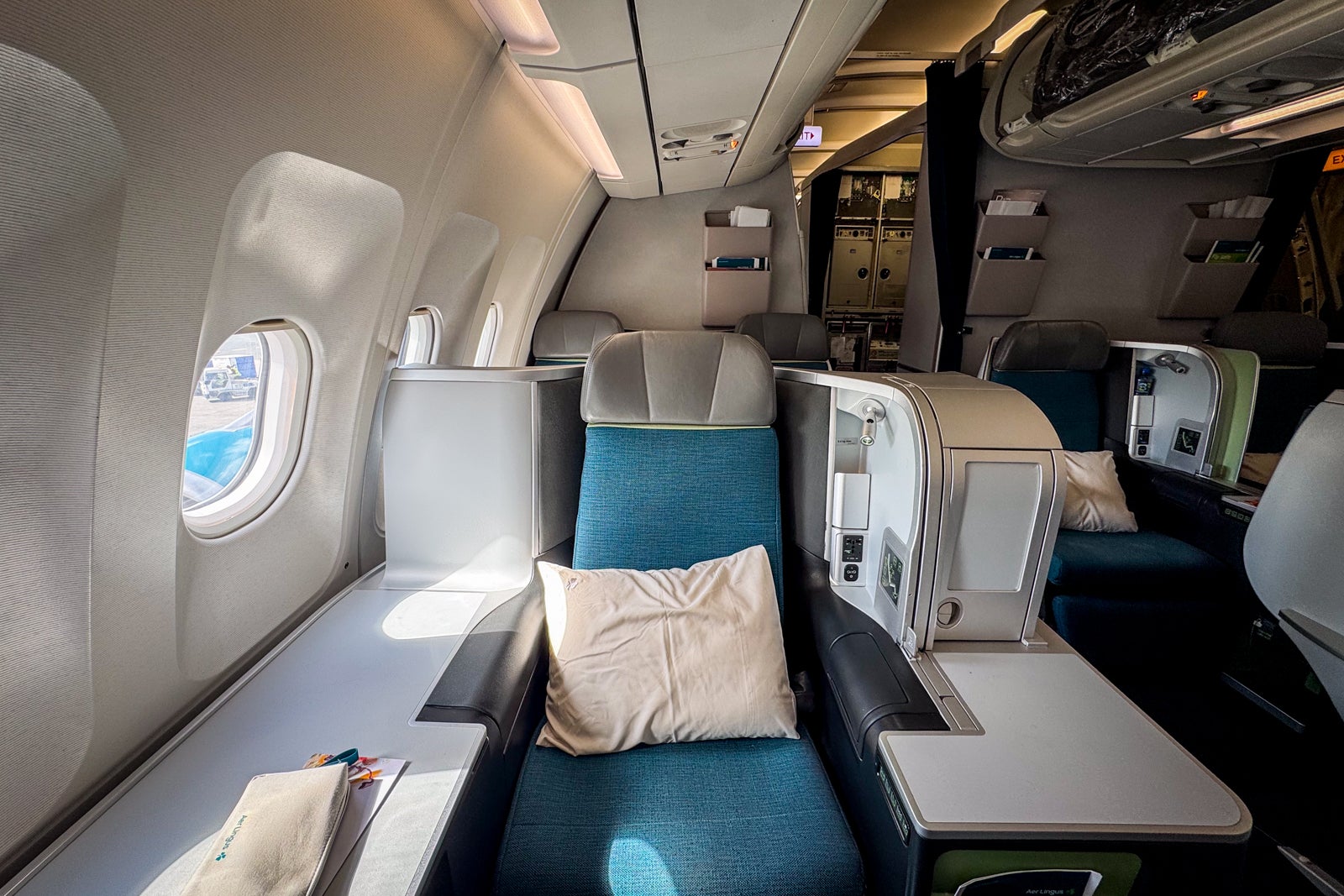
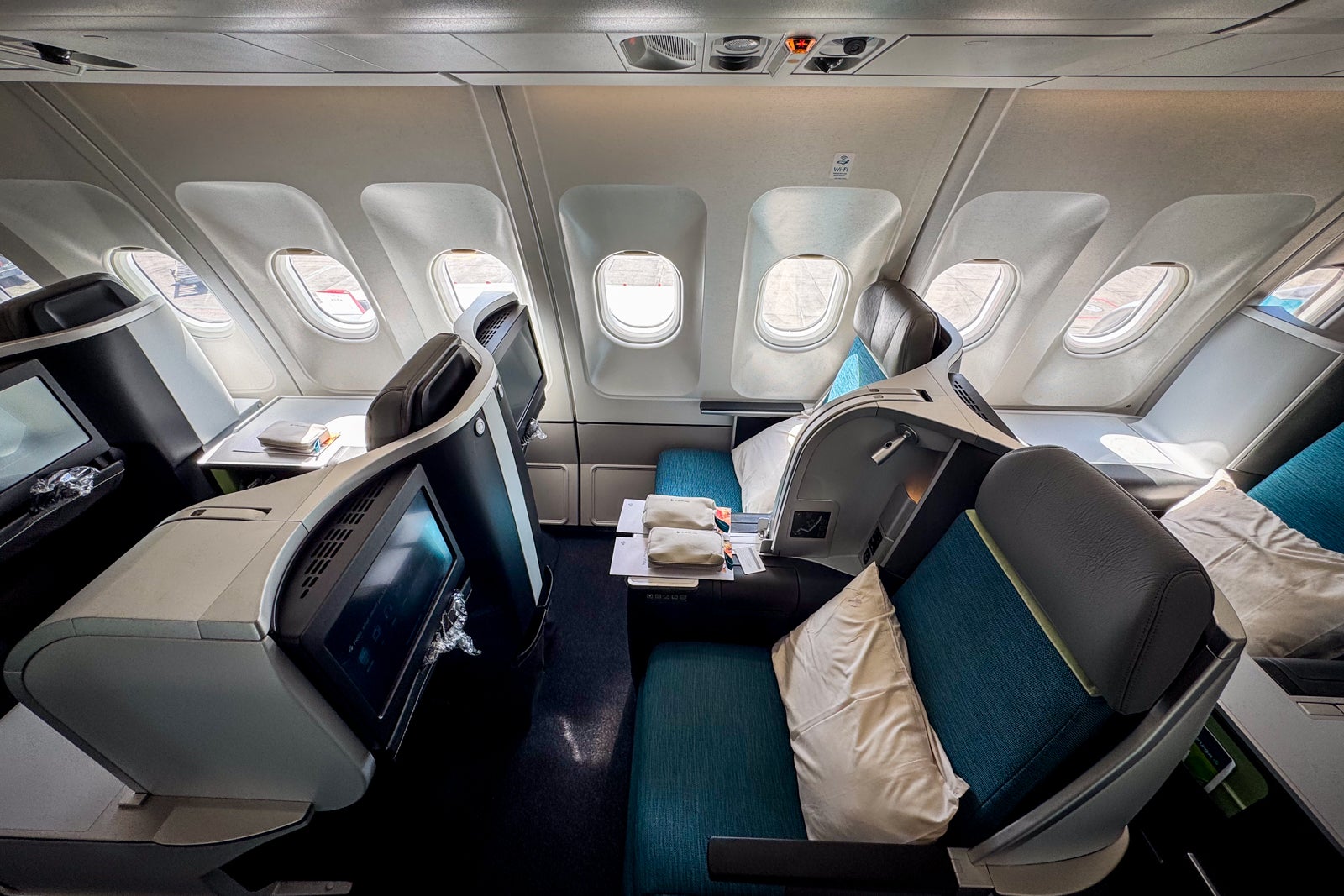
By the time I booked my ticket, only a single solo seat remained: 2A. And, because of a fun quirk of Aer Lingus, I actually had to call the airline to reserve it since you cannot do so online. I would have preferred one of the seats in the odd rows, since their wider armrests are on the aisle, providing a bit more of a buffer from other passengers or crew walking along the aisle.
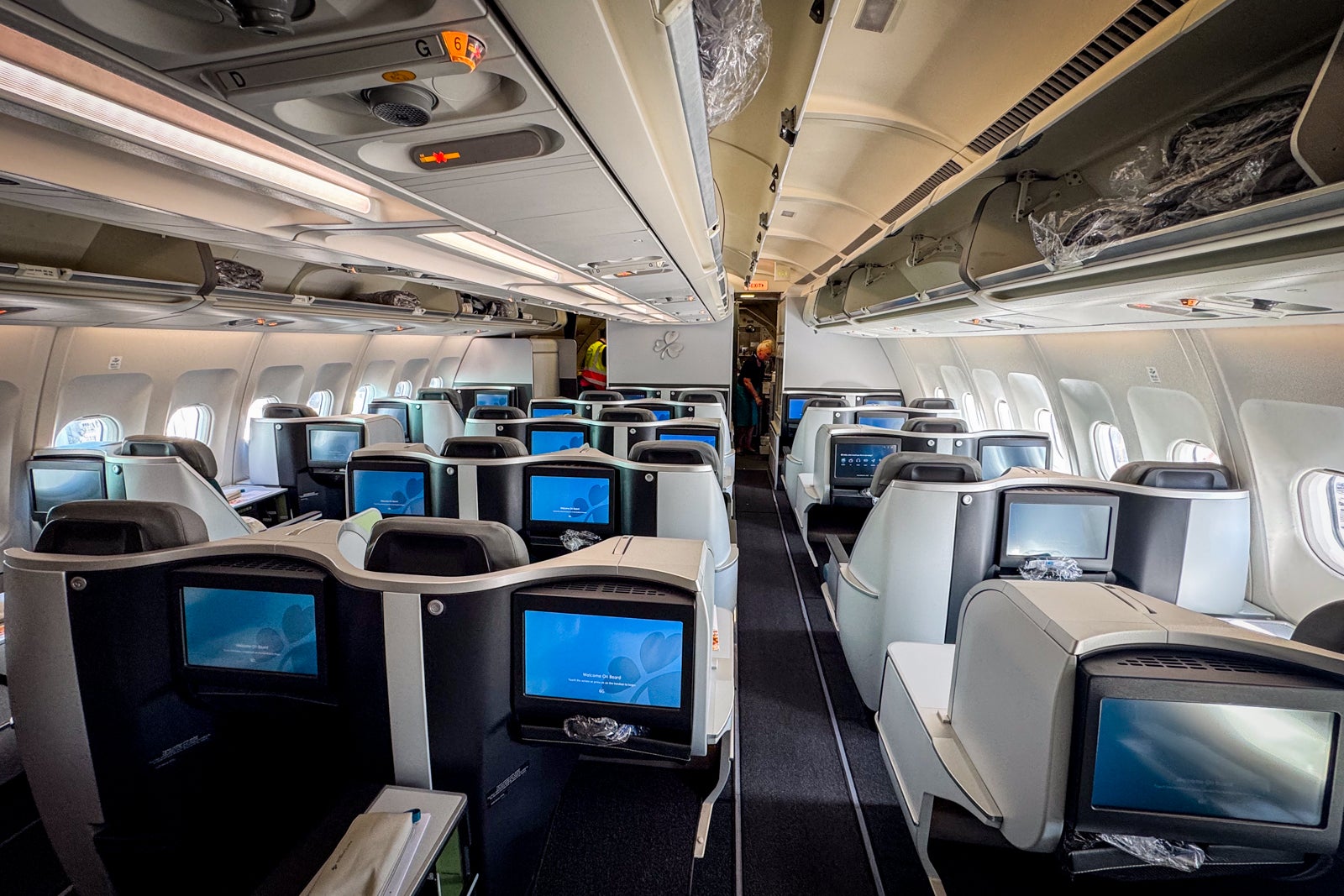
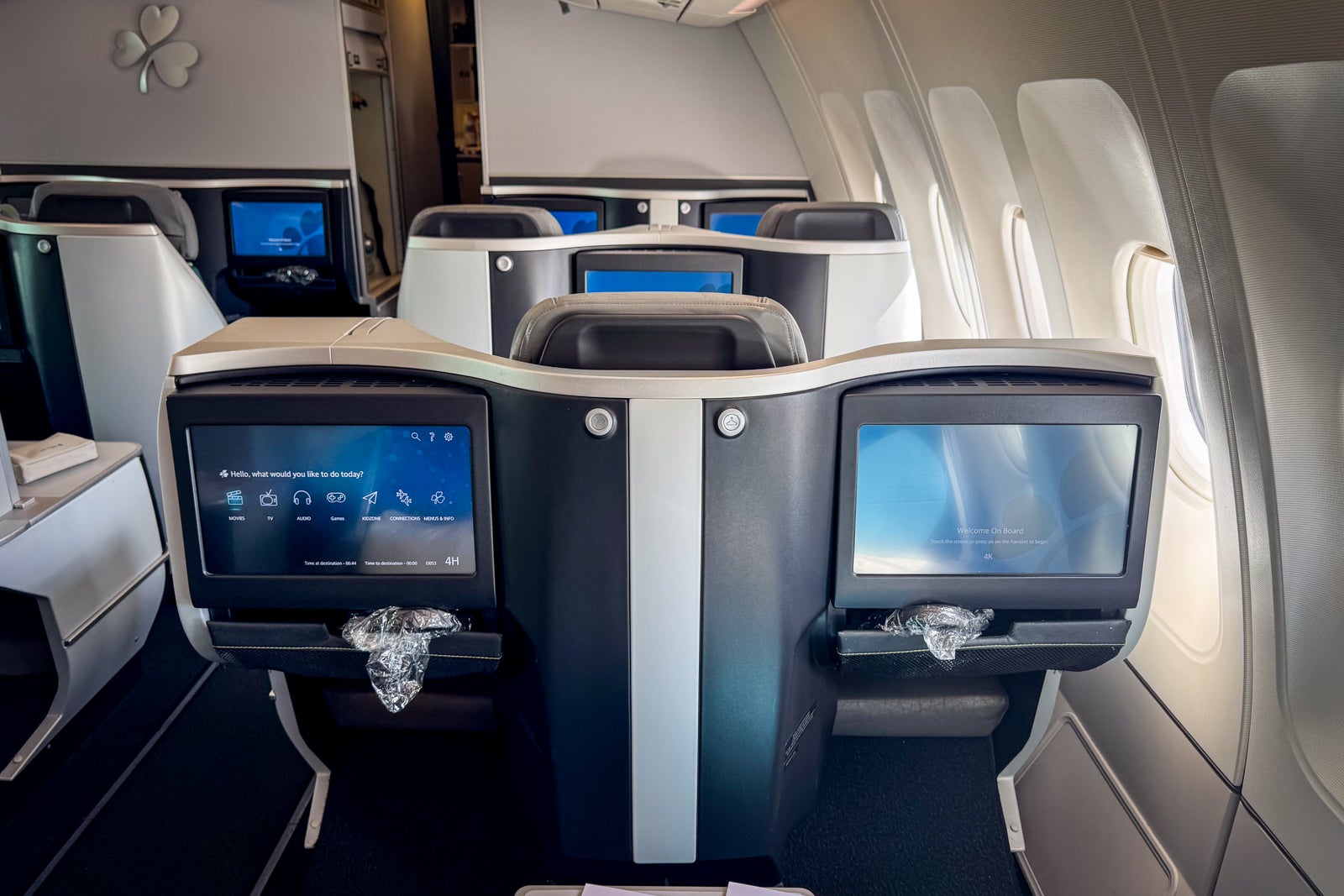
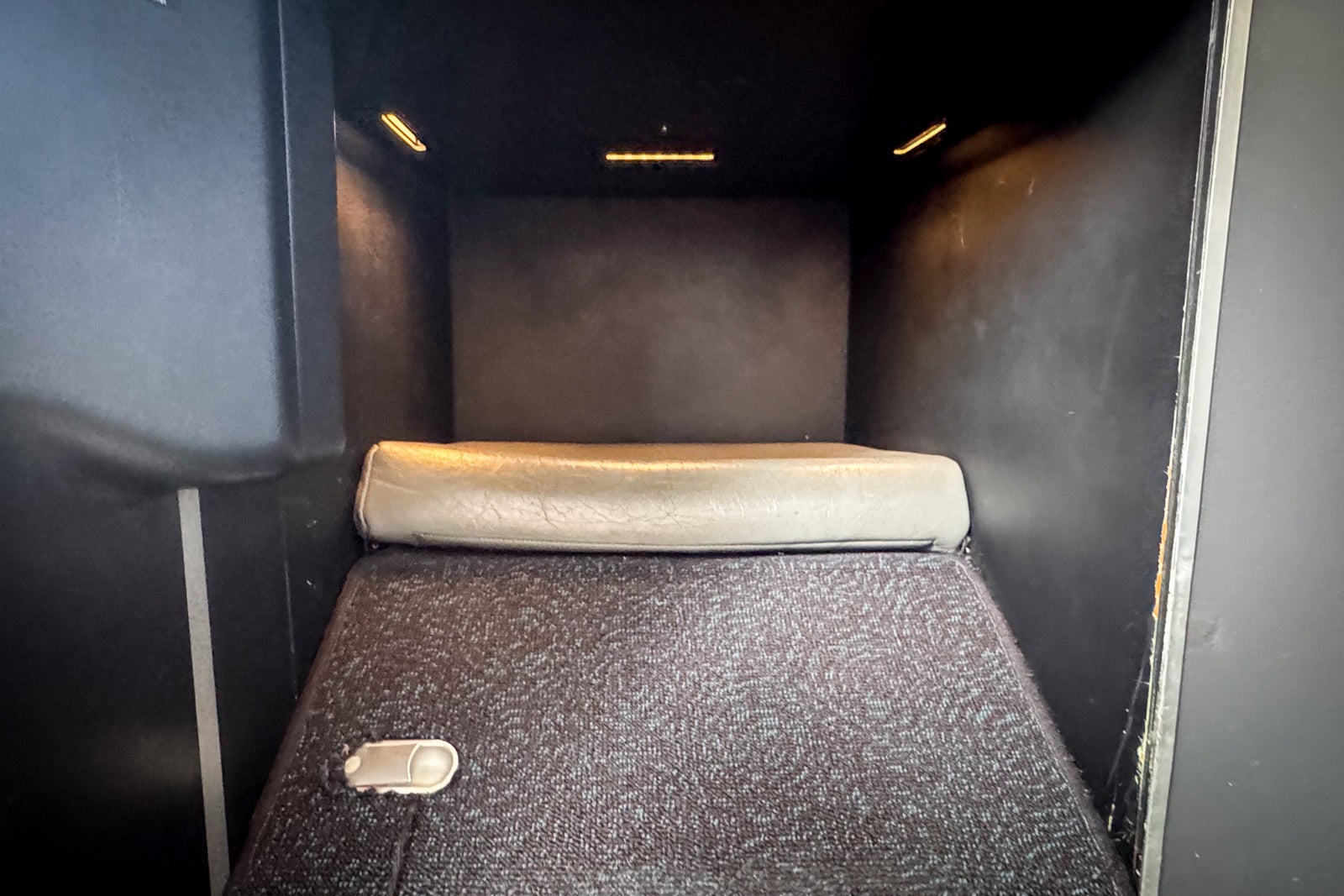
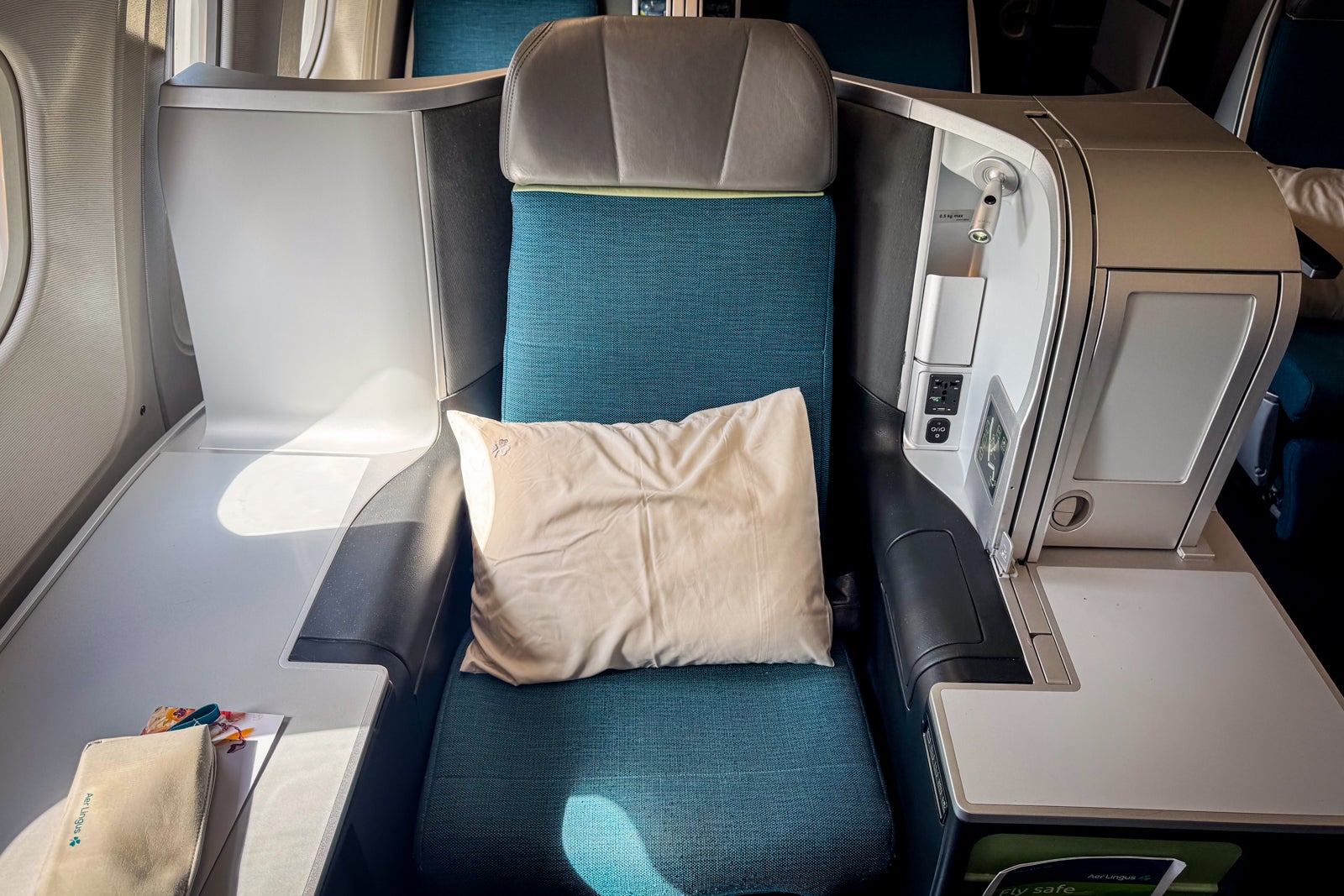
Like the other seats in the cabin, mine was 21 inches wide between armrests and reclined to a 77-inch lie-flat bed. I especially liked the upholstery, which was an emerald green with a chartreuse trim and a gray leather headrest. It felt very Irish indeed. The foot cubby was 20 inches wide and 11 inches tall, which was large enough for me, but if you have big feet, it could feel tight.
ERIC ROSEN/THE POINTS GUY

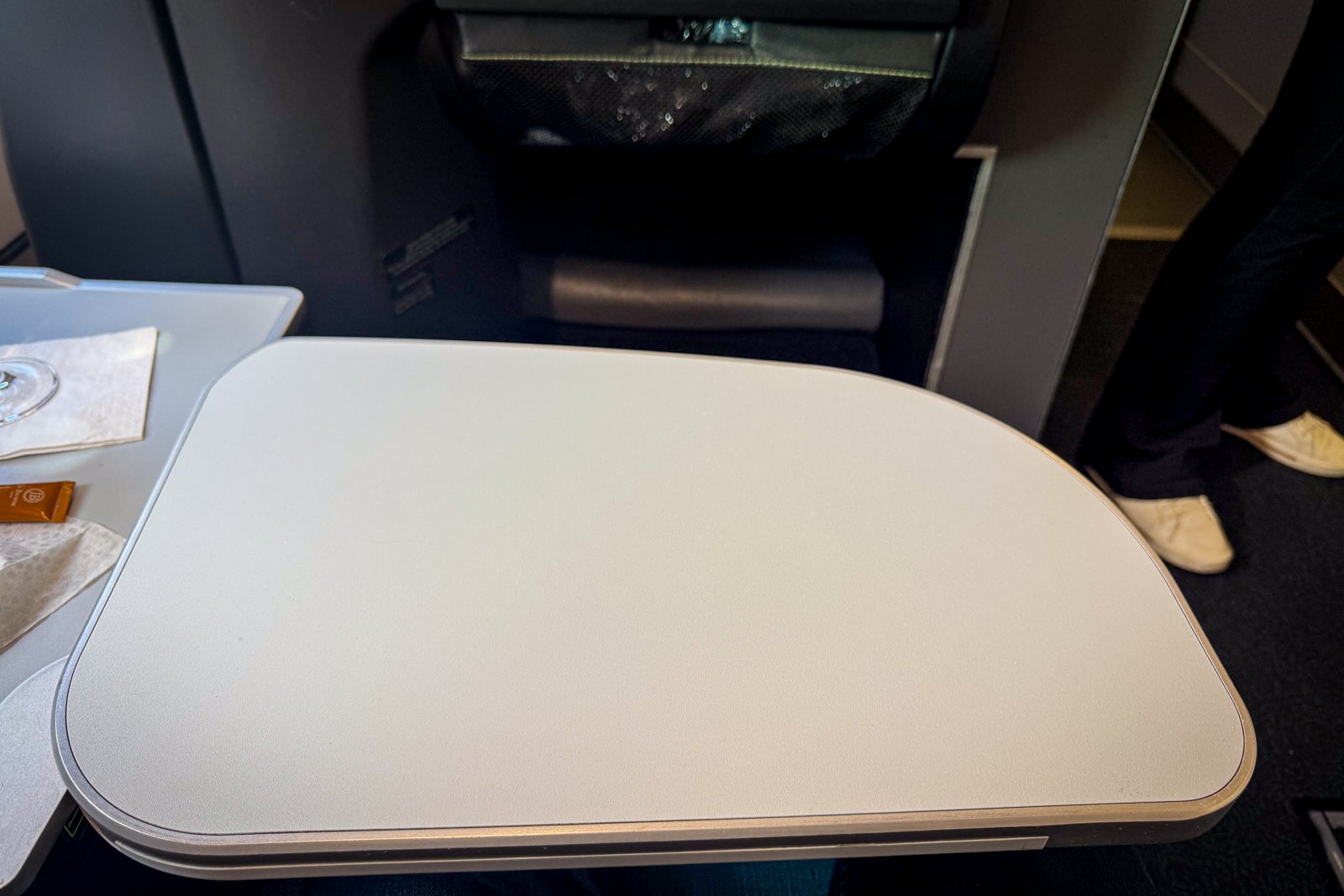
The tray table, which was 17 inches wide by 12 inches deep, unlatched vertically from the side of the seat and then swung into place with a mere 17 inches between it and the seatback, so it might feel restrictive for some folks.
ERIC ROSEN/THE POINTS GUY

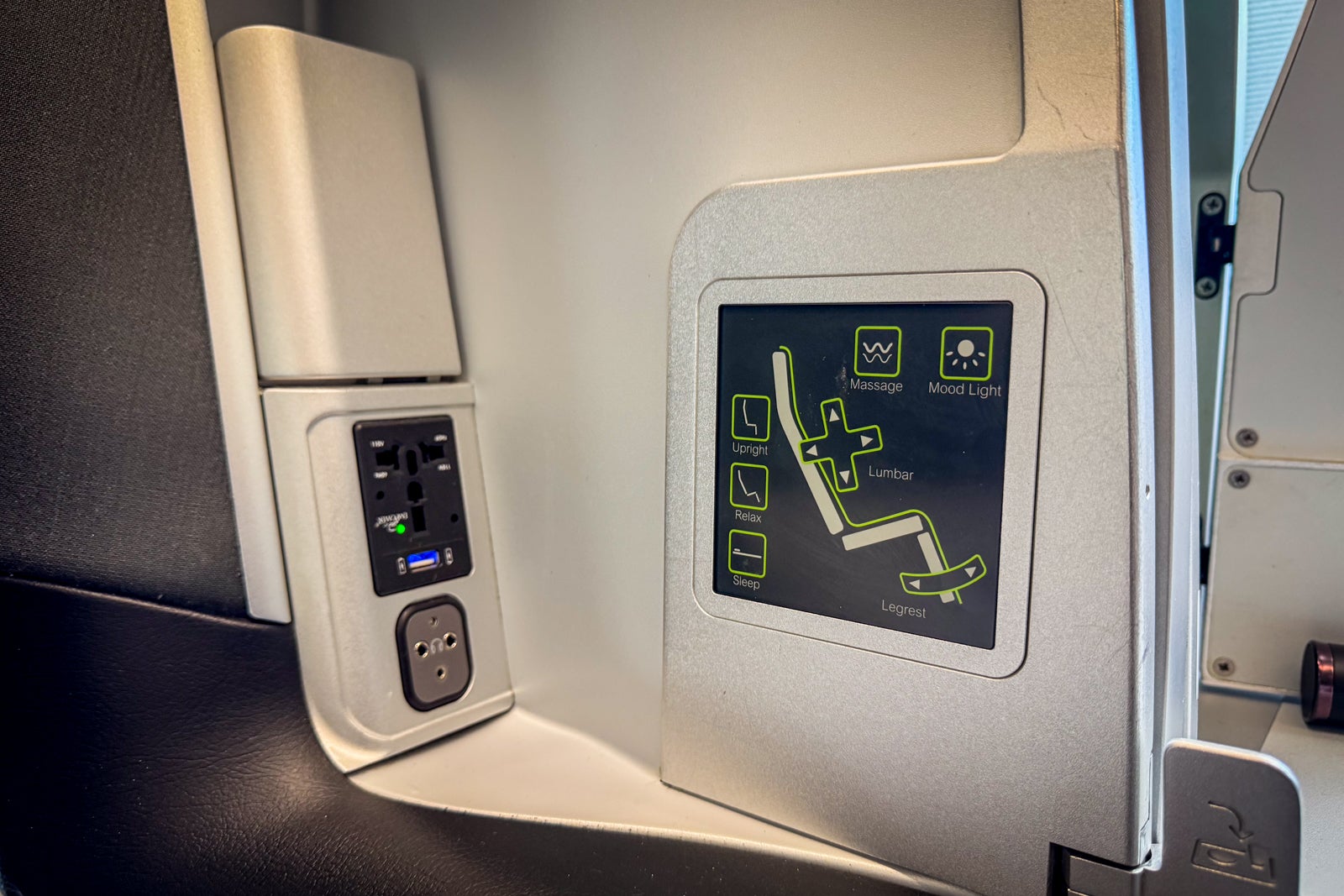
The seat controls included three preset positions, a button for lumbar support and another that could maneuver the legrest, but none to move just the seatback.
ERIC ROSEN/THE POINTS GUY

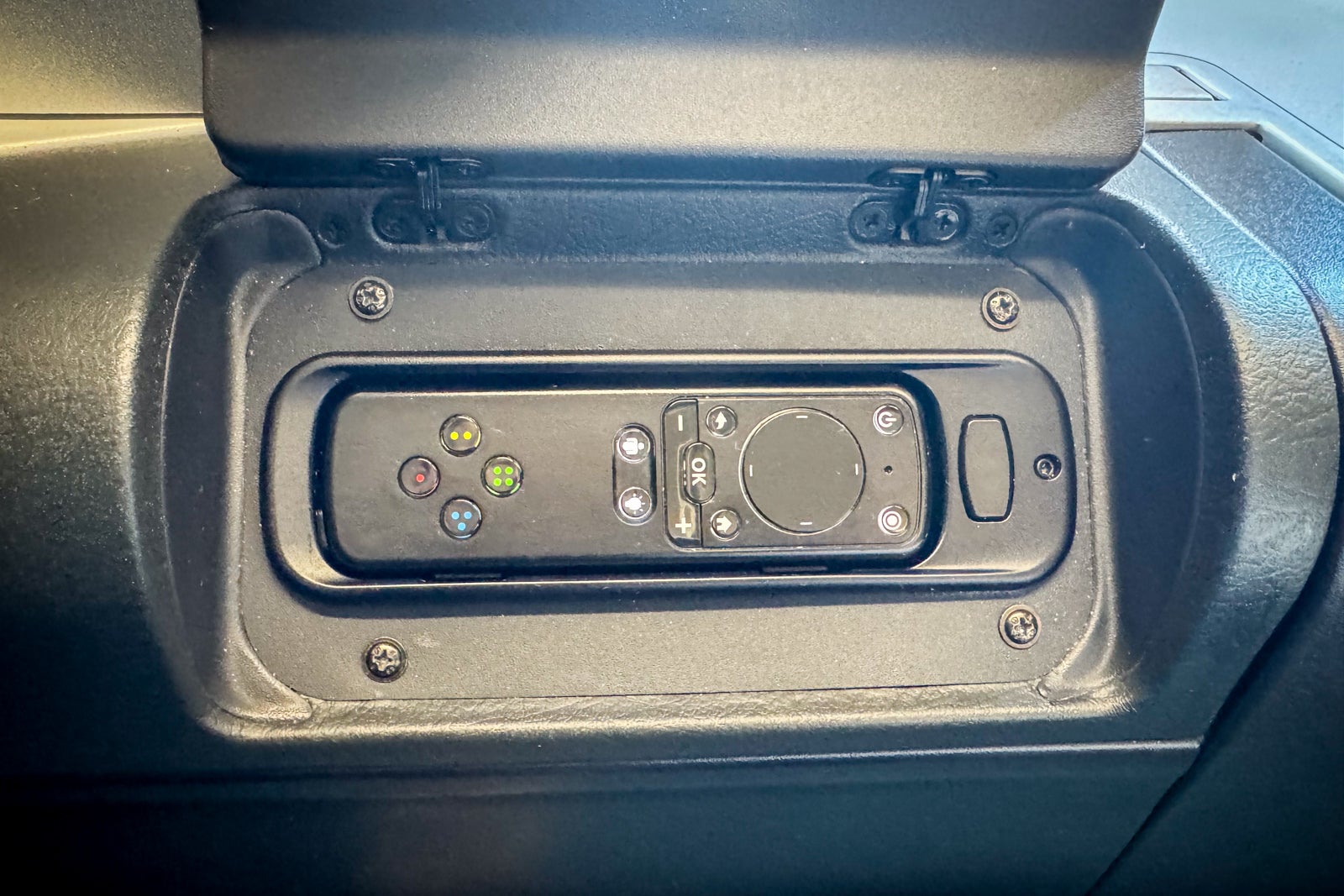
There was also a universal power plug and a USB-A port, but no USB-C port. Inside the armrest, there was a corded remote for the entertainment system.
ERIC ROSEN/THE POINTS GUY

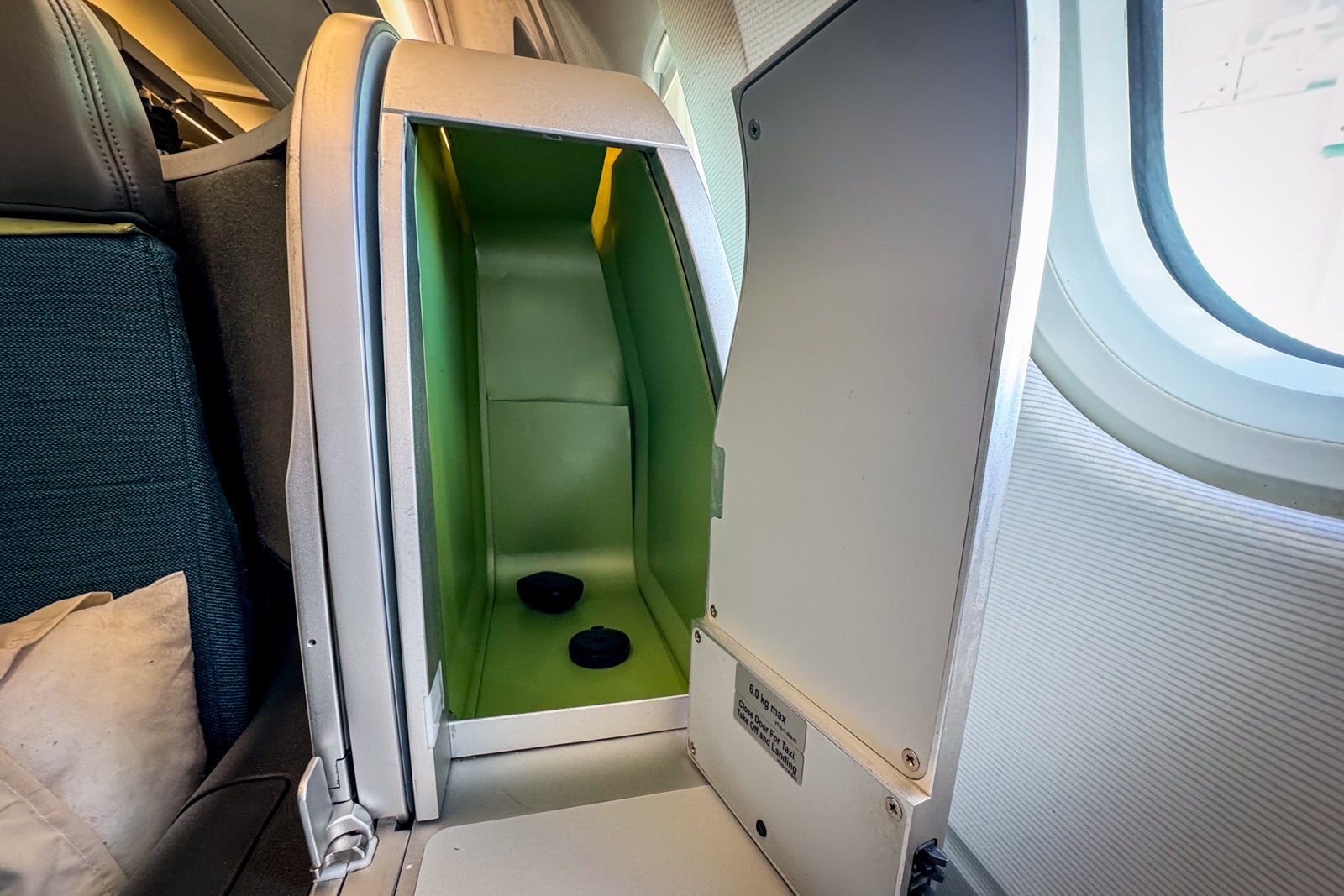
Then, in the larger console (near the window in my seat), I found a boxy stowage compartment that was big enough for my amenity kit and some other small belongings, but not quite big enough for a computer. There was also a water bottle holder by my legs and another compartment under the footrest for shoes.
ERIC ROSEN/THE POINTS GUY

In lie-flat mode, I found the seat comfortable and roomy, and I wasn’t disturbed by activity in the aisle. I managed to snooze for four hours between meals, which left me feeling refreshed and ready to enjoy the last few hours of the day once I arrived on the West Coast.

Each seat had its own individual air nozzles, so I could keep my area cool throughout the flight.

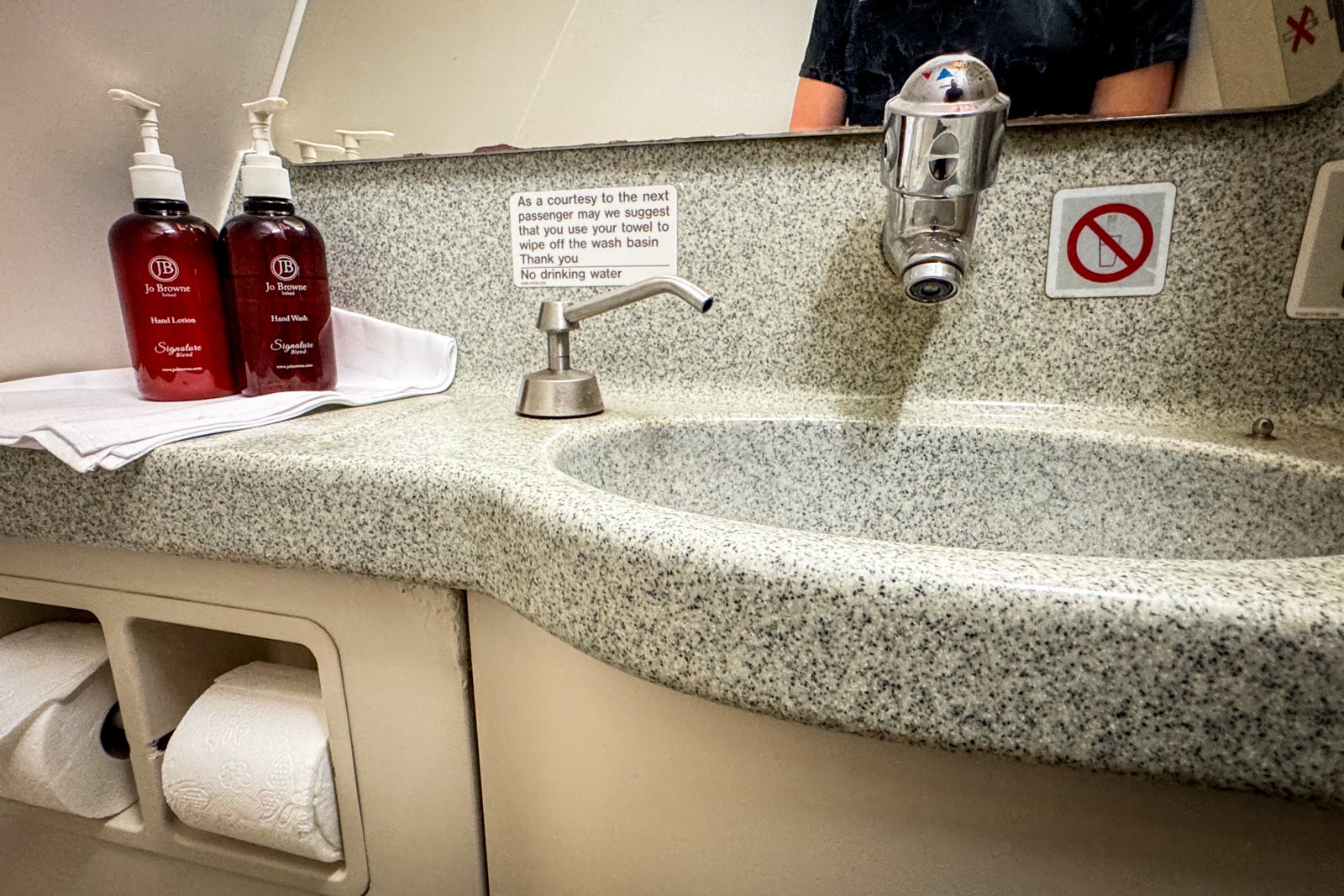
Finally, the A330-200 had two lavatories for business class. One was up front on the left side of the galley near the cockpit, and the other was at the back right of the cabin. Staff kept both very clean throughout the flight, and although there were no other frills to speak of, hand soap and lotion from high-end Irish brand Jo Browne were available. I do wish the toilet flush and the sink had been touchless, though.
ERIC ROSEN/THE POINTS GUY

Amenities in Aer Lingus business class

Waiting at each seat was a large, firm pillow; lightweight duvets were stowed in individual plastic bags in the overhead bins. I also found a menu and wine list to peruse.
ERIC ROSEN/THE POINTS GUY

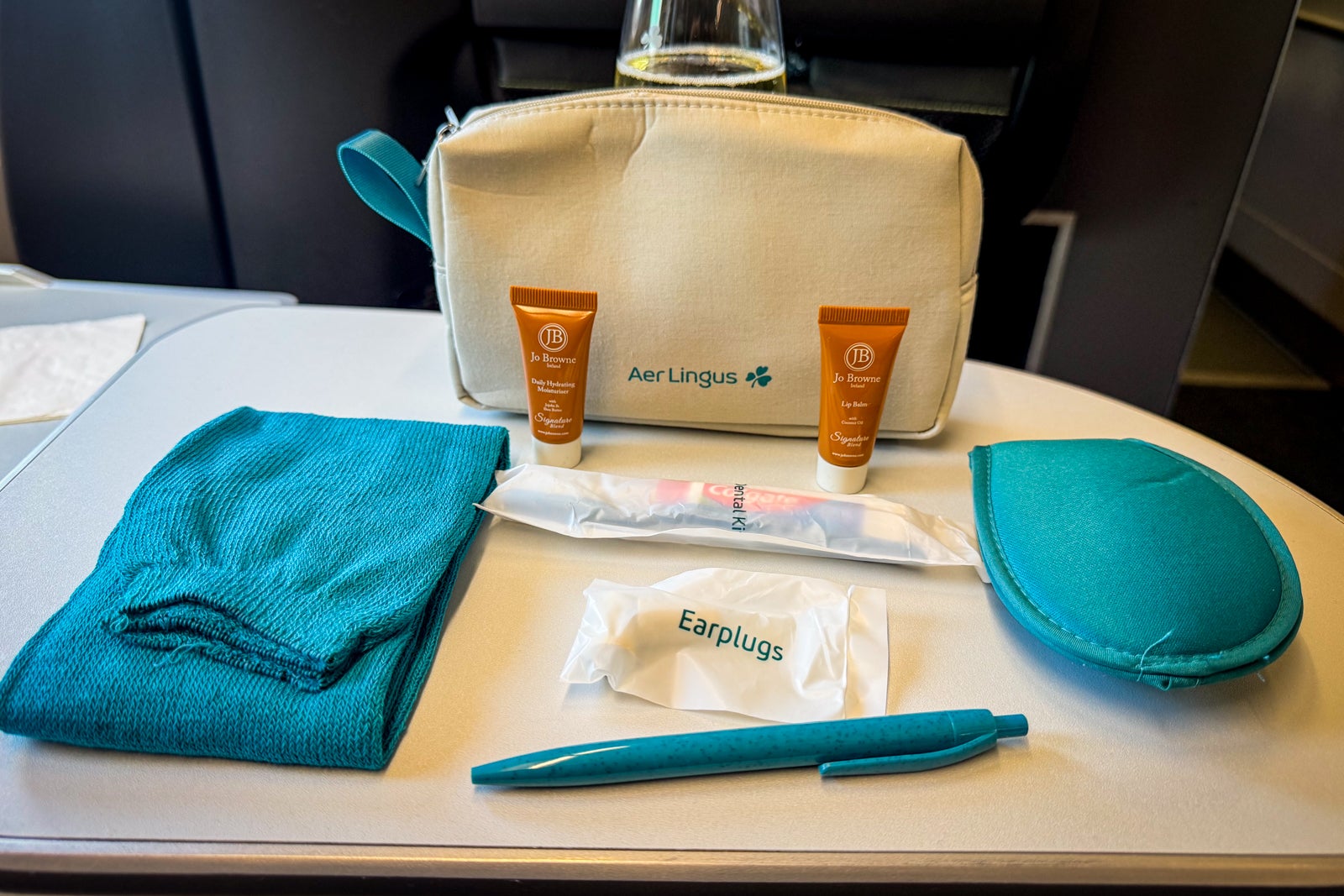
Sitting on the large armrest was a small fabric amenity kit that contained a toothbrush and toothpaste, earplugs, an eye mask, a pen, socks, and Jo Browne-branded moisturizer and lip balm.
ERIC ROSEN/THE POINTS GUY

The entertainment screen was 16 inches wide diagonally and had over 100 hours of programming, including recent movie releases like “One Battle After Another” and “Bugonia,” as well as a large selection of television shows like “All Her Fault,” “The Penguin” and “The Studio.”

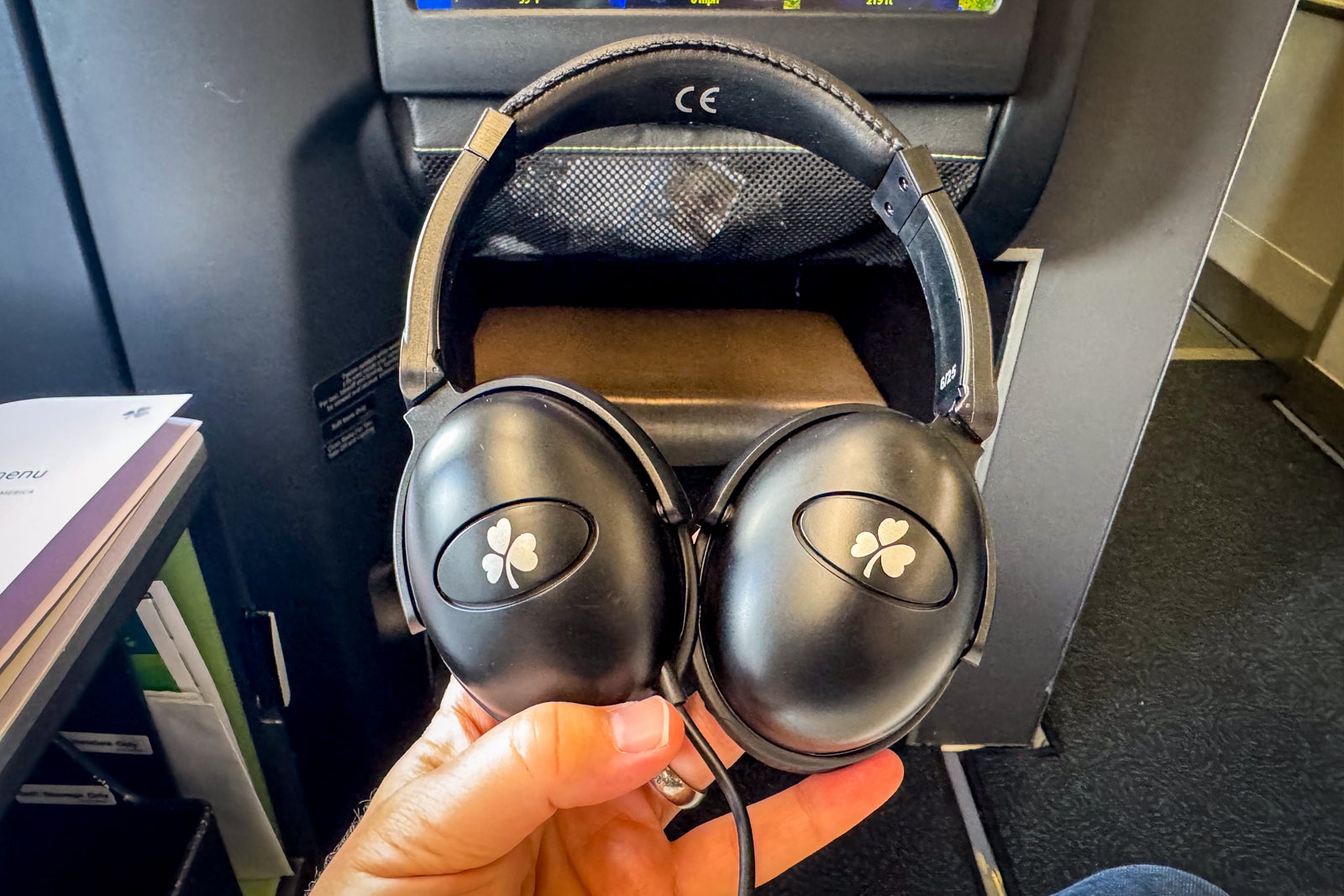
The airline provided basic headphones that reduced some of the ambient cabin noise.
ERIC ROSEN/THE POINTS GUY

Even more exciting, though, was that business-class passengers received vouchers for free Wi-Fi for the duration of the flight, which otherwise would have cost 22.49 euros ($26.50). It worked well for the first two hours of the flight, then fizzled out until we were about two hours from landing; if it hadn’t been free, I might have requested a refund. Other Wi-Fi packages included messaging for one hour or the full flight, and four hours of browsing. The costs ranged from $4.10 to $15.85.
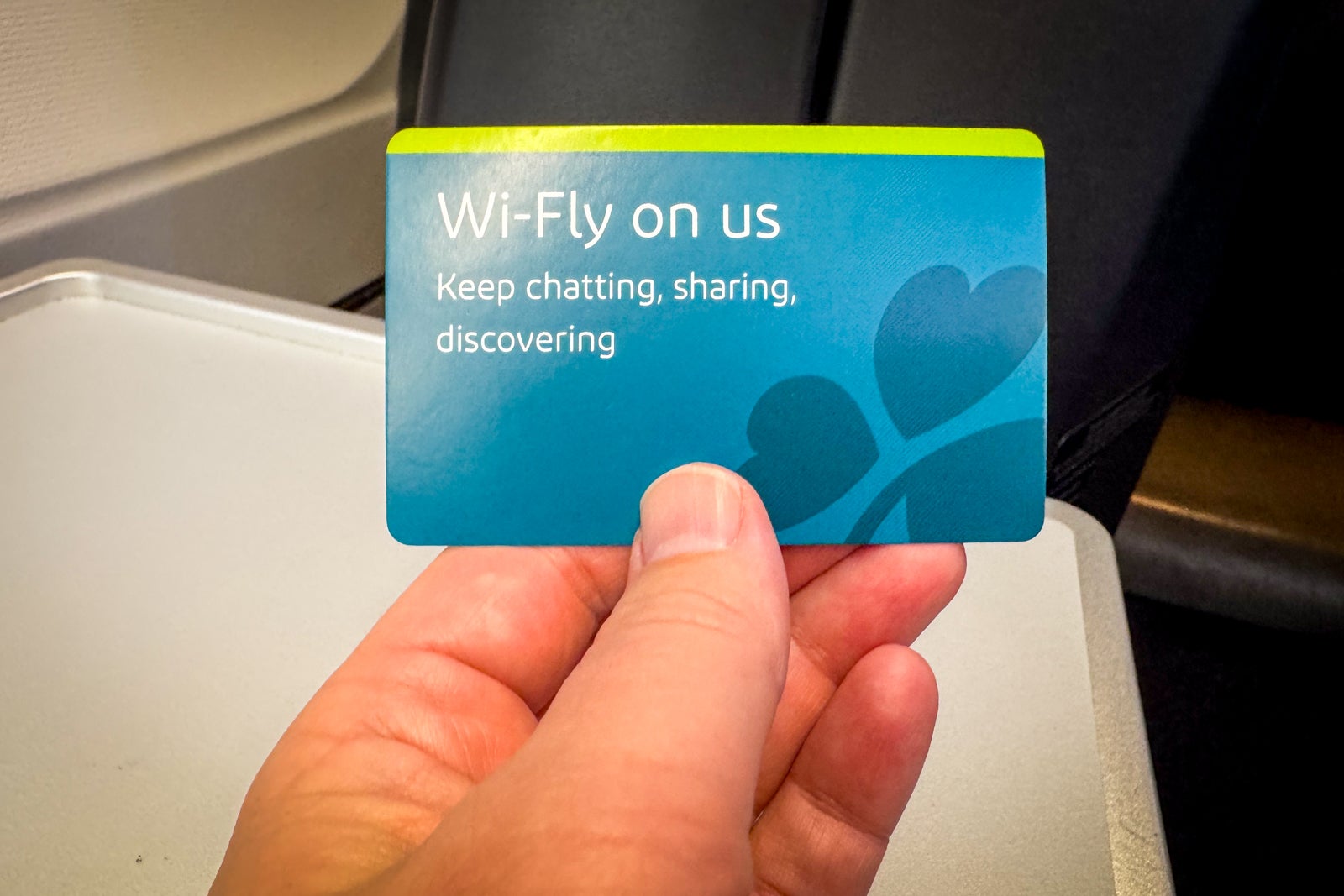
Aer Lingus is currently rolling out Starlink Wi-Fi on its fleet. Its first aircraft to receive Starlink connectivity was an A330-300 in March, so it might be a while before it’s available on all the airline’s flights.

ERIC ROSEN/THE POINTS GUY

How was the food in Aer Lingus business class?

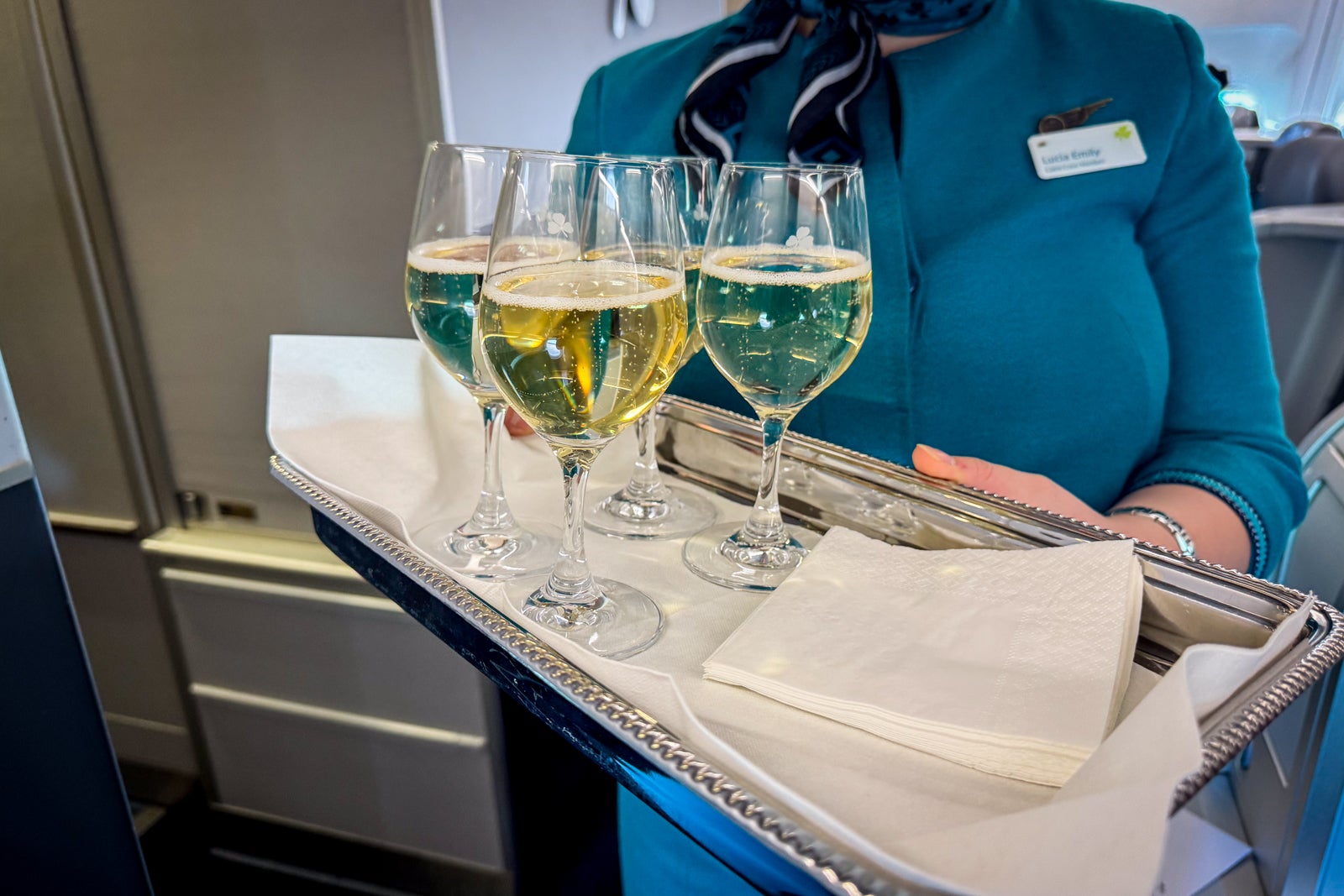
While passengers were boarding and getting settled, flight attendants came through the aisles to introduce themselves, assist with luggage and offer a choice of water or Jean Pernet Tradition Brut NV Champagne.
ERIC ROSEN/THE POINTS GUY

As boarding ended, they came through to take orders for a post-departure beverage and dinner.

About 30 minutes after takeoff, they served a round of drinks along with Turas Pantry chili jam and rosemary-tomato crackers, which were delicious.

Among the beverages available were:

  • The Olive Grove chardonnay from Australia
  • Fossili Gavi di Gavi from Italy
  • Bardolino Chiaretto rose from Italy
  • Zweigelt from Austria
  • Spatburgunder pinot noir from Germany
  • A selection of beers, including Heineken and Moretti
  • Various whiskeys, including Jameson and Teeling Single Pot Still
  • Drumshanbo Gunpowder gin
  • Tito’s vodka
  • Baileys
  • Whitebox canned cocktails
  • A variety of soft drinks, juices and water

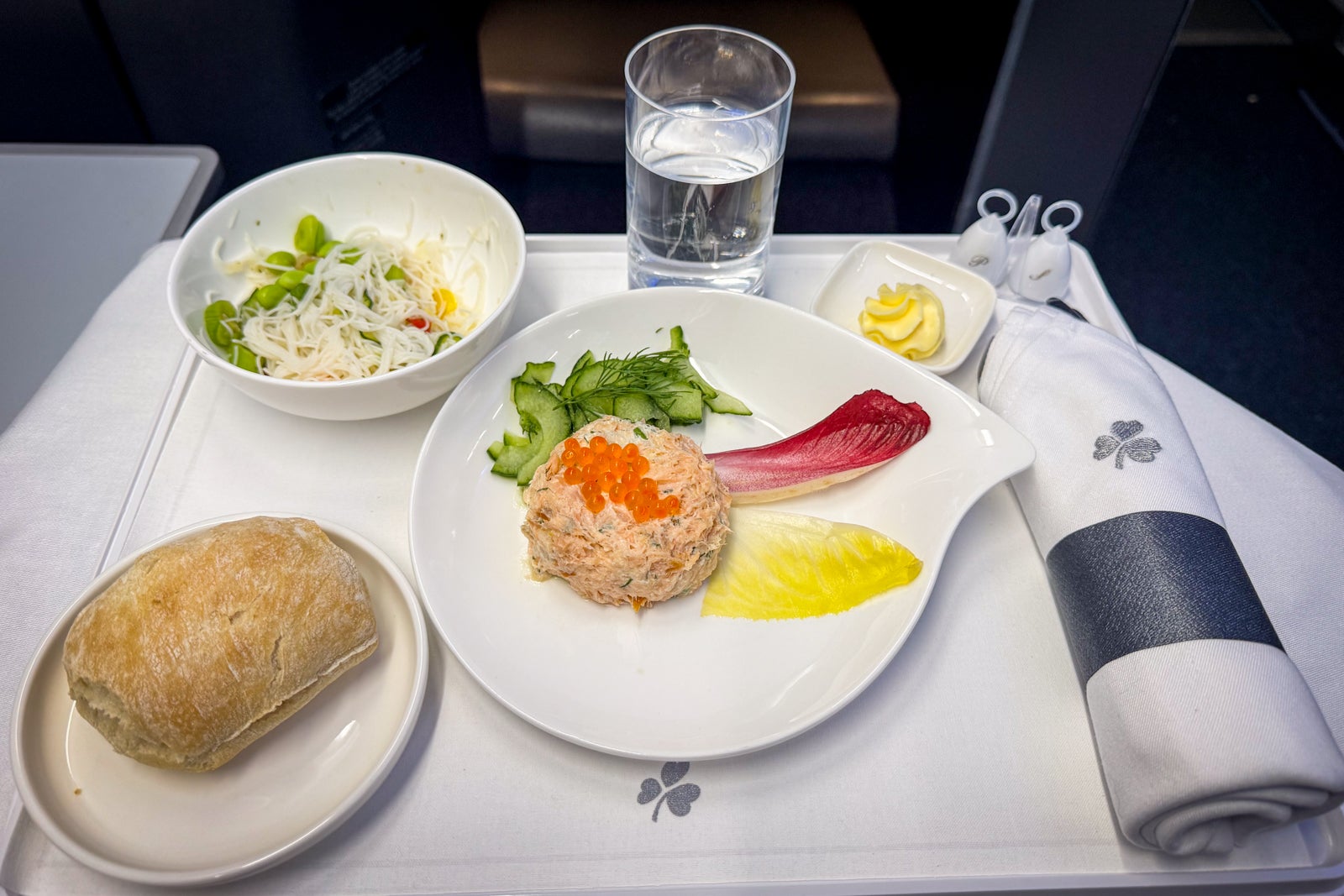
After another round of drinks, meal service kicked off. It began with a choice of butternut squash and coriander soup with sesame crumble, or smoked salmon and horseradish mousse with cucumber and dill. I ordered the latter and thought it was delicious — smoky and savory but not too salty. Everyone also got the seasonal salad of glass noodles in a tangy Thai dressing with cucumber, pepper and edamame.
ERIC ROSEN/THE POINTS GUY

The main courses included:

  • 18-hour braised beef brisket in red wine sauce with smoked mashed potatoes, green beans, carrots and star anise (by far the most popular choice)
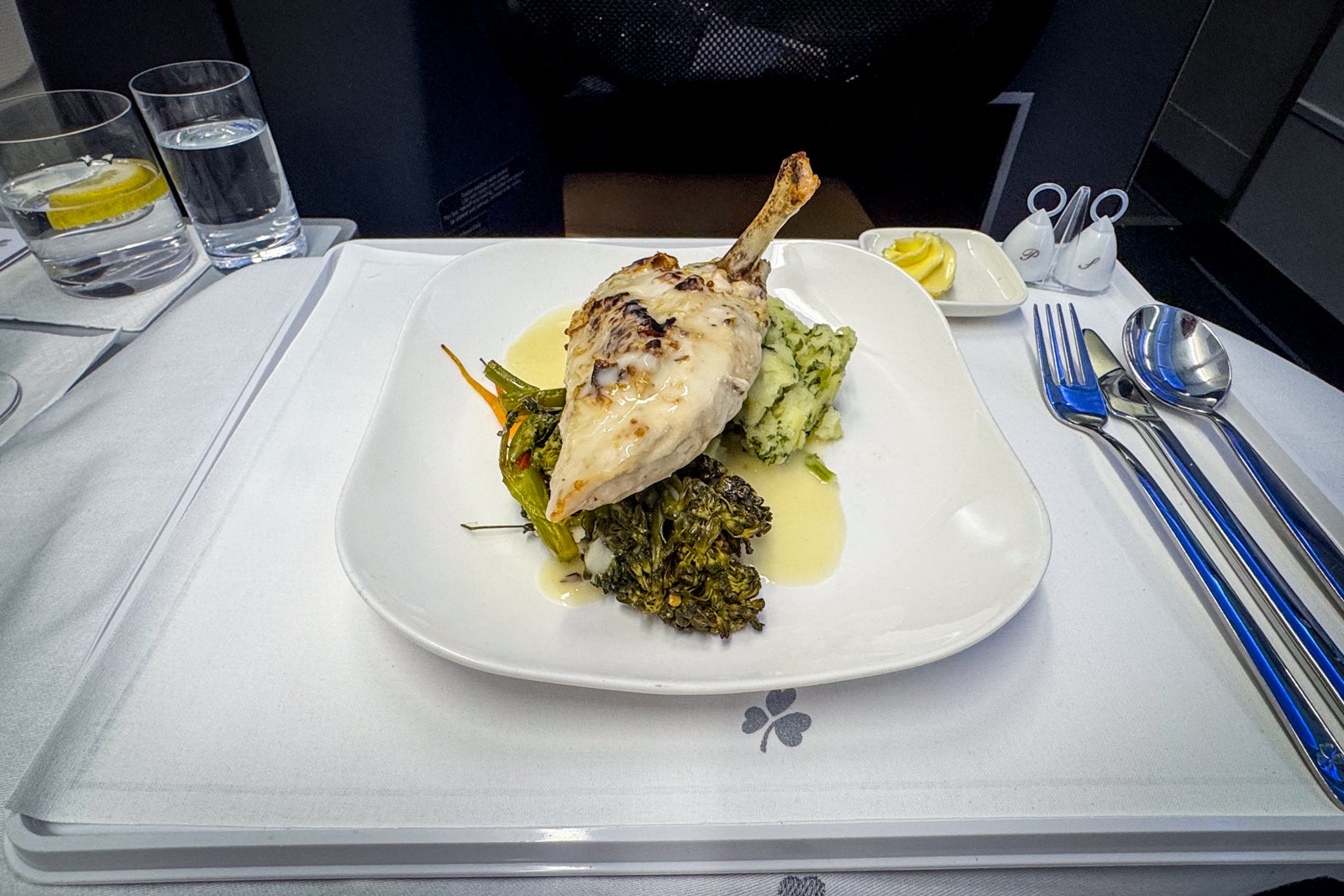
  • Chicken supreme in mustard marinade with mashed potato and charred broccolini, spinach and carrots
  • Pumpkin gnocchi with fresh herb salsa verde

I had the chicken, and it was surprisingly tender and juicy for … well, airline chicken. The sauce was rich but not too heavy.
ERIC ROSEN/THE POINTS GUY

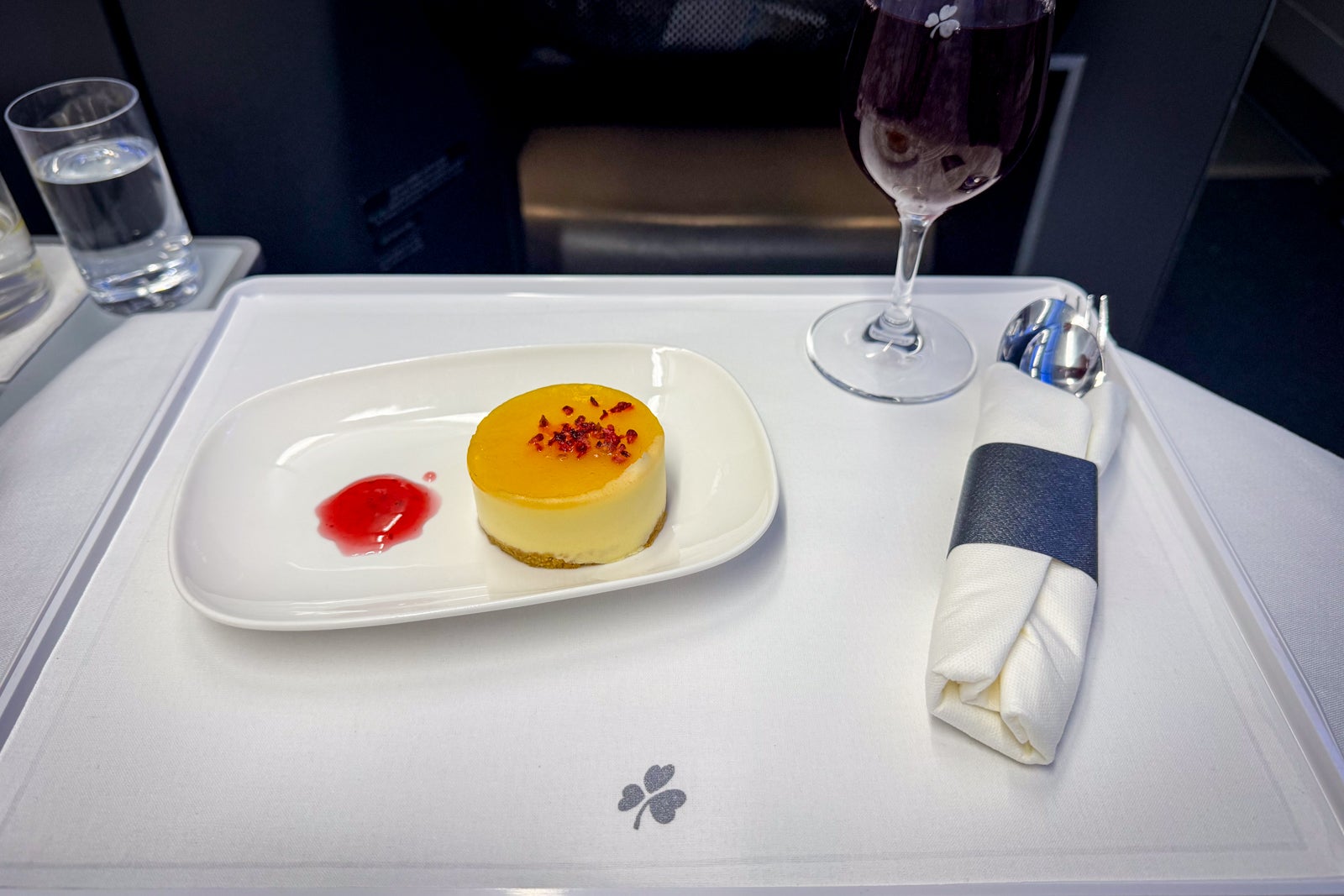
I skipped the selection of Irish cheeses and asked for the mango-passionfruit cheesecake for dessert, which was a sweet, light way to end the meal.
ERIC ROSEN/THE POINTS GUY

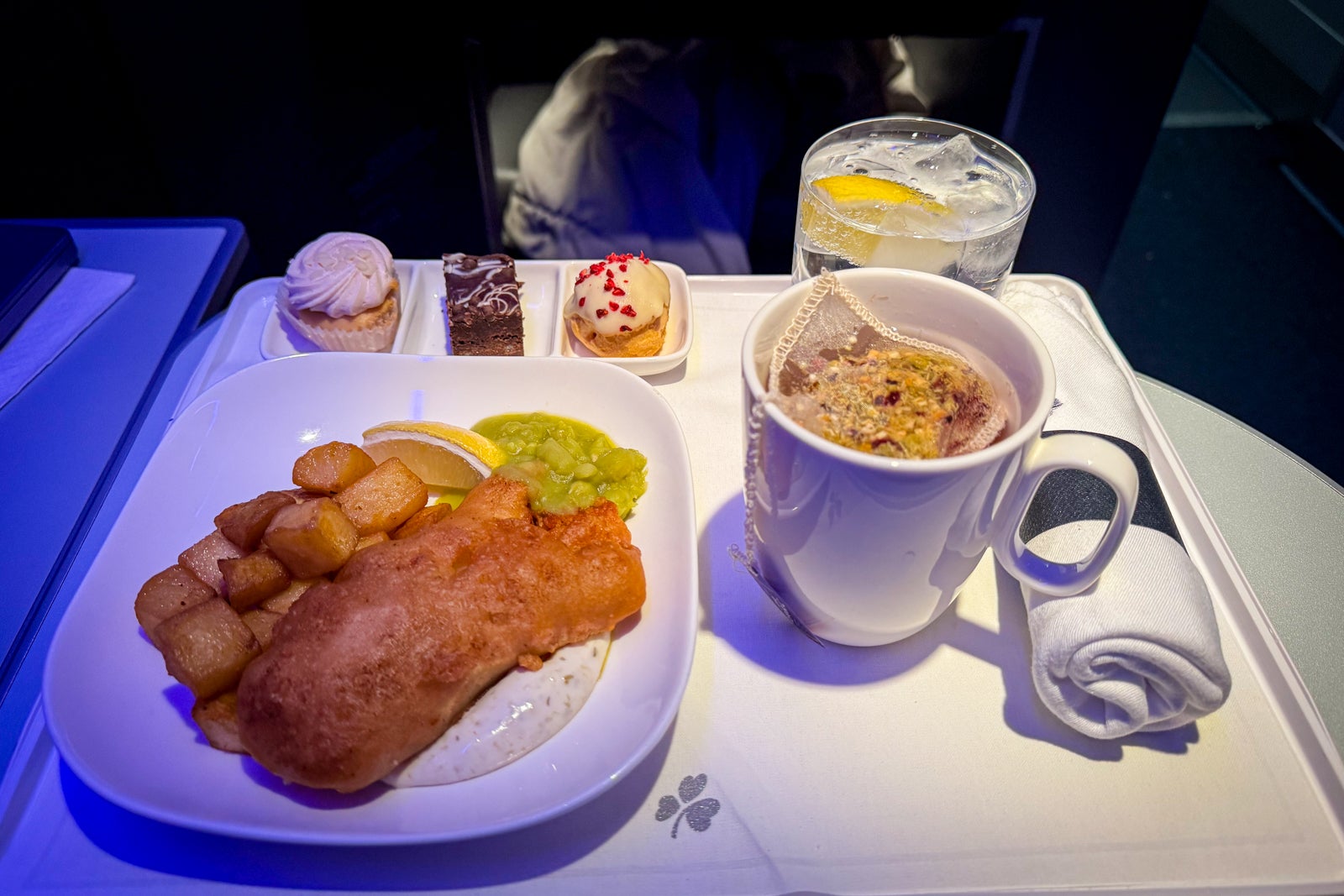
About 90 minutes before landing, flight attendants woke passengers who had requested a prearrival meal. The main options were battered cod with tartar sauce, spiced potato cubes, chunky pea and apple chutney puree, or a vegan version of the fish with the same fixings.
ERIC ROSEN/THE POINTS GUY

I don’t love fish-and-chips, but I tried the vegan version just to see how it was. TLDR: too heavy for my liking.

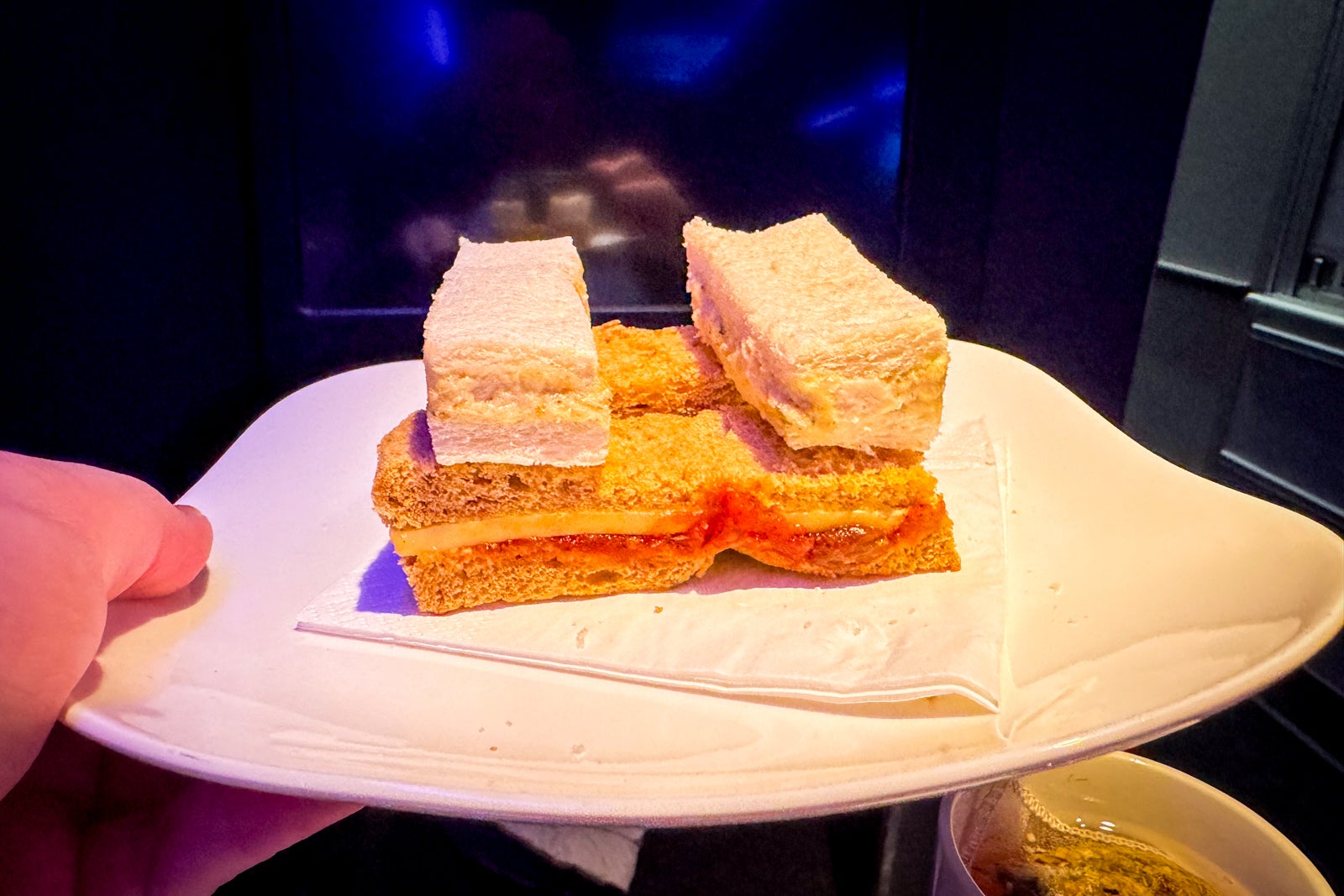
Luckily, the flight attendants had a few more tricks up their sleeves and could serve a selection of teas along with finger sandwiches that included chicken salad, cheddar and tomato relish, and egg salad. Those were much more my speed for an afternoon snack.
ERIC ROSEN/THE POINTS GUY

There were bites like chips and cookies available in the galley between meals, too.

Would you recommend Aer Lingus business class?

The flight attendants on my Aer Lingus flight were among the friendliest crews I have ever encountered in many years of travel. The three working in business class were cheerful and chatty, taking the time to get to know each passenger, offering suggestions from the menu, asking about their travel plans and more. It set the tone for the entire flight, and I heard other passengers remark on just how delightful the experience was. I concurred.

ERIC ROSEN/THE POINTS GUY

While Aer Lingus’s A330 business class doesn’t have the newest business-class seats or up-to-date technology, it’s still a comfortable ride across the Atlantic. The widespread availability of awards, the affordable taxes and fees, and the friendly service and creativity of the food menus make it a winner in my book. It took me a while to try it out, but now that I have, I am sure I’ll be booking Aer Lingus business class again soon.

Related reading:


Source link

Leave a Reply

Subscribe to Our Newsletter

Get our latest articles delivered straight to your inbox. No spam, we promise.

Recent Reviews


You own two businesses. They work in similar spaces, but are distinct businesses. One of them has financial troubles and gets behind on its bills. You decide to have the other business acquire the assets of the failing business.

You start thinking about taxes. You think ahead when you go to do the tax returns for the businesses, you note that the cost to acquire the assets is generally capitalized and deducted over time. You prefer an immediate tax deduction. The businesses are also in the same space, so they want to protect themselves from liability from the failing business’ creditors. Can you structure the asset acquisition whereby the business pays the debts of the failing business and lists those payments as cost of goods sold on its tax return? If so, that could be an immediate deduction.

The case of Temnorod v. Commissioner, Docket Nos. 5114-19, 13634-19, 14053-19, 14462-19, 14464-19 (T.C. Dec. 8, 2025), gets into this type of fact pattern where a buyer settles a seller’s debts as part of an asset acquisition in bankruptcy.

Facts & Procedural History

The taxpayers in this case are shareholders of an S corporation that provided telecommunications services to customers. The principal shareholders formed their own competitive carrier in 2004 as a related entity. This related carrier was wholly owned by a holding company in which the principal shareholders held significant ownership interests.

The related carrier entered into a service agreement with the S corporation’s operating subsidiary in 2008. Under this agreement, the related carrier would accept call traffic from the S corporation’s customers and route the calls to their destinations through interconnection agreements with AT&T and Verizon. Payment disputes arose because the related carrier maintained it was providing information services through internet connections, while AT&T and Verizon insisted the traffic constituted long-distance services subject to higher rates. These disputes created growing payment differentials that the related carrier never passed through to the S corporation despite having contractual rights to do so.

By early 2011, AT&T threatened service disconnection unless the related carrier immediately escrowed approximately $3 million. The related carrier filed for Chapter 11 bankruptcy protection in October 2011. AT&T submitted unsecured creditor claims totaling approximately $10.2 million, and Verizon submitted claims totaling approximately $13.9 million.

Through the bankruptcy proceedings

Through the bankruptcy proceedings, a wholly owned subsidiary of the S corporation purchased substantially all of the related carrier’s assets. The Asset Purchase Agreement provided that the buyer would pay $1.6 million to the seller and $1.6 million directly to Verizon. The agreement also specified that the seller would use some of the cash it received to pay $1.5 million to AT&T. These payments to AT&T and Verizon settled their bankruptcy claims and were conditions for assigning the related carrier’s interconnection agreements to the buyer.

On its 2012 Form 1120S

On its 2012 Form 1120S, the S corporation included $1.5 million (roughly equal to the AT&T payment) and the $1.6 million Verizon payment—totaling $3 million—as cost of goods sold. This treatment contributed to the S corporation reporting a loss of $7 million for its 2012 tax year. The shareholders reported their pro rata shares of this loss on their respective 2012 Forms 1040. Some shareholders carried portions of their losses back to their 2010 tax returns.

The IRS audited the S corporation’s 2012 return. The IRS audit resulted in the proposed disallowance of the $3.1 million in cost of goods sold. The IRS then examined each shareholder’s returns and issued Notice of Deficiency letters to each petitioner. The taxpayers petitioned The U.S. Tax Court, and the cases were consolidated for trial.

Cost of Goods Sold: What It Is and What It Isn’t

We have previously addressed cost of goods sold in various articles. This includes this article about the Texas state tax planning for COGS.

Cost of goods sold is a tax accounting concept. It is not a deduction from gross income as one normally thinks of for tax deductions, but, rather, is a subtraction from gross receipts in determining gross income. The distinction matters because it affects how a business calculates its starting point for taxable income.

Section1.61-3(a) of the regulations explains that in a manufacturing, merchandising, or mining business, gross income means total sales less the cost of goods sold, plus any income from investments and incidental operations. This reduction happens before reaching the gross income figure that appears on a tax return. Cost of goods sold thus never shows up as a deduction on the return because it already reduced the gross receipts to arrive at gross income.

Service providers operate under different rules. When a business primarily provides services rather than manufacturing, merchandising, or mining goods, the business’s gross receipts constitute gross income without any reduction for cost of goods sold. So, instead, service businesses incur deductible business expenses in providing their services.

The distinction between cost of goods sold and service bu…

The distinction between cost of goods sold and service business expenses determines timing. Cost of goods sold matches against the revenue from selling goods in the same period. Service business expenses get deducted under section 162 when paid or incurred, assuming they meet the requirements for ordinary and necessary business expenses. But neither treatment applies when costs must be capitalized under section 263.

In this case

In this case, the taxpayers acknowledged that the S corporation was in the business of providing telecommunications services, not manufacturing or selling goods. Despite this concession, they initially argued the creditor payments constituted cost of goods sold. The court quickly dispensed with this argument, noting that service providers usually cannot reduce gross receipts for cost of goods sold.

Section 162: The General Rule for Business Expense Deductions

Section 162(a) allows a deduction for “all the ordinary and necessary expenses paid or incurred during the taxable year in carrying on any trade or business.” This provision represents one of the tax code’s most important deduction rules. The deduction reduces gross income to arrive at taxable income.

The statute requires that an expense be both ordinary and necessary. “Ordinary” means the expense is normal, common, or accepted in the taxpayer’s trade or business. “Necessary” means the expense is appropriate and helpful to the business, though not indispensable. Courts have interpreted these requirements broadly, recognizing that business owners need flexibility in operating their enterprises.

Section 162 deductions provide immediate tax benefits. The taxpayer recovers the full cost of the expense in the year paid or incurred. This immediate recovery accelerates the tax benefit compared to capitalization, where the taxpayer must spread the cost recovery over multiple years through depreciation or amortization.

The timing advantage of section 162 treatment creates an incentive for taxpayers to characterize payments as deductible expenses rather than capital expenditures. A $3 million deduction today is more value than the same $3 million capitalized and amortized over fifteen years. The present value difference can be substantial, particularly for high-tax-rate taxpayers or S corporation shareholders who can use the losses to offset other income.

Section 263: The Capitalization Requirement

Section 263(a)(1) prohibits a deduction for any amount paid out for new buildings or for permanent improvements or betterments made to increase the value of any property or estate. This language, though focused on buildings and improvements, extends more broadly to many types of capital expenditures. The capitalization requirement ensures that costs creating long-term benefits get matched against the income those benefits produce over time.

The Supreme Court addressed the scope of section 263 in INDOPCO, Inc. v. Commissioner, 503 U.S. 79 (1992). The Court explained that the primary effect of characterizing a payment as either a business expense or a capital expenditure concerns timing. Business expenses are currently deductible, while a capital expenditure usually gets amortized and depreciated over the relevant asset’s life. Where no specific asset or useful life can be ascertained, the capitalized amount gets deducted upon dissolution of the enterprise.

The INDOPCO Court emphasized that the tax code endeavors to match expenses with the revenues of the taxable period to which they properly belong. This matching produces a more accurate calculation of net income for tax purposes. The opinion noted that deductions are exceptions to the norm of capitalization, not the other way around. Deductions are specifically enumerated in the statute and thus are subject to disallowance in favor of capitalization.

This priority given to capitalization stems from the prin…

This priority given to capitalization stems from the principle that income tax deductions are matters of legislative grace. Taxpayers bear the burden of proving entitlement to claimed deductions. When doubt exists about whether an amount should be deducted or capitalized, the tie goes to capitalization.

What Costs Must Be Capitalized in an Asset Acquisition?

The costs requiring capitalization in an asset acquisition extend well beyond the purchase price paid to the seller. Buyers have to capitalize various ancillary costs directly related to acquiring the assets. These additional capitalizable costs include legal fees, accounting fees, appraisal costs, brokerage commissions, and other professional fees incurred in connection with the purchase.

The general rule is that an expenditure has to be capitalized when it creates or enhances a separate and distinct asset, produces a significant future benefit, or is incurred in connection with the acquisition of a capital asset. The phrase “in connection with” means the expenditure was directly related to the acquisition.

For asset-related expenses where the origin of the expenses is in the process of acquisition itself, the courts apply a “process of acquisition test.” This test considers whether an expenditure was somehow related to an asset acquisition and whether the expenditure was directly related to that acquisition.

Assumed liabilities also require capitalization. When a buyer assumes the seller’s obligations as part of an asset purchase, those assumed liabilities increase the buyer’s basis in the acquired assets. Thus, the payment of an obligation of a preceding owner of property by the person acquiring such property—whether or not such obligation was fixed, contingent, or even known at the time the property was acquired—is not an ordinary and necessary business expense. Rather, when paid, such payment is a capital expenditure that becomes part of the cost basis of the acquired property.

This rule applies regardless of what the tax character of…

This rule applies regardless of what the tax character of the payment would have been to the prior owner. If the seller could have deducted the payment as a business expense, that fact does not allow the buyer to deduct it. The buyer must still capitalize the payment because it relates to acquiring assets.

The Priority of Capitalization Over Deduction

Section 161 provides that in computing taxable income, there shall be allowed as deductions the items specified in Part VI of Subchapter B of Chapter 1, which includes section 162, subject to the exceptions provided in Part IX, which includes section 263. Coordinately, section 261 provides that in computing taxable income no deduction shall in any case be allowed for the items specified in Part IX.

The Supreme Court interpreted these priority-ordering directives in Commissioner v. Idaho Power Co., 418 U.S. 1, 17 (1974). The Court held that an expenditure incurred in acquiring capital assets must be capitalized even when the expenditure otherwise might be deemed deductible under Part VI. The case involved equipment depreciation incurred during construction of capital facilities. Even though section 167(a) allowed a deduction for depreciation, section 263(a)(1) required capitalization because the depreciation related to constructing capital assets.

This priority rule means that when a payment falls under both a deduction provision and a capitalization provision, capitalization wins. The taxpayer cannot avoid capitalization by pointing to some aspect of the payment that would support deduction treatment. If the payment meets the requirements for capitalization, that determination controls.

A priority rule allows taxpayers to choose between deduction and capitalization based on which characterization saves more tax would undermine the matching principle, in theory. It would let taxpayers accelerate deductions for costs that produce long-term benefits. The government would collect less revenue in early years while the taxpayer enjoys those benefits.

This opens the door for tax planning as creative structur…

This opens the door for tax planning as creative structuring is needed to transform capitalizable costs into deductible expenses. This sets up the dispute, as it opens the door for the IRS to argue about the substance of the transaction and how that controls over its form.

When Are Debt Settlements “Directly Related” to Asset Acquisitions?

This brings us back to this case. The U.S. Tax Court’s analysis focused on whether the payments to AT&T and Verizon were “directly related” to the acquisition. This question determined whether the payments had to be capitalized even if they might otherwise qualify as deductible business expenses.

The taxpayers’ theory rested on dual purposes for the payments. They acknowledged that the buyer purchased the seller’s assets. But they argued that $3.1 million of the total purchase consideration served a different purpose—settling potential claims that AT&T and Verizon might have brought directly against the buyer’s corporate group. Under this theory, the payments forestalled two threats. First, AT&T and Verizon might have sued to hold the buyer liable for the seller’s debts under successor liability or other theories. Second, the creditors might have pushed to convert the seller’s Chapter 11 bankruptcy into a Chapter 7 liquidation, in which case a trustee might have pursued the seller’s contractual rights to collect the payment deltas from the buyer.

The taxpayers argued these potential liabilities made the $3.1 million payments defensive rather than acquisitive. The payments bought peace from creditors who threatened the buyer’s business operations. Without the bankruptcy settlement, AT&T and Verizon might have terminated the interconnection agreements that the buyer needed for its telecommunications services. The taxpayers characterized these as payments to protect existing business operations under section 162, not payments to acquire new assets under section 263.

This argument had surface appeal

This argument had surface appeal. The buyer did face real exposure. The service agreement between the entities gave the seller the right to pass through charges from AT&T and Verizon to the buyer. The seller had never exercised this right during the years when the payment differentials accumulated. But in bankruptcy, a trustee might have pursued these contract rights to generate cash for creditors. AT&T and Verizon might also have claimed that the buyer bore some direct liability for the disputed charges.

The IRS countered by pointing to the Asset Purchase Agreement’s express terms. The agreement stated that the purchase price consisted of three components: the cash purchase price, the assumed liabilities (including the Verizon payment), and the buyer’s waiver of its unsecured claims against the seller. The agreement defined “Assumed Liabilities” to include the Verizon payment. Another section listed the Verizon payment among the liabilities that the buyer would assume as part of the purchase.

The court assumed for argument’s sake that the payments resolved the buyer’s potential liabilities to AT&T and Verizon. Standing alone, such payments might qualify as ordinary and necessary business expenses under section 162.

But the payments did not stand alone. They occurred as part of the buyer’s purchase of the seller’s assets. The payments were conditions of that purchase. They settled obligations that the seller owed to its creditors. The settlement enabled the buyer to take assignment of the seller’s interconnection agreements, which were valuable assets that the buyer needed for its telecommunications business.

The court invoked the priority rule from sections 161 and…

The court invoked the priority rule from sections 161 and 261. When a payment falls under both a deduction provision and a capitalization provision, the capitalization provision prevails. Idaho Power established this principle clearly. An expenditure incurred in acquiring capital assets must be capitalized even when the expenditure otherwise might be deemed deductible.

The Takeaway

This case has significant implications for structuring business acquisitions. It shows that buyers cannot avoid capitalization by identifying defensive or protective purposes for payments that relate to acquiring assets. The directly-related test asks whether the payment connects to the acquisition, not whether the payment also serves other business purposes. Multiple motivations do not create an exception to capitalization requirements.

To avoid this result, one might structure separate transactions that are truly independent. For example, if a buyer first settles potential claims with the seller’s creditors through a standalone settlement agreement, then later purchases the seller’s assets in an unrelated transaction, perhaps the settlement payments could be deducted under section 162. But such structuring invites scrutiny under step transaction and substance-over-form doctrines, as noted in this case.

Watch Our Free On-Demand Webinar

In 40 minutes, we’ll teach you how to survive an IRS audit.

We’ll explain how the IRS conducts audits and how to manage and close the audit.  


Source link