Amex Platinum vs. Sapphire Reserve: Most usable credits


These days, premium travel cards are packed with statement credits designed to offset sky-high annual fees. As someone focused on real-world value, I’m not interested in how many statement credits I can access — I want to know how many of them I’ll actually use.

The American Express Platinum Card® and the Chase Sapphire Reserve® (see rates and fees) each offer many statement credits, which often require effort to maximize.

Which top-tier card offers the most usable statement credits? Here’s how they compare.

Methodology

To evaluate the real-world value of the statement credits on the Amex Platinum and Sapphire Reserve, I focused on five key criteria:

  • Potential dollar value: The maximum dollar value available through statement credits
  • Ease of redemption: The amount of effort required to redeem the credit, including any enrollment or activation requirements
  • Frequency: How often the credit is available, whether annually, biannually, quarterly or monthly
  • Broad vs. niche merchants: How broadly applicable the credit is and how easy it is to find eligible merchants
  • Natural fit: Whether I use the credit organically or have to change my spending habits to justify it

Related: 7 cards that can replace your Amex Platinum

Amex Platinum vs. Sapphire Reserve: Potential value chart

Before we dive into each benefit side by side, let’s take a look at the total potential value each card offers.

The table below breaks down each card’s statement credits by seven categories. If you’re interested in which card wins in practice, jump ahead to the category-by-category analysis.

 Statement credits Amex Platinum Sapphire Reserve

  • Up to $200 in statement credits per calendar year on airline incidentals (such as checked bags and inflight refreshments, on one selected airline)*

  • Up to $300 each account anniversary year for a broad suite of travel purchases

  • Up to $600 each calendar year (up to $300 in biannual statement credits) on prepaid bookings with Amex Fine Hotels + Resorts or The Hotel Collection^ properties made through American Express Travel® (The Hotel Collection requires a two-night minimum stay)

  • Up to $500 (split into two up-to-$250 credits that can be used at any time but cannot be combined) for prepaid stays of two nights or more booked via Chase Travel℠

  • Up to $400 each calendar year (up to $100 in quarterly statement credits) for Resy purchases in the U.S.*
  • Up to $200 each calendar year (up to $15 per month, plus an additional up to $20 in December) toward U.S. Uber rides and Uber Eats orders# (if used toward Uber Eats, this counts as a dining statement credit)

  • Up to $300 each year (up to $150 from January through June and up to $150 from July through December) for Sapphire Reserve Exclusive Tables through OpenTable
  • Two separate $10 monthly credits toward non-restaurant purchases on DoorDash (when you activate your DashPass membership by Dec. 31, 2027; up to $240 annually)
  • A $5 monthly promo for restaurant orders on DoorDash (through Dec. 31, 2027; up to $60 annually)
  • At least 12 months of complimentary DoorDash DashPass (when you activate by Dec. 31, 2027; up to $120 annually)

Entertainment and shopping

  • Up to $300 each calendar year (up to $25 in monthly statement credits) for select digital entertainment and streaming services*
  • Up to $300 each calendar year (up to $75 in quarterly statement credits) for Lululemon purchases (online and in U.S. stores, excluding outlets)*
  • Up to $155 each calendar year (up to $12.95 in monthly statement credits) for one recurring Walmart+ membership (subject to auto-renewal plus applicable taxes; Plus Up benefits are not eligible)

  • Up to $300 each year (up to $150 from January through June and up to $150 from July through December) for purchases with StubHub and Viagogo (through Dec. 31, 2027; one-time activation required)
  • $288 complimentary Apple TV and Apple Music subscriptions each year (through June 22, 2027; one-time activation for each service required)

  • Up to $200 each calendar year (up to $15 per month, plus an additional up to $20 in December) toward U.S. Uber rides and Uber Eats orders# (if used toward U.S. Uber rides, this counts as a ride-hailing statement credit)
  • Up to a $120 statement credit each calendar year (fully covers an auto-renewing $96 annual or $9.99 monthly Uber One membership)*

  • Up to $120 each year (up to $10 in monthly in-app credit) on Lyft rides (through Sept. 30, 2027)

  • Up to $300 in annual statement credits for select Equinox memberships (including the app, subject to auto-renewal)*
  • Up to $200 in annual statement credits for hardware purchases with Oura Ring each calendar year*

  • Up to $120 each year on Peloton subscriptions ($10 monthly membership credit through Dec. 31, 2027)

Trusted traveler programs

  • Up to $209 in statement credits toward an annual Clear+ membership for expedited airport security (subject to auto-renewal)*
  • $120 statement credit for Global Entry or up to an $85 statement credit for TSA PreCheck (every four years)*

  • Up to $120 for Global Entry, TSA PreCheck or Nexus (every four years)

Total potential annual value 

Up to $3,104

Up to $2,468

$795

Uber benefits are shown in both categories for comparison purposes, but are counted only once in the total value.

Reward your inbox with the TPG Daily newsletter

Join over 700,000 readers for breaking news, in-depth guides and exclusive deals from TPG’s experts

At face value, the Amex Platinum provides $636 in additional statement credits when compared to the Sapphire Reserve. But the key here is analyzing how easy it is to actually redeem the Amex Platinum’s credits. That’s what we’ll dive into next.

*Enrollment is required.
#Add your qualifying Amex card to your Uber account and pay with any Amex card.
^Eligible charges vary by property.

Related: Credit cards that can get you $1,500 or more in first-year value

Travel

The Amex Platinum and Sapphire Reserve each provide a credit toward travel, but they differ in how they’re applied.

The Sapphire Reserve’s $300 annual travel credit may be the easiest benefit to use on this entire list. It automatically applies to a broad list of travel purchases, including flights, hotels and public transit.

I used my Sapphire Reserve’s annual travel credit throughout a recent trip to London, tapping in and out for (essentially) free tube rides the entire time.

seat on nextgen acela train
CLINT HENDERSON/THE POINTS GUY

Meanwhile, the Amex Platinum’s airline incidental credit earns up to $200 in statement credits per calendar year on incidental fees charged by your selected airline (enrollment required). Qualifying airlines include many of the most popular U.S. airlines, such as Delta Air Lines, Southwest Airlines and United Airlines.

Since I don’t have a cobranded airline card or airline elite status, I find this credit useful. This year, I chose American Airlines and used it on checked bag fees and an Admirals Club day pass during a four-hour layover at John F. Kennedy International Airport (JFK) in Terminal 8.

My verdict: I find both of these statement credits easy to use, but the Sapphire Reserve’s flexible travel credit certainly wins out. It’s simpler, broader and easier to use, while the Amex Platinum’s airline fee credit requires more planning and effort.

Related: My 5 top travel credit cards — and how they elevate my trips

Hotels

The Amex Platinum‘s hotel statement credit is split into two biannual up-to-$300 increments. You’re limited to using one half from January to June, then the other from July to December.

You can use your credit for a one-night stay through Amex Fine Hotels + Resorts, but you have to book at least two nights if you book through The Hotel Collection.

Meanwhile, the Sapphire Reserve splits its $500 annual hotel credit in half — but you can use your two $250 credits at any time; they just can’t be combined. You have to book at least two nights through The Edit. This adds timing flexibility that the Amex Platinum’s statement credit doesn’t provide.

Sonoran Landing Pool at Fairmont Scottsdale Princess.
TARAH CHIEFFI/THE POINTS GUY

My verdict: I prefer the Amex Platinum’s hotel statement credits because FHR and THC include more properties than The Edit. Plus, FHR allows one-night stays, which makes it easier for me to use the credit without spending as much cash. If you’re likely to book at least one eligible stay in each half of the year, I think the Amex Platinum’s credit offers more value. However, if you value the flexibility of accessing The Edit credits without a biannual restriction, that may be a better choice for you.

Related: 10 hotels where your Amex Platinum hotel credit covers half (or more) of your stay

Dining

The most prominent differences between the dining credits on the Amex Platinum and Sapphire Reserve are the frequency they’re received and the platforms they partner with.

Amex Platinum cardmembers receive up to $100 in quarterly statement credits for U.S. Resy purchases (enrollment required), while the Sapphire Reserve offers up to $150 from January to June and $150 from July to December for Sapphire Reserve Exclusive Tables through OpenTable.

Sapphire Reserve Exclusive Tables features a decent list of restaurants — especially in larger cities and popular vacation destinations — making this an excellent credit to stack with other benefits, like The Edit credit. However, its footprint isn’t as broad as Resy, in my experience.

SUMMER HULL/THE POINTS GUY

Additionally, Amex Platinum provides easy-to-use perks with Uber (and thus, Uber Eats), while the Sapphire Reserve offers DoorDash credits that can be a bit more complicated. However, the best part of the Sapphire Reserve’s DoorDash benefit is receiving at least 12 months of DashPass for free (when you activate by Dec. 31, 2027).

My verdict: While the Sapphire Reserve offers higher potential value with its dining statement credits, I prefer the wider availability of restaurants with the Amex Platinum’s U.S. Resy statement credit. I also prefer the ease of the Amex Platinum’s U.S. Uber benefit, especially compared to the complexity of the Sapphire Reserve’s DoorDash credits.

Related: Use your Amex Resy credit at even more restaurants

Entertainment and shopping

Both the Amex Platinum and the Sapphire Reserve offer statement credits for shopping and entertainment, so the winner here really comes down to your individual spending habits.

The Amex Platinum offers up to $25 in monthly statement credits for select digital entertainment and streaming services (up to $300 each calendar year; enrollment required). You can use it on eligible purchases made directly with popular services, including Disney+, Hulu, Paramount+ and Peacock.

I use this statement credit on YouTube TV and get $25 back every month. This is one of the easiest credits to use, especially if you already subscribe to an eligible service.

The Amex Platinum also provides up to $75 in quarterly statement credits for U.S. Lululemon purchases (online and in-store, excluding outlets; enrollment required), which is obviously useful if you already shop there. Generally, it’s not hard for me to remember to use this credit each quarter for new workout gear or gifts.

Finally, Amex Platinum cardmembers receive up to $155 in annual statement credits for a recurring Walmart+ membership (enrollment required). If you shop at Walmart regularly, this benefit can be valuable. I’ve already saved more than $100 this year through fuel discounts and free delivery.

Man and woman looking at a laptop
MORSA IMAGES/GETTY IMAGES

It’s easy for live-event fans like me to redeem the Sapphire Reserve’s up to $300 annual credit (split into two $150 biannual credits) for StubHub and Viagogo purchases (through Dec. 31, 2027). I’ve already bought tickets for a Sombr concert later this year, and I plan to use the next half of the credit toward tickets for a college football game in the fall.

The Sapphire Reserve also provides complimentary Apple TV and Apple Music subscriptions each year (one-time activation required for each service; subscriptions run through June 22, 2027), which are natural fits for those who already subscribe to these services.

My verdict: I enjoy the suite of entertainment and shopping credits on both cards, though the Sapphire Reserve’s credits may be easier for some to redeem since they’re received biannually and annually, while the Amex Platinum’s credits are mostly received monthly or quarterly.

Related: The best credit cards to maximize your entertainment spending

Ride-hailing

The Amex Platinum provides benefits with Uber, while the Sapphire Reserve partners with Lyft.

As mentioned in the dining section, Amex Platinum cardmembers receive Uber benefits (up to $200 each year) that can be used toward U.S. Uber rides (and Uber Eats orders). They also receive an Uber One membership (up to $120 each year; subject to auto-renewal). Just make sure your Platinum card is added to your Uber account, and from there you can redeem your Uber Cash with any Amex card.

Uber pickup area at Midway Airport
SCOTT OLSON/GETTY IMAGES

Meanwhile, the Sapphire Reserve gives cardholders up to $10 in monthly in-app credit on Lyft rides, which is a solid monthly benefit as long as you can maximize it.

My verdict: I find both benefits useful, and your personal loyalty to Uber or Lyft may push one ahead of the other. However, thanks to the addition of the Uber One membership and the fact that Uber may be more widely available in some parts of the U.S., the Amex Platinum’s ride-hailing credits win here.

Related: 5 things to know before the next time you use a ride-hailing service at the airport

Health and wellness

The Amex Platinum provides up to $300 in annual statement credits for select Equinox memberships (enrollment required; subject to auto-renewal), including the app, and up to $200 in statement credits for hardware purchases with Oura Ring each calendar year (enrollment required).

Meanwhile, Sapphire Reserve cardmembers receive up to $120 each year on Peloton subscriptions ($10 monthly membership credit through Dec. 31, 2027).

Peloton
ERIC ROSEN/THE POINTS GUY

When it comes to the Amex Platinum’s statement credits, you’re likely to get the most out of the Equinox benefit if you have a nearby location, even though the app is included in the benefit. Plus, the Oura Ring perk may be difficult to get ongoing annual value from unless you upgrade your ring each year, since it’s for hardware purchases only.

The Sapphire Reserve’s Peloton credit may be easier for those who already have a bike and use it regularly. For instance, TPG contributing editor Matt Moffitt values the credit highly since he’s been a subscriber for six years. So, he pays just $4 out of pocket per month for his subscription.

My verdict: Even though the Amex Platinum offers a higher total credit value, its credits are more niche. It’s also worth noting that the Sapphire Reserve’s Peloton credit may be easier only for existing Peloton users.

Related: 6 reasons why the Amex Platinum Card is the perfect card for fitness enthusiasts

Trusted traveler programs

Both the Amex Platinum and the Sapphire Reserve offer up to $120 in statement credits for Global Entry or TSA PreCheck every four years (enrollment required for the Amex Platinum).
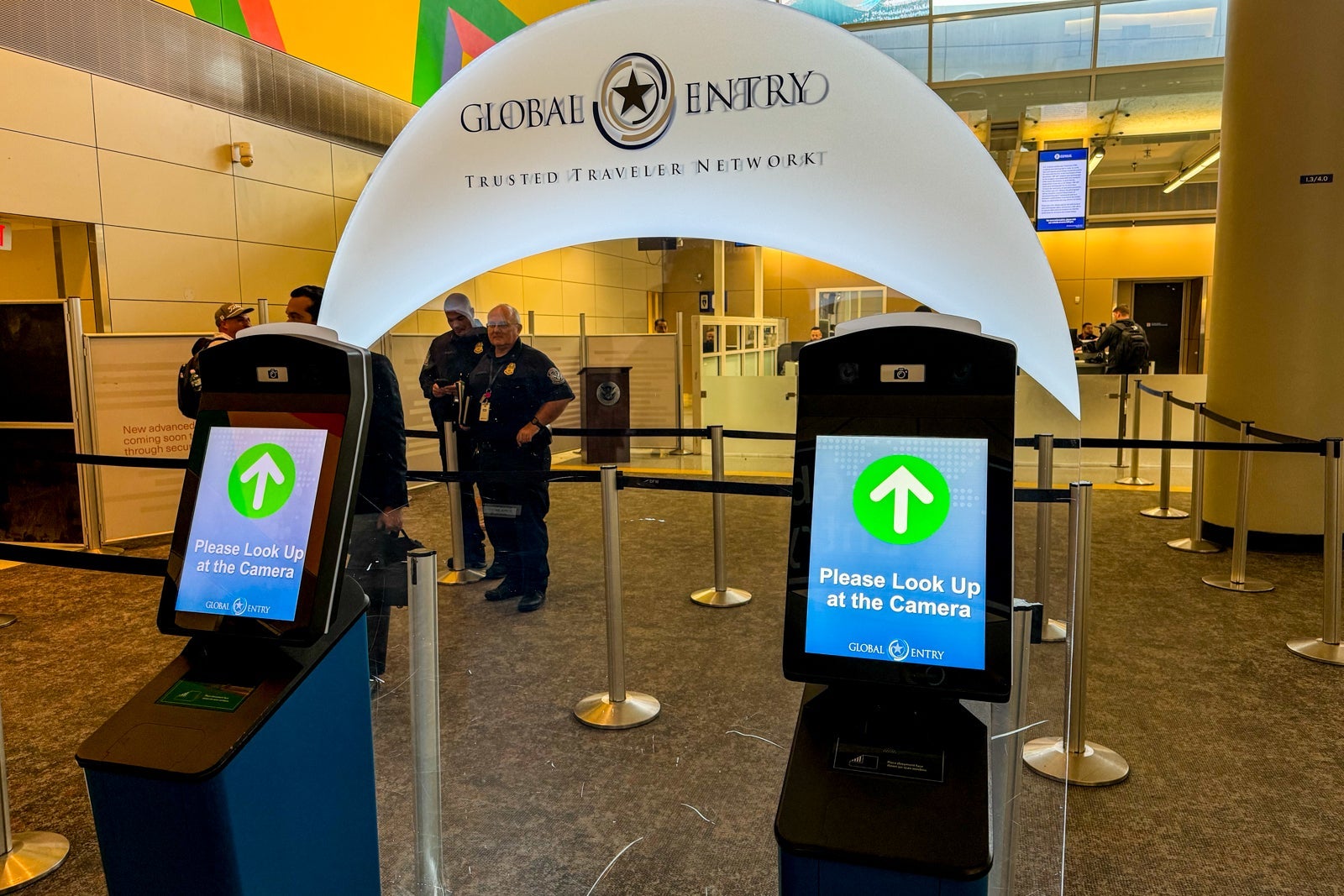
CBP Global Entry
SEAN CUDAHY/THE POINTS GUY

The Amex Platinum offers one additional statement credit, giving cardmembers up to $209 toward an annual Clear+ membership for expedited airport security (subject to auto-renewal; enrollment required).

My verdict: These statement credits are easy to use, and the Amex Platinum inches ahead of the Sapphire Reserve since it also offers Clear+.

Related: Can someone else use my Global Entry application credit?

Bottom line

The Amex Platinum’s statement credits offer greater potential value — but they generally require more active tracking and include more niche merchants.

Comparatively, Sapphire Reserve provides less potential value — but its credits are much easier to track and use.

If you’re interested in more value and more opportunities to redeem credits, then the Amex Platinum is the way to go. If you don’t want to put as much effort into maximizing your benefits, the Sapphire Reserve is a better option, even though it provides less value and fewer opportunities.

To learn more, read our full reviews of the Amex Platinum and Chase Sapphire Reserve.


Apply here: American Express Platinum

Apply here: Chase Sapphire Reserve


For rates and fees of the Amex Platinum, click here.


Source link

Leave a Reply

Subscribe to Our Newsletter

Get our latest articles delivered straight to your inbox. No spam, we promise.

Recent Reviews


Taxpayers have various tax filing deadlines throughout the year. Missing one can trigger penalties, interest charges, and collection actions.

When there is a major disaster, the IRS typically grants short extensions to give affected taxpayers breathing room. During the COVID-19 pandemic, the IRS issued notices extending various tax deadlines by a few months. The agency moved the April 15, 2020 deadline to July 15, 2020, for example. Most taxpayers and tax advisors assumed these specific notices defined the full extent of available relief.

What if the law actually provided a much longer extension than the IRS provided? A recent case from the Court of Federal Claims says that is exactly what happened. In Kwong v. United States, No. 23-271T, (Fed. Cl. Nov. 25, 2025), the court held that statutory relief extended certain tax deadlines until July 2023—years beyond what the IRS had publicly announced in its COVID-19 disaster declarations.

Facts & Procedural History

The taxpayer owned and managed real estate through his business. In 2005, he bought out his co-owners and became the sole owner. As part of that transaction, he refinanced the business property. On advice from his tax attorney and accountant, he claimed a loss of over $2.3 million on his 2005 tax return. He carried that loss forward to subsequent years, including 2007, 2010, and 2011.

The IRS audited the tax return for 2005 and disallowed the loss in 2012. This resulted in additional tax liabilities for the years to which he had applied the loss. The IRS simultaneously assessed delinquency penalties for those tax years in April 2012 for the 2007 tax period and later for 2010 and 2011. The taxpayer also had penalties for tax years 2015 and 2016 related to underwithholding taxes throughout those years.

In 2020, the taxpayer filed penalty abatement requests seeking refunds of the penalties he had paid for each of the 2007, 2010, 2011, 2015, and 2016 tax years. The IRS issued notices of disallowance for his 2007, 2010, and 2011 claims in September and October 2020. The taxpayer filed his complaint to start the tax litigation in February 2023 in the U.S. Court of Federal Claims seeking refunds of the penalties for all five tax years.

The government moved for summary judgment. It argued that the claims for 2007, 2010, and 2011 were untimely because the taxpayer filed suit more than two years after the IRS denied his claims. The government also argued that the IRS had correctly assessed penalties for 2015 and 2016. The taxpayer responded that his suit was timely because of statutory extensions under COVID-19 emergency relief legislation. This defense triggered extensive briefing on whether and how the pandemic extended his deadline to file suit.

The Two-Year Deadline for Tax Refund Suits

Section 6532 of the tax code provides strict time limits for filing suit to recover taxes or penalties. It generally says that a taxpayer cannot file suit “after the expiration of 2 years from the date of mailing . . . of the disallowance of the part of the claim to which the suit or proceeding relates.” This two-year window begins when the IRS formally denies a refund claim. Miss that deadline and the courthouse doors close.

The Federal Circuit has long held that Section 6532’s deadline is jurisdictional. This means courts lack power to hear cases filed after the two-year period expires. The jurisdictional nature of the deadline prevents equitable tolling—the doctrine that allows courts to extend deadlines when extraordinary circumstances beyond a party’s control prevent timely filing. Courts cannot create extensions based on fairness or hardship.

However, jurisdictional deadlines can still be extended by statute. Section 6532 itself recognizes this possibility. The statute provides that the two-year period “shall be extended for such period as may be agreed upon in writing between the taxpayer and the Secretary.” Congress can likewise extend these deadlines through legislation addressing specific circumstances.

Section 7508A: The Disaster Relief Statute

Section 7508A gives the Secretary of the Treasury authority to postpone tax-related deadlines during disasters.

Congress enacted Section 7508A to address natural disasters that temporarily disrupt taxpayers’ ability to meet their obligations. The typical scenario involves hurricanes, floods, or wildfires. These events damage infrastructure, displace populations, and make compliance impossible for defined periods. The statute typically operates for short time periods. A hurricane makes landfall, causes destruction over several days, and the affected area begins recovery. The IRS issues a notice extending deadlines by a few months to give taxpayers time to get back on their feet.

The statute allows the Secretary to “specify a period of up to 1 year that may be disregarded” during a taxpayer’s deadline to file returns, pay taxes, or bring suit for refunds. This discretionary authority under subsection (a) lets the Secretary respond flexibly to emergencies.

The statute also includes an automatic extension provision in subsection (d). This mandatory extension applies without any action by the Secretary. Under the version in effect before November 2021, the automatic extension ran from “the earliest incident date specified in the declaration” to “the date which is 60 days after the latest incident date so specified.” Unlike the discretionary extension under subsection (a), the mandatory extension under subsection (d) contained no express time limit in the pre-2021 version.

The mandatory extension in subsection (d) historically operated in tandem with the discretionary extension. For a typical disaster, the mandatory 60-day extension might run from the disaster’s start through 60 days after its end. This might total three or four months. If taxpayers needed more time, the Secretary could exercise discretionary authority under subsection (a) to extend deadlines up to a year. This two-tier system worked well for localized, short-term emergencies. No one anticipated how it would function during a multi-year national pandemic.

How the Statute Changed in 2021

Congress amended Section 7508A in November 2021. Understanding which version applies requires careful attention to effective dates and statutory language. This proved to be the key issue in Kwong.

The original 2019 version of subsection (d) stated that the mandatory extension period ran from “the earliest incident date specified in the declaration” to “the date which is 60 days after the latest incident date so specified.” This language tied the extension’s length directly to the disaster declaration itself. If the declaration said the disaster lasted from Date A to Date B, the mandatory extension ran until 60 days after Date B. The statute imposed no cap on how long that period could last.

In November 2021, Congress amended subsection (d). The new version changed the end of the extension period from “the date which is 60 days after the latest incident date so specified” to “the date which is 60 days after the later of such earliest incident date . . . or the date such declaration was issued.” This amendment effectively capped the mandatory extension at 60 days maximum. The extension would end 60 days after either the disaster’s start or the declaration’s issuance, whichever came later.

This change matters in this case. Under the 2019 version, a disaster that lasted three years would trigger an extension that lasted three years plus 60 days. Under the 2021 version, that same disaster would trigger only a 60-day extension. The question in this case is which version applies to COVID-19?

The answer depends on when the disaster was declared. The November 2021 amendment applied only “to federally declared disasters declared after the date of enactment of this Act.” The COVID-19 disaster was declared in early 2020. Therefore, the 2019 version of Section 7508A governs COVID-19 cases. The government initially argued that the 2021 amendment should apply retroactively to COVID-19. Only after the court pressed the issue did the government concede that the amendment’s effective date provision barred retroactive application.

When Did the COVID-19 Emergency Begin and End?

On March 13, 2020, President Trump declared a nationwide emergency. On March 22, 2020, he declared California, where this taxpayer resided, a major disaster area “beginning on January 20, 2020, and continuing” due to pandemic conditions. The Federal Emergency Management Agency coordinated the response.

That phrase “beginning on January 20, 2020, and continuing” became the linchpin of the Kwong decision. The declaration established January 20, 2020 as the “earliest incident date.” But what was the “latest incident date”? The declaration said the emergency was “continuing.” This suggested no fixed end date at the time of issuance.

The pandemic emergency declaration remained in effect for over three years. On February 10, 2023, the government amended the declaration to close the incident period effective May 11, 2023. This amendment established May 11, 2023 as the “latest incident date” for purposes of Section 7508A.

Under the plain language of the 2019 statute, the mandatory extension ran from January 20, 2020 through July 10, 2023. The latter date represents 60 days after May 11, 2023. This created an extension period of roughly three and a half years. No one anticipated such a duration when Congress drafted Section 7508A.

Does “Continuing” Mean There Was No Specified End Date?

The government argued that because the initial declaration said “continuing” rather than specifying an end date, only January 20, 2020 qualified as a date “so specified” under the statute. According to this reading, both the earliest and latest incident dates were January 20, 2020. This would yield only a 60-day extension from that single date.

The Kwong court rejected this argument. The word “continuing” has meaning. If the declaration was meant to cover only January 20, 2020, it would not have added “and continuing.” The government’s choice to maintain the disaster declaration beyond January 20, 2020 demonstrated that the emergency period extended far beyond that initial date. The government kept the declaration in effect for more than three years. This active maintenance of the declaration showed that the emergency continued throughout that period.

The government relied on Abdo v. Commissioner, 162 T.C. 148 (2024), for support. In Abdo, the Tax Court addressed whether COVID-19 extended certain filing deadlines. The court held that taxpayers who filed within 60 days of January 20, 2020 had filed timely. But Abdo did not address whether the extension could last longer than 60 days. The taxpayers there had filed within the initial 60-day window. The Tax Court explicitly noted: “We need not, and therefore do not, express a view on what the outer limits of the extension period may be where a declaration omits an ending date or is extended.”

The Kwong court thus faced a question Abdo left open. The court concluded that the declaration’s use of “continuing” meant the emergency period extended as long as the declaration remained in effect. When the government amended the declaration in February 2023 to close the incident period on May 11, 2023, that date became the “latest incident date” under the statute. The mandatory extension therefore ran until 60 days after that date.

How This Applied to the Taxpayer’s Refund Suit

The taxpayer’s deadline to file suit began when the IRS denied his refund claims in September and October 2020. Under normal circumstances, he would have had until September or October 2022 to file suit. This represents the two-year period from the denial date under Section 6532. He filed in February 2023—several months after that normal deadline expired.

But the COVID-19 mandatory extension under Section 7508A lasted until July 10, 2023. Section 7508A allows affected taxpayers to “disregard” deadlines that fall within the extension period. The taxpayer’s September and October 2020 denial notices triggered deadlines that would normally expire in September and October 2022. Those expiration dates fell within the January 2020 to July 2023 extension period. Therefore, the taxpayer could disregard those deadlines until the extension period ended.

When the July 2023 extension period ended, the taxpayer’s two-year clock to file suit would have started running again. Because he filed in February 2023—well before July 2023—his suit was timely. This analysis applies regardless of whether we characterize Section 7508A as providing tolling or a postponement period. Tolling pauses the clock while postponement moves the deadline. Either characterization leads to the same result here.

The court granted summary judgment in the taxpayer’s favor on the timeliness issue for tax years 2007, 2010, and 2011. This means his refund claims for those years can proceed to address their merits. Whether he ultimately wins those refunds depends on whether the IRS properly assessed the underlying penalties. The court did not reach that question in its summary judgment decision. The parties will need to litigate the substantive penalty issues at trial or through further proceedings.

The Takeaway

The Kwong decision explains that the COVID-19 emergency extended tax deadlines far longer than the IRS’s public guidance suggested. The mandatory extension under Section 7508A’s pre-2021 version ran from January 20, 2020 through July 10, 2023. This extension applied automatically to any taxpayer affected by the declared disaster. It operated regardless of whether the IRS issued specific guidance for particular situations. The practical impact remains viable for some taxpayers even to today. By late 2025, a taxpayer seeking to invoke the July 2023 extension would need to have had a deadline fall during the COVID-19 period. They would then need to have acted quickly enough after July 2023 to file claims while their own limitations periods remained open. Most such claims have now expired through the passage of time, but those who filed during this time, even if late, may benefit. This may preserve claims the government thought time-barred.

Watch Our Free On-Demand Webinar

In 40 minutes, we’ll teach you how to survive an IRS audit.

We’ll explain how the IRS conducts audits and how to manage and close the audit.  


Source link