Android XR Is Finally Starting To Feel Real


Last year at Google I/O, we got a promising, if frustratingly limited, look at Android XR. At this year’s event, the company confirmed that the first glasses from Warby Parker and Gentle Monster are finally coming later this year.

Those frames are still under wraps, though we got a bit of a preview during the I/O keynote. But Google’s developer conference did, at least, give us a much clearer picture of how its smart glasses will work. Given that Meta has a years-long headstart, Google will have a lot to prove. But despite being almost embarrassingly late to the smart glasses game, Google has a few significant advantages. And, after trying out the latest Android XR glasses, I suspect at least some people will prefer these over Meta’s Ray-Ban shades.

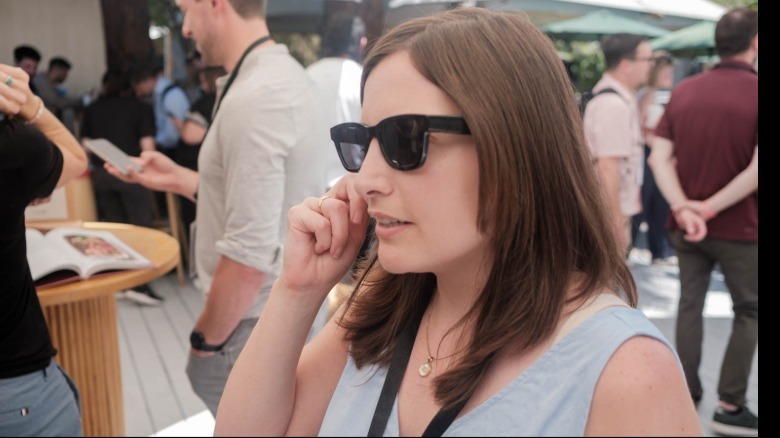
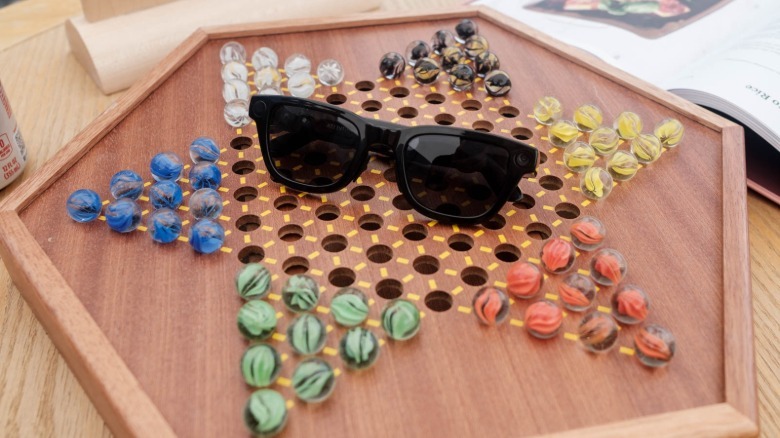
The glasses I demoed were not the branded frames briefly shown off during the keynote. They were “reference hardware” that Google uses for its own internal development. These glasses also had a built-in display, unlike the Warby Parker and Gentle Monster specs, which will be audio-only. But they didn’t really look or feel like a prototype either. While not quite as polished as my Ray-Ban Meta frames, they weren’t overly thick or nerdy looking. And they felt much lighter than the extra chunky Meta Ray-Ban Display frames.
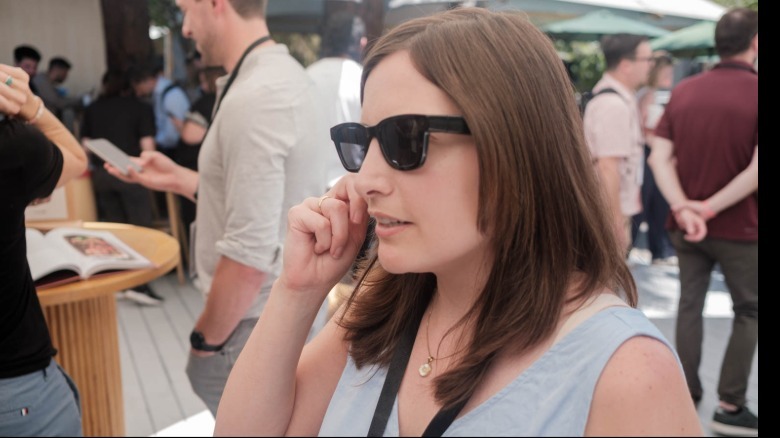
The display setup is similar to the prototype I saw last year, with a single window over the right lens. On the reference hardware, it had a 20-degree field of view, though Google was quick to point out that specific specs could change.

While the display was impressive — it was every bit as crisp and bright as the Meta equivalent — it was obvious that even the audio-only Android XR glasses could have a big advantage over Meta and other would-be rivals. Namely, that Google has been able to integrate its own apps and, yes, Gemini into the frames in a way that seems incredibly useful.

For example, using Google Translate was much more seamless than my experience with Meta’s glasses. I was able to move between a Google rep speaking Spanish and my colleague Igor Bonifacic speaking Serbian and the glasses kept the translation going without interruption. It also adeptly ignored the people around me speaking English, and only showed a real-time translation of what was being said in a foreign language. There probably aren’t that many real-life situations when you would need to move between multiple languages inside of the same conversation, but the fact that it was possible underscores Google’s advantage.

While I’ve generally been impressed with Meta’s AI glasses’ translation abilities, you can only do one language at a time. You also need to download the language to your phone ahead of time, which can make spur of the moment translations tricky.
The non-display glasses will also still benefit from multimodal capabilities, which rely on the onboard cameras and Gemini to surface information based on your surroundings. I was able to look at a recipe and ask Gemini to add the ingredients to my shopping list on Google Keep. Gemini actually briefly struggled with the command, but I didn’t have to stop and start over. I kept speaking and it was able to adjust on the fly.

I’ve often complained that one of the biggest drawbacks of Meta’s glasses is that they work with relatively few third-party apps. While Meta’s working on fixing that, for now they’re great if you want to read WhatsApp messages or Instagram DMs, but there aren’t as many options outside of the company’s ecosystem. Android XR may also be heavily reliant on Google’s own ecosystem, at least for now, but being able to access Maps, Gmail and Keep feels much more practical to my everyday life.

Maps in particular could be especially useful. In my latest demo, I was once again able to get walking directions in the display, alongside a little map view when looking down towards the ground. The audio-only XR glasses won’t have the benefit of a visual guide, but Google will still be able to provide walking directions via audio cues. You can also look at restaurants and businesses around you and ask Gemini for reviews and information. I’ve long thought that travel is one of the best use cases for smartglasses. The addition of Google Maps data is a real advantage, especially when you think about combining that with other features like real-time translations and navigation.

I still have some unanswered questions about how all this will work when it’s in a pair of glasses people can actually buy. And Google still hasn’t revealed specs or pricing for the consumer version of these glasses. But there’s already a lot to look forward to.


Source link

Leave a Reply

Subscribe to Our Newsletter

Get our latest articles delivered straight to your inbox. No spam, we promise.

Recent Reviews


Glass items may seem dangerous to bring on airplanes because when broken, they may become sharp. But this usually isn’t considered a security threat on airplanes.

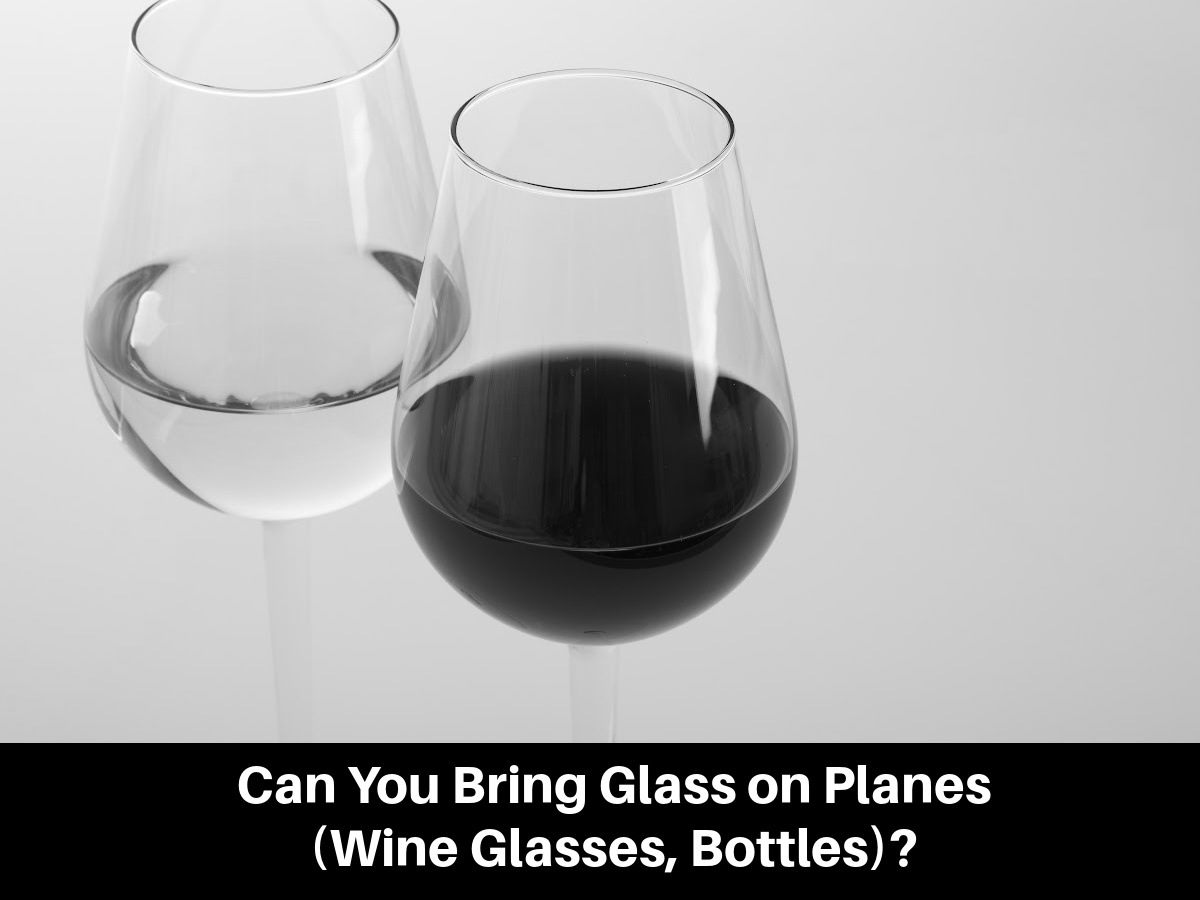
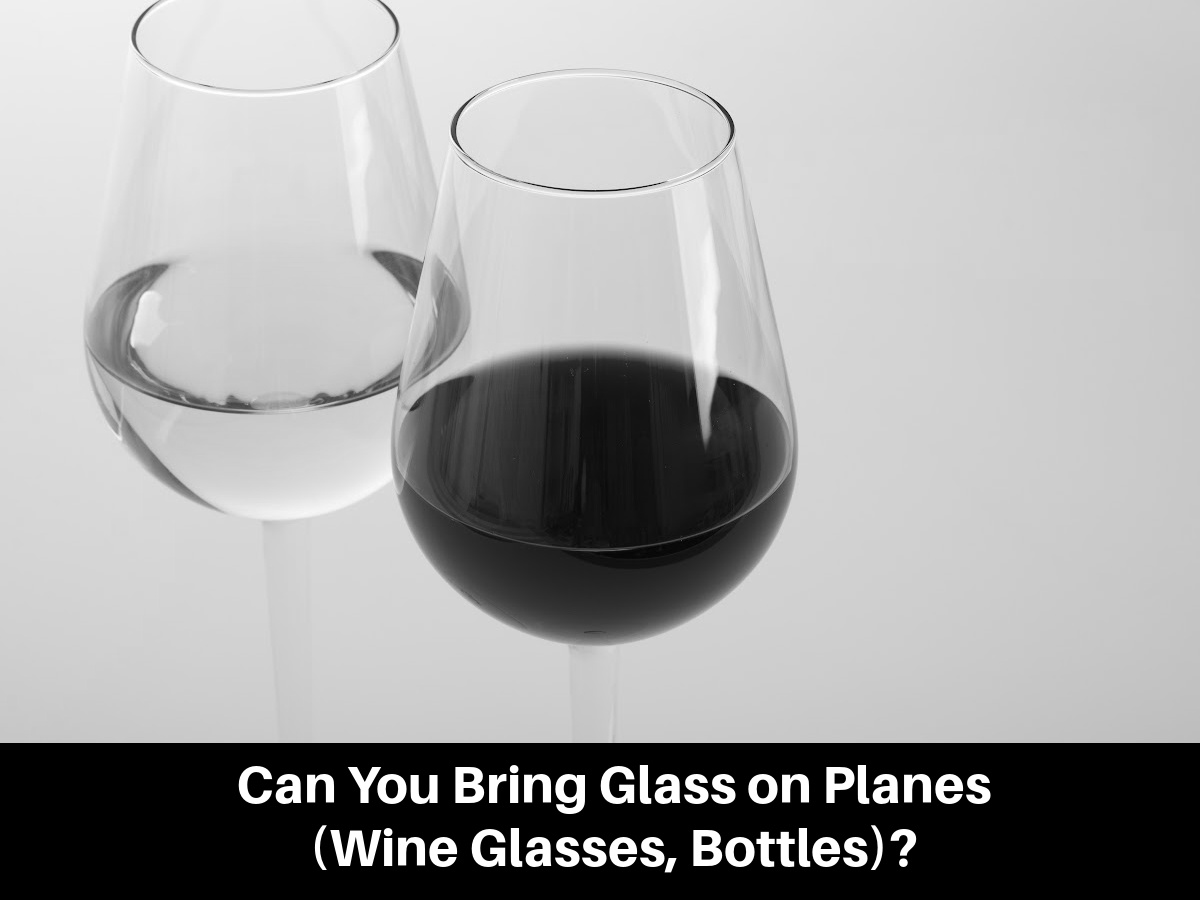
TSA, FAA, IATA, and virtually all other airline regulators, airlines, and airports across the world don’t restrict glass items on airplanes. Glass items are allowed just like any other solid and non-dangerous item.

You can bring glass items in your hand and checked luggage without any restrictions. Here’s a list of some glass items that don’t have any packing restrictions:

  • Glass vases and jars
  • Wine glasses, shot glasses, cups, crystal glasses
  • Glass plates, bowls, Tupperware, and other glass containers
  • Empty glass perfume, wine, water, makeup, and alcohol bottles
  • Glass nail files
  • Glass pipes
  • Reading glasses and sunglasses
  • Glass picture frames, sculptures, and other artwork
  • Glass Jewelry

Exceptions for Specific Glass Items

There are no restrictions on the glass itself. But some glass items are restricted because of their contents or because they’re sharp.

Glass Perfume Bottles

In hand luggage, perfume in glass bottles has to be below 3.4 oz (100 ml). This is because all liquids in hand luggage have to follow the 3-1-1 rule. You also have to put them in a quart-size bag with your other toiletries.

In checked luggage, larger bottles are allowed, but not above 17 fl oz (500 ml) in size. That’s because perfume is flammable and treated as a hazardous toiletry item. The total amount of hazardous toiletries for each passenger is also limited to 68 fl oz (2 kg) per passenger.

But if the perfume bottle is empty, then it doesn’t have any packing restrictions. For traveling, a good idea is to transfer your perfume to smaller, non-spillable plastic bottles.

Glass Alcohol Bottles

In hand luggage, only small alcohol bottles below 3.4 oz (100 ml) are allowed due to the 3-1-1 rule for liquids.

In checked baggage, larger bottles are allowed but there are restrictions based on the alcohol content in the bottle. Alcohol with small alcohol content, like wine and beer, isn’t limited. Liqurs and spirits between 24-70% are limited to 5 liters in total per passenger. And alcohol drinks above 70% are prohibited.

Empty liquor bottles are allowed both in hand and checked bags. It also doesn’t matter if the alcohol bottles are opened or not – all of them have identical rules. The only exception is homemade alcohol, which is banned from travel unless properly marked and licensed.

Glass Picture Frames, Chandeliers, and Glass Jewelry

Expensive glass picture frames, chandeliers, and jewelry need to be declared if you’re traveling internationally. Usually, if it’s above 300-1800$ (depending on your destination), you’ll have to pay an import tax. Always declare expensive glass artwork because you could face expensive fines otherwise.

Snowglobes

Snowglobes are generally allowed only in checked luggage unless they’re really small. That’s because they contain liquid inside, which is limited to 3.4 oz (100 ml) in hand luggage. And there aren’t any indications of how much liquid is inside them. Each security officer has to determine for themselves whether to allow them in hand luggage.

Liquid and Gel Candles

Liquid and Gel candles are banned from hand luggage. They’re only allowed in checked bags. They are generally considered safe because the gel can’t sustain a flame by itself. But they’re banned because they’re considered a liquid and there is no way of knowing whether it’s below 100 ml or not.

Glass Makeup Bottles

Glass makeup bottles (mascara, nail polish, powder, roll-on deodorants, etc.) have to be in 3.4 oz (100 ml) bottles when packed in hand luggage. You also have to pack it inside your quart-sized bag.

In checked baggage, larger quantities are allowed. But for nail polish and nail polish remover, there are extra restrictions. They’re treated as hazardous toiletries because they’re flammable. So only bottles below 500 ml (17 fl oz) are allowed.

Sharp Glass Items

Sharp glass nail files and decorative glass knives and daggers are banned from hand baggage.

In checked bags, they’re allowed without any restrictions. They only have to be safely wrapped so that the security agents can’t hurt themselves when performing inspections.

How to Pack Glass Items in Your Luggage

Preferably, you should pack glass items in your hand luggage – either in your carry-on or personal item. That’s because in checked bags they could break due to luggage handling or get lost or delayed. You have much more control over what happens to your hand luggage.

When packing glasses, mugs, and other glass items with hollow centers, always put something inside them. Fill them with newspapers, socks, or something similar, to reduce the chances of them breaking.

Put glass items in the center of your suitcase and avoid packing them near the edges to reduce the chances of them getting damaged. Always wrap them in plastic wrap, newspaper, or spare clothing.

Owning a hardside suitcase is also a benefit because they provide more protection than fabric ones. Aluminum luggage will offer more protection than plastic ones, like ones made from ABS, PC, or Polypropylene. But they’re still a better option than fabric polyester or nylon suitcases.

You can also ask the airline to put on a fragile sticker if you choose to pack them in your checked bag. In practice though, this doesn’t mean that the baggage handlers will treat them more carefully. If your glass items get damaged while checked in, airlines usually won’t cover them because they aren’t responsible for fragile items. It’s still worth it to keep the receipts in case the checked bag gets lost.

Summing Up – Traveling With Glass Items

Traveling with glass items isn’t as difficult as it may seem at first glance. That’s because glass is treated as a completely safe substance, so it isn’t restricted. You only have to watch out for certain glass items which contain restricted substances. This includes all liquids, pastes, gels, alcohol, perfume, expensive items which need to be declared, and sharp glass items.


Source link