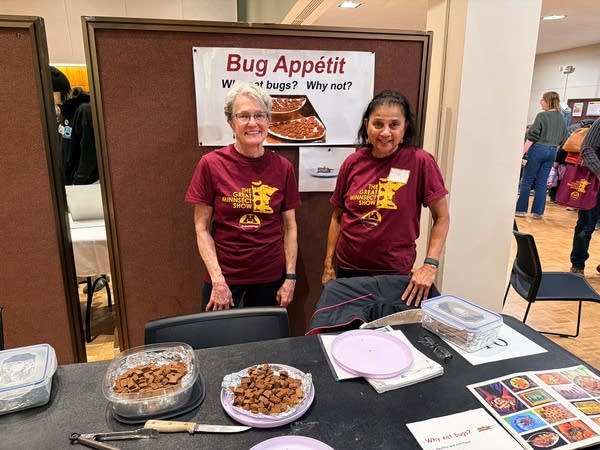
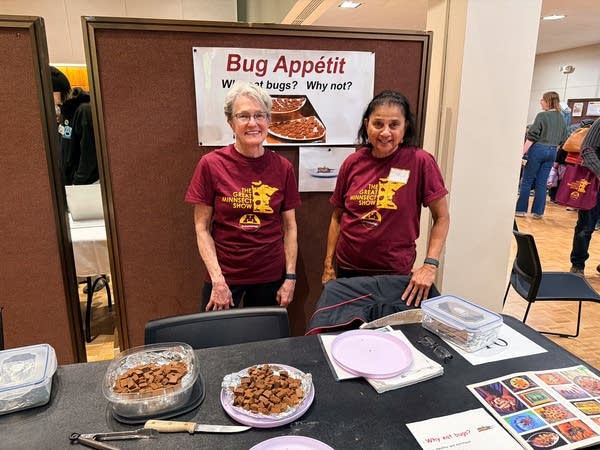
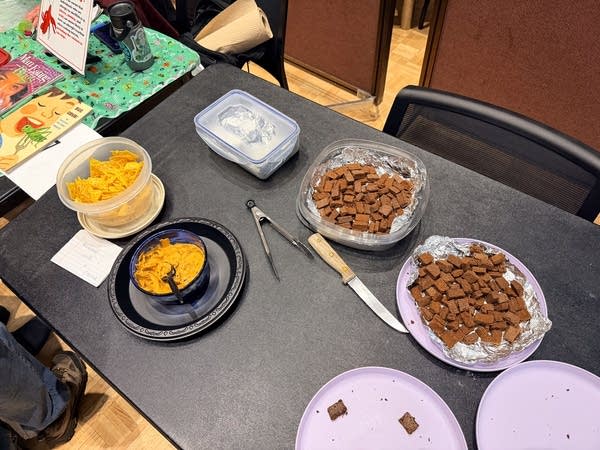
Sujaya Rao arrived Saturday at the University of Minnesota’s student center in St. Paul with her usual trays of homemade brownies.
But there was one key difference in Rao’s chocolate treats.
“You can't see the insect. You can't smell it. There's no odor, but tonight it's going to chirp in your stomach,” Rao joked with curious passersby who sampled the brownies.
The retired professor — a self-proclaimed “insect evangelist” — tabled at the Great Minnsect Show. Rao, professor emeritus in the entomology department, helped start the event in 2019 to showcase the wonders of bugs.
The free public event drew thousands to educational activities, including an insect petting zoo, maggot racing and watercolor painting with maggots.
Rao passed out her brownies with a smile. Though they were unassuming, the treats were made of milled cricket flour.
“Bug appétit. Why eat bugs? Why not?” read the sign behind Rao, an advocate for insect cuisine. Insects offer high protein content without the environmental impact of cattle farming, she said.
Plus cricket flour is gluten-free, though a note warned people with shellfish allergies.
“Just because insects are closely related,” Rao said, adding researchers aren’t entirely sure about correlated sensitivities.
The idea of insects as a food source has gained traction since the United Nations released a report in 2013 promoting human consumption of insects to combat food insecurity, according to Rao. With nine billion people projected on Earth by 2050, she said people will need to look for alternatives to animal-based products.
“How are we going to feed everyone?” Rao said. “There won't be enough land and with so many people, that land will be taken up by human dwelling, so we need alternative foods.”
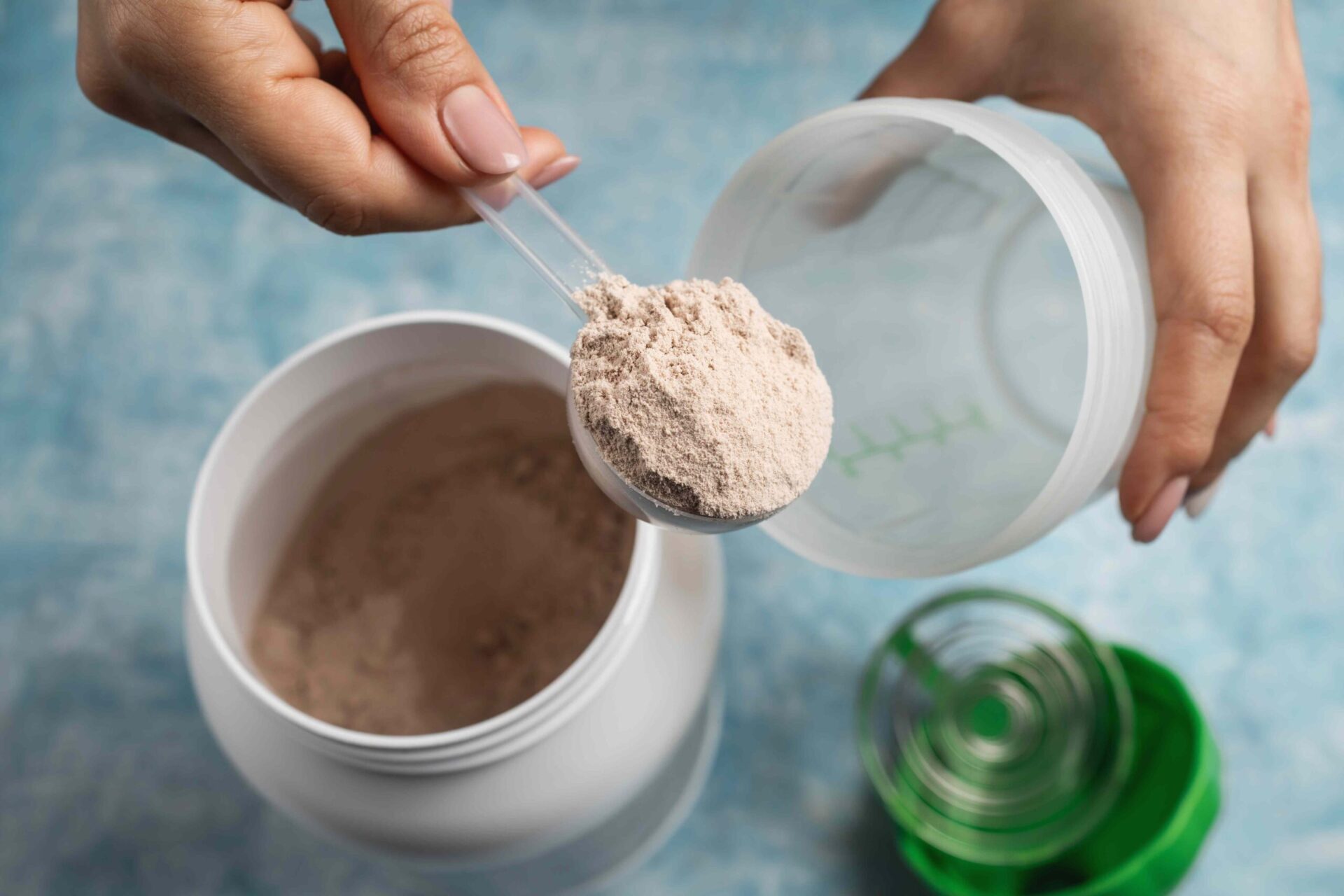
Chad Simons, co-founder of 3 Cricketeers, said one tablespoon of cricket flour has 13 grams of protein. The St. Louis Park company tabled next to Rao at the Great Minnsect Show, selling snack foods made of crickets.
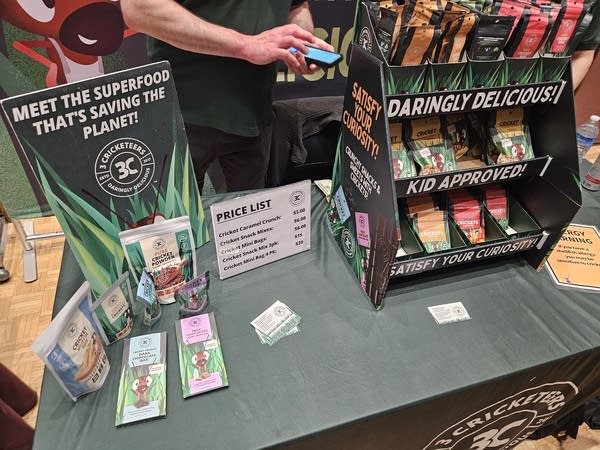
Between Rao’s and Simons’ tables, people could try a variety of cricket-based delights: fig and date balls, chocolate bars and hummus “with a crunch.”
“I love that they're sustainable, but they really taste good, honestly. It's really a lot of fun,” Simons said.
Simons got the idea for the business after his son came home from school with a cricket cookie. His wife, a registered nurse, then discovered the health benefits, such as calcium, iron and vitamin D.
They’re exploring expanding cricket powder into pastas, crackers and other foods.
“The future is definitely using crickets as an ingredient, really any kind of insect,” he said.