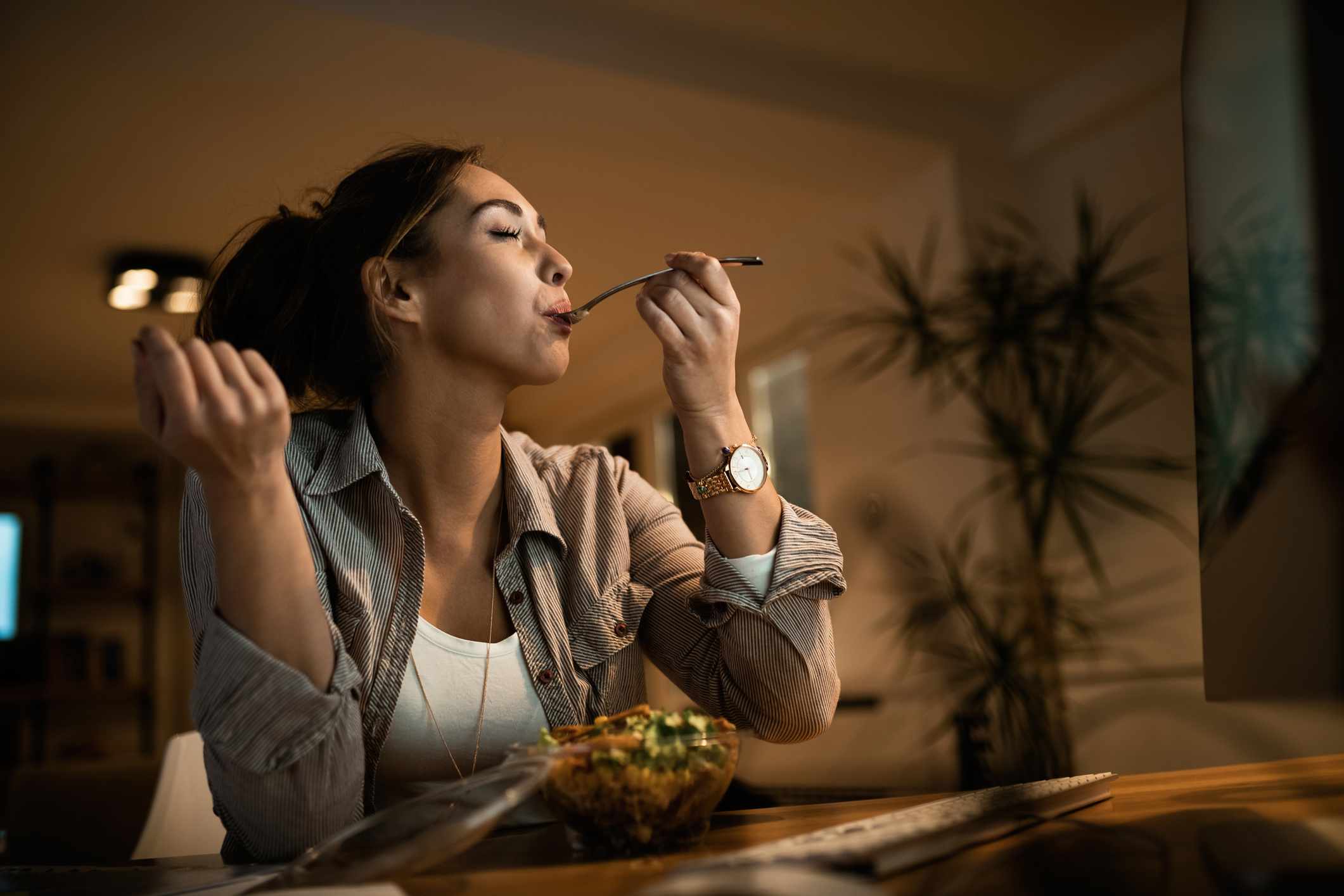
:max_bytes(150000):strip_icc():format(jpeg)/Health-GettyImages-WorstFoodsAtNight-34e22d8cc57749a4824b8e9cb598fabd.jpg "Low angle view of young woman eating salad with her eyes closed while using computer at night at home.")
- Caffeine before bed increases alertness and can make it harder to fall and stay asleep.
- Sugary foods and refined carbs can spike blood sugar and disrupt sleep during the night.
- Spicy foods, ultra-processed foods, and alcohol can interfere with digestion or sleep cycles and reduce sleep quality.
If you’re among the 30% of Americans who struggle with sleep, your diet could be playing a bigger role than you think. Your food choices before bed may be making it harder to get restful sleep, which can affect your overall health. Here are the six worst foods to eat before bed.
1. Caffeinated Foods and Beverages

Drinking caffeinated drinks or eating caffeine-containing foods before bed could lead to restless sleep.
Caffeine is considered a central nervous system stimulant, meaning it affects neural activity in the brain, increasing alertness. It does this by blocking receptors for a neurotransmitter called adenosine. Adenosine builds up in the brain during the day to help you feel drowsy as it gets closer to bedtime.
Consuming caffeine, especially later in the day, can make it harder to fall asleep, disrupt your ability to stay asleep, and reduce overall sleep quality.
Some people are more sensitive to the stimulating effects of caffeine than others, which is largely determined by genetics. If you fall into this group, caffeine-containing foods and drinks, like coffee, energy drinks, matcha-based desserts, and dark chocolate, might keep you up at night.
2. Foods and Drinks High in Added Sugar

Foods and drinks high in added sugar, like soda, cookies, and candy, have a high glycemic index (GI). The GI is a scoring system that measures how quickly a food raises blood sugar on a scale of 0–100, with foods under 55 considered low GI and those over 70 considered high.
Studies show that people who follow high-GI diets are more likely to experience sleep issues, like insomnia.
High GI foods and drinks can cause spikes and dips in blood sugar, which can affect sleep by stimulating the release of certain hormones, including cortisol, adrenaline, and growth hormone, which can cause sleep-disrupting symptoms, like hunger, heart palpitations, anxiety, and restlessness.
If you have a sweet treat before bed, the resulting high blood sugar could initially cause you feel drowsy and make you fall asleep fast. However, the insulin spike that follows may trigger middle-of-the-night wake-ups, making it harder to stay asleep and get restorative rest.
3. Refined Carbs

Refined carbs, such as white bread, sweetened baked goods, and white pasta, can also affect sleep quality. Refined carbs also have a high GI and can spike blood sugar and insulin levels, leaving you restless at night.
A 2024 study found that people who consumed mostly low-quality carbs, such as refined grains and added sugars, had a 36% higher risk of poor sleep patterns than those who consumed mostly high-quality carbs, such as whole grains, fruits, vegetables, and beans.
4. Spicy Foods

Spicy foods could be problematic for some people’s sleep quality.
For example, if you have heartburn or acid reflux, spicy foods could make your symptoms worse. When you’re lying down, spicy foods can travel back up into the esophagus, causing irritation that can keep you tossing and turning at night.
Additionally, spicy foods, like chili peppers, could slightly increase your body temperature, which may negatively impact sleep. If you’re already a hot sleeper, eating a spicy meal before bed could make you feel even hotter, which can make it more difficult to fall and stay asleep.
5. Ultra-Processed Foods

A diet high in ultra-processed foods, such as fast food, candy, soda, and instant noodles, has been linked to poor sleep quality and short sleep duration. Studies show that people with poor sleep quality are more likely to consume more ultra-processed foods.
These foods are typically high in refined carbs, added sugars, and saturated fats, all of which have been linked with sleep disturbances. In addition to the blood sugar swings that come from refined carbs, foods high in fat, like fried foods and fast food, can slow digestion, which is already slowed down at night. This can lead to symptoms like nausea, which make it hard to get a good night’s sleep.
6. Alcoholic Drinks

Having a drink or two at night is a common nightly habit that could be wreaking havoc on your sleep.
While alcohol can initially make you feel tired and cause you to fall asleep quickly, as levels decline, it can disrupt your sleep, waking you up and making it harder to fall back asleep. Research shows that higher alcohol intake is associated with shorter overall sleep duration, poorer sleep quality, and an increased risk of sleep disorders such as insomnia. In fact, up to 91% of people with alcohol use disorder experience sleep issues, like insomnia.