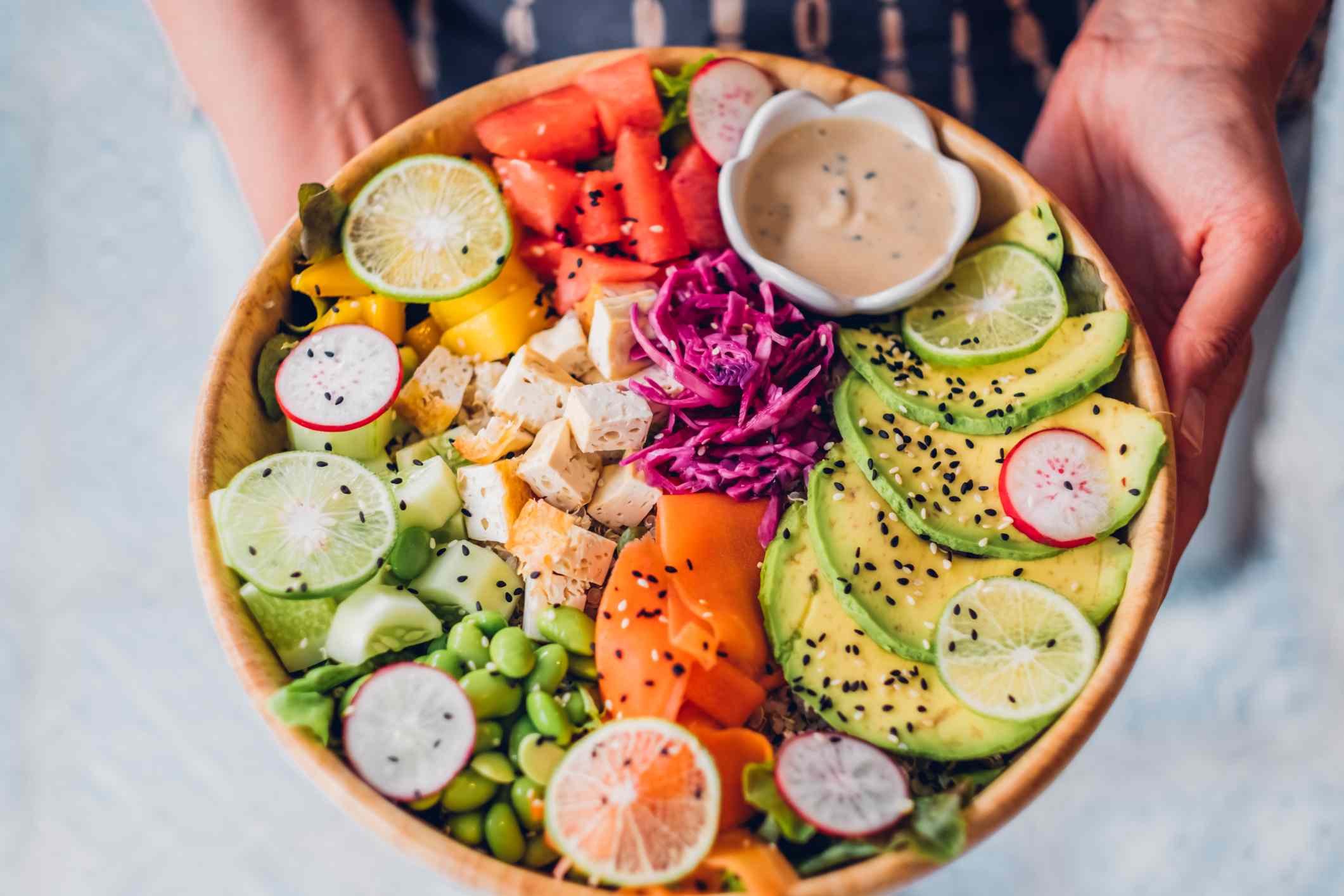
Does It Matter Which Foods Your Fiber Comes From? A Dietitian Explains


Credit: Milky Way / Getty Images
  • Most people don’t get enough fiber, which can negatively affect gut health, heart health, blood sugar regulation, and body weight.
  • Different fiber-rich foods provide unique benefits, so eating a variety of fruits, vegetables, legumes, nuts, seeds, and whole grains is best.
  • Fiber supplements can help increase intake, but whole plant foods remain the best source.

More than 90% of women and 97% of men in the U.S. fall short of the recommended daily fiber intake. Fortunately, many fiber-rich foods, like fruits, vegetables, nuts, beans, and whole grains, are affordable, versatile, and easy to incorporate into your diet. But does it really matter where your fiber comes from? Here’s what to know about fiber, including the different types and why eating a variety of fiber-rich foods matters for overall health.

What Are the Different Types of Fiber?

Fiber is a type of indigestible nutrient that’s concentrated in plant foods, like beans, fruits, and vegetables. Fiber passes through your small intestine into your large intestine mostly intact.

There are two main types of fiber, which are categorized based on their solubility in water:

  • Soluble fiber: Soluble fibers dissolve in water and can be fermented or broken down by your gut bacteria. Foods rich in soluble fiber include oats, fruits, and beans. 
  • Insoluble fiber: Insoluble fiber doesn’t dissolve in water. Soluble fiber passes through your digestive system intact. It’s concentrated in foods like whole grains, nuts, and seeds.

Soluble fiber plays important roles in gut and heart health. It supports beneficial bacteria in the digestive tract and stimulates the production of short-chain fatty acids (SCFAs), compounds that benefit gut health by reducing inflammation, strengthening the gut lining, and supporting healthy immune function. It also helps regulate blood lipid levels by decreasing cholesterol absorption in the gut and increasing its excretion.

Insoluble fiber adds bulk to stool, keeping bowel movements regular.

Most whole foods, like fruits, vegetables, and whole grains, contain a combination of insoluble and soluble fibers, but some are more concentrated in one than the other. 

Do Fruits,Vegetables, and Whole Grains Offer Different Benefits?

While all plant foods, such as fruits, vegetables, beans, and whole grains, contain fiber, vitamins, and minerals, each has a unique nutritional profile and offers distinct health benefits.

Fruits and Vegetables

For example, most fruits are high in natural sugars, which provide a quick source of energy. Fruits like watermelon, pineapple, and citrus fruits also have a high water content, making them a good source of hydration.

Fruits and vegetables contain high levels of antioxidants, compounds that help protect cells against oxidative damage. Studies show that diets high in anthocyanins may help protect against common health conditions like heart disease. Some fruits and vegetables are also high in vitamin C, an antioxidant vitamin that plays important roles in skin and immune health.

Grains and Legumes

Grains and legumes provide fiber-rich complex carbohydrates, which serve as a steady source of energy. Choosing fiber-rich carbohydrates may help support healthy blood sugar and blood lipid levels. Whole grains and legumes can also help promote fullness and satisfaction after meals. In addition, these foods are often rich in important nutrients such as magnesium.

Legumes, like lentils, stand out from many other carbohydrate-rich foods because they’re also high in protein. Protein helps keep you full and satisfied after eating and is essential for muscle growth, hormone production, and many other important processes in the body.

Why Variety Matters

Including a variety of fiber sources in your diet ensures that you’re providing your body with the nutrients it needs.

Consuming a diet high in both insoluble and soluble fiber promotes and protects gut health by stimulating the growth of beneficial gut bacteria, reducing the risk of constipation, and keeping bowel movements regular and comfortable. 

Additionally, different types of fibers nourish different types of gut bacteria. For example, inulin, a type of fiber found in foods like onions and garlic, stimulates the growth of beneficial Bifidobacterium and Lactobacillus species, while pectin, concentrated in apples and pears, fuels Faecalibacterium prausnitzii, a bacterium that produces anti-inflammatory molecules in the gut.

Soluble and insoluble fibers play essential roles in the body, and incorporating a variety of fiber-rich foods into your daily diet can help you meet your daily fiber and nutrient goals.

Are Fiber Supplements and Fiber-Added Foods Enough?

Fiber supplements, like psyllium husk, can be helpful for certain people, especially those with conditions like high cholesterol or constipation. However, fiber supplements usually contain one type of fiber.

Studies show that psyllium husk, a source of soluble fiber, may help reduce constipation symptoms, support a healthy balance of gut bacteria, and promote healthy cholesterol and blood sugar levels. Plus, fiber supplements, like psyllium husk, are relatively affordable and easy to use, which makes them a convenient way for people to increase their fiber intake. 

Fortified bars, cereals, and other high-fiber products can help you meet your fiber goals and address issues like constipation, but they shouldn’t completely replace whole-food sources of fiber.

Whole food sources of fiber, like fruits, vegetables, beans, nuts, and whole grains, provide fiber alongside other nutrients that support overall health. While supplements and fiber-fortified foods can be useful tools, getting most of your fiber from a variety of whole plant foods is generally the best long-term approach for supporting overall health.

Simple Ways to Eat More Fiber From Different Sources

If you’re looking for simple ways to add more fiber to your diet, try these expert-approved tips:

  • Swap refined grains, like white rice and white bread, for whole grains or legumes
  • Add beans to soups, salads, rice dishes, and meat sauces for a boost of fiber
  • Add a side of sliced fruit to your breakfast and lunch
  • Snack on balanced, fiber-rich options, like a piece of fresh fruit paired with a handful of nuts and seeds 
  • Add chia seeds, almonds, and berries to your morning yogurt
  • Swap sugary cereals for oatmeal or chia pudding
  • Add veggies and beans to your pasta dishes

If your diet is currently low in fiber, it’s best to increase your fiber intake gradually to give your body time to adjust and help reduce the risk of side effects like bloating and gas.




Source link

Leave a Reply

Subscribe to Our Newsletter

Get our latest articles delivered straight to your inbox. No spam, we promise.

Recent Reviews


Being a founder is awesome. And it also really sucks.

It’s a huge amount of stress, disappointment and uncertainty, with little appreciation or guidance.

It’s perfectly normal to find yourself questioning what it all means.

I’ve been there myself… questioning whether the sleepless nights and stress was worth it. And now, I’m often the person founders turn to when they do the same.

In this essay, I wanted to talk about happiness, purpose, and how to get more of it when you’re constantly living in survival mode.

Three Types of Happiness

Martin Seligman, the father of positive psychology, describes three distinct paths to happiness: the pleasant life, the engaged life, and the meaningful life.

  • The pleasant life is about pleasure—closing a deal, hitting a milestone, getting some great customer feedback. As a founder, there’ll be phases where pleasure is hard to come by. Clearly, you can’t build a founder life on pleasure alone.
  • The engaged life is about flow—the state when you’re fully absorbed in solving a hard problem. Most founders have this in spades early on, but as their companies grow, their role can evolve away from flow. Being out of flow is often a signal you need to redesign your role.
  • The meaningful life is about purpose—the sense that what you’re doing matters. Unlike pleasure and engagement, meaning doesn’t require things to be going well. It sustains you through the hard times, not just in spite of them.

So when times are hard, meaning is what we can return to. Unlike pleasure and engagement, meaning is up to you.

And it’s work you can start right now.

How to Make Meaning

So how do you actually build meaning, even when you can barely see past next week? A meaningful life has three components:

  • A meaningful future
  • A meaningful past
  • A meaningful present

Creating meaning in each is an act of creativity. It’s an active process in which you assign meaning to things.

If you aren’t intentional about this, your brain will assign meaning for you. And if you’re not feeling great, your brain will come up with interpretations that match and then reinforce the negative feelings.

What I’m about to share with you is the process I run through when my clients start questioning themselves, and what they’re building.

1. A Meaningful Future

In Man’s Search for Meaning, Viktor Frankl documented the atrocities of the concentration camps. He writes:

“Any attempt to restore a man’s inner strength in the camp had first to succeed in showing him some future goal.”

A lot of modern therapy fixates on the past. But Frankl realised that getting clear on our future goal is even more powerful.

When it comes to founders, they often have goals… but unless you’re fully pumped, your goals need refinement. 

I commonly see three issues with a founder’s goals:

  • They have too many goals. We accumulate goals over time, but we rarely sit down and remove goals. For example, you had goals when you were 18 years old. Most of these have been parked, but some might still be guiding you now.
  • The goal isn’t big enough. For most founders, the more ambitious the goal, the more energy it unlocks. Just increasing the size of the goal can act as a powerful clarifying force for what matters.
  • The goal isn’t framed by its meaning. It’s the difference between ‘I want to make $100M’ versus ‘I want to help 10,000 customers avoid what happened to me’. One is financial, the other is personal.

Refining and reconnecting to your primary goal is critical for building a life of meaning.

Questions to work through:

  • What’s the biggest and most exciting goal you can dream up?
  • If that was your primary goal, what other goals stop being relevant?
  • What people or person could the bigger goal attract that would make it achieving it easier?

2. A Meaningful Past

Being a founder can sometimes feel like a full-contact sport. You can get hurt, through disappointment, bad luck, and even betrayal. That’s why painful events in the past need to be treated like a wound.

When we don’t process the past, unhelpful stories we tell ourselves to protect our ego can cause havoc in the present.

Treating the past means framing every single thing that happened in two ways:

  • A win: an accomplishment that we can celebrate.
  • A lesson: a failure that we learn from, that we can celebrate.

We leave everything else behind. If, for some reason, we can’t let something go, it means we haven’t learned something important from it. As my mentor used to tell me: failures will be repeated until learned.

This work can be done separately, but it’s even more powerful to do it in the context of a big goal. This way, the wins and lessons can be aligned to the vision that truly excites us.

Questions to work through:

  • What is the meaning of what you’ve been through?
  • How did those experiences serve you?
  • Where are they failing to serve you today?

3. A Meaningful Present

Here’s the thing: the future and the past don’t physically exist. They’re tools to help us act in the present.

Often, clarifying the meaning of a bigger future and a happier past makes changing the present obvious and necessary.

As founders, it’s easy to be driven entirely by the past: old goals, old activities, old habits. This stops us from growing. And a lack of growth is one of the fastest paths to feeling meaningless.

Most founders I work with don’t need to do more. They need the courage to do less.

Growth often requires us to:

  • Start doing something we haven’t done before
  • Stop doing something we’ve already mastered
  • Double down on getting even better at some things

The meaningful present is about making these changes — aligning how you spend your time with the future you’ve defined and the lessons you’ve drawn from the past.

Questions to work through:

  • What is the biggest bottleneck to making the big goal viable?
  • What do you need to stop doing—even if there’s a cost involved?
  • What do you need to delegate?

Happiness Isn’t Always Happy

A meaningful life isn’t always smiles and rainbows. It comes with difficulty, sacrifice, and discomfort. But it’s the thing that keeps you going when pleasure and engagement can’t.

If you’re a founder questioning what it all means, the answer isn’t to push harder or to quit. It’s to invest time in making meaning.

Start with the future. Let it reshape the past. And then rebuild the present around what actually matters.

Related Reading: 


Originally published on March 11th, 2026


How do top founders actually scale?

I’ve coached CEOs for 10,000+ hours—here’s what works.
Join 17,000+ founders learning how to scale with clarity.

Unsubscribe any time.


Source link