Fact checked by Nick Blackmer
:max_bytes(150000):strip_icc():format(jpeg)/Health-GettyImages-1458669990-d5224384e1844d1d85ddf2b98b1f0758.jpg "Keto salad bowl with salmon, avocado, spinach, cucumber, eggs, cashew nuts. Low-carbohydrate breakfast rich in healthy fats. White table background, top view")
Credit: 5PH / Getty Images
- New research suggests B vitamins may be linked to a lower risk of stroke.
- However, the findings show an association—not cause and effect.
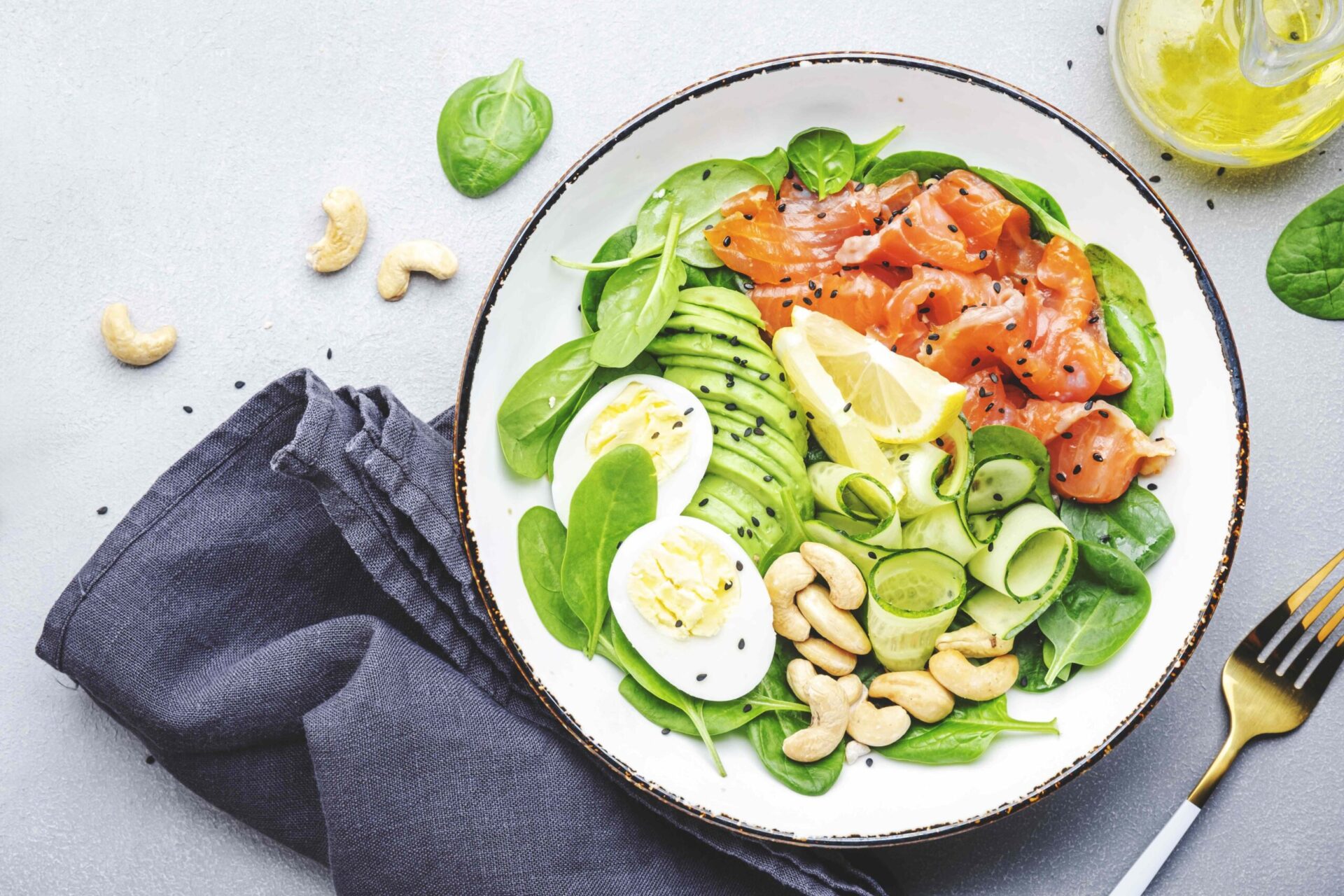
- To boost your intake, prioritize food sources like leafy greens, whole grains, and lean proteins.
Strokes are incredibly common, occurring about every 40 seconds in the United States. It’s well established that diet can play an important role in reducing the risk of a stroke, and a recent study points to one group of nutrients that may be especially helpful: B vitamins.
B Vitamins Associated With Lower Stroke Risk
The new research, published in the American Journal of Preventive Cardiology, specifically linked a higher intake of B vitamins to a lower risk of stroke—but only up to a certain level.
Previous studies have tied B vitamins, such as folic acid, pyridoxine, and cobalamin, with a reduced risk of stroke. However, little research has explored the long-term effects of taking the vitamins on stroke risk, the optimal intake for preventing stroke, and whether other B vitamins—particularly thiamin, riboflavin, and niacin—might also have an effect.
Wanting to better understand the potential of B vitamins as a simple, inexpensive approach to stroke prevention, researchers turned to two large datasets: the Women’s Health Initiative (WHI) and the National Institutes of Health All of Us Research Program. The WHI included 121,565 postmenopausal women who completed a food frequency questionnaire, while All of Us involved a more diverse sample of 99,660 participants with B vitamin levels measured from blood samples.
In the WHI analysis, higher intake of thiamin, riboflavin, niacin, pyridoxine, and folate was associated with a 10% to 20% lower risk of stroke compared with the lowest intake levels. The blood-based data showed a similar pattern, with higher pyridoxine and folate levels linked to reduced stroke.
However, for all B vitamins except folate (which continued to show a tie to reduced risk at an intake of about 2,000 dietary folate equivalent per day), the links appeared to hold only up until a certain point of consumption. Beyond that level, B vitamins seemed to no longer offer a benefit.
Why B Vitamins Might Reduce Stroke Risk
It’s important to note that the study has limitations. While it can show an association between B vitamins and stroke risk, it can’t prove that the vitamins themselves is what lowered the risk. Additionally, the WHI data is self-reported, meaning some inaccuracies could have crept in.
“The ideal would be to do a controlled study,” said Elaine Jones, MD, a geriatrician and American Academy of Neurology fellow, referring to an experiment in which researchers compare a treatment group to a similar control group to determine potential cause and effect.
Still, higher B vitamin intake could theoretically help prevent strokes because these nutrients support basic cellular function, which is critical for the health of the brain and blood vessels—both of which are directly involved in stroke risk, explained Simin Liu, MD, ScD, lead study author and the director of the Center for Global Cardiometabolic Health & Nutrition at the University of California, Irvine. However, each B vitamin works somewhat differently, so the exact mechanisms would likely vary depending on the specific nutrient.
Should You Try to Consume More B Vitamins?
Liu noted that more research is needed on stroke risk and B vitamins and that findings “shouldn't be seen as a green light to start a high-dose regimen of additional B vitamins.”
That’s especially the case because many B vitamins have an intake threshold, beyond which stroke risk appears to rise again. In other words, more isn’t always better, said Matthew Landry, PhD, RDN, a dietitian at UC Irvine.
Still, B vitamins are essential for basic functioning, and it’s important to ensure you’re getting enough. The best approach, Landry said, is to prioritize food sources—foods like leafy greens, whole grains, and lean proteins are especially rich in B vitamins. Because processing can strip foods of certain B vitamins, it's best to choose whole options.
Some people may need supplements, especially those following vegetarian diets, which can make certain B vitamins harder to get. In those cases, Jones advised first checking with your doctor, who can test for deficiencies and help determine an appropriate dose.
Remember that vitamin intake is also only one potential avenue for stroke prevention—habits like exercise and adequate sleep play a role, too. “While diet is certainly important,” Landry said, “it’s not the end-all-be-all. It’s about maintaining a variety of different healthy behaviors.”





:max_bytes(150000):strip_icc():format(jpeg)/coffeevsenergydrink-738dcdca64dd44cf913c6acb21f2dc44.jpg "A cup of coffee and a metal can side by side with a VS icon in the middle")