Verna Kragnes believes that there’s more to fighting hunger than putting food in people’s mouths. There’s also a hunger of the soul.
“With the new friends that have joined this community, each comes with a hunger for a certain kind of food that feels like it makes it home for them,” she said.
As executive director of the Prairie Rose Agricultural Institute for Research, Innovation and Education, she works to tackle both kinds.
Through a program called New Roots, the organization helps immigrants become farmers, helps those farmers' businesses get off the ground and puts the food they grow on the tables of people who are struggling.
“These folks really know how to handle a shovel,” she said. “They know what they're doing. They have farmers in their bodies and souls, and they want a chance.”
Planting the seed
Emmanuel Sinzinkayo and his younger brother Raphael Ndimubandi are from Burundi, an East African nation that, by the time they were young, was in the midst of a civil war.
“We spent most of our time in a refugee camp,” Sinzinkayo said. “Our parents were moving from country to country.”
Finally in 2007, the family immigrated to the Fargo-Moorhead area. But it was tough to adjust to life in the Upper Midwest. Particularly, his parents missed their native foods, like the African eggplant, which can’t be found in an average grocery store. They also missed growing food themselves.
“Where we're from, it's more of a farming culture. A lot of people like to grow what they eat,” Ndimubandi said. “Moving down here, it's hard because every place has things they eat, and they're different from place to place.”
So, their parents joined community gardens. But when the brothers grew up, they decided they wanted to do something bigger, and together they established Two Brothers Farm. They’re in their second season and grow tomatoes, peppers and African eggplant.
“We grow a lot,” he said. “We share with friends and family, and we mostly (sell) at the farmer markets in Fargo and Moorhead.”
PRAIRIE helped them get their start.
“We have an incubator farm that allows the farmers to have access to land, and they each get their own plot,” said Amy Rice, manager of the incubator farm. “They have shared tools, shared technical assistance trainings that we provide, funding for them to attend”
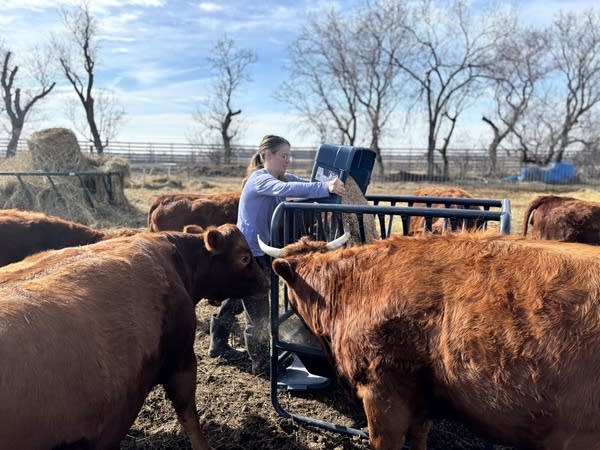
The two brothers began farming at the incubator but are in the process of what the group calls “hatching out.”
“It's a farm that gathers different types of farmers with the idea that they'll eventually work and start developing a plan on having their own business down the road,” Ndimubandi said. “It's a way of motivating farmers and saying, ‘Hey, we know you like to grow things for fun. You like to grow things to eat. However, you can grow those things to eat and also feed the community.’”
When the weather warms up, the brothers will be planting, harvesting and selling at local farmers’ markets. And, in the meantime, they’re paying it forward.
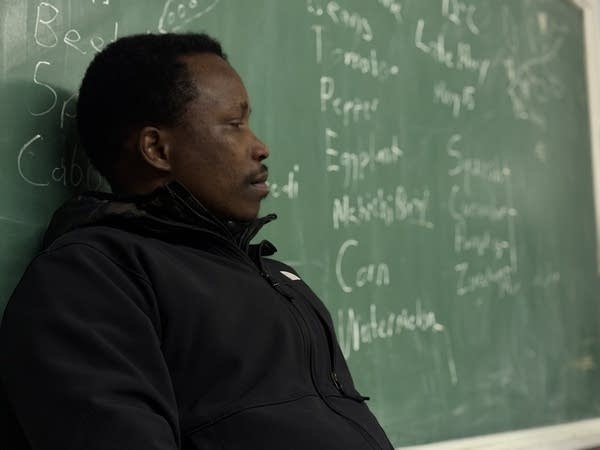
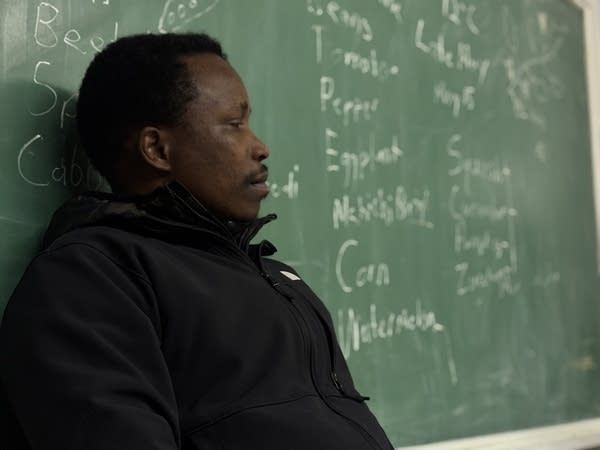
Last week, Sinzinkayo helped translate for a new class of PRAIRIE’s incubator farmers — a group of five African immigrants. They learned about what plants can grow in the Upper Midwest and when. During the session, Sinzinkayo went beyond translating and frequently added in his own knowledge that he’s learned by doing.
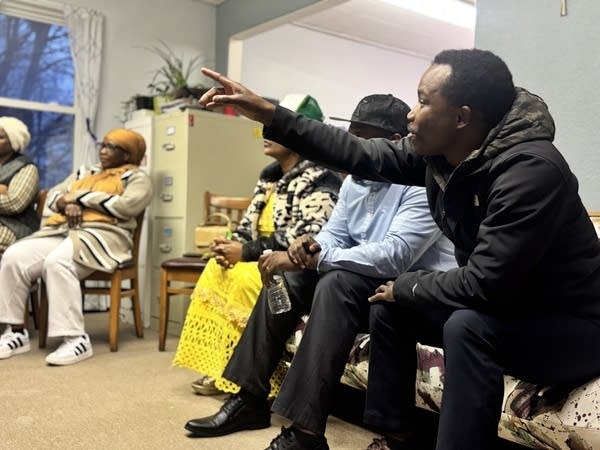
“We come back with the knowledge we have and share with the core,” Sinzinkayo said.
Kragnes said building up the leadership skills of the farmers like Sinzinkayo is a key part of the program.
“We have nurtured and identified leadership and encouraged and supported the flowering of their skills to really take on increasing responsibility to lead,” she said.
Supporting growth
To help their “hatched out” farmers have reliable income early on, PRAIRIE buys their leftover produce.
“I've been involved in doing this work for 10 years here in this community, and we would have people come to one of the markets … and they wouldn't get as much of a sale volume on a Tuesday as they might at the market on Saturday,” Kragnes said. “And they'd be disappointed, and they might say, ‘Well, it's not worth my taking time off work to do this.’”
After buying the leftovers, PRAIRIE donates it to food pantries and community groups that directly deliver the food to specific communities that they serve, like the local Kurdish or African diaspora.
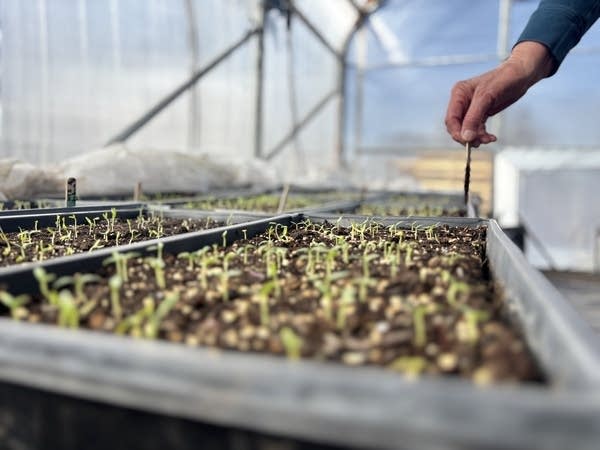
“We've developed mechanisms to get food directly to people that are maybe cautious about going to a food bank because they're a little bit worried about whether they have enough English to be able to navigate, to really know that they're getting things that are safe for their diets,” Kragnes said.
Jules Mukeba is a co-founder of one of those groups, Baraza La Afrika, which focuses on supporting African immigrants in the Fargo-Moorhead area. He said delivering food directly to people in need helps avoid the stigma of visiting a food pantry.
“With this program, we have food, they trust us, so we just deliver food to them, and it's a big help,” he said.
Funding uncertainty
Kragnes said the group has mostly relied on federal funding. The money to buy food from start-up farmers was awarded through the Local Food Purchase Assistance program. It’s a federal COVID-era program designed to get food from local farmers into places like food pantries.
Through multiple rounds of funding, the group bought over $90,000 of local produce and meat from underserved farmers.
But the program was cancelled by the Trump administration last year.
“It was just devastating, because there were so many amazing programs that were able to purchase local food and distribute it in their communities,” Kragnes said.
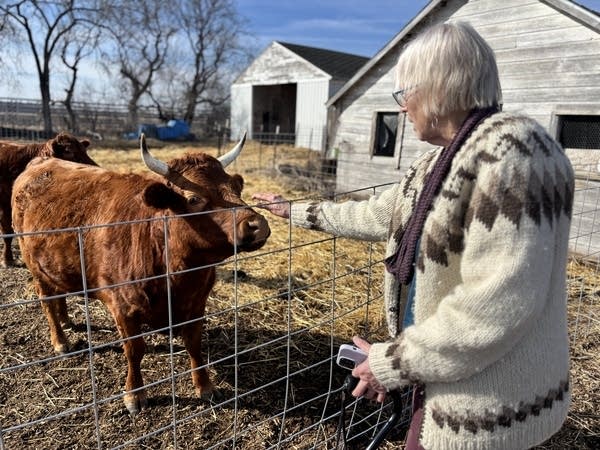
Kragnes said that since the second Trump Administration took office, she doesn’t feel like any of the federal grant money they’ve already acquired is actually secure. And she’s worried about whether the group will be reimbursed for funds they’ve already spent under various grants.
She said PRAIRIE is turning to other partners and funding sources. The state of Minnesota came out with a program to replace the Local Food Purchase Assistance program, and applications are due at the end of this month. She said the group will get more money from the state if they come up with matching funds.
“It's been one of the most community-building moments for a nonprofit that you could ever imagine,” Kragnes said. “You have to reach out to all the other folks that are our colleagues for ideas and support, and you have to reach out to new people to help. It’s been a mixed blessing.”
“If you are serving a need, if your mission is clear, if you're operating with morality and ethics, then you try to ignore the fear that might come from the ever more turbulent times,” she added. “This has been challenging to my faith this year, more than anything else.”
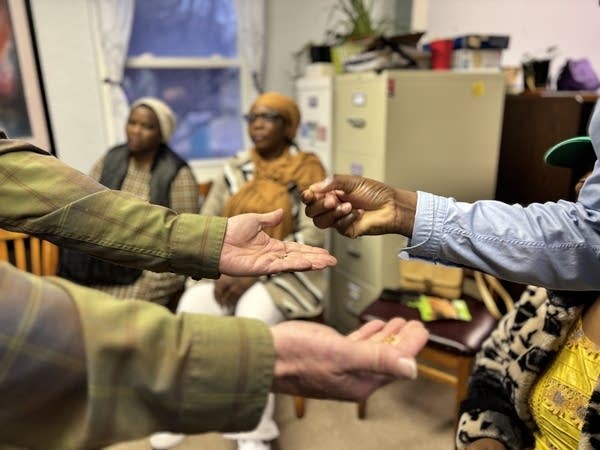
The group operates out of the meeting rooms on the second floor of a Moorhead church. It’s where they teach classes to new farmers, apply for grants with the government and plan out the growing season — who’ll be farming, what they are growing and where that food will go.
“I feel like the work that inspires me is home-making,” Kragnes added. “It's making certain people have the food that they eat. It's making certain that they feel welcomed and making certain that they feel there is a place that they can call their own, even if it's a tiny plot of land.”