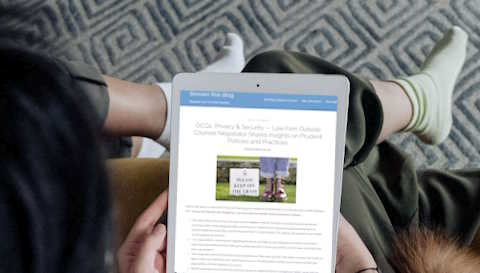
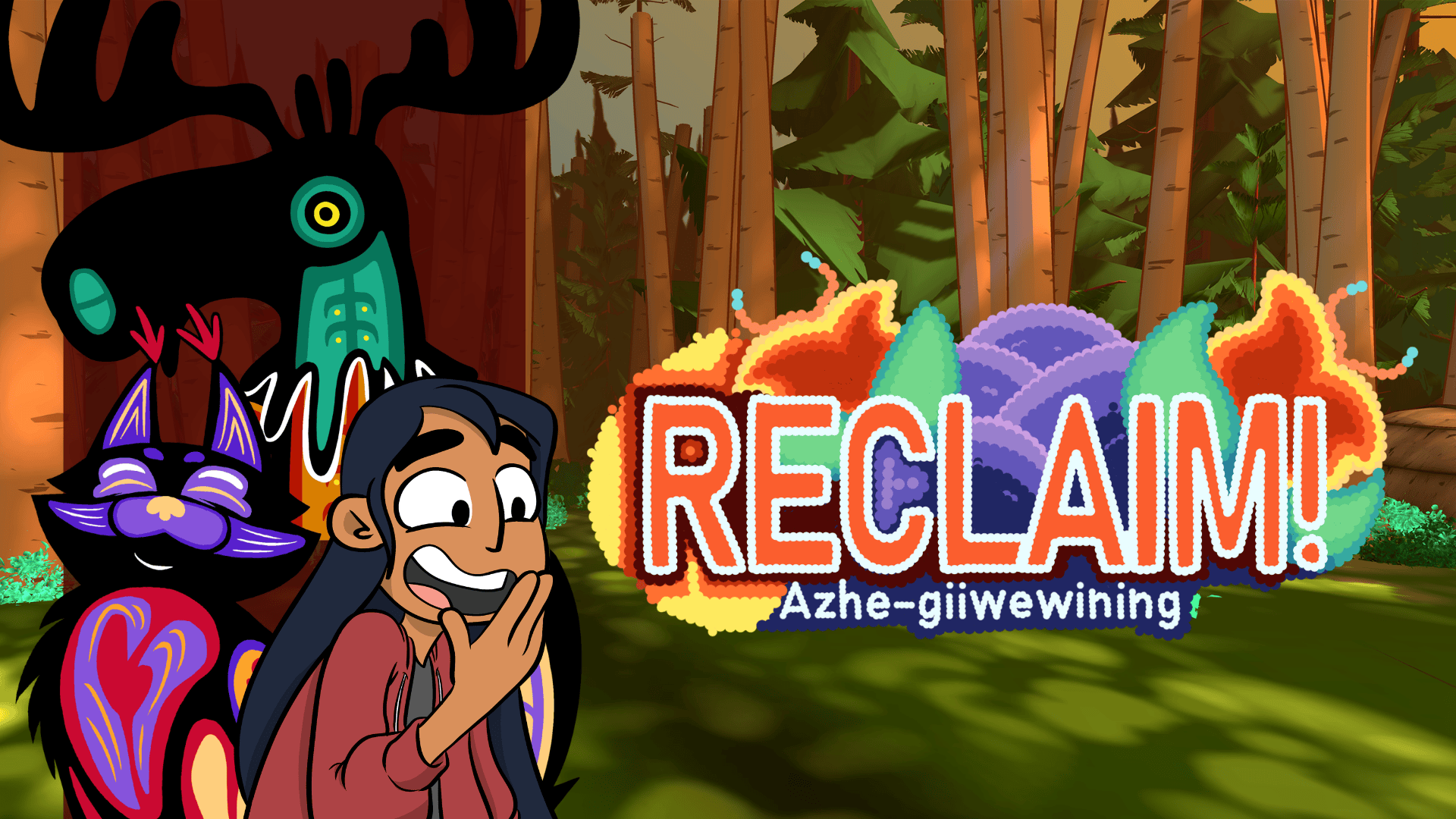
Five-year-old Joan sat with her father, Joshua Herron, at their home in Minneapolis, playing the newly launched video game, Reclaim! Azhe-giiwewining.
“What’s asemaa?” Joan asked her father as they played through the first arc of the story.
The various characters ask the player to bring asemaa, or tobacco, Herron explained to his daughter. Asemaa, or tobacco, is a sacred medicine used to make offerings in numerous Indigenous cultures, including Ojibwe.
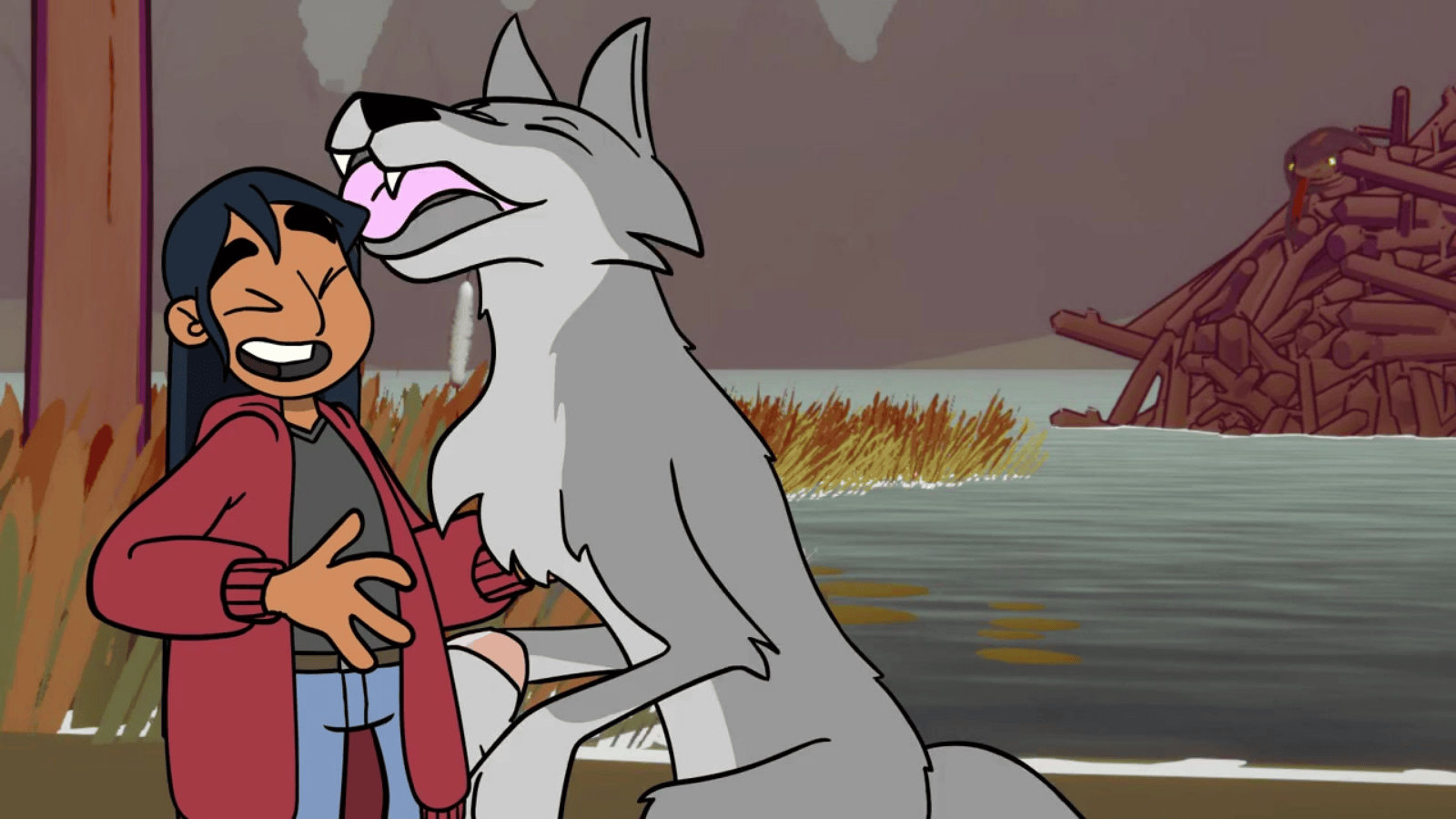
The game’s storyline follows a girl who falls asleep in the woods during a visit to her grandmother’s house. The teen, Miskwaa, wakes up in a dreamlike place filled with talking animals and spiritual beings. She must use the cultural teachings she has learned and her language skills to find a way back home.
“This is a new way to tell a story,” Mary Hermes, director of Grassroots Indigenous Multimedia, said.
Hermes, a professor at the University of Minnesota, cofounded Grassroots Indigenous Multimedia over two decades ago to strengthen Ojibwe language revitalization efforts. This is the first game development project the nonprofit has tackled.
The game, which debuts Thursday, offers an accessible method for learners of all ages to engage with the Ojibwe language outside the classroom, adding to the opportunities for families and communities to practice language in everyday life.
Grassroots Indigenous Multimedia partnered with the University of Minnesota and the Massachusetts Institute of Technology to develop Reclaim! The development team worked with Ojibwe speakers from Canada, Minnesota and immersion school alumni for language accuracy.
The game is voiced in the Ojibwe language and is playable in both Ojibwe and English.
Hermes said the idea for creating a point-and-click adventure game came from the need to capture the relationality, or how things can be in relation to one another, within the Ojibwe language.
The dreamlike world where Miskwaa finds herself is described as a “space between this world and the spirit world.” She can interact and have conversations with everything in the woods, including rocks, plants and trees.
Characters are illustrated in the woodland art style. The style uses bright colors, bold lines and X-ray views of people, animals, plants and spiritual beings.
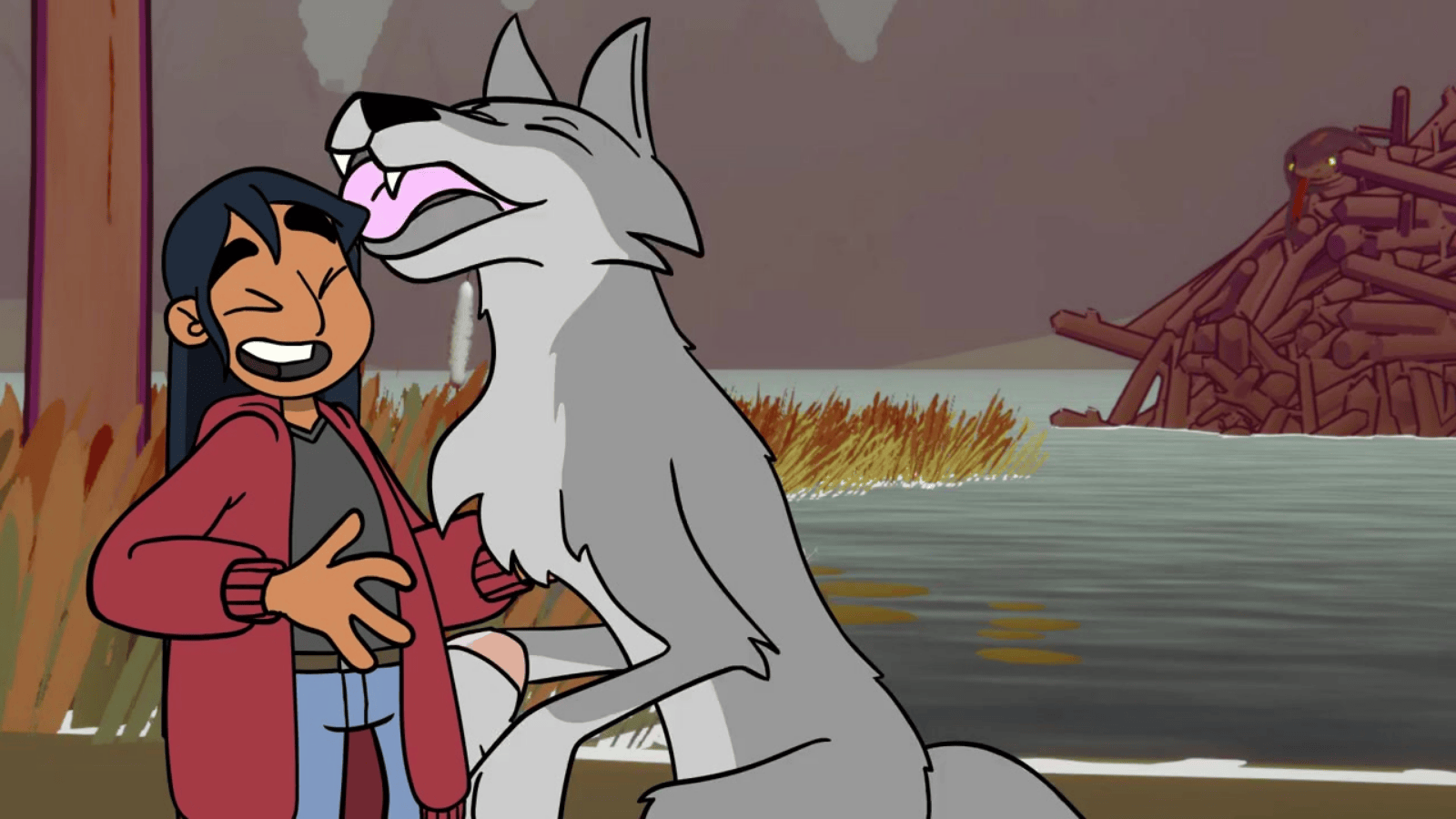
Throughout the game, Miskwaa offers tobacco to various characters and objects in exchange for inventory items.
“We wanted to capture that other beings were acknowledged in our conversations, in our silences, in our movements, in everything we did,” Hermes said.
‘We want the language back in homes’
The game’s concept and design were formed five years ago during several intergenerational workshops held at the Lac Courte Oreilles Band of Lake Superior Ojibwe community in northwestern Wisconsin.
Hermes, who has Indigenous heritage and has lived in the Lac Courte Oreilles Band community for over 30 years, said people of all ages, from young children to elders, attended the workshops and expressed a desire to access language learning outside the classroom.
“We need to go into family and communities, into games and to entertainment with our language,” Hermes said.
Her daughter, Anangookwe Hermes-Roach, is the lead designer and lead developer in the project. Hermes-Roach lives in Minneapolis and is a citizen of the Bad River Band of Lake Superior Chippewa.
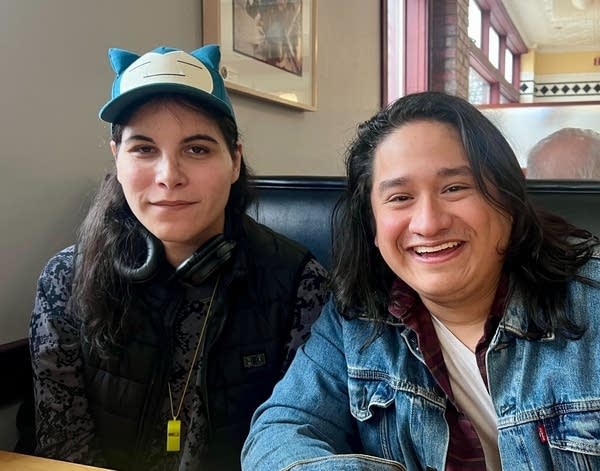
“This has been a part of a big push within the language movement to create these kinds of entertaining language experiences,” Hermes-Roach said.
In the summer of 2024, an Ojibwe dubbed version of “Star Wars: A New Hope” was released in theaters. Hermes-Roach said she considers the game to be in that same category of entertainment, where the language is used in informal situations.
“We kind of see Reclaim! as part of that mission of creating a space for the language that is fun and not didactic and not formal, like a ceremony or classroom,” Hermes-Roach said.
Hermes added that students may not have the opportunity to practice or engage with the language outside a classroom setting.
“It tends to stay in the school. The families that have been most successful here, they speak it as a family,” she said. “They speak it when they're playing games. They speak it all the time, right? That's where we want language—we want the language back in homes.”
With this in mind, developers designed Reclaim! as a game that all ages could play, even together.
“This was the link between storytelling, between generations,” Hermes said.
‘Comforted by the language’
Herron, who played the demo version of the game with his child, works as the head of art and animation at Grassroots Indigenous Multimedia. He identifies as Chicano-Otomi.
He said he can relate to the main character’s story. Miskwaa lives away from her family and tribal community. For Herron, the game has brought him a sense of comfort, and he hopes others will experience it as well.
“[The story] is one that I think a lot of kids could identify with because not all of us are connected in that way,” he said.
“You think about all the weird cartoons and stuff you watched as a kid, how you can just relate to this cultural osmosis,” Herron said. “If that becomes this new part of that, and that's bringing Indigenous kids together in some way, that’s really exciting and awesome.”
Hermes-Roach shares a similar sentiment and finds comfort in how the Ojibwe culture is portrayed throughout the game.
“I think for me, that experience of really feeling the language come alive and feeling comforted by the language,” she said. “There's a lot of moments that are like, ‘Oh, this is going to remind me of my relationships forever, not just to my family, but to the whole — how I relate to the Ojibwe community.’”
Reclaim! is available on Steam, an online game platform. It’s available for download on Windows and MacBook computers.
“It's a small contribution in the big world of things going on, but it's a big contribution in terms of its impact, and for me and for our team and for Grassroots, it's a big, big deal,” Hermes said.
Chandra Colvin covers Native American communities in Minnesota for MPR News via Report for America, a national service program that places journalists into local newsrooms to report on undercovered issues and communities.