Ten years ago, Philando Castile drove down Larpenteur Avenue in the Twin Cities suburb of Falcon Heights.
His girlfriend, Diamond Reynolds, was in the passenger seat. Her 4-year-old daughter was in the back.
Officer Jeronimo Yanez from the nearby suburb of St. Anthony thought Castile, a Black man, resembled a suspect in a gas station robbery a few days before due to his “wide-set nose.” Yanez turned on his emergency lights.
After Castile pulled over, Yanez told him his tail light was out, and asked for his license and registration.
“Sir, I have to tell you, I do have a firearm on me,” Castile told the officer.
”Don’t reach for it then. Don’t pull it out,” Yanez responded.
“I’m not pulling it out,” Castille said.
Seconds later, Yanez fired seven shots into the car, hitting Castile five times.
Reynolds captured Castile’s final moments on a Facebook Live video that spread quickly online.
“You just killed my boyfriend,” Reynolds said, as a hyperventilating Yanez stood outside the window with his gun pointed at the couple.
July 6 marks 10 years since Yanez killed Castile. His death sparked protests, became a rallying cry for police reform and led to the first prosecution of a police officer for an on-duty killing in Minnesota history.
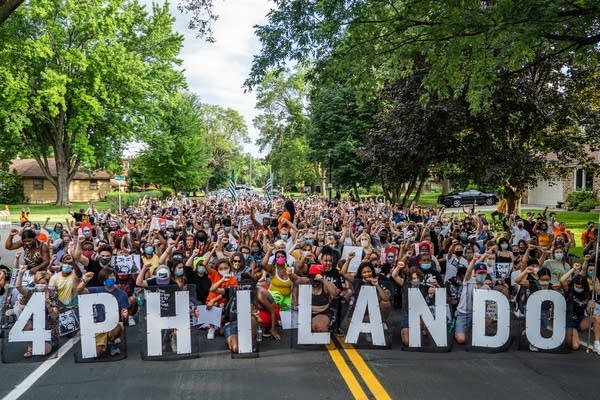
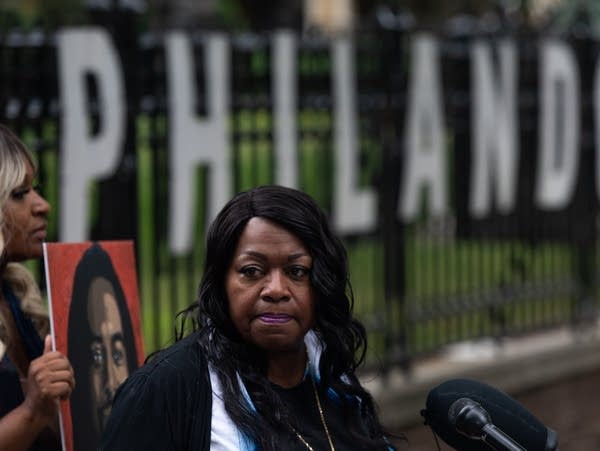
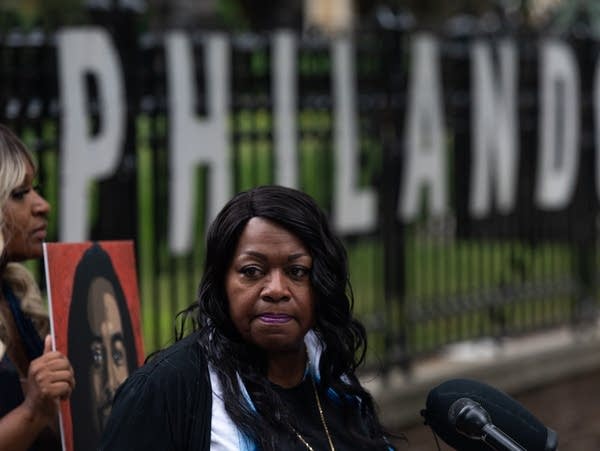
His mother Valerie Castile called for calm and pressed for criminal charges against the officer. When a Ramsey County jury acquitted Yanez of manslaughter a year later, Valerie gave voice to the community’s outrage.
“My son loved this state. He had one tattoo on his body, and it was of the Twin Cities, the state of Minnesota with ‘TC’ on it,” Valerie said outside the Ramsey County courthouse following the not guilty verdict. “My son loved this city. And this city killed my son.”
A decade after Philando’s killing, his family and friends are still grappling with the loss, even as the years have cemented his legacy as a symbol of change.
‘The biggest failure in Minnesota history’
Valerie now has three grandchildren, including a 2-year-old boy she says carries himself like Philando. She’ll say “Hi baby” to him, and he’ll say “Hi baby” back. The kids never got to meet Philando, but they adore him, she said.
“I love them with everything I’ve got, but Philando was a one-of-a-kind sweetheart. He was my son, he was my friend, he was my companion, he kept me grounded,” Valerie said. “He was my only child for 10 years. It was always just he and I.”
Realizing Philando has been gone for a decade devastates the family. Valerie still fantasizes about Yanez being charged again in her son’s death.
“There was a preponderance of evidence, yet still this guy went home and my son is dead,” Valerie said. “It's almost as if it's taboo to even speak Philando up. Which, I get, because what happened to Philando was the biggest failure of Minnesota history.”
But Valerie and her family haven’t stood still. She and her brother, Clarence, have worked with prosecutors to help move both Ramsey and Hennepin counties away from what are called pretextual stops, like when her son was pulled over on July 6 for a burned out taillight.
Castile’s alma mater, St. Paul Central High School, established a scholarship in the former cafeteria worker’s honor. Every year the family hosts a candlelight vigil on the day of his killing and, in recent years, a community barbecue. The Falcon Heights City Council has even declared July 6 every year as “Restoration Day” and July 7 as “Unity Day.”
Valerie said her driving forces are her son and her God. She’s seen friends and family change for the better by her son’s example.
”When these bad things happen,” Valerie said, “you have to acknowledge them and admit that harm was done and move forward in trying to design something or create something that will make a difference. And make a change so that these terrible things won't continue to happen to other people.”
‘Do the hard thing’
When Yanez shot Philando, no on-duty police officer in Minnesota had ever been charged for killing a civilian. Community members and activists had pushed for charges in cases like Minneapolis officers’ killing of Jamar Clark in 2015, to no avail.
The consensus from activists was that prosecutors and the police officers were too cozy.
Ramsey County Attorney John Choi broke with tradition after Philando’s killing by announcing he’d decide on charges himself rather than presenting the evidence to a grand jury, a secretive process activists also criticized for lacking transparency.
Four months after Philando’s death, Choi announced manslaughter charges against Yanez for the killing and intentional discharge of a dangerous weapon for endangering Reynolds and her young daughter in the car.
“I have come to the conclusion that there simply was no justification for the use of deadly force by Officer Yanez in this case,” Choi said during the announcement. “No reasonable officer who knew, saw and heard what Officer Yanez did at the time would have used deadly force under these circumstances.”

Choi met with Valerie for the first time that day. He remembers the protesters gathered outside the building. And the Castile family came up, telling him how Philando had used one of Choi’s diversion programs to keep his driver’s license despite accumulating numerous traffic tickets.
Under the law, officers are given wide discretion for lethal force in the course of their duties. On June 16, 2017, jurors found Yanez not guilty on all counts, largely because jurors couldn’t conclusively say whether Yanez could see a gun in Philando’s hand.
Choi said he thinks about Philando’s case every day.
“I'm a different prosecutor today compared to what I was back then,” Choi said. “It changed me as a human being, as a prosecutor, looking at a lot of things and getting to this place where I recognized that it's not right to have the type of policing that resulted in Philando's death.”
In the ensuing years, Choi and local law enforcement departments in Ramsey County have largely moved away from the sort of pretextual stops that led to Philando being pulled over, he said. Preliminary data from a new study shows cities like St. Paul have kept those numbers low.
Now, when officers notice a burned out tail light in Ramsey County, the driver is more likely to get a letter in the mail and a coupon than be pulled over.
Yanez’s prosecution also sent a message to both the wider community and to other local prosecutors, Choi said.
“I think a prosecutor here in this community, meaning the state of Minnesota, recognizes it is their responsibility and their obligation to seek the truth and investigate the facts and do the hard thing,” Choi said, “which is to have accountability and apply the law to anybody, regardless if it's a police officer who was working in the line of duty.”
Choi met with the Castile family on the front porch of their home after the jury’s decision to explain the verdict. As Choi was about to leave, Valerie went inside and got a certificate from Philando’s traffic ticket diversion program graduation and handed it to him. Choi said he cherishes that certificate to this day.
Since then, Choi and Valerie have made a sort of unlikely duo as they speak at prosecutor and police conferences about how to best handle incidents like police shootings.
While Philando’s family didn’t get the result they hoped for from Yanez’s prosecution, there are some signs that the movement built around Philando’s killing may have led to both a greater willingness for prosecutors to press charges against on-duty police officers and for juries to convict.
In 2019, jurors in Hennepin County convicted Minneapolis police officer Mohamed Noor for third-degree murder and manslaughter in the killing of Justine Damond Ruszczyk, who called 911 for help after hearing what she believed was a woman being assaulted in her alley. The Minnesota Supreme Court later tossed the third-degree murder conviction.
After Minneapolis police officer Derek Chauvin murdered George Floyd in 2020, Chauvin and three officers were convicted or pleaded guilty to federal and state charges.

Although the swing toward prosecuting officers isn’t necessarily echoed nationally, it does show the success the Black Lives Matter movement had influencing the public in Minnesota, according to Michelle Phelps, a University of Minnesota professor who studies social movements and the criminal justice system.
Successful prosecutions of police officers don’t just require the active involvement of prosecutors, but the willingness of jurors to convict an officer.
“The impact of the Black Lives Matter movement has been to try and shift every piece of that process, to try and shift department policies, to try and shift state law, to try and shift public opinion, and to try and shift the politics that insulate the police,” Phelps said.
When Yanez killed Philando, activists in the Black Lives Matter movement were already disillusioned after years of work, Phelps said. Philando’s killing was a turning point in which calls to reform no longer held much appeal.
The movement that developed around Philando’s killing helped set the groundwork for the sometimes controversial discussion about policing following Floyd’s murder in 2020, Phelps said.
“Philando Castile, and then the complicated legal trial that followed, really was a pivot moment and a radicalizing moment, and really birthed what became this push for defund and abolition in the Twin Cities that would hit the national stage in 2020,” Phelps said.

‘None of this was supposed to happen’
Greg Crockett was one of Philando’s best friends. A year after the jury released a not guilty verdict for Yanez, Crockett left Minnesota for good.
He said the state seems to have a dark cloud hanging over it.
Crockett has a tattoo on his arm of Philando. Sometimes people in Arizona ask about it. He still sees his friend’s face on posters and murals.
“I've loved the fact that people still remember,” Crockett said. “But at the same time, it still hurts, because none of them people were supposed to know him, nobody was supposed to know what his name was, because none of this was supposed to happen.”
The loss is deep. Crockett remembers his grandfather in Indiana played his favorite card game — Spades — with his best friend almost every day for 60 years. After his grandfather’s best friend died eight years ago, he never played Spades again.
Crockett feels the same way about his friend. Crockett used to be all about comedy, but said he hasn’t been in a peaceful enough place in his mind to write.
Crockett still plays Xbox every day with the same group of guys who played with Philando. His friend comes up in conversation naturally, although Crockett tries to focus on the good times and not dwell on “the sad stuff.” He knows Philando would have gotten a kick out of the NBA finals this year because he knew Crockett is a Pacers fan.
“He would have been clowning me because we didn't get it done last year, and the Knicks was able to get it done,” Crockett said. “Completely just rubbing it in my face that my team wasn't able to accomplish it last year, and our arch rival was actually able to do it.”
Crockett hopes to make a quick trip back to Minnesota later this summer if he can pull together the funds.
The first item on his agenda? Take a car down Larpenteur Avenue to visit the Philando Castile Peace Garden for the very first time.