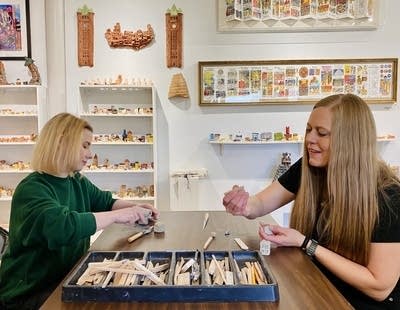
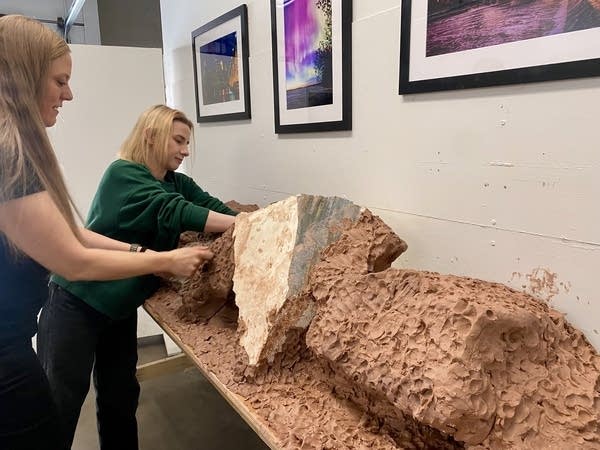
Lisa Roy and Maxi Maroni squish clay slabs onto Styrofoam chunks to create a mountainscape with peaks, valleys and secret hiding spots.
“The caves are really popular. A lot of people kind of fight for a prime spot in the cave. We've had a lot of trolls in the caves that people have made,” Roy said.
“And monsters are a very popular creation,” Moroni added.
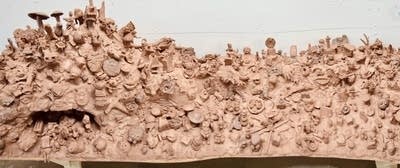
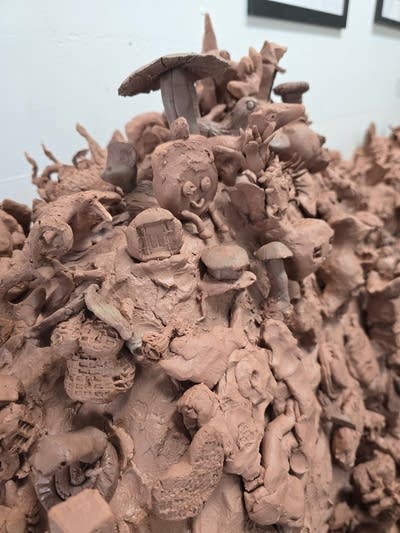
The sculpture requires about 300 to 400 pounds of upcycled clay. In just a few days, the community will help transform the mound into a craggy city filled with homes, bridges, mushrooms, animals and all sorts of creatures.
“By the end, people are having a hard time finding spots to put their sculptures on,” Roy said.
This is the third year that Aldo Moroni Studios, a sculpture space at the California Building in northeast Minneapolis, is hosting a free all-ages community sculpture build for Art-A-Whirl. According to the Northeast Minneapolis Arts Association, Art-A-Whirl, May 15-17, is the largest open artist studio tour in the country, with thousands of artists participating at more than 100 locations.
Roy, who is the studio manager, said hundreds of participants visit each year, including Mayor Jacob Frey and former Minneapolis Mayor R.T. Rybak in 2024.
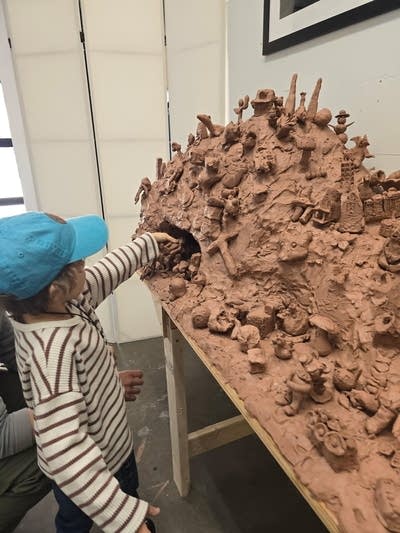
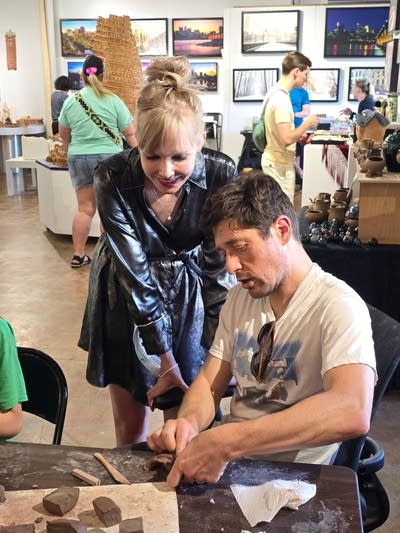
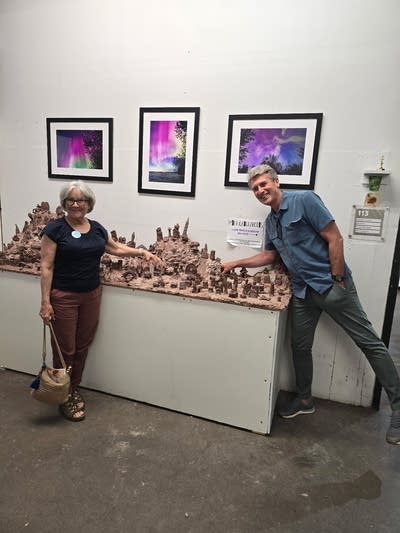
“We encourage everybody who comes through the California Building to stop in studio 113, come in and make either a tiny house or whatever they want to put on our mountain,” Roy said. “It’s really fun to kind of watch that come to life over the weekend.”
Moroni is a studio partner and the daughter of Aldo Moroni, the studio’s namesake, who died in 2020 from pancreatic cancer. The legendary Minneapolis artist was known for his ceramic “tiny houses” and for creating “narrative sculptures” — vast miniature cities and civilizations out of clay and wax. He was even coined the “Mayor of Minneaturapolis.”
This community sculpture is very much in the spirit of her father, Maxi Moroni says, who helped start Art-A-Whirl more than 30 years ago.

“He was very vocal about the fact that he wanted this to be a legacy space,” Moroni says. “A legacy space that would kind of continue what he would do — engaging with his community, bringing other people into the process of art and making it really a participatory, engaging experience.”
In a 1985 interview, Aldo Moroni said: “There’s a tradition of alienation in the arts that’s 200 years old, but there’s a bigger 4,000-year-old tradition of artists being involved in society. That’s what I think should be revived.”
Moroni said her father famously would create works, destroy them and then rebuild, while keeping “artifacts” from past civilizations. That’s the case with the “Tower of Babylon,” a Babel-like structure that stands some 8-feet tall in the studio.
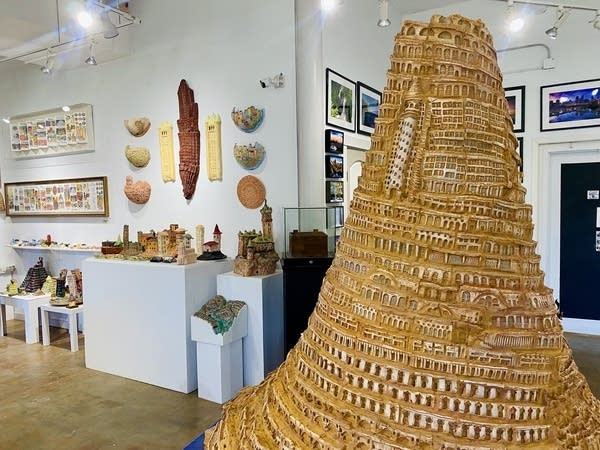
“The first version was ancient Mesopotamia, where the Tigris and the Euphrates Rivers met, and then he would destroy that, and he would go and he'd build the next city on top of it,” Moroni said.
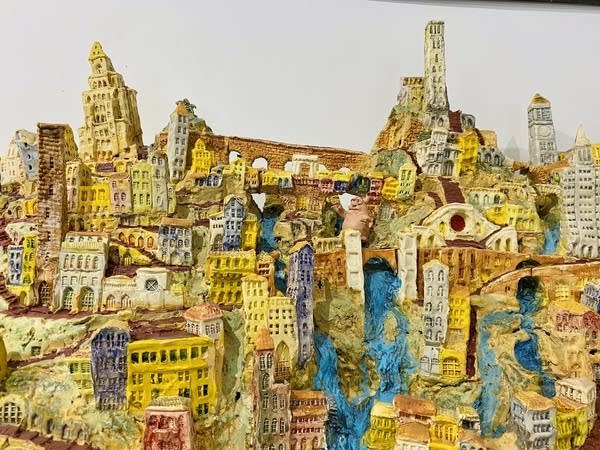
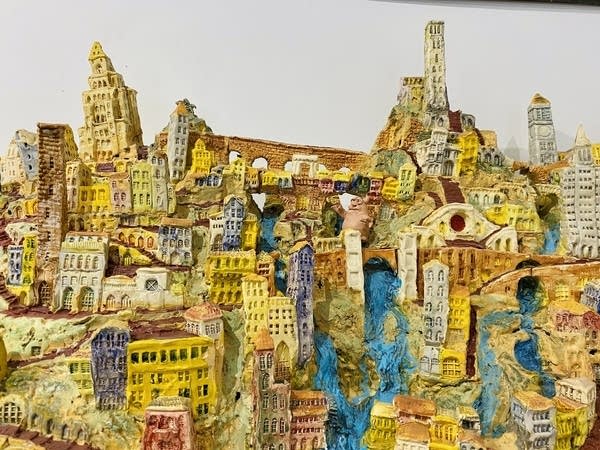
Then there is the hilly cityscape called “Bridges,” which originally started as “Trumptopia.”
“He did a performative art piece where he did dress as Trump, and he went in and he destroyed it, and then this he built after,” Roy said. “It's called ‘Bridges,” meaning we should be building bridges, not walls. So the community sculpture that we're doing is kind of in the spirit of this.”
And in the spirit of Aldo Moroni, the Art-A-Whirl sculpture will be on view for a week, and then it will be destroyed, to be built anew next year.
The goal, Roy said, is to “just create something beautiful that's going to be temporary, but just a really memorable experience for everyone.”