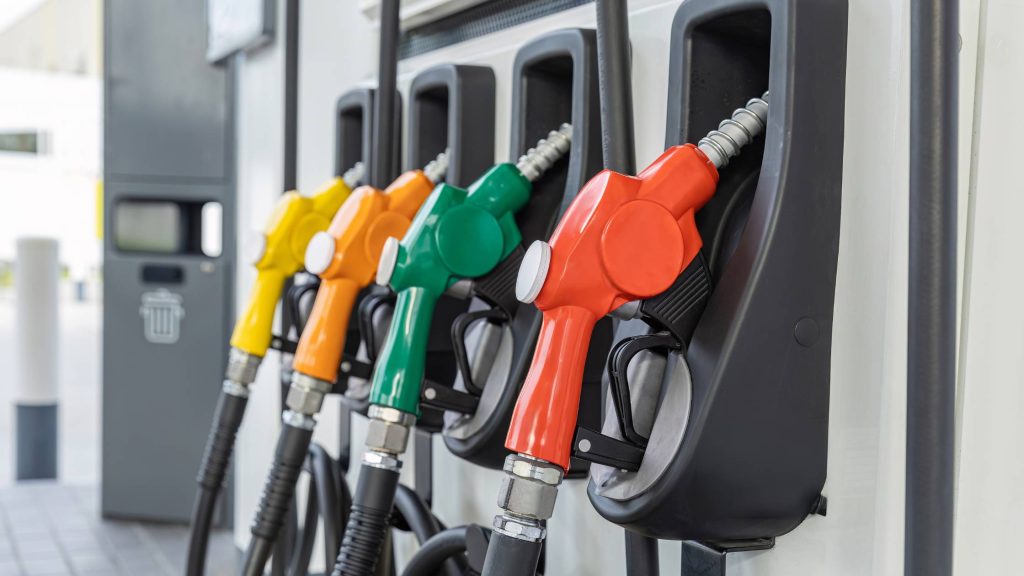
We don’t need to explain that fuel costs are so high right now (or the reasons why), as everyone reading this likely feels it each time they head to the pump. In any case, it’s fair to say that, while for the average person, high prices at the pump result in a frustrating experience that can drain savings, for business owners who rely on fuel to power their machinery, the increased prices can very rapidly turn into an existential threat and one that seemingly they have zero control over. These effects can rapidly cascade into other knock-on effects, with the only real way to mitigate as much as is realistically possible being to know how such cost increases will affect the bottom line.
The Direct Cost Burden

As we noted, there are multiple effects that a higher cost of fuel can cause, ranging from the obvious to the less so. When it comes to the former, the consequences tend to be immediate and hard-hitting, with the latter issues prone to coming in different forms later down the line. The amount and consequence of the effects will differ from industry to industry, but broadly speaking, when costs increase, bottom lines will look far more anemic, sometimes to the point where it begins to eat into net profit and potentially results in significant losses over time.
For companies relying on heavy plant, they suffer tremendously as margins are often tight, and there is no way to avoid the rising cost by, say, electrifying their machinery, and any delays result in fines and loss of reputation that has been built up over a long time. The only way for many to survive is to reinvest in more efficient machinery like the Cummins ISM engine in a bid to reduce the amount of fuel used during operation. Some of the more obvious examples of how higher fuel costs impact businesses include:
- Logistics and distribution: The rising cost of so-called “last-mile delivery” is something that affects almost all businesses, regardless of whether they actually use fuel or not. For logistics companies, the increase has to be absorbed somewhere along the chain, and it usually ends up either being passed on in some number to the end customer or shared between them.
- Service-based operations: Businesses that operate mobility are impacted because their expenses go up from the need to use fuel to bring them to and from a location.
- Energy surcharge: To maintain their margins, most businesses will apply an energy surcharge to their invoices, allowing them to pass the cost onto their clients without altering any contractual obligations.
Hidden Cascade Effects
There are other, unexpected effects that can harm all aspects of a business, beyond the obvious ones mentioned earlier. These can be broken down into four broadly defined categories, each with its own knock-on implications:
- Fuel prices rise → Shipping and logistics costs increase
- Suppliers add fuel surcharges → Wholesale prices climb
- Small businesses absorb or pass on costs → Margin compression or customer loss
- Reduced purchasing power → Lower sales volume
All of these outcomes can end up leading to a vicious cycle whereby businesses either lose money via lower margins or lose money from customers unwilling to absorb costs. Although certain industries are less affected by this cycle than others, all will be touched by it in one form or another.
Operational Solutions & Mitigation Strategies’
Despite the seemingly dire situation, particularly due to the seemingly endless geopolitical events causing higher costs at the pump, there is still hope. There are some mitigation strategies that businesses can utilize to reduce the impact on operations.
| Strategy | Implementation | Possible constraints |
| Route optimization | Combining GPS data with AI solutions can help create new routes that reduce idle times and suggest newer, more efficient ones. | This can eventually lead to diminishing results once routes have been maximized to their full extent. |
| Fuel-efficient vehicles | Transitioning to new, more fuel-efficient routes can minimize fuel costs per mile. | High upfront costs that may be prohibitive for SMEs and simply not worth the capex for larger ones. |
| Minimum order thresholds | Requiring a higher spend threshold before delivery fees are reduced. | Could alienate existing customers and cause a fall in custom due to competition not following suit. |
Note: These won’t apply to all industries and only offer an example of some options at your disposal.

Key Takeaways on Fuel Costs
Fuel prices have been a massive burden for companies in all sorts of industries, and any increase in prices can have cascading effects that range from a dip in profits to the potential collapse of the business. Companies also have to contend with the mixture of obvious problems that they might be better able to deal with and hidden obstacles that can sometimes prove even trickier to remedy. For instance, while it is possible that an enterprise could simply raise its own prices to mitigate the additional expense and pass it on to its customers, the process is not always a simple task, particularly when markets remain volatile and when customers are increasingly feeling the pinch with other rising costs of living.
Frequently Asked Questions about Fuel Costs
Can small businesses add fuel surcharges like large shipping companies?
While theoretically and practically possible, it’s not always as easy a decision as many might think. Large multinational logistics companies have few competitors and operate a “sticky” business model. Conversely, local businesses have to contend with a larger pool of competitors; any increase in costs for the customer could meet resistance and cause them to move elsewhere.
Are electric vehicles a practical solution for small business fuel costs?
There is no yes-or-no answer here, as it depends. For some businesses, the capital expense might be worth it, but for others, it’s either not a possibility (such as construction companies) or the upfront costs are simply too prohibitive and won’t cause the ROI they expect.
How can small businesses protect profit margins during fuel price volatility?
There are several ways that small businesses can mitigate the increased expense, including adding fuel escalation clauses into new contracts, bundling deliveries, and negotiating supplier terms. But you need to be aware that any mitigation technique can have unforeseen consequences, making it vital that you think through all possibilities before implementing them.
Everyone is reeling from the massive increase in fuel prices that the world has recently experienced, and if the past is anything to go by, they aren’t going to fall anytime soon. This article has outlined a few obvious and less obvious effects facing different businesses and some options that can be used to reduce the impact.