Orange vs. Sumo Citrus: Which Is Better for Managing Blood Sugar and Boosting Vitamin C?


Medically reviewed by Lindsey DeSoto, RD

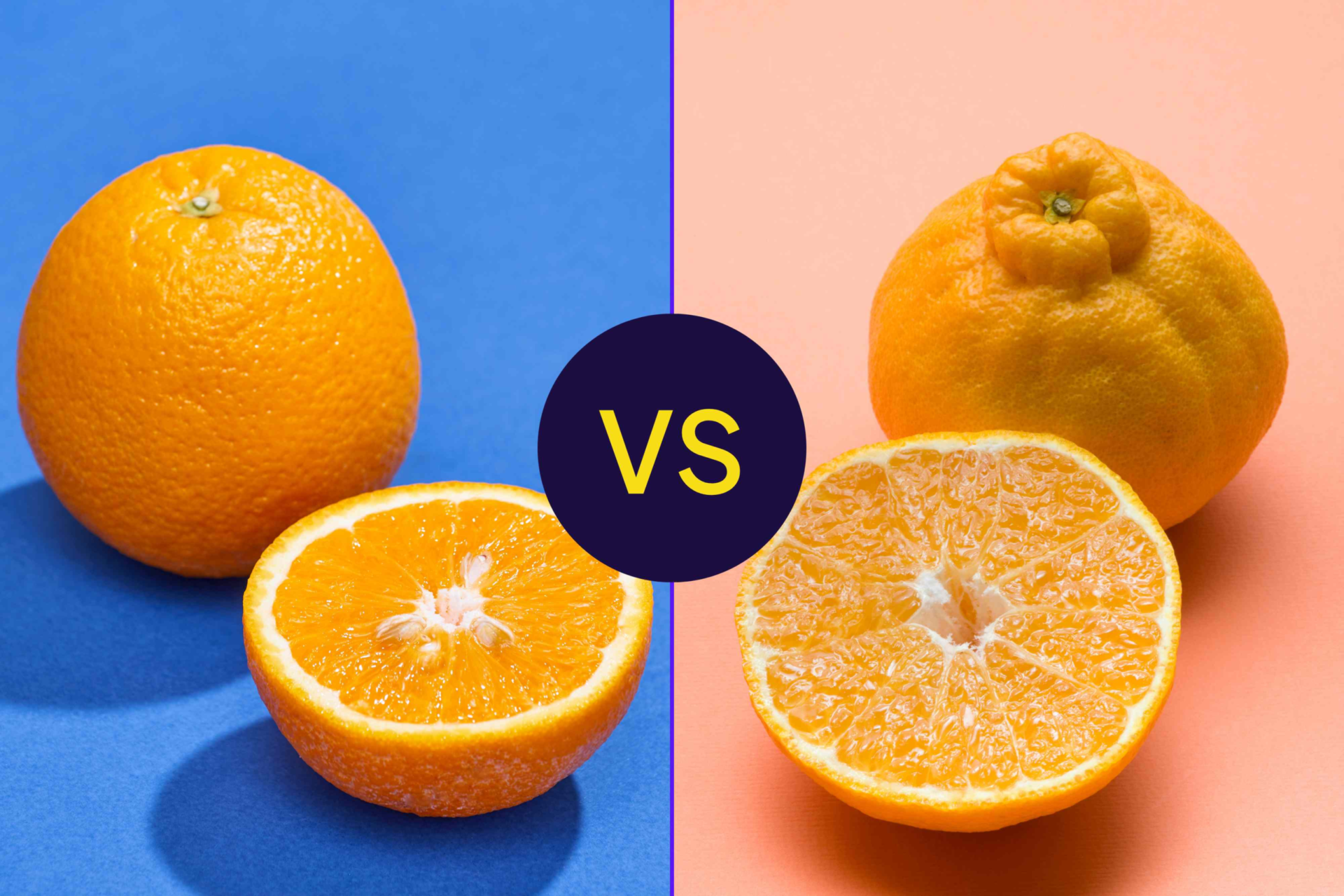
Sumo Citrus are hybrid fruits that are known for being sweeter and much larger than normal oranges.Credit: Design by Health; Getty Images
Sumo Citrus are hybrid fruits that are known for being sweeter and much larger than normal oranges.
Credit: Design by Health; Getty Images
  • Oranges have low sugar content and lots of fiber, so they may help control blood sugar better than Sumo Citrus.
  • Sumo Citrus have about 147 milligrams of vitamin C per fruit, which is almost double the amount in a navel orange.
  • Both fruits can be part of a healthy diet, as they offer antioxidants, fiber, hydration, and more.

Sumo Citrus and oranges are similar in appearance and are both great choices if you're looking for a nutrient-dense, sweet snack. However, these two citrus fruits differ in their size, sugar, and vitamin C levels—here's how they stack up.

Which Fruit Is Better for Managing Blood Sugar?

Most foods are given a glycemic index score, which measures how quickly or slowly they raise blood sugar—anything with a score below 56 is considered a low-glycemic index food, or one that keeps blood sugar more stable.

There are many types of oranges, but navel oranges are one of the most common varieties. With a score of about 45, they're also well-known for being a low-glycemic index food. Sumo Citrus don't have a listed glycemic index score. However, the fruit is a hybrid of mandarin oranges, which are also considered a low-glycemic index food with a score of 52.

This means Sumo Citrus and navel oranges likely have a relatively similar effect on blood sugar. That being said, oranges may have a slight advantage due to their size and sugar content:

  • Navel orange: 12 grams of sugar per standard orange (weighing 140 grams)
  • Sumo Citrus: 29 grams of sugar per standard Sumo Citrus (weighing 235 grams)

Not only do navel oranges offer a lower sugar content and a smaller portion size, but they also contain similar amounts of fiber as the much larger Sumo Citrus. Fiber helps slow the rate at which sugar enters the bloodstream, reducing blood sugar spikes.

That means if you're managing diabetes or otherwise closely monitoring your blood sugar, a medium-sized navel orange may be the slightly better choice.

In general, for better blood sugar results, it's best to balance carbohydrate- or sugar-rich foods with healthy fats and protein. Consider pairing a whole Sumo Citrus or navel orange with a handful of nuts or a cup of Greek yogurt—similar to fiber-rich foods, these snacks can slow digestion and prevent a quick rise in blood sugar.

How Are Sumo Citrus and Oranges Different From One Another?

Sumo Citrus, a brand name for fruits called dekopons, are large, hybrid fruits of satsuma, orange, and mandarin. The fruits were brought to the United States by Japanese growers in the late 1990s, and were first sold to the public in 2011. Sumo Citrus have a distinctive top-knot and bumpy peel, and they’re known for being very sweet.

Slightly smaller in size, navel oranges are widely popular across the U.S. and can be found in most grocery stores. Navel oranges provide a classic, sweet-tart orange taste.

Which Provides a Bigger Vitamin C Boost?

Most people associate citrus fruits with vitamin C, and Sumo Citrus and navel oranges are no exception. Though both fruits contain substantial amounts of this essential vitamin, Sumo Citrus may be the better choice for vitamin C:

  • Navel orange (140 grams): 83 milligrams of vitamin C (92% of the daily recommended intake)
  • Sumo Citrus (235 grams): 147 milligrams of vitamin C (163% of the daily recommended intake)

Importantly, Sumo Citrus' greater vitamin C content has more to do with the fruit's size than its nutritional makeup. A navel orange is about 60% of the size of a Sumo Citrus—by weight, the two have relatively similar vitamin C levels.

Regardless of which one you choose, both Sumo Citrus and oranges can help you reach your daily vitamin C goals—for adults, that's at least 90 milligrams per day. Vitamin C is an antioxidant that supports immune health, helps the body absorb plant-based iron, and plays a role in the building and repair of tissues.

Sumo Citrus vs. Oranges: Nutritional Head-to-Head

While Sumo Citrus provide more vitamin C and oranges are lower in sugar, the fruits do have very similar nutritional profiles overall:

Sumo Citrus (237 grams) ​Navel Orange (140 grams)
Calories ​150 ​62
Carbohydrates ​35 grams (g) ​16.5 g
Fats 0.5 g 0.2 g
Total Sugar ​29 g ​12 g
Fiber ​3 g ​2.8 g
Vitamin C ​147 milligrams (mg) ​83 mg
Potassium ​460 mg ​232 mg
Protein ​3 g ​1.27 g
Calcium 40 mg 60 mg
Iron 0.59 mg 0.46 mg

Which Should You Choose?

Sumo Citrus and oranges are both healthy, whole foods that help meet your nutritional needs. They offer:

  • Vitamin C for immune support
  • Antioxidants called hesperidin that help fight inflammation
  • Fiber for digestive health
  • Hydration due to high water content

Navel oranges may be best for you if you're concerned about blood sugar spikes, or if you're watching your calorie or carbohydrate intake. Logistical factors may also play a role in your decision—navel oranges are usually available all year and typically cost less than Sumo Citrus.

Meanwhile, you may want to choose Sumo Citrus if you're looking for more vitamin C per serving, or if you want a sweeter, more substantial snack.

Unfortunately, Sumo Citrus have a very short growing season and are only available from January to April. If you can't find Sumo Citrus, try other sweet, citrus fruits, such as mandarin oranges, tangerines, or clementines.




Source link

Leave a Reply

Subscribe to Our Newsletter

Get our latest articles delivered straight to your inbox. No spam, we promise.

Recent Reviews


Frontend vs Backend – Table of Content

What is frontend?

In web development, frontend refers to the user interface and the user experience of the web application. It focuses on the development of the visual aspects of the web application through which the users can interact like the functionality, design and the layout. The person involved in the frontend development of the website is called the front end developer.

What is Backend?

In web development, backend refers to the server side development of the web application. It focuses on building the application logics, databases and servers. It helps the developer to communicate with the database, save, retrieve and delete data. The person involved in the backend development of the website is called the backend developer.

Frontend and backend are very essential in web development. Users can see the frontend part of the website and can interact with it like design, texts, images, videos and navigation menu while the backend cannot be seen and cannot be interacted with. The primary difference between the frontend and backend is that the frontend indicates how a web page looks whereas the backend indicates how the website works. That is, the front end is the client side and the backend is the server side. Both of them would interact with each other and operate effectively as a single unit to enhance the functionality of the website.

Front End Vs Back End:

Skills required for Frontend web development:

Technical Skills: Front end developers need to possess skills in HTML, CSS and Javascript.

  • HTML: for building the structure of the webpage
  • CSS: for styling the web pages
  • Javascript: for adding the interactivity to the web pages

Snowflake Training

  • Master Your Craft
  • Lifetime LMS & Faculty Access
  • 24/7 online expert support
  • Real-world & Project Based Learning

Frameworks and Libraries: Front end developers must possess skills in anyone of the below frameworks and libraries.

Testing frameworks and methodologies: Frontend developers should have good knowledge on the testing frameworks and methodologies like Enzyme, Jest or Cypress to make sure that web pages are working correctly.
Version control system: They must have knowledge on version control systems such as Git to manage the code and coordinate with the other developers.

Frontend developers should also have a good understanding of responsive design principles that ensures the website is displayed correctly on distinct devices, Design skills for creating appealing and user friendly web pages, Idea on Cross browser compatibility to make sure that their web pages display and function correctly on various browsers, etc.

Skills required for Backend web development

Programming languages: Backend developer must have proficiency in any one of the server side programming languages like

  • Python
  • Node.js
  • PHP
  • Ruby on Rails

Databases: Backend developers should be proficient with the databases like

  • MySQL
  • MongoDB
  • PostgreSQL
  • And must have a good knowledge on data structures and algorithms.

Backend frameworks: Backend developer must have proficiency in any one of these frameworks like

  • Express.js
  • Django
  • Laravel
  • Flask

Testing frameworks and methodologies: Backend developers should have good knowledge on the testing frameworks and methodologies like

  • Pytest
  • Jest
  • Mocha
  • Backend developers must also have skills on API design and implementation to expose backend functionality to front-end applications, server administration and deployment skills to configure web servers, setup databases, and deploy databases, and also must be able to take steps to secure the backend application.

Generals, frontend-vs-backend-description-0, Generals, frontend-vs-backend-description-1

Subscribe to our YouTube channel to get new updates..!

Testing methodologies for frontend & backend

To make sure that the developed application is reliable, functional and secure, we need to use some testing methodologies in frontend as well as backend development. Although the skills required for frontend and backend development are different, the testing principles are the same.

  • Unit testing: In frontend development, for every individual component like menus, buttons, input fields unit testing is performed. Frameworks like Mocha/Jest are used in frontend development to automate and execute unit testing on codebase. Even in backend development, unit testing is used to test every function and the code component. Frameworks like JUnit, Mockito or PyTest are used in backend development to automate and execute unit testing on codebase.
  • Integration testing: In frontend development, Integration testing is used to verify the interaction between the components. Frameworks like Cypress or Selenium are used to test integration of components in frontend integration testing. Integration testing in backend development is used to test if the backend components like server and database work correctly together. Frameworks like Spring test/testNG are used in the backend integration testing.
  • In frontend development, we even perform performance testing to check whether the website is loading quickly and performing well. Tools like Google Lighthouse/Webpage Test are used for testing the website performance. Whereas in Backend development, security testing plays an important role in protecting the application from vulnerabilities. Tools like OWASP ZAP/Burp Suite are used to test the security vulnerabilities.

Collaboration Between Frontend and Backend Development Teams

To ensure that the website is developed efficiently, collaboration between the frontend and backend development team is very important. Although the responsibilities and expertise of both frontend and backend developers are different, they need to work together to create a seamless and secure experience for the users.

Snowflake Training

Weekday / Weekend Batches

Security concerns in front end and back end development

To ensure the security of the website or application, both frontend and backend developers are responsible. User inputs must be validated and sanitised by Frontend developers to prevent cross site scripting and various other attacks. They also need to implement secure authorization and authentication techniques to protect the user data. While the backend developers must ensure that server-side code is secure and is not vulnerable to the attacks like cross-site request forgery, SQL injection, etc. To protect the sensitive data, backend developers also need to implement secure data storage and transition.

Career prospects for frontend and backend development

As businesses are continuing to invest in the development of mobile and web applications, there is a huge demand for both frontend and backend developers. In India, a frontend developer’s salary ranges in between 3 Lakhs to 11.4 Lakhs per annum while the backend developer’s salary ranges in between 3.5 Lakhs to 17 Lakhs per annum.

Either you are willing to become a frontend developer or backend developer, you need to possess attention to detail, problem solving skills, and the ability to work in a team environment. As the developers seek the ways to create an efficient and seamless experience for the users, the future of web development is likely to get integration between frontend and backend technologies. Now Fullstack development frameworks like MERN/MEAN are used by developers for both frontend and backend development. Developers are also using serverless architectures to focus on writing code instead of managing infrastructures. Serverless architecture is used by both frontend and backend development to build microservices.

Conclusion:
In this blog we have compared both frontend and backend development. Now we know the differences between frontend and backend, skills required for frontend and backend, their salaries and career prospects. We hope you found this information useful. For more blogs on various frontend and backend technologies, stay tuned!.

Related Article:

Front End Technologies


Source link