Medically reviewed by Lindsey DeSoto, RD
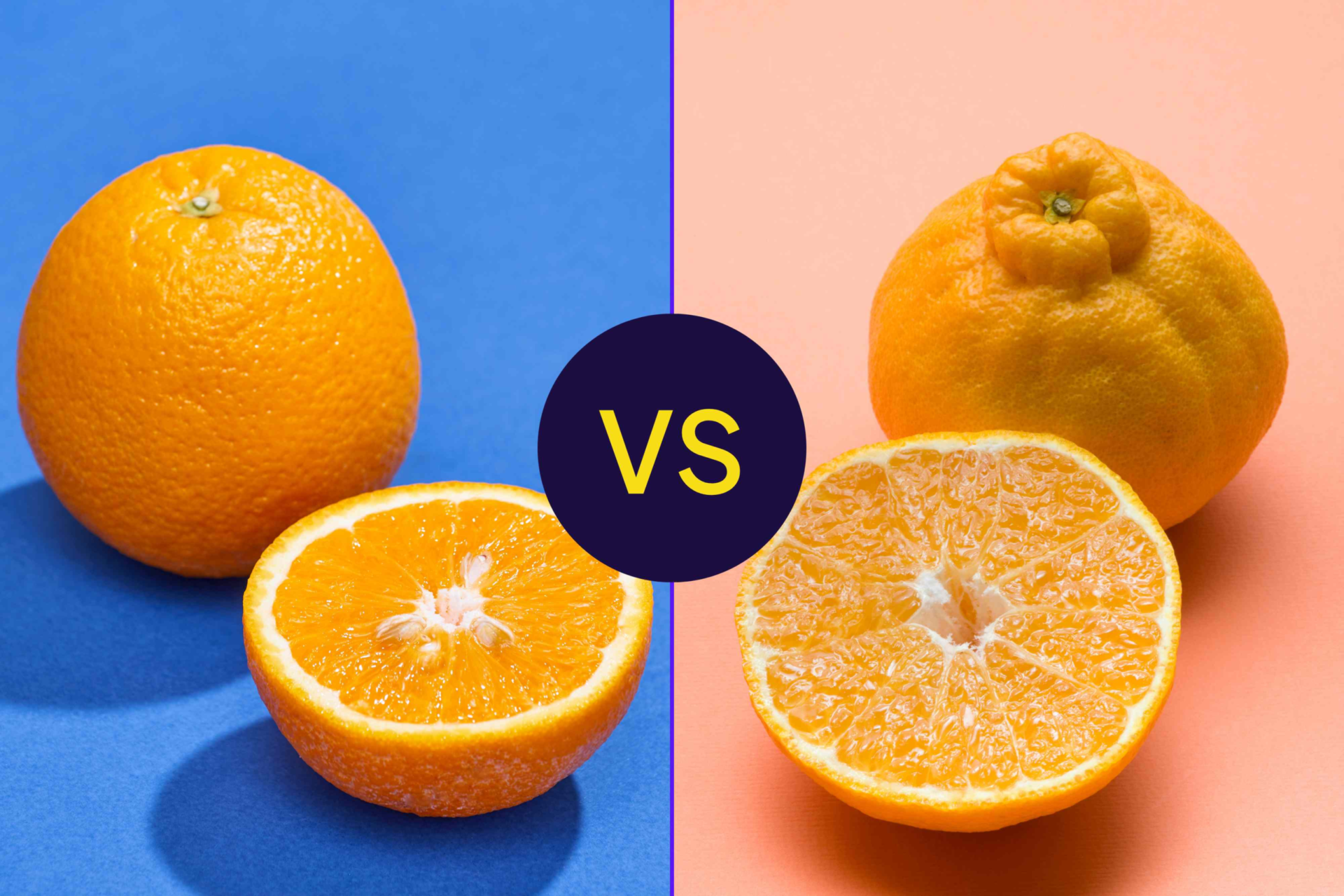
:max_bytes(150000):strip_icc():format(jpeg)/Health-Sumo-Citrus-vs-Oranges-1027cee8effc4e5a9cb902788ed5bb68.png "Whole and halved oranges on the left and a Sumo Citrus with one half cut on the right placed against contrasting blue and orange backgrounds")
Credit: Design by Health; Getty Images
- Oranges have low sugar content and lots of fiber, so they may help control blood sugar better than Sumo Citrus.
- Sumo Citrus have about 147 milligrams of vitamin C per fruit, which is almost double the amount in a navel orange.
- Both fruits can be part of a healthy diet, as they offer antioxidants, fiber, hydration, and more.
Sumo Citrus and oranges are similar in appearance and are both great choices if you're looking for a nutrient-dense, sweet snack. However, these two citrus fruits differ in their size, sugar, and vitamin C levels—here's how they stack up.
Which Fruit Is Better for Managing Blood Sugar?
Most foods are given a glycemic index score, which measures how quickly or slowly they raise blood sugar—anything with a score below 56 is considered a low-glycemic index food, or one that keeps blood sugar more stable.
There are many types of oranges, but navel oranges are one of the most common varieties. With a score of about 45, they're also well-known for being a low-glycemic index food. Sumo Citrus don't have a listed glycemic index score. However, the fruit is a hybrid of mandarin oranges, which are also considered a low-glycemic index food with a score of 52.
This means Sumo Citrus and navel oranges likely have a relatively similar effect on blood sugar. That being said, oranges may have a slight advantage due to their size and sugar content:
- Navel orange: 12 grams of sugar per standard orange (weighing 140 grams)
- Sumo Citrus: 29 grams of sugar per standard Sumo Citrus (weighing 235 grams)
Not only do navel oranges offer a lower sugar content and a smaller portion size, but they also contain similar amounts of fiber as the much larger Sumo Citrus. Fiber helps slow the rate at which sugar enters the bloodstream, reducing blood sugar spikes.
That means if you're managing diabetes or otherwise closely monitoring your blood sugar, a medium-sized navel orange may be the slightly better choice.
In general, for better blood sugar results, it's best to balance carbohydrate- or sugar-rich foods with healthy fats and protein. Consider pairing a whole Sumo Citrus or navel orange with a handful of nuts or a cup of Greek yogurt—similar to fiber-rich foods, these snacks can slow digestion and prevent a quick rise in blood sugar.
How Are Sumo Citrus and Oranges Different From One Another?
Sumo Citrus, a brand name for fruits called dekopons, are large, hybrid fruits of satsuma, orange, and mandarin. The fruits were brought to the United States by Japanese growers in the late 1990s, and were first sold to the public in 2011. Sumo Citrus have a distinctive top-knot and bumpy peel, and they’re known for being very sweet.
Slightly smaller in size, navel oranges are widely popular across the U.S. and can be found in most grocery stores. Navel oranges provide a classic, sweet-tart orange taste.
Which Provides a Bigger Vitamin C Boost?
Most people associate citrus fruits with vitamin C, and Sumo Citrus and navel oranges are no exception. Though both fruits contain substantial amounts of this essential vitamin, Sumo Citrus may be the better choice for vitamin C:
- Navel orange (140 grams): 83 milligrams of vitamin C (92% of the daily recommended intake)
- Sumo Citrus (235 grams): 147 milligrams of vitamin C (163% of the daily recommended intake)
Importantly, Sumo Citrus' greater vitamin C content has more to do with the fruit's size than its nutritional makeup. A navel orange is about 60% of the size of a Sumo Citrus—by weight, the two have relatively similar vitamin C levels.
Regardless of which one you choose, both Sumo Citrus and oranges can help you reach your daily vitamin C goals—for adults, that's at least 90 milligrams per day. Vitamin C is an antioxidant that supports immune health, helps the body absorb plant-based iron, and plays a role in the building and repair of tissues.
Sumo Citrus vs. Oranges: Nutritional Head-to-Head
While Sumo Citrus provide more vitamin C and oranges are lower in sugar, the fruits do have very similar nutritional profiles overall:
| | Sumo Citrus (237 grams) | Navel Orange (140 grams) |
| Calories | 150 | 62 |
| Carbohydrates | 35 grams (g) | 16.5 g |
| Fats | 0.5 g | 0.2 g |
| Total Sugar | 29 g | 12 g |
| Fiber | 3 g | 2.8 g |
| Vitamin C | 147 milligrams (mg) | 83 mg |
| Potassium | 460 mg | 232 mg |
| Protein | 3 g | 1.27 g |
| Calcium | 40 mg | 60 mg |
| Iron | 0.59 mg | 0.46 mg |
Which Should You Choose?
Sumo Citrus and oranges are both healthy, whole foods that help meet your nutritional needs. They offer:
- Vitamin C for immune support
- Antioxidants called hesperidin that help fight inflammation
- Fiber for digestive health
- Hydration due to high water content
Navel oranges may be best for you if you're concerned about blood sugar spikes, or if you're watching your calorie or carbohydrate intake. Logistical factors may also play a role in your decision—navel oranges are usually available all year and typically cost less than Sumo Citrus.
Meanwhile, you may want to choose Sumo Citrus if you're looking for more vitamin C per serving, or if you want a sweeter, more substantial snack.
Unfortunately, Sumo Citrus have a very short growing season and are only available from January to April. If you can't find Sumo Citrus, try other sweet, citrus fruits, such as mandarin oranges, tangerines, or clementines.