Instagram Debuts A New Disappearing-Photo App Called Instants


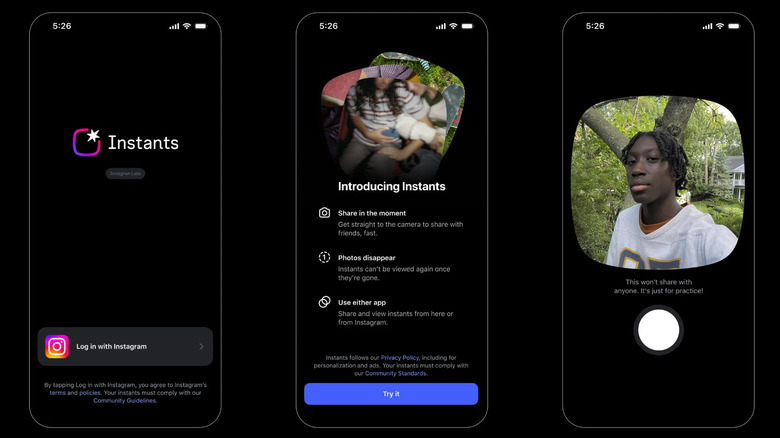
Instagram is taking another stab at the ephemeral photo format with a new feature called Instants. It’s available in the main Instagram app as well as in a new dedicated app, which is also called Instants.

The idea here is to snap and share photos spontaneously. Kinda like how Instagram used to be way back in the day before it became influencer central. These photos disappear after your friends — who can react and reply to the images — see them. They’ll stay in your archive for up to a year and you can share them as stories later by compiling them as a recap.

In the main Instagram app, you can access Instants from your DM inbox by tapping on the photo stack in the bottom right corner. The only way you can modify Instants is by adding a caption. There are no editing tools or filters here. You can’t upload photos from your camera roll either. 

You can then choose who you want to share one of these photos with (either close friends or mutuals) and then send them. There’s an undo button that gives you a moment to change your mind and remove an Instant before your friends see it.

When it comes to your friends’ Instants, you can snooze them by holding the icon in your inbox and swapping right. Swipe the other way to start seeing them again.

As for the dedicated Instants app, Instagram says it’s been experimenting with that in certain countries on iOS and Android. “We’ve been testing instants for a while, and one thing we heard was that people wanted a quicker, easier way to get into the camera,” the company said in a blog post. That’s almost an admission that the main Instagram app is way too bloated. (It absolutely is.)

The Instants feature and app also use all of Instagram’s normal safety and privacy protections, including blocking and muting other users. Parental supervisions for teen accounts on Instagram proper are automatically applied to Instants, including shared time limits, safety tools (such as a block on screenshots and screen recordings) and restricted access by default between 10PM and 7AM. A parent of a teen with a supervised account will get a notification when the latter downloads the Instants app.

This is hardly the first time that Instagram has taken on the likes of Snapchat (which it did incredibly successfully with stories) and BeReal. In 2014, it deployed an app called Bolt that was about quickly sharing photos with friends. Four years ago, Instagram released a BeReal clone called Candid Stories.


Source link

Leave a Reply

Subscribe to Our Newsletter

Get our latest articles delivered straight to your inbox. No spam, we promise.

Recent Reviews


TSA allows bringing any homemade food on planes, as long as it isn’t in liquid, jam, paste, or cream form.

Most airlines also allow you to consume your own food during the flight. The only exception is very short flights below 1 hour. That’s because you won’t be able to consume it while the airplane hasn’t reached cruising altitude (while the seatbelt sign is on). On shorter flights, sometimes, airplanes don’t even reach cruising altitude, or they do it only for a very short time period.

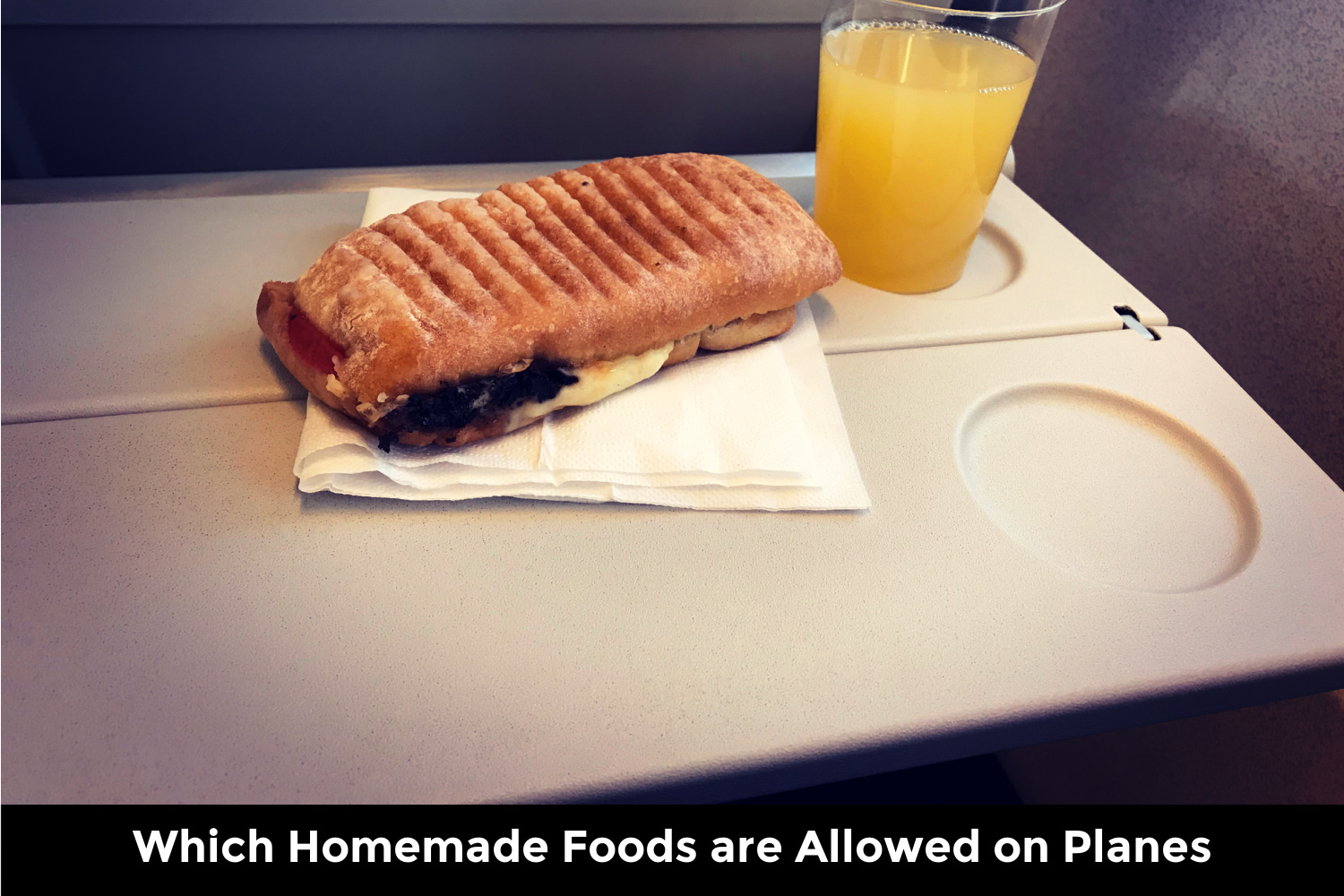
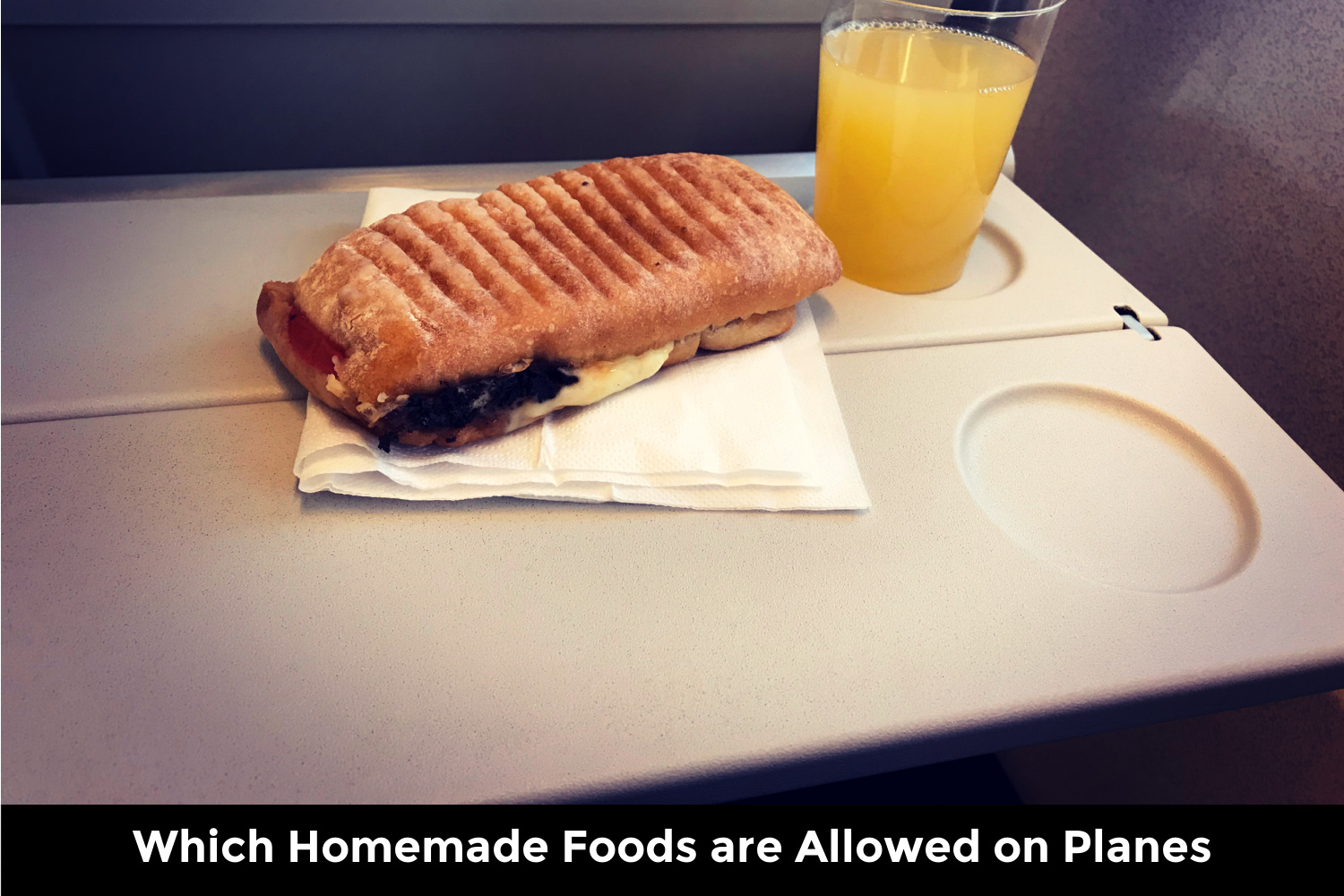
Which Homemade Foods are Allowed on Planes

All homemade foods that are in solid or powder form are allowed. Airport security can easily scan it with regular scanners, so it isn’t considered a security threat.

Here are some homemade foods that are allowed on planes without any restrictions:

  • Pizza
  • Sandwiches
  • Hamburgers
  • Tortillas and tacos
  • Salads without (or very little) sauce
  • Nuts
  • Dried fruit
  • Granola bars
  • Sweets
  • Chocolate
  • Cookies
  • Fruit (fresh, cut, or frozen)
  • Vegetables (fresh, cut, or frozen)
  • Beef jerky
  • Potato chips
  • Pasta without a lot of sauce
  • Risotto
  • Cooked vegetables

Which Homemade Foods are Restricted on Planes

All homemade foods in liquid form are limited to small quantities in hand luggage due to security risks. If it’s considered a liquid, then it will have to be stored in 3.4 oz (100 ml) containers or smaller and be packed in a 1-quart bag together with other liquids. If you can smear it, it’s considered a liquid.

Here are some examples of foods that are considered liquids:

  • Applesauce
  • Peanut butter
  • Jams
  • All other sauces
  • Butter
  • Smoothies
  • Smearable cheese
  • Nutella
  • Soup

Powdered foods and spices also have additional limitations. On flights in the US, powders above 350 g (12 oz) are allowed in hand luggage but must be individually screened. On international flights, powders over 350 g (12 oz) are usually banned from hand luggage.

Here are some foods that are considered powders:

  • Salt
  • Spices
  • Protein powder
  • Cocoa powder

Powders over 12 oz (350 g) and liquids over 3.4 oz (100 ml) are only allowed in checked baggage.

It’s also worth noting that on domestic flights in New Zealand and Australia, and on a few flights in the US and the UK, these restrictions don’t apply. That’s because some airports are fitted with new CT 3D scanners, which can safely scan liquids in large quantities in hand luggage as well as powders.

Fresh Fruit, Vegetables, Eggs, Meat, and Milk are Banned on International Flights

After passengers land on international flights, they have to go through Customs and Immigration. And they impose additional rules on products that may cause ecological problems within that specific country.

Fresh fruit, vegetables, eggs, meat, milk, mushrooms, and plants are usually banned from entering other countries. That’s because they can contain invasive pests and diseases.

So if you’re bringing any of these products, you’ll have to consume them during the flight (before landing). If you don’t do that, the border agents will ask you to dispose of them. You’re also required to declare them.

How to Pack Homemade Food for Air Travel

  • The best option for storing sandwiches, burgers, tortillas, and cooked foods, is to wrap them in aluminum foil and then put them inside a plastic bag. This will keep the food fresh and avoid making a mess. Aluminum won’t cause any disturbances with the airport scanners.
  • Salads, cut fruit, vegetables, pasta, risotto, and other messy foods are best stored in Tupperware containers. Another option is to put them in a disposable ice cream box, and then throw it in the trash bin when you’re finished.
  • Make good use of Ziploc bags. They’re great for storing messy and smelly foods.
  • You can bring forks and spoons through security, but not knives.
  • You’ll most likely be asked to remove your homemade food from your bag when going through security. You’ll have to place it in a separate screening bin. That’s because food is hard to scan with the airport scanners. So pack it somewhere easily accessible.
  • Your food counts towards the hand luggage size and weight allowance. So you should pack it inside your personal item or carry-on.
  • Pack small snacks in the pockets of your jacket and wear them while going through security if you’re low on space.

Summing Up – Traveling With Homemade Food

Although it isn’t really a rule, you should avoid bringing homemade food that contains a lot of garlic (or in general, has a strong aroma) on the flight. Other passengers might not like the smell and you might even be asked to stow it away by the flight attendants if the smell is too strong.

But other than that, you’re free to pack almost any homemade food. The only thing to watch out for is that it shouldn’t contain a large amount of liquids. A bit of sauce on pasta is usually fine.


Source link