Trump Phone Will Finally Ship This Week, CEO Says


The golden Trump phone is finally shipping this week to people who preordered it, according to an emailed statement from Trump Mobile CEO Pat O’Brien, as reported earlier by USA Today.

Trump Mobile expects phones to be delivered within the next few weeks after months-long production delays.

“The technology business is more difficult than some may realize, as parts must be tested for quality assurances,” O’Brien said in a statement emailed to CNET. “We have experienced delays during a variety of steps in getting the T1 to completion, but those delays were worth it in our minds as we are delivering an amazing product.”

CNET Director of Content Patrick Holland had put down a $100 deposit to preorder the T1 phone in June 2025 so CNET could review it, but he has yet to hear from the company about a shipping date. However, on Wednesday morning, when he logged in to his Trump Mobile account, he was notified that his payment method was outdated and needed to be updated.

Holland says his preorder was “confirmed but not processed,” and he sees a red bubble that reads, “Awaiting Sim Assignment.”

A screenshot of an email confirmation of a Trump phone preorder

Screenshot by CNET

Trump Mobile launched in June 2025 with a $47.45-a-month mobile phone plan, and announced that a Trump phone would be made in the US and launch in August 2025. But when it became obvious that domestic large-scale smartphone manufacturing would not be possible, Trump Mobile dropped the “made in the US” claim

Now, the site simply says it is “designed with American values in mind,” an “American-proud design” and “shaped by American innovation.”

Last month, a redesigned Trump Mobile website finally showcased a new-look T1 phone, its third redesign. It followed Trump Mobile executives showing off a handset they said was a near-production version of the T1 phone to The Verge in early February. 

The website claims it will have a 6.78-inch AMOLED screen; a 50-megapixel, front-facing camera; a camera bump featuring a 50-megapixel main lens, an 8-megapixel wide lens and a 50-megapixel (2X Tele) lens; a 5,000-mAh battery; a fingerprint sensor and AI face unlock; a Snapdragon mobile platform; and an Android operating system.

The site is still accepting $100 deposits on the Trump phone, which it continues to advertise as having a promotional price of $499. Trump Mobile also sells refurbished Apple and Samsung phones, ranging from $369 to $629. 

While Trump Mobile has not said where the T1 phone is manufactured, executives told The Verge that it’s being made in a “favored nation” with “final assembly” in Florida. It’s unclear what qualifies another nation as “favored” to handle most of the assembly of the T1 phone. Meanwhile, President Trump has just arrived in China for a two-day summit with President Xi Jinping to discuss a potential trade deal.


Source link

Leave a Reply

Subscribe to Our Newsletter

Get our latest articles delivered straight to your inbox. No spam, we promise.

Recent Reviews


TSA allows bringing any homemade food on planes, as long as it isn’t in liquid, jam, paste, or cream form.

Most airlines also allow you to consume your own food during the flight. The only exception is very short flights below 1 hour. That’s because you won’t be able to consume it while the airplane hasn’t reached cruising altitude (while the seatbelt sign is on). On shorter flights, sometimes, airplanes don’t even reach cruising altitude, or they do it only for a very short time period.

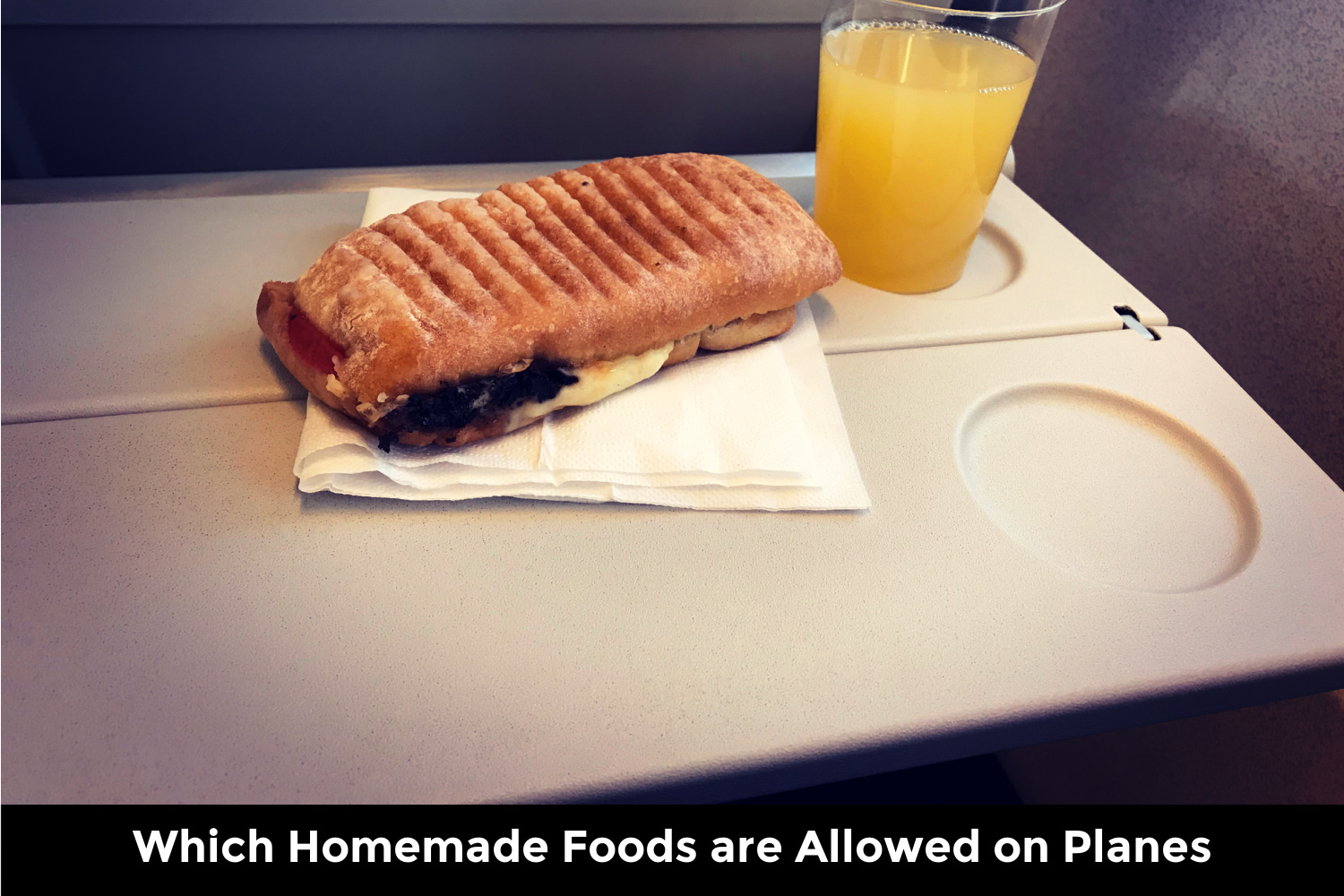
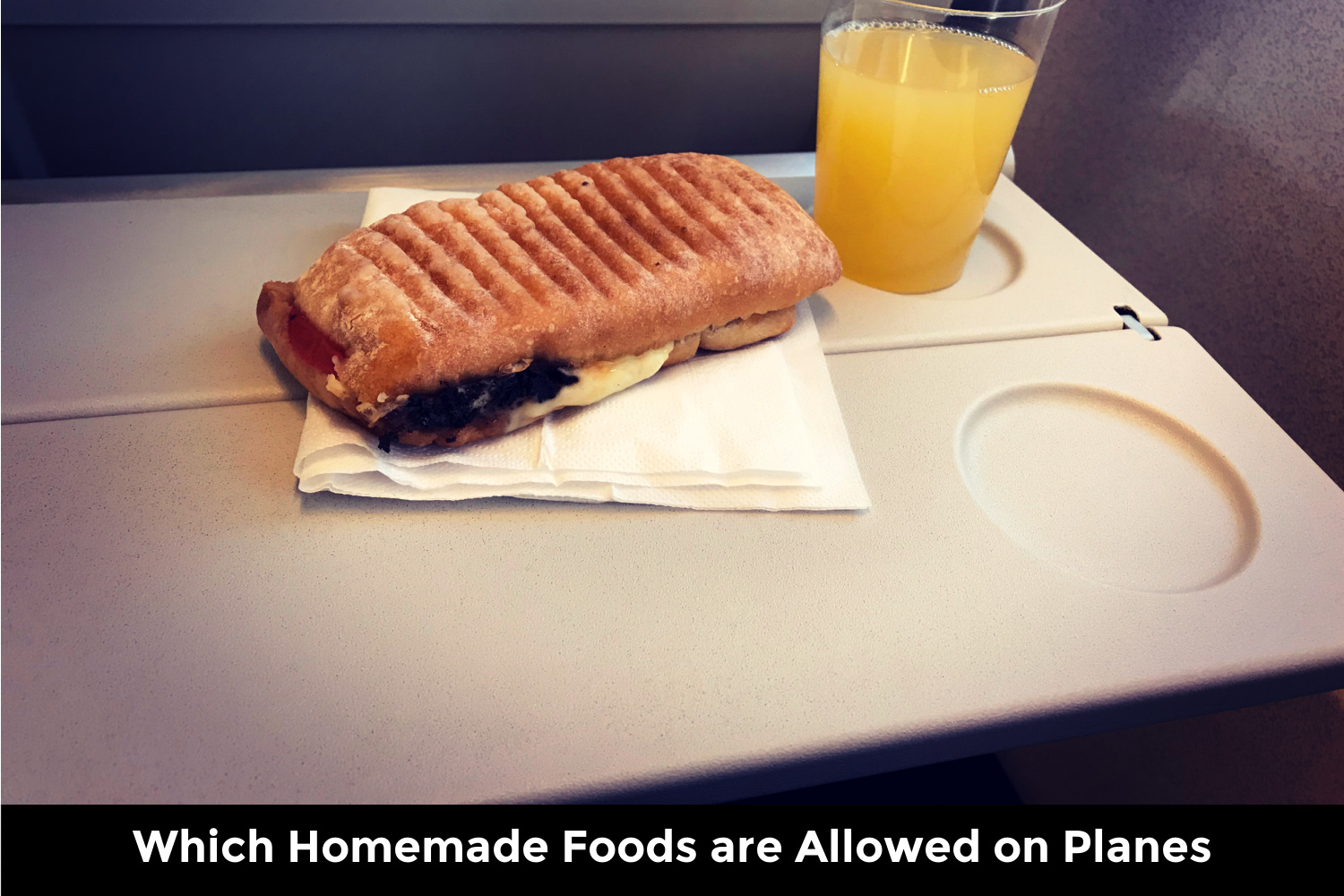
Which Homemade Foods are Allowed on Planes

All homemade foods that are in solid or powder form are allowed. Airport security can easily scan it with regular scanners, so it isn’t considered a security threat.

Here are some homemade foods that are allowed on planes without any restrictions:

  • Pizza
  • Sandwiches
  • Hamburgers
  • Tortillas and tacos
  • Salads without (or very little) sauce
  • Nuts
  • Dried fruit
  • Granola bars
  • Sweets
  • Chocolate
  • Cookies
  • Fruit (fresh, cut, or frozen)
  • Vegetables (fresh, cut, or frozen)
  • Beef jerky
  • Potato chips
  • Pasta without a lot of sauce
  • Risotto
  • Cooked vegetables

Which Homemade Foods are Restricted on Planes

All homemade foods in liquid form are limited to small quantities in hand luggage due to security risks. If it’s considered a liquid, then it will have to be stored in 3.4 oz (100 ml) containers or smaller and be packed in a 1-quart bag together with other liquids. If you can smear it, it’s considered a liquid.

Here are some examples of foods that are considered liquids:

  • Applesauce
  • Peanut butter
  • Jams
  • All other sauces
  • Butter
  • Smoothies
  • Smearable cheese
  • Nutella
  • Soup

Powdered foods and spices also have additional limitations. On flights in the US, powders above 350 g (12 oz) are allowed in hand luggage but must be individually screened. On international flights, powders over 350 g (12 oz) are usually banned from hand luggage.

Here are some foods that are considered powders:

  • Salt
  • Spices
  • Protein powder
  • Cocoa powder

Powders over 12 oz (350 g) and liquids over 3.4 oz (100 ml) are only allowed in checked baggage.

It’s also worth noting that on domestic flights in New Zealand and Australia, and on a few flights in the US and the UK, these restrictions don’t apply. That’s because some airports are fitted with new CT 3D scanners, which can safely scan liquids in large quantities in hand luggage as well as powders.

Fresh Fruit, Vegetables, Eggs, Meat, and Milk are Banned on International Flights

After passengers land on international flights, they have to go through Customs and Immigration. And they impose additional rules on products that may cause ecological problems within that specific country.

Fresh fruit, vegetables, eggs, meat, milk, mushrooms, and plants are usually banned from entering other countries. That’s because they can contain invasive pests and diseases.

So if you’re bringing any of these products, you’ll have to consume them during the flight (before landing). If you don’t do that, the border agents will ask you to dispose of them. You’re also required to declare them.

How to Pack Homemade Food for Air Travel

  • The best option for storing sandwiches, burgers, tortillas, and cooked foods, is to wrap them in aluminum foil and then put them inside a plastic bag. This will keep the food fresh and avoid making a mess. Aluminum won’t cause any disturbances with the airport scanners.
  • Salads, cut fruit, vegetables, pasta, risotto, and other messy foods are best stored in Tupperware containers. Another option is to put them in a disposable ice cream box, and then throw it in the trash bin when you’re finished.
  • Make good use of Ziploc bags. They’re great for storing messy and smelly foods.
  • You can bring forks and spoons through security, but not knives.
  • You’ll most likely be asked to remove your homemade food from your bag when going through security. You’ll have to place it in a separate screening bin. That’s because food is hard to scan with the airport scanners. So pack it somewhere easily accessible.
  • Your food counts towards the hand luggage size and weight allowance. So you should pack it inside your personal item or carry-on.
  • Pack small snacks in the pockets of your jacket and wear them while going through security if you’re low on space.

Summing Up – Traveling With Homemade Food

Although it isn’t really a rule, you should avoid bringing homemade food that contains a lot of garlic (or in general, has a strong aroma) on the flight. Other passengers might not like the smell and you might even be asked to stow it away by the flight attendants if the smell is too strong.

But other than that, you’re free to pack almost any homemade food. The only thing to watch out for is that it shouldn’t contain a large amount of liquids. A bit of sauce on pasta is usually fine.


Source link