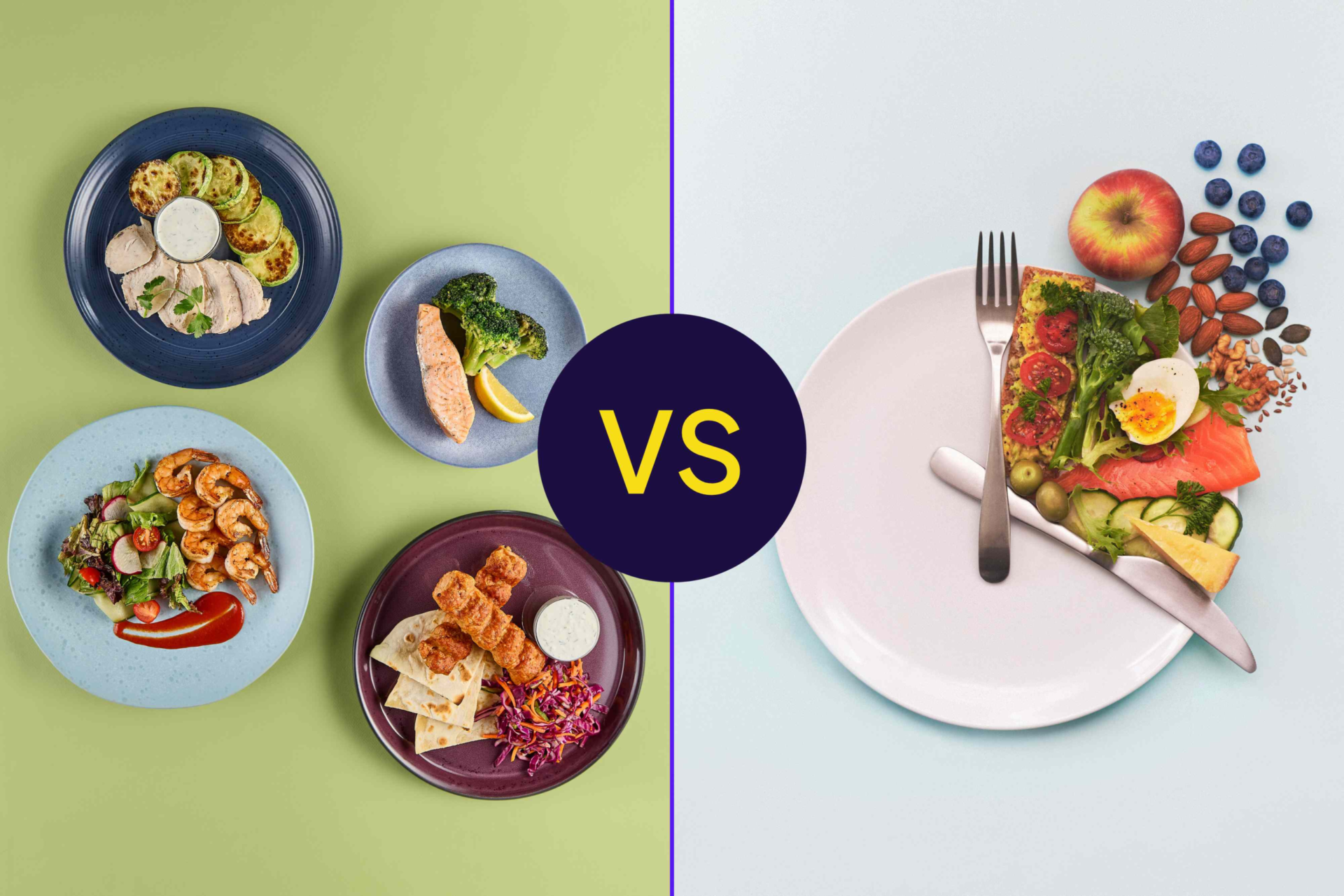
:max_bytes(150000):strip_icc():format(jpeg)/Health-Small-Meals-vs-Intermittent-Fasting-fc683480ffc146c1a844822501df7689.png "Comparison of small meals on one side and intermittent fasting with a single meal on the other marked with a VS in the center.")
Credit: Design by Health; Getty Images
- Neither intermittent fasting nor small, frequent meals directly boosts your metabolism.
- Intermittent fasting may help reduce calorie intake, while frequent meals may help you eat healthier while avoiding hunger.
- The best eating pattern for weight loss is the one that easily fits into your lifestyle and meets your nutritional needs.
Intermittent fasting and eating small, frequent meals are often promoted as ways to “boost” metabolism, or how many calories your body burns each day. In reality, your metabolism isn’t something you can significantly speed up with meal timing alone. However, both of these eating patterns could be helpful for weight loss.
Meal Timing and Metabolism
Metabolism refers to all the ways that your body converts food into energy to support breathing, thinking, and other essential bodily processes. As you age, your body uses fewer calories to complete these functions, and you may gain weight.
People may try to increase their metabolism or boost the number of calories their body burns by changing how they eat. Eating does increase caloric burn slightly through digestion, which is called the thermic effect of food.
Because of this, some people assume eating smaller meals frequently throughout the day promotes greater calorie burning. Others believe intermittent fasting—or limiting food intake to certain hours of the day—can do the same, since the thermic effect of food is stronger in the mornings and around noon.
However, there's no research to suggest that either intermittent fasting or small, frequent meals can boost metabolism or encourage your body to burn more calories in the long run.
Instead, your metabolism is primarily influenced by:
- Genetics
- Body size and body composition
- Physical activity
- Age and sex
- Diet quality
- Insulin resistance
Though it doesn't seem to have a lasting impact on metabolism, meal timing may still impact your appetite, food choice, mood, weight, and other factors.
How Does Intermittent Fasting Support Your Health?
Though it likely doesn't increase the amount of calories your body burns, intermittent fasting can still be good for your health overall.
Research suggests that fasting is a good way to lose weight and fat mass. It may also help support blood sugar control, reduce inflammation, and lower cholesterol levels, though more research is needed.
Experts believe intermittent fasting works because it aligns with natural body clock rhythms, and because people who fast usually end up consuming fewer calories. In fact, intermittent fasting's benefits are often similar to those seen with traditional lower-calorie diets.
Intermittent fasting may even have a leg up over standard calorie counting. Many people find it less restrictive, as it focuses more on when you eat rather than what you eat.
How to do it: You're following an intermittent fasting diet if you limit your food intake to a certain time of day. However, there are lots of ways to do it. The popular 16:8 approach involves eating normally within an eight-hour window and fasting for 16 hours. Another common strategy is alternate day fasting, where people don't eat for one full day, then eat normally the next day.
Risks: Intermittent fasting isn't right for everyone—the diet may cause excessive hunger, headache, low energy, and other side effects.
Do Small, Frequent Meals Offer Any Health Benefits?
Though it can't boost metabolism, eating more often can still offer some benefits, depending on your needs.
According to a 2023 study of over 500 participants, eating more small meals was associated with lower weight. The study also concluded that limiting the frequency of large meals was a more productive weight loss strategy than time-restricted eating (like intermittent fasting).
This could be because eating smaller portions more frequently keeps hunger at bay, which may prevent overeating at mealtimes. Diet patterns with smaller, more frequent meals have also been shown to be beneficial for athletes.
However, the research on the benefits of small meals or snacks as a weight loss strategy is mixed. Other research found no clear link between meal frequency and body mass index (BMI) and blood sugar markers. That study also found connections between weight loss and lower (not higher) meal frequency.
How to do it: To follow this eating plan, people snack or eat small meals every few hours, usually around 6–10 times per day with no time restrictions. These meals are under 500 calories, and may be a helpful weight loss strategy for people who find themselves getting very hungry between meals.
Risks: This diet can backfire if it turns into constant, unstructured snacking, which could end up raising your overall caloric intake. If you're eating small, frequent meals throughout the day, make sure they're nutritious.
Choosing the Better Diet Plan for Weight Loss
There's solid research suggesting that intermittent fasting and standard lower-calorie diets lead to comparable weight loss results. The research on small, frequent meals for weight loss is more inconclusive.
However, as long as you're eating nutritious foods and balancing the number of calories you consume, both intermittent fasting and frequent meals will likely help support weight management. The best one for you may depend on your circumstances:
- Intermittent fasting may work best if you find traditional calorie counting to be restrictive or complicated.
- Frequent meals may be a better fit for those who feel overly hungry between meals or tend to overeat later in the day.
Regardless of which one you choose, the following tips can set you up for success:
- Plan ahead: Prepping meals and snacks can help you avoid making less-healthy food choices based on cravings.
- Prioritize nutrient-dense food: Include protein, fiber, plant foods, and healthy fats in all meals.
- Pay attention to hunger and energy: Your ideal eating pattern for weight loss should feel sustainable, not restrictive. If you feel overly hungry or have low energy, try something else.