Medically reviewed by William Truswell, MD
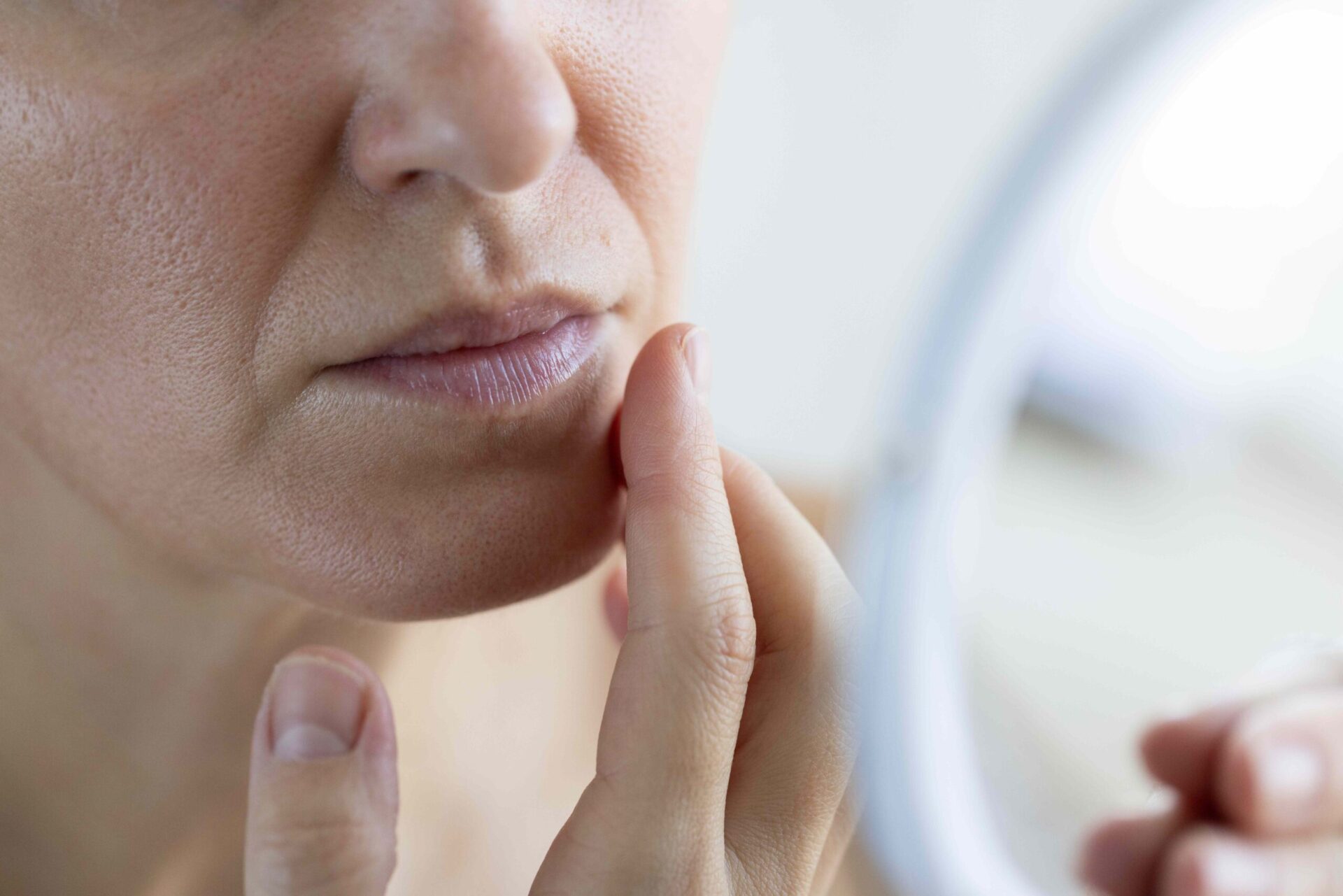
:max_bytes(150000):strip_icc():format(jpeg)/Health-GettyImages-2189371158-96ab736bb7174981add6662d8cae0023.jpg "A person examining their facial skin in a mirror focusing on the chin area")
Credit: Vitalina Nakonechna / Getty Images
- Low vitamin B12 makes it hard for your body to renew cells in your mouth, leading to inflammation.
- If you have low levels of vitamin B12, you may notice a sore mouth or a red, smooth tongue without much texture.
- Chronic mouth sores are an additional sign of a potential B12 deficiency.
Vitamin B12 (cobalamin) helps your body build and renew healthy cells and tissue. Since the cells in your mouth grow and replace themselves faster than most other parts of your body, it is often the first place you see signs of vitamin B12 deficiency.
1. Mouth Inflammation
The cells in your body need B12 to copy their DNA correctly. Your mouth is one of the most demanding areas to keep up with because it constantly sheds old cells and replaces them with new ones. When B12 levels drop, your body can't produce the DNA it needs to replace those cells, and the tissue starts to thin and weaken.
As the tissue breaks down, your mouth loses its protective barrier against germs, acidic foods, and irritation. This breakdown can cause stomatitis, which is inflammation of the mouth. The inflammation will show as irritation, redness, and swelling. It can affect your cheeks, gums, tongue, lips, and the roof of your mouth.
2. Burning Sensation on Your Tongue or in Your Mouth
B12 helps maintain the surface of your tongue and the protective coating around the nerves in your mouth. When this coating wears thin, the nerves misfire and send discomfort signals even when there's no irritant.
These misfires cause glossodynia, a burning or stinging sensation on your tongue or in your mouth. You may also notice discomfort when you eat or swallow.
Glossodynia is one of the most common symptoms of low vitamin B12 and typically occurs before you notice any redness or swelling in the mouth.
3. A Red, Swollen, and Bald Tongue
In addition to the protective coating, your tongue also has papillae, the tiny bumps that give it texture. When you don’t have enough B12, the protective coating thins, and you can’t regrow the papillae fast enough to replace the old ones.
This causes glossitis, which is inflammation of the tongue. You may notice that your tongue is:
- Red, purple, or beefy (like raw meat)
- Sore or tender (especially after eating spicy foods)
- Swollen
If the papillae continue to shrink and eventually disappear, you may notice that your tongue loses its texture, leaving it thinner and bald with a smooth, shiny surface. This is also known as atrophic glossitis.
4. Red Patches in Your Mouth or on Your Tongue
You may have bright red patches on the:
- Roof of your mouth
- Inside of your cheeks
- Bottom of your tongue
These patches might look like bands, lines, or uneven shapes. They are sometimes smoother or shinier than the surrounding tissue.
5. Mouth Ulcers
Recurrent aphthous stomatitis is the clinical term for painful mouth ulcers that keep coming back. These are usually small, shallow, painful sores with a white or yellow center and a bright red ring around them. You might notice them on the inside of your cheeks or lips or on your tongue.
There are many reasons you might get one or two sores in your mouth. But if you have them often and they stick around for a long time, a B12 deficiency may be the underlying issue.
6. Altered Taste
A B12 deficiency might affect your taste buds—especially the large ones at the back of your tongue—and the nerves that carry taste signals to your brain.
This can cause dysgeusia, which is a persistent, distorted flavor that some people describe as metallic, bitter, foul, or salty. Taste bud changes can also cause hypogeusia, making your food taste bland, dull, or flat.
If you do experience a loss of taste, it would typically happen shortly after you feel the burning sensation in your mouth. In addition to taste changes, you may also notice deep cracks (fissuring) on your tongue surface.
7. Cracking or Dry Lips
A vitamin B12 deficiency may cause inflamed, sore lips that look red, dry, or cracked, which is medically known as chelitis . You might notice this all over your lips or just in the corners. Angular cheilitis is the term for it when it’s in the corners, and it usually occurs on both sides.
8. Dry Mouth
If a vitamin B12 deficiency affects your nerves or saliva glands, you may experience dry mouth, or xerostomia. This can make your mouth feel dry, sticky, or uncomfortable, which can make it harder to speak or swallow.
9. A Tingling Tongue or Itchy Mouth
Similar to what happens with the burning sensation, your nerve insulation starts to wear down, causing the nerves to misfire or become more sensitive. This disruption can cause a numb or tingling sensation in the tongue known as lingual paresthesia. It might feel prickly, like pins and needles, or like your tongue is asleep.
While it’s less common, some people also notice an itchy tongue or mouth.
What To Do If You Notice These Symptoms
If you notice these symptoms, especially multiple symptoms that keep returning, contact your healthcare provider. They may order the following blood tests:
- B12 and folate (B9) levels: Measures the amount of each specific B vitamin in your blood
- Hemoglobin and hematocrit: Measures how well your blood carries oxygen; low levels may indicate B12-related anemia
- Mean corpuscular volume (MCV): Measures red blood cell (RBC) size; larger-than-normal red blood cells can signal a deficiency.
- Methylmalonic acid (MMA) and homocysteine: More sensitive markers that can catch deficiency even when standard B12 levels look normal
A normal B12 level alone does not always rule out deficiency, so your provider will consider not only your lab results but also your symptoms and medications before making a diagnosis.
Treatment depends on the underlying cause. If diet is the issue, your provider may recommend B12-rich foods or an oral supplement. But most B12 deficiency stems from absorption problems rather than diet. If that is the case, your provider may adjust your medications, prescribe high-dose oral B12, or recommend injections.