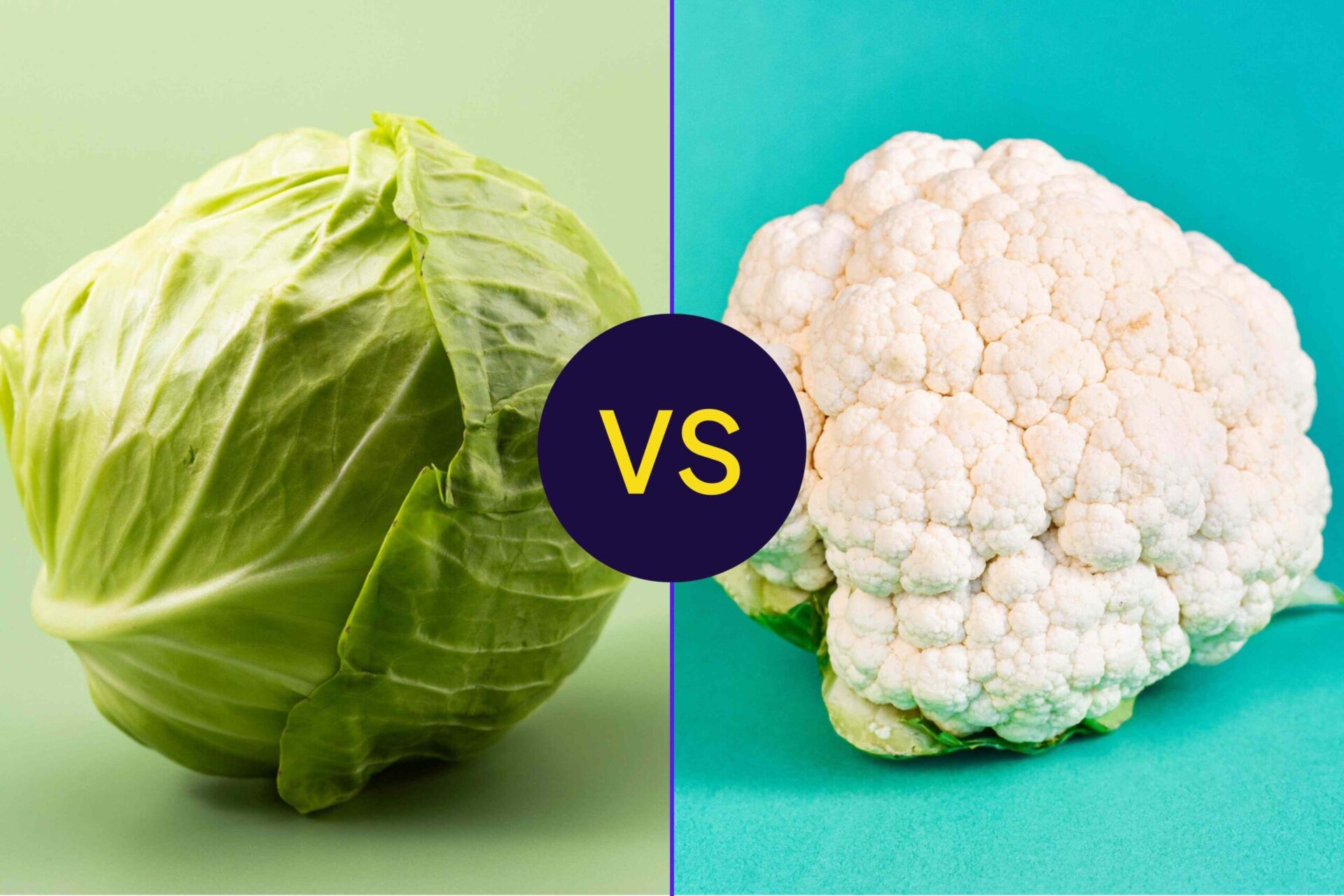
:max_bytes(150000):strip_icc():format(jpeg)/cabbagevscauliflower-8a73d5085d574d3caa9bea3ecf10ce75.jpg "Cabbage and cauliflower side by side with a VS graphic in between")
Credit: Health / Getty Images
- Cabbage and cauliflower both support heart health with fiber, antioxidants, and plant compounds.
- Cabbage may have a slight edge for digestion, especially when fermented.
- Eating both regularly offers the most benefit.
Cabbage and cauliflower are cruciferous vegetables that are low in calories and rich in fiber and antioxidants. Adding them to a balanced diet may help support heart health and digestion.
Both Support Heart Health
Both cabbage and cauliflower support heart health because they contain fiber, antioxidants, and anti-inflammatory plant compounds.
They contain viscous fiber, a type of soluble fiber that forms a gel in the gut. This gel can bind to cholesterol, reducing how much the body absorbs, which may help lower LDL (“bad”) cholesterol.
While all vegetables are beneficial for heart health, some evidence suggests cruciferous vegetables like cabbage and cauliflower may have a slight advantage. This may be due to sulfur-containing compounds that help support healthy blood pressure and reduce inflammation.
Cabbage May Be Slightly Better for Digestion
Fiber-rich vegetables like cabbage and cauliflower can support regular bowel movements and gut health. Fiber helps add bulk to stool, keeps food moving through the digestive tract, and supports a healthy gut microbiome.
Cabbage may have a slight advantage because it is often eaten fermented as sauerkraut or kimchi. These foods can provide beneficial bacteria that support the gut microbiome.
Cruciferous vegetables also contain plant compounds, including glucosinolates, flavonoids, and polyphenols, that may help keep the gut lining strong and reduce inflammation in the digestive tract.
Some people may also find cooked cabbage easier to tolerate than cauliflower, which can cause gas or bloating in some people due to its fermentable carbohydrates.
Other Benefits of Cabbage and Cauliflower
In addition to supporting digestion and heart health, cabbage and cauliflower may help:
- Support immune health: Both provide vitamin C, which helps protect cells and supports immune function.
- Promote fullness: Cabbage and cauliflower are low-calorie, high-volume foods, which can help meals feel more satisfying and support weight management.
- Support bone health: Both provide vitamin K, a nutrient that plays a role in maintaining bone strength.
- May help protect against certain cancers: Cruciferous vegetables contain sulfur compounds that are being studied for their role in cancer prevention. However, more research is needed.
Nutrient Comparison
Cabbage and cauliflower have similar nutrient profiles. Both contain fiber and are rich in vitamins C and K, as well as folate. Cauliflower is slightly higher in vitamin C and folate, while cabbage is higher in vitamin K.
Here are the nutrition differences between one cup of raw shredded cabbage and one cup of raw chopped cauliflower.
| | Cabbage | Cauliflower |
| Calories | 22 | 26.8 |
| Protein | 1.1 grams (g) | 2 g |
| Fiber | 2.2 g | 2.1 g |
| Vitamin C | 32.6 milligrams (mg) (36% DV) | 51.6 mg (57% DV) |
| Vitamin K | 67.6 micrograms (mcg) (56% DV) | 16.6 mcg (13% DV) |
| Folate | 38.3 mcg (9.5% DV) | 61 mcg (15% DV) |
The Verdict? Include Them Both
There is no clear winner between cabbage and cauliflower. Both are nutritious additions to a heart-healthy diet and contain fiber, which supports digestive health.
The best choice is to include both regularly as part of a balanced eating pattern.
Easy Ways To Eat More of Both
Try these simple ideas to add more cabbage and cauliflower to your meals:
- Roast cauliflower with olive oil and seasonings
- Add shredded cabbage to tacos, salads, or grain bowls
- Use cauliflower rice in stir-fries or casseroles
- Add cabbage to soups and stir-fries
- Try kimchi or sauerkraut as a topping or side dish
- Blend cauliflower into soups for extra creaminess