Fact checked by Nick Blackmer
:max_bytes(150000):strip_icc():format(jpeg)/Health-Chia-Pudding-VS-Overnight-Oats-template-1-11d321b1ab22458bb58e82803c443ceb.jpg "Chia pudding and overnight oats")
Credit: Design by Health; Getty Images
- Both chia seed pudding and overnight oats are quick, nutritious breakfast options.
- Chia seed pudding typically has more fiber per serving, while protein content is comparable between the two.
- What you mix in, however, can change the nutritional profile of the meals.
Both chia seed pudding and overnight oats are easy, nutritious breakfast options that you can prepare the night before. When determining which is healthier, consider that chia seed pudding offers more fiber and slightly more protein than overnight oats.
How Chia Seed Pudding Wins
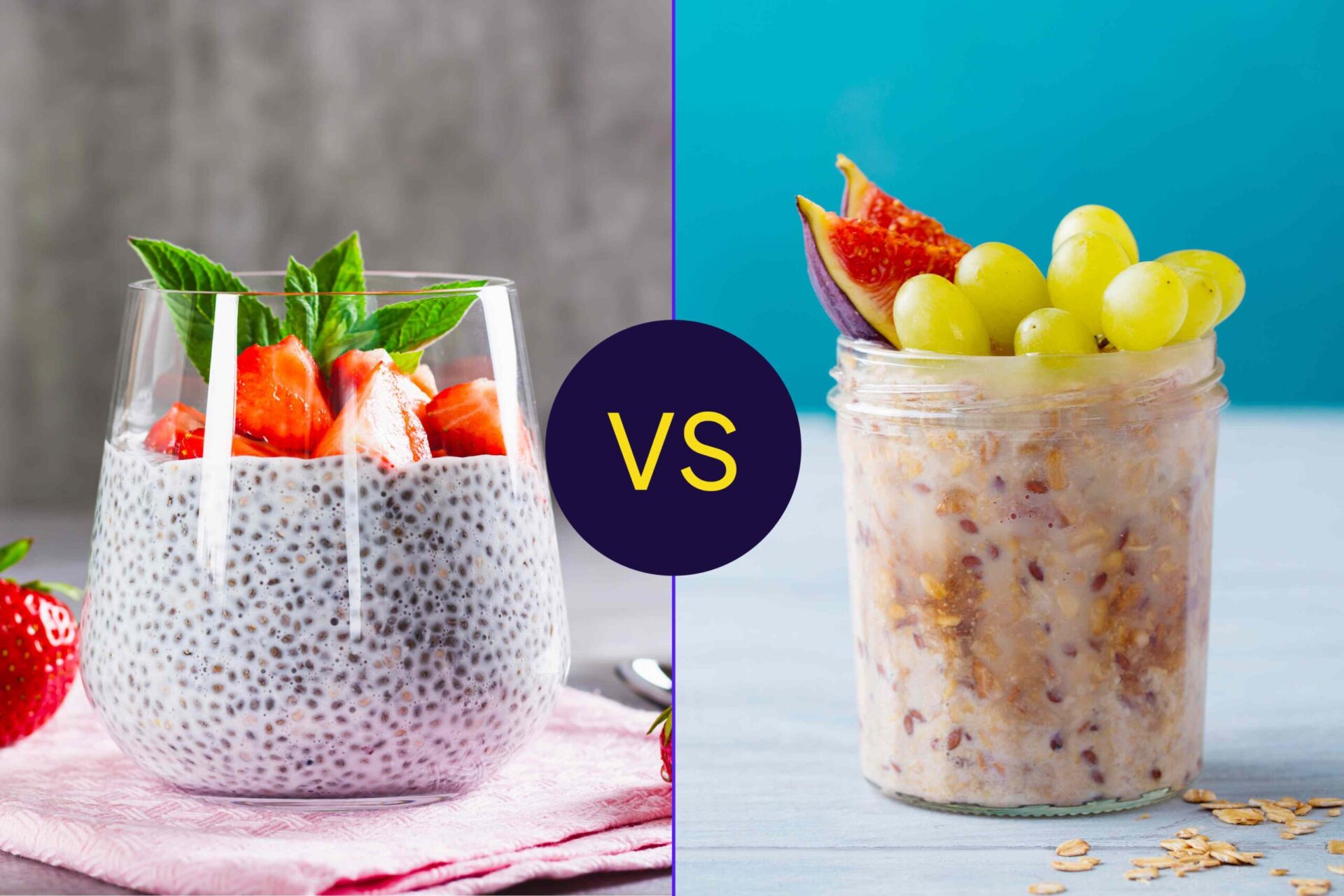
Chia pudding is a simple dish, typically consisting of a quarter cup of chia seeds and one cup of water or milk.
When it comes to fiber, these tiny seeds pack a solid dose. “Chia pudding typically provides more fiber per serving than overnight oats because chia seeds are extremely fiber-dense,” said Erin Palinski-Wade, RD, CDCES, a New Jersey-based dietitian and author of “2 Day Diabetes Diet.”
To be specific, a quarter cup of chia seeds contains 14 grams—the recommended amount for every 1,000 calories consumed. That’s significantly more than the 2-3 grams found in the same amount of rolled oats.
Chia seeds are also a good source of protein. A quarter cup provides 5-6 grams and contains all nine essential amino acids, according to Lauren Twigge, MCN, RDN, LD, a registered dietitian in Dallas. You can boost the protein content even further by swapping water for soy or dairy milk, both of which contain about 8 grams.
Why Overnight Oats Are Also a Good Choice
Overnight oats are also low-effort to prepare. The basic recipe usually includes half or a third of a cup of rolled oats and half a cup of liquid, such as water or milk.
Although a quarter cup of rolled oats contains about 5 grams of protein—similar to the same amount of chia seeds—overnight oats can end up being a richer protein source if you add milk, yogurt, and chia seeds, Meyer noted.
As for fiber, chia pudding may take the lead in total content—but rolled oats are still a strong contender.
According to Twigge, oats contain a specific type of fiber called beta-glucan, which is linked with health benefits like lowering cholesterol and reducing heart disease risk.
Oats also contain more soluble fiber than chia seeds—about 40%, compared to 7-15% in chia seeds. Experts generally recommend that your total daily fiber intake include about 5-10 grams of soluble fiber.
“In addition to supporting bowel regulation, soluble fiber may also reduce LDL ‘bad’ cholesterol and improve blood glucose levels,” Meyer said.
Added Ingredients Matter
Both overnight oats and chia pudding are easy, nutritious options that make for a healthy start to the day. As breakfasts that pack both fiber and protein, they can help you feel full for longer.
That said, the nutritional profile of each meal can majorly shift based on what you mix in.
You can increase the protein content by using milk instead of water—Meyer recommends ultra-filtered milk for an extra boost—and by adding ingredients like Greek yogurt or cottage cheese. To up the fiber, Palinski-Wade suggests tossing in add-ons such as:
- Hemp seeds
- Almonds
- Walnuts
- Pistachios
- Pumpkin seeds
- Fresh fruit
“Chia pudding and overnight oats offer endless flavor combos,” Meyer noted.
For the ultimate fiber and protein-packed breakfast, consider combining the best of both: Add a serving of chia seeds to your overnight oats recipe. That way, Twigge said, you get the softer texture of oats, the beta-glucan fiber they provide, and the nutritional benefits of chia seeds.