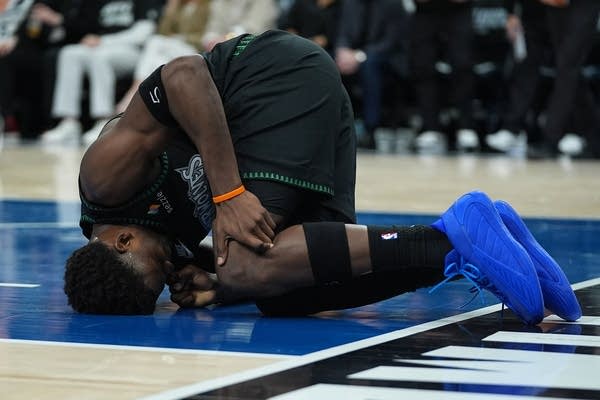
Edwards likely to miss weeks for knee injury


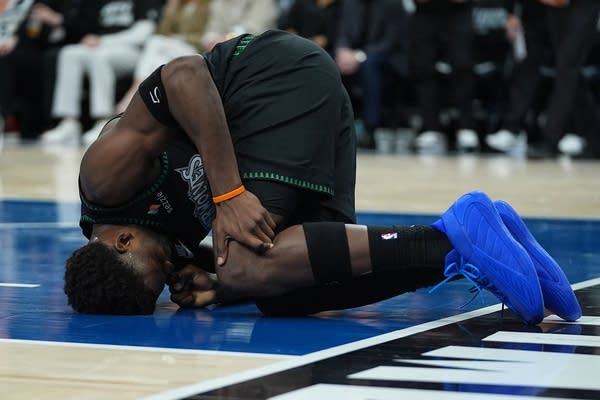
A basketball player curls up on the court floor while clutching his knee.

The left knee of Minnesota Timberwolves guard Anthony Edwards remained structurally intact when he was injured during Game 4 of his team's Western Conference first-round playoff series, but he is likely to miss multiple weeks, a person with knowledge of the situation said Sunday.

Edwards has a bone bruise and also hyperextended the knee, said the person, who spoke to The Associated Press on condition of anonymity because the team had not announced details or a return-to-play timeline.

ESPN and The Athletic first reported the diagnosis on Edwards.

Edwards was hurt in the first half of Minnesota's 112-96 win over the Denver Nuggets on Saturday night, a victory that gave the Timberwolves a 3-1 lead in that series. But the Wolves also lost fellow starting guard Donte DiVincenzo in that game with a torn Achilles tendon, meaning his season is over and his 2026-27 season is likely in great jeopardy as well.

Game 5 of the series is Monday night in Denver.

DiVincenzo was having surgery to repair the Achilles on Sunday in New York, the Timberwolves announced. That timeframe — surgery one day after the injury — follows what Boston’s Jayson Tatum did after he suffered the same injury in last season’s playoffs. Tatum started rehab quickly and missed about 10 months, returning for the final stretch of this season. If DiVincenzo follows the same timeline, he could be back before the end of next season.

Edwards is one of the NBA's most dynamic players, someone who — if he had met the league's eligibility criteria by playing in a few more games — would have been a lock to make the All-NBA team for a third consecutive season.

He averaged 28.8 points in the regular season, third best in the NBA behind Luka Doncic of the Los Angeles Lakers and reigning MVP Shai Gilgeous-Alexander of the Oklahoma City Thunder. Edwards also averaged five rebounds and 3.7 assists per game.

Edwards was fourth in scoring for the U.S. Olympic team that won a gold medal at the Paris Games in 2024. He missed 21 games this season, by far the most of his career.

This injury happened with him on the defensive end, while he was contesting a layup attempt by Denver's Cam Johnson. Edwards leaped in an effort to block the shot, and when he landed his left leg appeared to be at an unusual angle. His knee buckled, and when he hobbled off the floor he seemed unable to put much if any weight on that leg.

Timberwolves forward Julius Randle said he didn't see DiVincenzo before leaving the arena, and he had a quiet exchange with Edwards when he saw him in the locker room.

“I just dapped him up,” Randle said. “There's not much to say in those moments. … Somebody who's going through those situations is processing a lot.”



Source link

Leave a Reply

Subscribe to Our Newsletter

Get our latest articles delivered straight to your inbox. No spam, we promise.

Recent Reviews


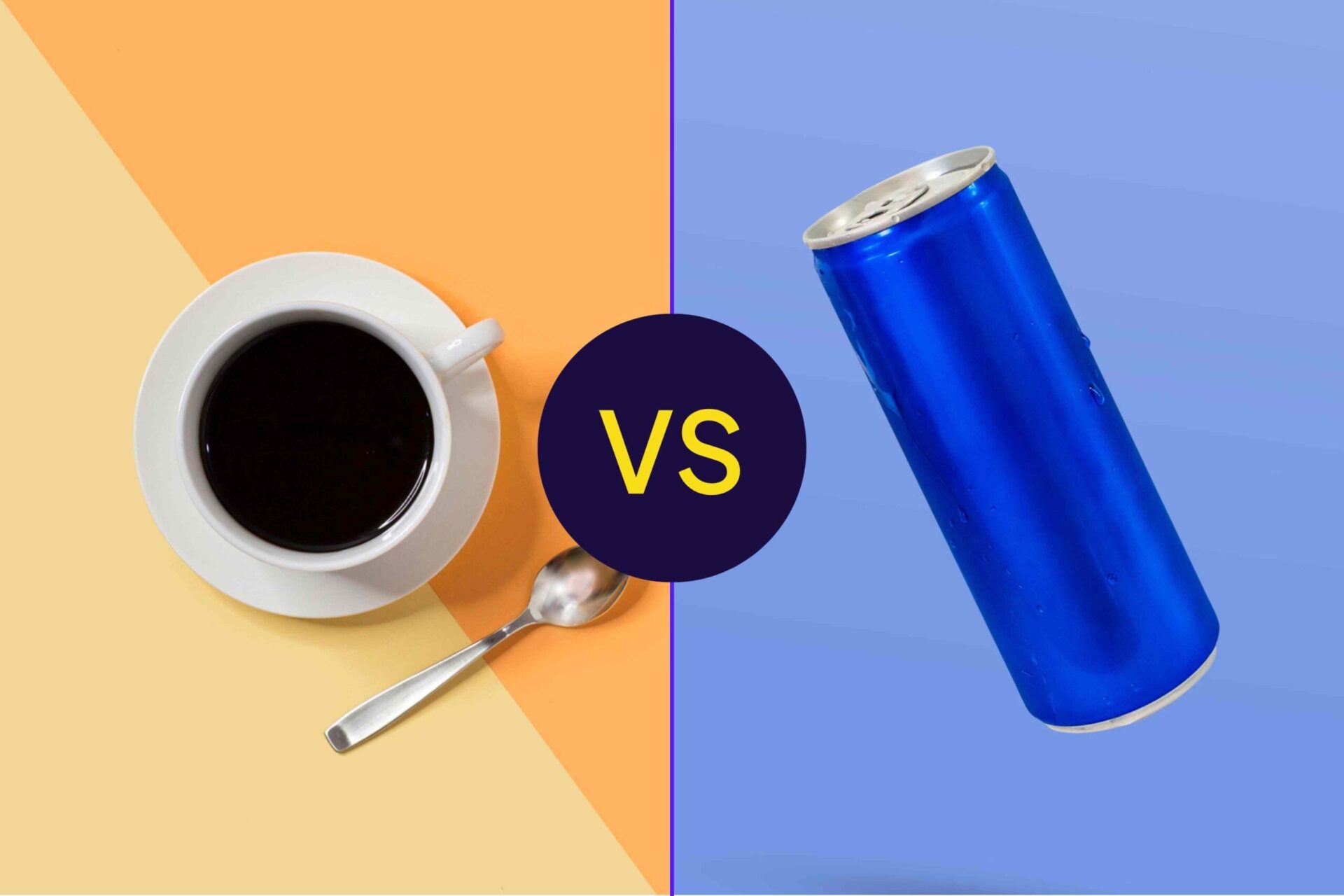
Coffee and energy drinks are popular sources of caffeine, but may have different health effects.Credit: Health / Getty Images
Coffee and energy drinks are popular sources of caffeine, but may have different health effects.
Credit: Health / Getty Images
  • Both coffee and energy drinks can vary in caffeine content.
  • Moderate caffeine consumption is recommended for reducing the risk to your heart.
  • Energy drinks have been shown to cause heart problems, but more research is needed.

Coffee and energy drinks are popular options for a quick energy boost. Both caffeinated beverages can support physical endurance, alertness, and reaction time. However, they can also increase heart rate, reduce steadiness, and increase your added sugar intake.

Which One Will Give You More Energy?

Coffee and energy drinks can both range in caffeine content, which can affect their impact on energy levels. Coffee drinks vary in caffeine based on the brew method and bean type, but on average, a cup (8 ounces) of coffee contains about 113-247 milligrams of caffeine.

Standard 16-ounce energy drinks can contain anywhere from 70 to 240 milligrams of caffeine. Concentrated 2-2.5 ounce energy shots pack about 113-200 milligrams of caffeine in a much smaller volume.

It's important to be aware of how much caffeine you’re consuming and check nutrition labels. However, energy drink manufacturers aren’t required to disclose the caffeine content.

Which Has a Greater Impact on Heart Health?

Research shows consuming high levels of caffeine can raise your blood pressure and heart rate, as well as affect your heart’s rhythm. This risk is especially high for children since their cardiovascular and nervous systems aren’t fully developed.

Coffee's effect on heart health is more widely researched than that of energy drinks. Evidence suggests that moderate coffee drinking can support heart health, while heavy consumption increases heart disease risk. How you prepare your coffee also affects the way it impacts your heart. Boiled coffee, like the kind you can make with a French press, can increase your cholesterol levels. High amounts of caffeine can also have negative effects on the heart, so many people with existing heart conditions choose decaf coffee out of caution.

Some case studies show that energy drink consumption can harm heart health, even in young people, but more research is needed to understand the mechanisms behind this. Some of the more severe cases include sudden death from drinking an energy drink.

What Other Ingredients, Besides Caffeine, Can Affect My Health? 

Coffee and energy drinks aren’t just pure caffeine. It’s important to consider their other ingredients when thinking about how they can impact your health. Early research suggests some of the cardiovascular effects of coffee and energy drinks may be more related to other ingredients than caffeine.

For example, energy drinks can contain a range of other ingredients, such as guarana (which contains additional caffeine), sugar, B vitamins, and other energy-boosting compounds. Both coffee drinks and energy drinks can contain high amounts of added sugar. Energy drinks can also interact with alcohol and prescription or illicit drugs, causing negative health effects.

Risks of Having Too Much Caffeine

Whether you choose coffee, an energy drink, or another caffeinated drink for your energy boost, it’s important to watch how much caffeine you’re consuming per day. Adults without underlying health conditions should limit their total caffeine intake per day to 400 milligrams. People who are pregnant or breastfeeding should stick to half of that limit, or about 200 milligrams. You can always check with your healthcare provider about your individual health status and their recommendations for your caffeine levels.

If you consume too much caffeine, you may notice:

  • A faster heart rate or a racing heart
  • High blood pressure
  • Trouble sleeping
  • Anxiety or jitters
  • Nausea or an upset stomach
  • Headache

If you’re choosing an energy drink, research suggests having only one drink at a time, with a max of two per day, for safer outcomes.


Source link