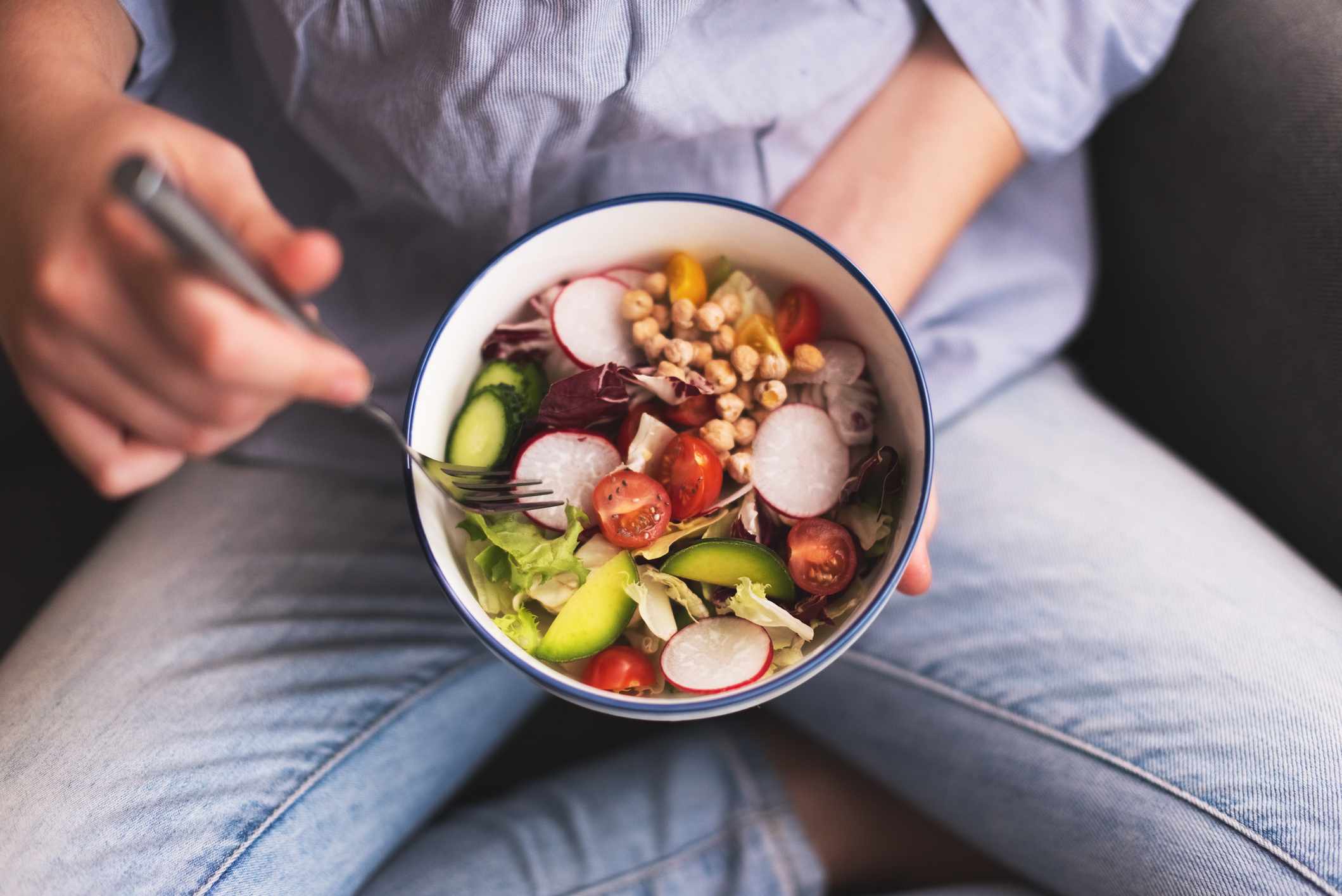
:max_bytes(150000):strip_icc():format(jpeg)/Health-GettyImages-WhenFiberForWeightLoss-a54780ef88c645bba55f1e6596b2a627.jpg "A high-fiber meal in a bowl with spinach, arugula, avocado, seeds and sprouts.")
- Fiber helps with weight loss by slowing digestion and increasing feelings of fullness.
- Total daily fiber intake matters more than timing, so it’s best to spread fiber-rich foods across meals and snacks.
- Gradually increasing fiber and including foods like lentils, oats, berries, and seeds can support appetite control and weight management.
Fiber is essential when trying to lose weight because it helps you stay full and may help you eat fewer calories. Here’s what to know about the best time of day to eat fiber for weight-loss support, plus some of the best high-fiber foods to include in your routine.
How Fiber Helps You Lose Weight
Fiber is a type of complex carbohydrate that the body can’t break down or absorb. Fiber plays important roles in health, including promoting the growth of beneficial bacteria in the digestive tract, keeping bowel movements regular and comfortable, and protecting against common diseases, such as colon cancer.
Fiber also helps you maintain a healthy body weight and can make weight loss easier.
Fiber supports weight loss because it slows digestion and stimulates the release of satiety hormones, including glucagon-like peptide-1 (GLP-1) and peptide YY (PYY), which makes it easier for you to control your calorie intake.
Studies show that those who consume more fiber tend to weigh less than those who consume less. A 2019 study that included 345 people found that fiber intake was the most influential predictor of weight loss, independent of calorie and macronutrient intake.
This suggests that increasing your intake of fiber-rich foods can be an effective way to promote weight loss.
Is There a “Best Time” to Eat Fiber for Weight Loss?
When it comes to body weight, overall dietary intake matters more than specific timing.
Research consistently shows that people who follow high-fiber diets are more likely to have healthier body weights than people who consume low-fiber diets.
To reap the most benefits, it’s recommended to evenly distribute fiber-rich foods throughout your day by adding them to every meal and snack. Spreading fiber out rather than cramming it into one meal can improve overall satiety and help you eat fewer calories throughout the day.
How To Increase Your Fiber Intake for Weight Loss
All adults should aim for a daily fiber intake of at least 28 grams.
If your current diet is low in fiber, it’s important that you add in fiber-rich foods slowly in small amounts. Rapidly increasing your fiber intake or eating large portions of high-fiber foods can cause uncomfortable digestive side effects such as diarrhea and bloating.
When increasing your fiber intake, it’s best to include at least one source of fiber with every meal and snack. Spreading fiber intake throughout the day can help stabilize appetite and blood sugar levels, making it easier to feel satisfied and stay in control of your calorie intake.
This can look like adding chia seeds and berries to yogurt at breakfast, enjoying lentil soup for lunch, and including a serving of roasted vegetables at dinner.
The Most Effective High-Fiber Foods for Weight Loss
While total fiber intake is most important for reaching and maintaining a healthy body weight, some high-fiber foods may be especially effective for supporting weight loss.
1. Lentils
- Fiber content: 15.6 grams per cooked cup, 55.7% of the DV
Lentils are rich in fiber and high in protein, both of which support weight loss by slowing digestion and promoting the release of satiety hormones. One cup provides about 17.9 grams of protein, making them one of the best plant-based protein sources you can include in your diet.
2. Flaxseeds
- Fiber content: 7.64 grams per ounce, 27.2% of the DV
Studies show that adding flaxseeds to your diet may be an effective way to lose weight. Flaxseeds may help reduce hunger and appetite, making it easier for you to stay on track with your weight-loss plan and reach your body composition goals.
3. Avocados
- Fiber content: 13.5 grams per 201-gram avocado, 48% of the DV
Avocados are high in calories, but they’re often included in weight loss-friendly diets because they're an especially filling option. Avocados have been shown to curb hunger and increase meal satisfaction up to 6 hours after eating, thanks to their high fiber content.
4. Raspberries
- Fiber content: 8 grams per cup, 28.5% of the DV
Raspberries are very low in calories, providing just 64 calories per cup. Their low-calorie content, combined with an impressive amount of fiber, makes them an excellent choice for those trying to lose weight. Increasing your intake of produce, like fresh or frozen berries, may help support fat loss and promote a healthier body weight.
5. Steel Cut Oats
- Fiber content: 4 grams per cup or 14.2% of the DV
Regularly eating oats is associated with weight loss and may improve overall health by reducing cholesterol, blood sugar, and blood pressure levels. Steel-cut oats are higher in fiber and protein than rolled oats and instant oats, making them a better choice for weight loss.