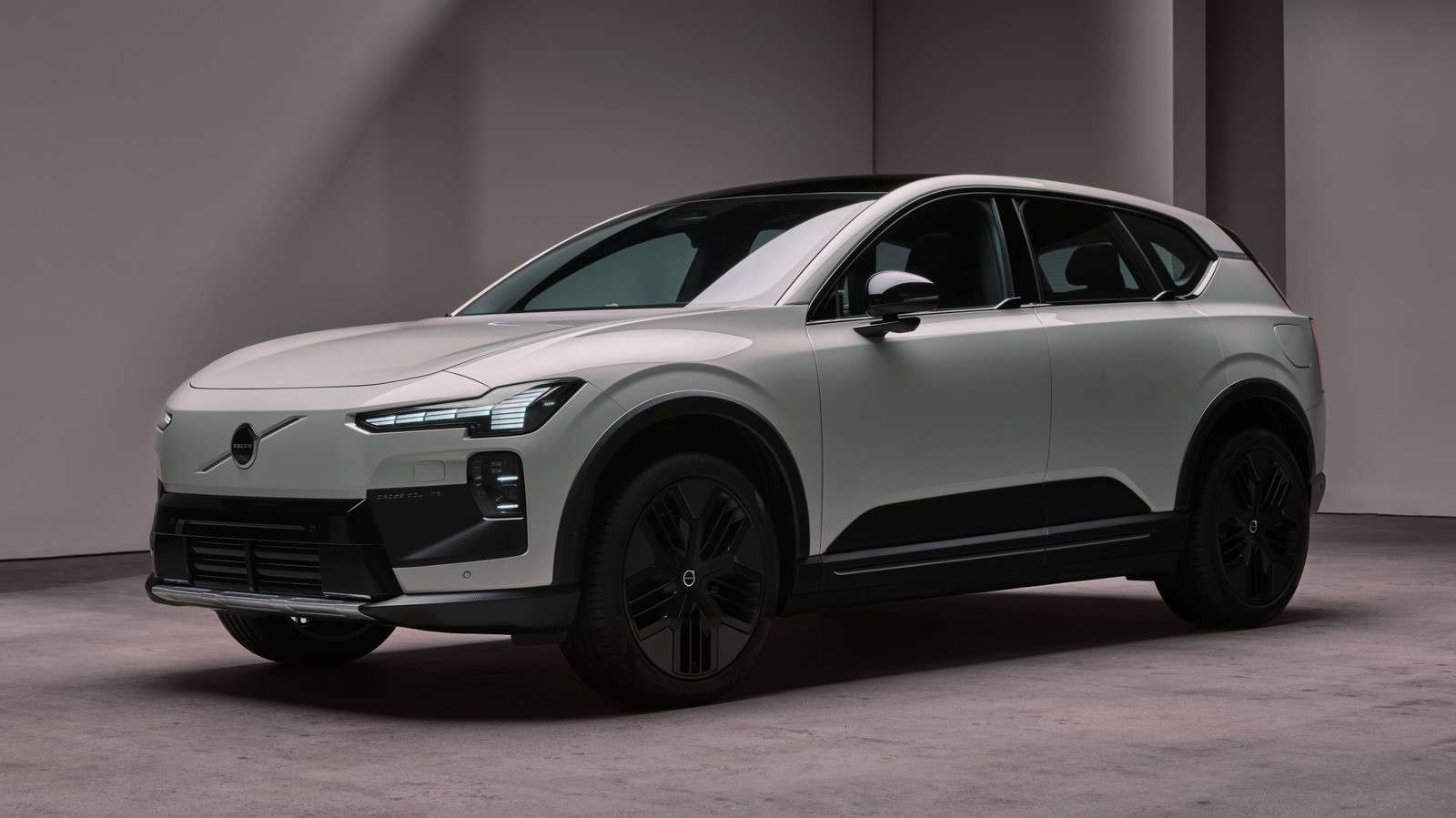
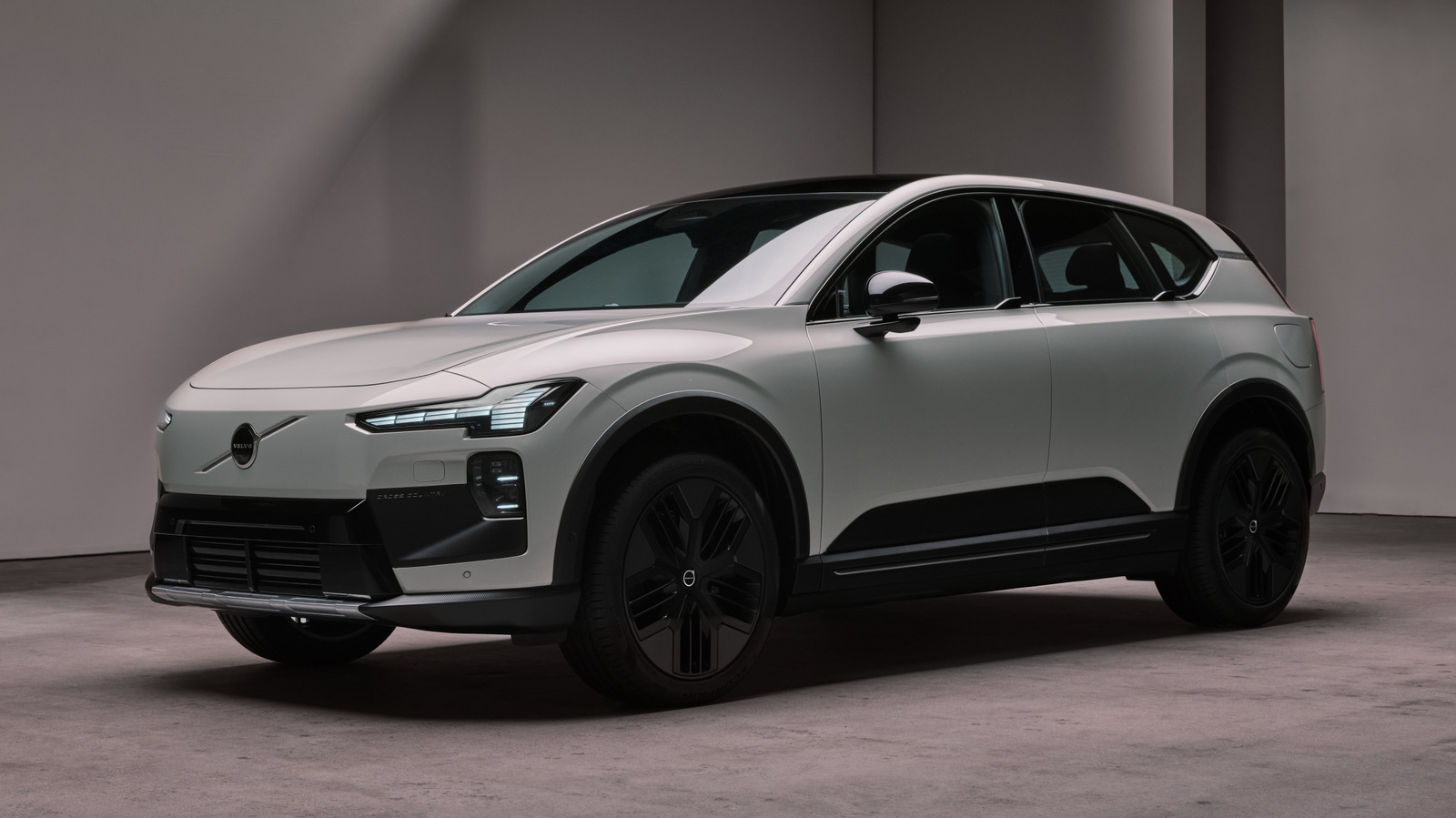
Volvo Reveals $58,400 Starting Price For The EX60


Between the Rivian R2, BMW iX3 and the Volvo EX60, there’s a bunch of appealing electric SUVs scheduled to hit the market soon. And now, Volvo is revealing official pricing for its upcoming family EV, which starts at $58,400.

While that price might seem a bit high considering it’s pretty much the same as a fully loaded R2 with Rivian’s top-spec Performance trim ($57,990), it’s not a far cry from the average cost of a new car in the US, which stands at right around $50,000. Furthermore, even a base EX60 P6 Plus packs solid specs such as an estimated range of 307 miles from a 83kWh power pack; a 10 to 80 percent charging time of 16 minutes at up to 320kW; and 374 horsepower from its single motor rear-wheel drive configuration. That’s enough oomph to provide a 0 to 100 km/h time of 5.9 seconds. Other standard components include Volvo’s Pilot Assist system, a 21-speaker sound system, 800-volt architecture, native NACS port and a 15-inch OLED main screen with Gemini and Google built-in. And if you have extra room in your budget, you can upgrade to a EX60 P6 Ultra for $65,000 that adds updated badging, ventilated leather seats, integrated heated seats for the second row and a dimmable electrochromic roof.

For those who want a more dynamic driving experience, you can move up to an EX60 P10 AWD Plus, which starts at $60,750 (or $67,350 for the P10 AWD Ultra), which bumps the EV’s battery size and range up to 95kWh and 322 miles respectively, while also increasing its max charging rate to 370kW. The P10’s overall performance also gets a sizable boost, with output rising to 510hp while its 0-to-100km/h time drops to 4.6 seconds.

Finally, at the top of the range, there’s the EX60 P12 AWD, which doesn’t have official pricing yet. That said, if you want a comfortable and safety-conscious five-seater with as much power as Volvo can put in an SUV, the P12 offers 680hp (10 more than a top-spec EX90) that’s good for a 0 to 100 km/h time of just 3.9 seconds. On top of that, a maxed out EX60 sports an even larger 117 kWh battery with up to 400 miles of estimated range, which Volvo notes is enough to drive from NYC to Montreal without stopping.

The one quirk to the EX60’s launch is that unlike, Rivian, which is kicking off sales with the most premium versions of the R2, Volvo is initially rolling out the P6 and P10 trims (which are ready to order now) before more the pricier P12 models become available sometime later. Regardless, for families looking for a premium and well-equipped EV SUV, the Volvo EX60 is already looking like a top contender. We’ll have more in-depth coverage soon.


Source link

Leave a Reply

Subscribe to Our Newsletter

Get our latest articles delivered straight to your inbox. No spam, we promise.

Recent Reviews


I was watching a Ford truck commercial—you know, the kind that airs during Monday Night Football—and the theme was how good solid blue-collar Americans who own small welding businesses and wear plaid flannel shirts always give 100%. Cue Bob Seger, “Like a Rock.”

Oh wait, that was Chevy. But you get the idea.

Anyway, Ford has obviously gone soft. Anyone who follows sports or business figures on social media knows that giving 100% is for losers. Winners give 110% every day. I know this from watching Shark Tank and that Michael Jordan documentary.

This idea is not limited to athletes and self-made billionaires. There’s another group that really likes to say that you need to exert the maximum possible effort, stretching yourself to the limit, every time, all the time.

The 110% mentality in law practice

Lawyers, of course. Especially in the BigLaw world. It’s a standard part of the culture.

Just ask that prominent “law-bro” recruiter who’s always giving cringey advice. Or that firm that billed a bazillion hours on the Twitter lawsuit.

I chalk up this 110% rhetoric mainly to marketing. It’s the image law firms want to sell to their clients, and also to their associates. They want clients to think they go all out, all the time, and they want associates to feel guilty when they don’t bill as many hours as humanly possible.

I’ve always been kind of skeptical about this idea. For starters, I just don’t think it’s realistic to demand maximum effort, 25 billable hours a day, for days on end. Anybody who has worked in a law firm knows this just doesn’t really happen.

I mean, we’re talking about practice. Not a game . . .

But lately I’ve been thinking about a different objection to the “always be grinding” mentality in law firm culture: does it actually result in better performance?

I hypothesize that lawyers and other professionals might actually perform at a higher level if they ditch the 110% approach.

To test this hypothesis, I did an experiment.

My scientific experiment

I went to the park to test how far I could kick a soccer ball. But here’s the key: I did it two ways.

First, I thought about kicking the ball as hard as I possibly could.

Second, I relaxed and thought about kicking the ball hard, but not as hard as I could.

To keep it scientific, I repeated the experiment multiple times. I mean, like at least three times.

I don’t even need to tell you what happened.

Yes, of course, I got more distance with the second approach. Maybe not every single time, but definitely most of the time.

The same experiment works with driving a golf ball off the tee. If you play golf at all, you already know this. When you walk up to the tee box thinking “I’m going to smack the crap out of this ball,” the result is almost always bad. Unless you are John Daly. But I digress.

The point is that the experiment illustrates a principle well known to sports psychologists, the “85 Percent Rule.”

The 85 Percent Rule

Here’s what people who coach elite athletes already know. Let’s say you tell a world-class sprinter to run the 100-meter dash at 85% effort. Often that results in a faster time than trying to run at 100% effort.

Now, of course, this isn’t a highly scientific theory, and you can quibble with the details. But that’s not the point.

The point is that athletes often get better results when they don’t try as hard as they possibly can.

What gives? Why is that?

The theory is that when elite athletes concentrate on exerting the maximum possible effort, they tense up, and their performance suffers. When they think about giving 85%, they relax and perform better.

Could the same principle hold true for lawyers, and other professionals?

Anecdotal evidence and my own personal experience suggest the answer may be yes.

Do the most effective lawyers give 110 percent?

Have you ever watched a lawyer in the courtroom who just seems to be trying too hard? It can be hard to watch. They’re going all out to try to persuade the judge or jury to go their way, but instead they just sound desperate, or overly aggressive.

And don’t get me started on law firms over-working a file.

On the other hand, think about the most persuasive lawyers you have seen in action. Did they seem like they were straining to exert themselves as much as humanly possible? Or did they seem relaxed and confident?

You don’t even have to say anything, I already know what the best lawyers are like.

Like a rock.

______________________

Zach Wolfe (zach@zachwolfelaw.com) is a Texas trial lawyer who handles non-compete and trade secret litigation at Zach Wolfe Law Firm (zachwolfelaw.com). Thomson Reuters has named him a Texas Super Lawyer® for Business Litigation every year since 2020.

These are his opinions, not the opinions of his firm or clients, so don’t cite part of this post against him in an actual case. Every case is different, so don’t rely on this post as legal advice for your case.


Source link