The Best Time To Drink Pomegranate Juice To Support Heart Health and Circulation


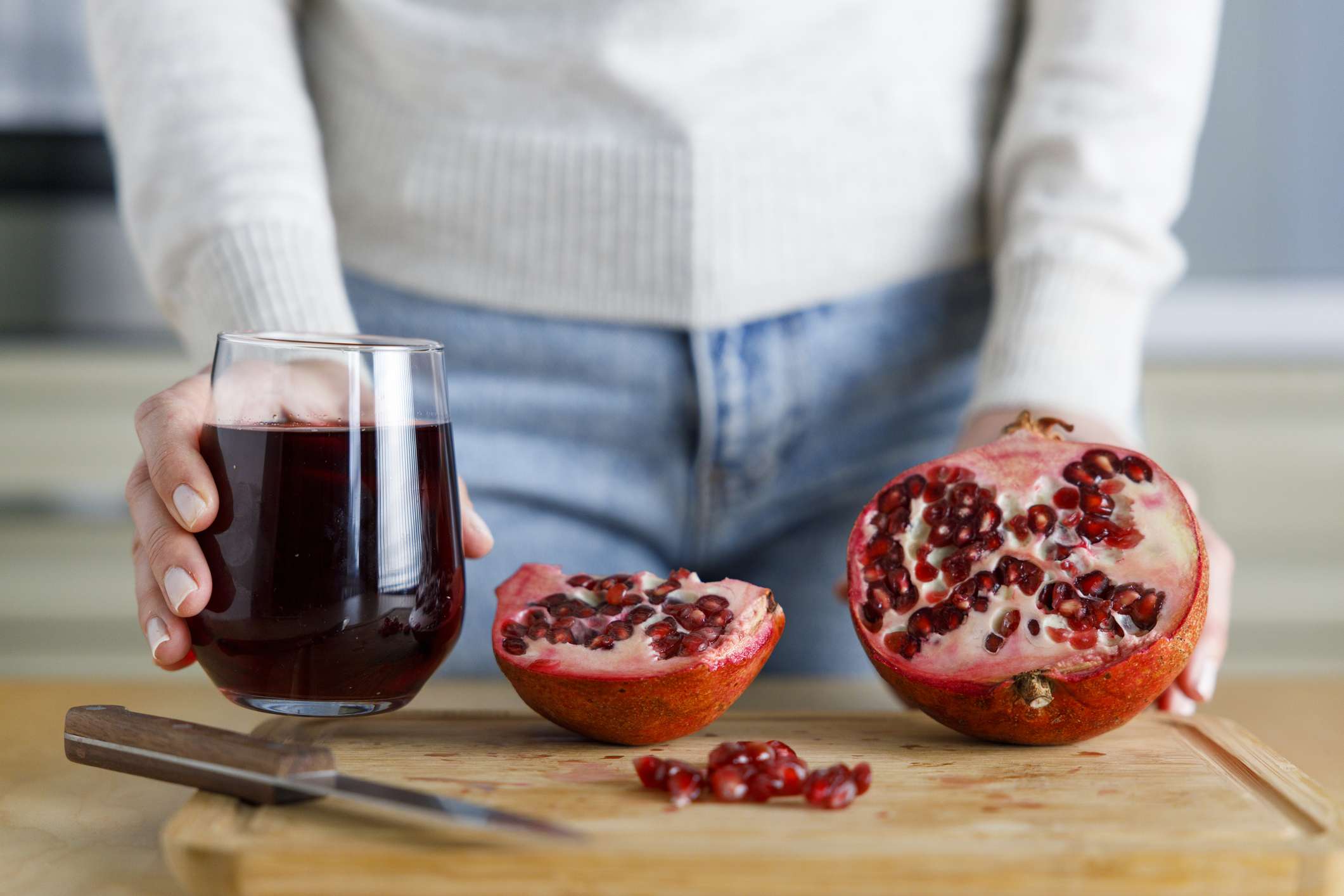
Drinking pomegranate juice with a balanced meal can provide heart-healthy benefits.Credit: eternalcreative / Getty Images
Drinking pomegranate juice with a balanced meal can provide heart-healthy benefits.
Credit: eternalcreative / Getty Images
  • There is no single best time to drink pomegranate juice for heart health.
  • Drinking it with meals may help support steadier blood sugar, which is important for heart health.
  • Consistent intake likely matters more than exact timing.

Pomegranate juice is rich in antioxidants and plant compounds that may support heart health and circulation. While there is no single perfect time to drink it, having it with a meal or before an activity may offer the most benefit.

The Best Time To Drink Pomegranate Juice

There isn’t enough research to suggest one best time to drink pomegranate juice for heart health.

However, drinking it with a balanced meal or snack may be a good option. Pomegranate juice contains natural sugar, so pairing it with protein, fiber, or healthy fats can help slow digestion and support steadier blood sugar levels.

Managing blood sugar can help protect heart health, especially for people with diabetes or insulin resistance. Over time, high blood sugar can damage blood vessels and the nerves that control the heart.

You can also drink pomegranate juice before a walk or workout to support circulation. A small 2014 study found that taking pomegranate extract 30 minutes before exercise improved blood flow and vessel diameter after exercise.

For broader heart-health benefits, consistency likely matters more than the exact time of day. Drinking pomegranate juice regularly as part of a heart-healthy diet may be more helpful than focusing on perfect timing.

Why Pomegranate Juice Supports Heart Health

Pomegranate juice is rich in polyphenols, including anthocyanins. These plant compounds help fight oxidative stress and inflammation, both of which can affect heart health over time.

Some research suggests compounds in pomegranate may help increase nitric oxide availability, which helps relax blood vessels and support healthy blood flow.

While more research is needed, pomegranate juice may also help improve HDL (“good”) cholesterol and reduce triglycerides.

Pomegranate juice also provides potassium, a mineral that helps lower blood pressure by reducing the effects of sodium.

The exact time you drink pomegranate juice is less important than how often you include it and what you pair it with. A small serving paired with a balanced meal is a simple way to make it part of a heart-healthy routine.

It also works best when paired with other heart-healthy habits, like eating more fruits and vegetables, choosing fiber-rich foods, staying active, and limiting excess sodium and added sugar.

How Much Should You Drink?

A good serving size is about 4-8 ounces of 100% pomegranate juice per day. This can help you get the benefits without overdoing sugar or calories. Some studies have found heart-health benefits with as little as 100 milliliters, or about 3.4 ounces, several times per week.

You can also choose whole pomegranate seeds, which provide fiber and may be more filling than juice.

Who May Need To Limit Pomegranate Juice?

Pomegranate juice is safe for most people, but there are a few things to consider. It may interact with some medications, so talk with a healthcare provider if you take blood pressure medicine, blood thinners, statins, or other daily medications.

People with diabetes or blood sugar concerns should also be mindful of portions. Choose 100% juice with no added sugar, and pair it with a meal or snack that contains protein, fat, or fiber to help support steadier blood sugar.

Tips for Adding It to Your Diet

Try these simple ways to use pomegranate juice:

  • Drink 4-8 ounces with breakfast or lunch
  • Mix it with sparkling water for a mocktail
  • Make your own at home by blending fresh pomegranate arils with a small amount of water, then straining through a fine mesh strainer or cheesecloth.
  • Add a splash to smoothies
  • Avoid juice with added sugar, which can add extra calories and work against heart-health goals


Source link

Leave a Reply

Subscribe to Our Newsletter

Get our latest articles delivered straight to your inbox. No spam, we promise.

Recent Reviews


TSA allows bringing any homemade food on planes, as long as it isn’t in liquid, jam, paste, or cream form.

Most airlines also allow you to consume your own food during the flight. The only exception is very short flights below 1 hour. That’s because you won’t be able to consume it while the airplane hasn’t reached cruising altitude (while the seatbelt sign is on). On shorter flights, sometimes, airplanes don’t even reach cruising altitude, or they do it only for a very short time period.

Which Homemade Foods are Allowed on Planes

All homemade foods that are in solid or powder form are allowed. Airport security can easily scan it with regular scanners, so it isn’t considered a security threat.

Here are some homemade foods that are allowed on planes without any restrictions:

  • Pizza
  • Sandwiches
  • Hamburgers
  • Tortillas and tacos
  • Salads without (or very little) sauce
  • Nuts
  • Dried fruit
  • Granola bars
  • Sweets
  • Chocolate
  • Cookies
  • Fruit (fresh, cut, or frozen)
  • Vegetables (fresh, cut, or frozen)
  • Beef jerky
  • Potato chips
  • Pasta without a lot of sauce
  • Risotto
  • Cooked vegetables

Which Homemade Foods are Restricted on Planes

All homemade foods in liquid form are limited to small quantities in hand luggage due to security risks. If it’s considered a liquid, then it will have to be stored in 3.4 oz (100 ml) containers or smaller and be packed in a 1-quart bag together with other liquids. If you can smear it, it’s considered a liquid.

Here are some examples of foods that are considered liquids:

  • Applesauce
  • Peanut butter
  • Jams
  • All other sauces
  • Butter
  • Smoothies
  • Smearable cheese
  • Nutella
  • Soup

Powdered foods and spices also have additional limitations. On flights in the US, powders above 350 g (12 oz) are allowed in hand luggage but must be individually screened. On international flights, powders over 350 g (12 oz) are usually banned from hand luggage.

Here are some foods that are considered powders:

  • Salt
  • Spices
  • Protein powder
  • Cocoa powder

Powders over 12 oz (350 g) and liquids over 3.4 oz (100 ml) are only allowed in checked baggage.

It’s also worth noting that on domestic flights in New Zealand and Australia, and on a few flights in the US and the UK, these restrictions don’t apply. That’s because some airports are fitted with new CT 3D scanners, which can safely scan liquids in large quantities in hand luggage as well as powders.

Fresh Fruit, Vegetables, Eggs, Meat, and Milk are Banned on International Flights

After passengers land on international flights, they have to go through Customs and Immigration. And they impose additional rules on products that may cause ecological problems within that specific country.

Fresh fruit, vegetables, eggs, meat, milk, mushrooms, and plants are usually banned from entering other countries. That’s because they can contain invasive pests and diseases.

So if you’re bringing any of these products, you’ll have to consume them during the flight (before landing). If you don’t do that, the border agents will ask you to dispose of them. You’re also required to declare them.

How to Pack Homemade Food for Air Travel

  • The best option for storing sandwiches, burgers, tortillas, and cooked foods, is to wrap them in aluminum foil and then put them inside a plastic bag. This will keep the food fresh and avoid making a mess. Aluminum won’t cause any disturbances with the airport scanners.
  • Salads, cut fruit, vegetables, pasta, risotto, and other messy foods are best stored in Tupperware containers. Another option is to put them in a disposable ice cream box, and then throw it in the trash bin when you’re finished.
  • Make good use of Ziploc bags. They’re great for storing messy and smelly foods.
  • You can bring forks and spoons through security, but not knives.
  • You’ll most likely be asked to remove your homemade food from your bag when going through security. You’ll have to place it in a separate screening bin. That’s because food is hard to scan with the airport scanners. So pack it somewhere easily accessible.
  • Your food counts towards the hand luggage size and weight allowance. So you should pack it inside your personal item or carry-on.
  • Pack small snacks in the pockets of your jacket and wear them while going through security if you’re low on space.

Summing Up – Traveling With Homemade Food

Although it isn’t really a rule, you should avoid bringing homemade food that contains a lot of garlic (or in general, has a strong aroma) on the flight. Other passengers might not like the smell and you might even be asked to stow it away by the flight attendants if the smell is too strong.

But other than that, you’re free to pack almost any homemade food. The only thing to watch out for is that it shouldn’t contain a large amount of liquids. A bit of sauce on pasta is usually fine.


Source link